
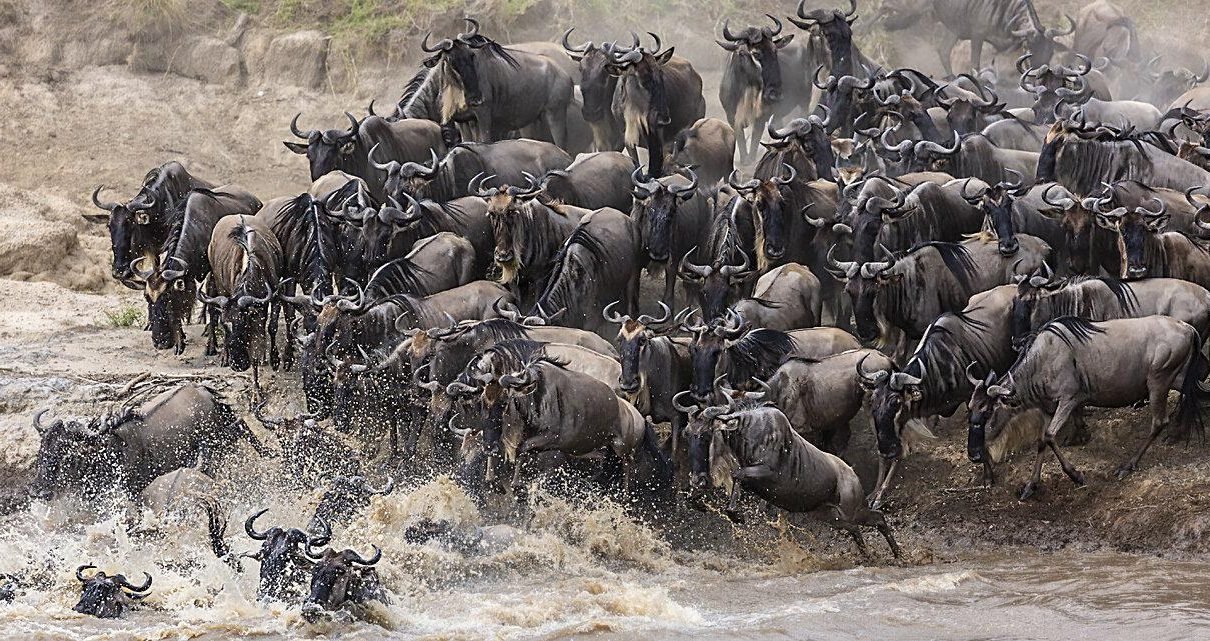
The Tanzania Great Migration Safari is one of the most popular wildlife experiences in Africa. Every year, large herds of wildebeest, zebras, and gazelles move across the Serengeti ecosystem in search of fresh grass and water. Along the way, they travel through open plains, gather in large groups, give birth to their young, and sometimes cross rivers where crocodiles wait. For travelers planning a Tanzania safari in 2027, 2028, or 2029, the Great Migration offers an opportunity to experience wildlife in its natural environment.
One of the most important things to understand before booking is that the Great Migration does not happen in one place throughout the year. The herds move according to rainfall, grazing conditions, and the availability of water. During the early months of the year, many wildebeest gather around the southern Serengeti and Ndutu plains for the calving season. As the year progresses, the herds generally move through the central and western Serengeti before reaching the northern plains, where some attempt to cross the Mara River.
The cost of a Great Migration safari depends on several factors, including the number of days, accommodation category, travel season, group size, and the area of the Serengeti you plan to visit. A budget camping safari can cost considerably less than a private luxury safari, while itineraries that include remote northern Serengeti camps or domestic flights may have higher prices.
At Eddy Tours & Safaris, we organize Tanzania wildlife safaris for travelers interested in seeing the Great Migration, exploring the Serengeti, and visiting other famous destinations such as Ngorongoro Crater and Tarangire National Park. This guide explains the available safari options, estimated costs, seasonal migration patterns, and important booking considerations for 2027, 2028, and 2029.
How Much Does a Tanzania Great Migration Safari Cost in 2027, 2028 and 2029?
The cost of a Tanzania Great Migration safari depends mainly on how long you stay, where you sleep, and whether you choose a shared or private safari. Budget safaris normally use public campsites or simple accommodation, while mid-range packages include comfortable lodges and tented camps. Luxury safaris offer higher-end accommodation, more personalized services, and, in some cases, flights between destinations.
The following prices are estimated planning ranges in US dollars per person, based on general Tanzania safari market pricing available in 2026. They are not confirmed Eddy Tours & Safaris package prices for 2027, 2028, or 2029. Actual quotations will depend on travel dates, group size, park fees, accommodation availability, and the final itinerary.
Estimated Great Migration Safari Prices
| Safari duration | Budget safari | Mid-range safari | Luxury safari |
|---|---|---|---|
| 3 days | $750–$1,350 | $1,200–$2,100 | $2,100–$4,500+ |
| 4 days | $1,000–$1,800 | $1,600–$2,800 | $2,800–$6,000+ |
| 5 days | $1,250–$2,250 | $2,000–$3,500 | $3,500–$7,500+ |
| 6 days | $1,500–$2,700 | $2,400–$4,200 | $4,200–$9,000+ |
| 7 days | $1,750–$3,150 | $2,800–$4,900 | $4,900–$10,500+ |
| 8 days | $2,000–$3,600 | $3,200–$5,600 | $5,600–$12,000+ |
| 10 days | $2,500–$4,500 | $4,000–$7,000 | $7,000–$15,000+ |
Important pricing information: These figures are broad estimates, not fixed offers. They generally assume shared accommodation and favorable group arrangements. Private safaris for one or two travelers, premium migration camps, peak-season travel, and domestic flights can cost more. Some three-day road itineraries also provide limited time in the Serengeti, so travelers should compare the actual game-drive schedule rather than choosing a package based only on price.
For an accurate quotation, contact Eddy Tours & Safaris with your travel month, number of travelers, preferred accommodation category, and the number of safari days.
Understanding the Serengeti Great Migration
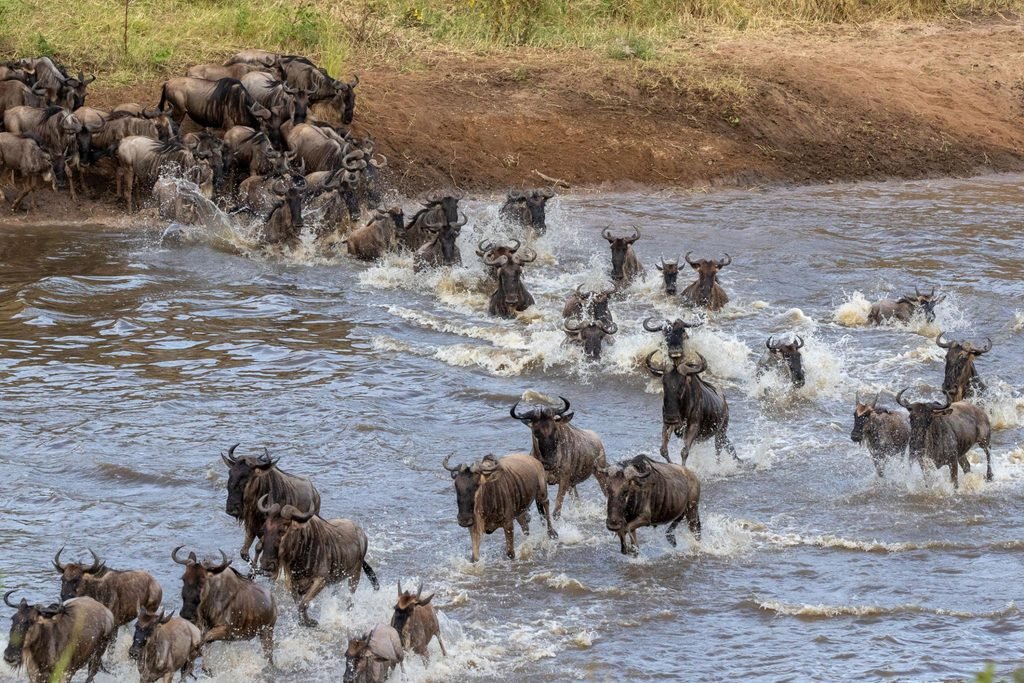
The Great Migration is a continuous movement of wildebeest and other grazing animals across the wider Serengeti–Mara ecosystem. It is not a single event that takes place on a particular day. Herds travel in different groups, and their locations change depending on rainfall and the condition of the grasslands. This means that two travelers visiting during the same month may have different wildlife experiences depending on where the animals are moving.
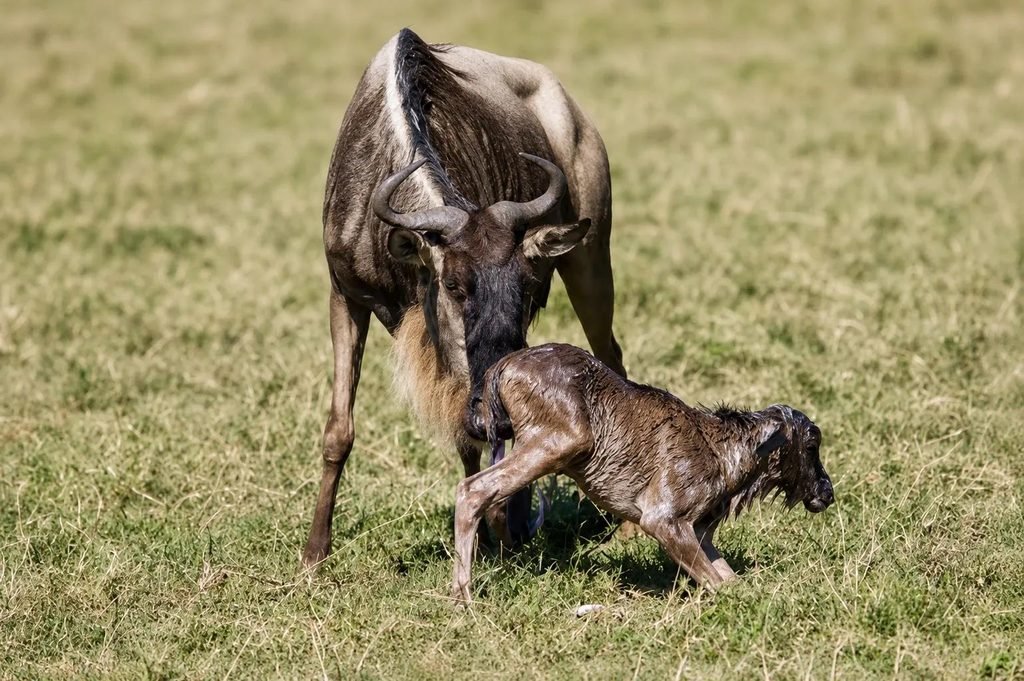
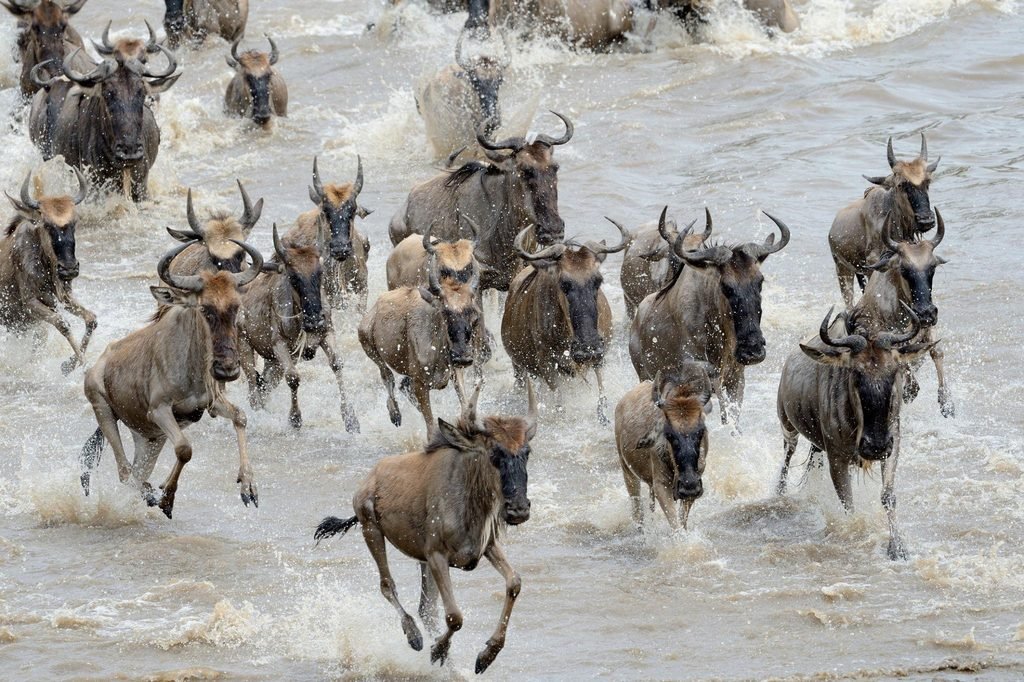
The migration is especially famous for two events: the wildebeest calving season and the river crossings. During the calving season, large numbers of wildebeest gather on the southern plains, where many calves are born over a relatively short period. This attracts predators such as lions, cheetahs, hyenas, and jackals. Later in the year, some herds reach the northern Serengeti, where river crossings may occur as the animals move between grazing areas.
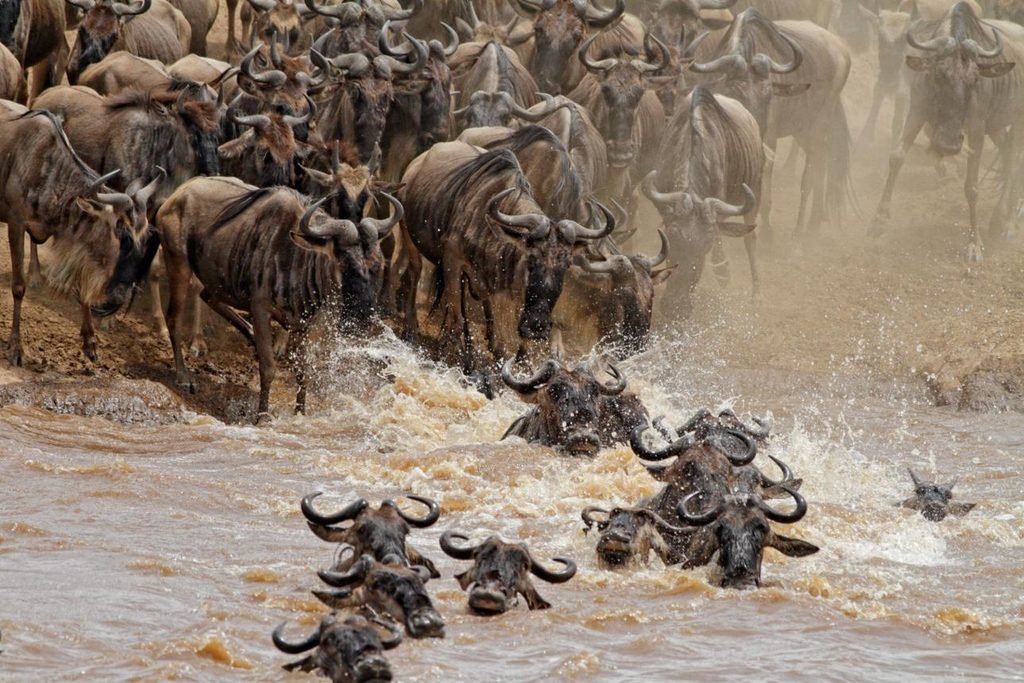
However, river crossings are unpredictable. Wildebeest may gather beside a river for hours or days without crossing, and they may suddenly turn away or move to another location. A responsible safari company should explain these natural uncertainties rather than guaranteeing a crossing on a specific date.
Best Time to See the Great Migration in Tanzania
The best time to visit depends on which part of the migration you want to experience. Travelers interested in newborn wildebeest and predator activity often choose January or February, while those hoping to witness Mara River crossings generally plan their safari between July and October. Other months can also provide excellent wildlife viewing, particularly when the herds are moving through the central or western Serengeti.
Great Migration Calendar for 2027, 2028 and 2029
| Month | General migration location | Main wildlife experience |
|---|---|---|
| January | Southern Serengeti and Ndutu | Large herds gathering on the southern plains |
| February | Ndutu and southern Serengeti | Main calving season and predator activity |
| March | Southern Serengeti | Calves, grazing herds, and possible northward movement |
| April | Southern and central Serengeti | Green landscapes and seasonal herd movements |
| May | Central and western Serengeti | Herds moving toward western grazing areas |
| June | Western Corridor and Grumeti region | Large herds and possible river crossings |
| July | Western and northern Serengeti | Northward movement and possible river crossings |
| August | Northern Serengeti | Mara River crossing opportunities |
| September | Northern Serengeti | Herds around the Mara River and northern plains |
| October | Northern and eastern Serengeti | Late-season crossings and changing herd movements |
| November | Central and eastern Serengeti | Return movements following seasonal rainfall |
| December | Central and southern Serengeti | Herds returning toward southern grazing areas |
This calendar describes the usual seasonal pattern rather than an exact prediction for 2027, 2028, or 2029. The actual location of the herds may differ from one year to another.
Best Tanzania Great Migration Safari Packages for 2027–2029
There are several ways to experience the Great Migration, depending on your budget, available time, and preferred travel season. Some travelers choose a short safari focused on the Serengeti, while others prefer a longer itinerary that combines migration viewing with Ngorongoro Crater, Tarangire, and other northern Tanzania destinations.
The following packages are suggested itinerary options. Accommodation, dates, and prices should be confirmed before booking.
1. Three-Day Serengeti Great Migration Safari
Duration: 3 days and 2 nights
Estimated budget: $750–$1,350 per person
Best for: Travelers with limited time
Accommodation: Budget camping or selected lodge options
A three-day Serengeti Great Migration safari is designed for travelers who want to experience the Serengeti within a short holiday. The itinerary can begin in Arusha and continue through the Ngorongoro highlands toward Serengeti National Park, where guests spend their time exploring the plains with a professional safari guide. Depending on the season, the route may focus on the central Serengeti or another suitable area that can realistically be reached within the available time.
On the first day, travelers depart from Arusha and make their way toward the Serengeti, enjoying views of the changing landscapes along the journey. The second day provides the main opportunity for game drives, with time spent searching for wildebeest herds, zebras, giraffes, elephants, lions, and other wildlife. On the third day, guests return toward Arusha or continue with another planned travel arrangement.
Because the Serengeti is a large national park and road transfers take considerable time, a three-day safari provides limited opportunities to follow distant migration herds. Travelers hoping to see Mara River crossings in the northern Serengeti should generally consider a longer itinerary or a fly-in option.
2. Four-Day Serengeti and Ngorongoro Migration Safari
Duration: 4 days and 3 nights
Estimated budget: $1,000–$1,800 per person
Best for: Travelers combining migration viewing with Ngorongoro Crater
Accommodation: Camping, mid-range lodges, or tented camps
A four-day Serengeti and Ngorongoro safari combines wildlife viewing in two of Tanzania’s best-known destinations. The journey usually begins in Arusha and continues toward Serengeti National Park, where travelers explore the open plains and search for wildlife with the assistance of an experienced driver-guide. The exact Serengeti area visited depends on the season, road conditions, and the time available.
The first two days generally focus on traveling to and exploring the Serengeti, while the third day includes further wildlife viewing before continuing toward the Ngorongoro Conservation Area. On the fourth day, travelers descend into Ngorongoro Crater for a game drive before returning to Arusha. The crater provides opportunities to observe several animal species in a relatively compact area, although wildlife sightings remain unpredictable.
This itinerary is suitable for travelers who want to experience both destinations without spending an entire week on safari. However, it is less suitable for guests whose main objective is to spend several days waiting for river crossings in the northern Serengeti.
3. Five-Day Serengeti Great Migration Safari
Duration: 5 days and 4 nights
Estimated budget: $1,250–$2,250 per person
Best for: First-time safari travelers
Accommodation: Budget camping, mid-range, or luxury upgrades
A five-day Great Migration safari offers a more balanced schedule for travelers who want additional time in the Serengeti. Depending on the season, the itinerary can include Tarangire National Park, Serengeti National Park, and Ngorongoro Crater, or it can dedicate more time to the Serengeti itself. The best arrangement depends on whether the traveler prefers a variety of wildlife destinations or wants to concentrate on the migration.
A typical itinerary begins with a drive from Arusha to Tarangire, where guests may observe elephants, giraffes, antelopes, and other animals among the park’s baobab trees. The following days focus on the Serengeti, with game drives arranged according to the seasonal location of the herds. The final part of the journey includes Ngorongoro Crater before returning to Arusha.
For travelers visiting during the calving season, the itinerary can be adjusted to include the Ndutu area when conditions and accommodation availability allow. During the northern migration season, additional time or a different route may be necessary to reach the Mara River area.
4. Six-Day Serengeti Wildebeest Migration Safari
Duration: 6 days and 5 nights
Estimated budget: $1,500–$2,700 per person
Best for: Travelers seeking more time for wildlife viewing
Accommodation: Camping, mid-range tented camps, or luxury lodges
A six-day Serengeti Great Migration safari gives travelers more time to explore the national park and follow wildlife movements. The itinerary can be designed around the southern Serengeti during the calving season, the central and western areas during the middle of the year, or the northern Serengeti during the months when Mara River crossings are more likely.
A typical six-day journey may include Tarangire, several days in the Serengeti, and a visit to Ngorongoro Crater. However, travelers whose main interest is the Great Migration may prefer to reduce the number of parks and spend more nights in the most suitable Serengeti region. This provides additional opportunities to observe the herds without spending too much time traveling between destinations.
For travelers visiting between July and October, a six-day itinerary focused on northern Serengeti can provide opportunities to search for herds near the Mara River. However, crossing sightings are never guaranteed, and the itinerary should allow flexibility based on local wildlife reports.
5. Seven-Day Tanzania Great Migration Safari
Duration: 7 days and 6 nights
Estimated budget: $1,750–$3,150 per person
Best for: Travelers seeking a balanced migration safari
Accommodation: Budget, mid-range, or luxury options
A seven-day Great Migration safari is an excellent option for travelers who want to spend more time in the Serengeti without rushing between destinations. The itinerary can include several nights in the national park, allowing the guide to explore different wildlife areas and adjust game drives according to the seasonal movement of the herds.
During the calving season, a seven-day safari may combine Ndutu, central Serengeti, and Ngorongoro Crater. During the northern migration season, the itinerary can focus on the northern Serengeti, with time around Kogatende and the Mara River. The exact route should be selected according to the travel month rather than following the same itinerary throughout the year.
For first-time visitors, seven days provides a useful balance between travel time and wildlife viewing. It also allows travelers to include additional destinations such as Tarangire or Ngorongoro without reducing the Serengeti portion of the safari to only one or two game drives.
6. Eight-Day Serengeti Mara River Migration Safari
Duration: 8 days and 7 nights
Estimated budget: $2,000–$3,600 per person
Best for: Travelers interested in Mara River crossing opportunities
Recommended season: July to October
Accommodation: Mid-range or luxury migration camps, with budget options subject to location
The eight-day Serengeti Mara River safari is designed for travelers who want to spend several days in northern Serengeti during the period when wildebeest herds may approach the Mara River. This region is known for its dramatic river landscapes and the possibility of observing animals crossing between grazing areas.
A well-planned itinerary generally includes travel from Arusha toward the Serengeti, wildlife viewing in the central plains, and several nights in the northern region. During the northern Serengeti portion, the guide can explore different areas based on current herd movements and reports from other guides. Some days may involve waiting near known crossing areas, while others may focus on general wildlife viewing.
The main advantage of this itinerary is the additional time available in the northern Serengeti. Wildebeest do not cross the river according to a schedule, so spending several days in the region can provide more opportunities than a brief visit. Nevertheless, even an eight-day safari cannot guarantee a river crossing.
7. Ten-Day Tanzania Great Migration and Big Five Safari
Duration: 10 days and 9 nights
Estimated budget: $2,500–$4,500 per person
Best for: Travelers seeking a longer wildlife holiday
Accommodation: Budget, mid-range, or luxury options
A ten-day Tanzania Great Migration safari provides enough time to combine migration viewing with several of northern Tanzania’s major wildlife destinations. Depending on the season, the itinerary can include Tarangire National Park, Lake Manyara, Ngorongoro Crater, central Serengeti, and either the southern or northern migration areas.
The longer schedule gives travelers the opportunity to enjoy game drives at a more relaxed pace. Instead of spending most days transferring between parks, guests can stay additional nights in selected areas and explore different habitats. This is particularly valuable in the Serengeti, where wildlife can be widely dispersed and sightings often depend on patience.
A ten-day safari can also be customized for families, photographers, honeymooners, or travelers who prefer luxury accommodation. The final cost depends on the number of guests, accommodation choices, park fees, and whether domestic flights are included.
Great Migration Safari Packages by Travel Season
January to March: Ndutu and Southern Serengeti Calving Safaris
January, February, and March are popular months for travelers interested in the wildebeest calving season. During this period, large herds often gather around the southern Serengeti and Ndutu plains, where many wildebeest give birth. The presence of young animals can attract predators, making the area particularly interesting for travelers who enjoy observing natural wildlife behavior.
February is often considered the main calving month, although the exact timing depends on rainfall and grazing conditions. A safari during this period should include enough time in the Ndutu and southern plains areas rather than concentrating entirely on central Serengeti. Five to seven days can provide a useful schedule for combining calving-season wildlife viewing with other destinations.
April to June: Central and Western Serengeti Migration Safaris
Between April and June, the migration generally moves away from the southern plains toward central and western areas of the Serengeti. Rainfall can affect road conditions during part of this period, but the landscape is often green and the herds may gather in large numbers as they travel toward new grazing areas.
June is particularly interesting because some herds may reach the western Serengeti and Grumeti region, where river crossings can occur. However, these movements are not guaranteed, and the exact location of the animals depends on seasonal conditions. Travelers visiting during this period should choose an itinerary that allows the guide to adjust the route based on current wildlife information.
July to October: Northern Serengeti and Mara River Crossing Safaris
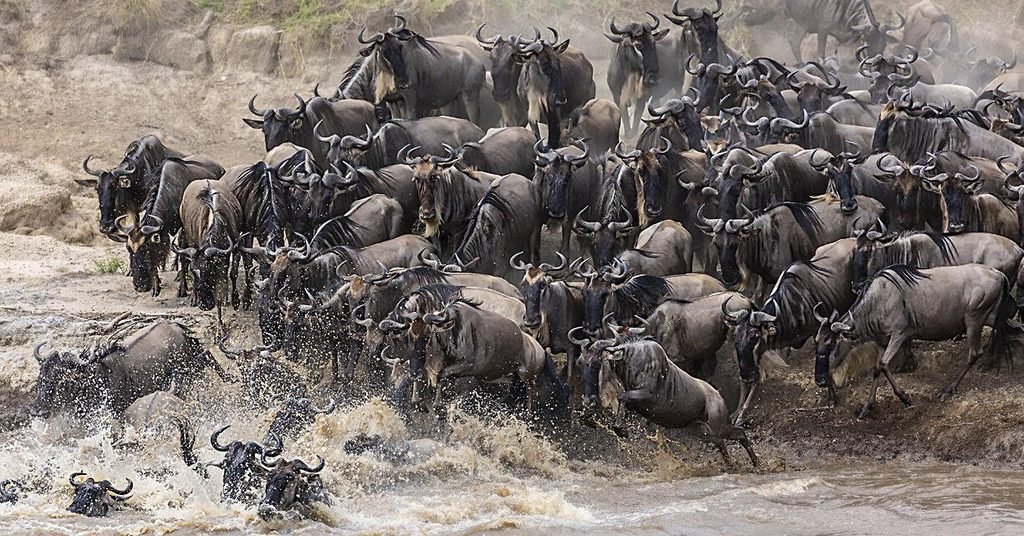
July to October is a popular period for travelers hoping to see wildebeest crossing the Mara River. During these months, many herds generally move into northern Serengeti, where they may gather near riverbanks before attempting to cross. The northern region is also home to lions, elephants, giraffes, and other wildlife, making it a rewarding safari destination even when crossings do not occur.
August and September are particularly popular months for northern Serengeti safaris, and well-positioned accommodation can be in high demand. Travelers planning to visit during this period should consider booking early and allowing several nights in the northern region. A seven- or eight-day safari is often more practical than a short itinerary when river crossings are the main objective.
November to December: Returning Herds and Green-Season Safaris
During November and December, the migration generally begins moving toward central, eastern, and southern Serengeti as seasonal rainfall encourages new grass growth. The exact route can vary considerably, and the herds may spread across different parts of the ecosystem rather than remaining in one large group.
These months can be attractive for travelers who enjoy green landscapes, birdwatching, and wildlife photography. Accommodation demand and prices may vary, particularly around the Christmas and New Year holidays. A flexible itinerary can help travelers explore the areas where wildlife activity is strongest during their visit.
Budget, Mid-Range and Luxury Great Migration Safaris
Budget Great Migration Safari
A budget Great Migration safari is designed for travelers who want to experience Tanzania’s wildlife while keeping accommodation expenses relatively low. These packages commonly use public campsites, basic facilities, and shared arrangements where available. Travelers still enjoy guided game drives, but the accommodation is simpler than that offered on mid-range or luxury safaris.
Budget safaris can be a practical choice for solo travelers, students, friends, and visitors who prefer spending more of their travel budget on wildlife activities. However, it is important to compare the actual itinerary, because a cheaper package may include fewer nights in the Serengeti or longer driving days.
Mid-Range Great Migration Safari
Mid-range safaris provide a balance between comfort and cost. Accommodation normally includes comfortable lodges or tented camps with private or shared facilities, depending on the property. Meals, guided game drives, and transport are arranged as part of the confirmed package.
This category is popular with couples, families, and first-time safari travelers who want comfortable accommodation without paying premium luxury rates. Seasonal tented camps can be especially useful when they are located near the areas where migration activity is expected.
Luxury Great Migration Safari
Luxury Great Migration safaris focus on high-end accommodation, personalized services, and carefully planned wildlife experiences. Travelers may stay in luxury tented camps or lodges offering spacious rooms, private bathrooms, quality dining, and views of the surrounding landscape.
Some luxury itineraries include domestic flights to reduce long road transfers, particularly when visiting northern Serengeti. These arrangements can be useful for travelers with limited time or those who prefer to spend more of their holiday on game drives rather than traveling between destinations.
What Is Included in a Tanzania Great Migration Safari Package?
The services included in a Great Migration safari depend on the selected package and the written quotation. A typical organized safari includes transport in a suitable safari vehicle, a professional driver-guide, accommodation during the itinerary, meals as specified, scheduled game drives, and applicable park fees where stated.
Private safaris commonly use a four-wheel-drive safari vehicle with a viewing roof, allowing guests to observe wildlife during game drives. The guide helps identify animals, explains their behavior, and plans the daily route according to the season and wildlife conditions.
Services that may be excluded include international flights, Tanzania visa fees, travel insurance, personal expenses, tips, alcoholic drinks, optional balloon safaris, and domestic flights unless specifically included. Travelers should review the quotation carefully before booking so they understand the complete cost.
What Makes Great Migration Safari Prices Higher or Lower?
Several factors affect the final cost of a Great Migration safari. The travel season is particularly important because accommodation demand can increase during the northern Serengeti river-crossing period and the southern calving season. Camps in popular migration areas may charge higher rates when demand is strong.
Group size also affects the price per person. A private safari for two travelers generally costs more per person than a similar trip for four or six guests sharing one vehicle. Accommodation category, number of nights, park fees, and the inclusion of domestic flights can also change the total cost considerably.
The location of your accommodation matters as much as its standard. A lodge located far from the migration area may appear cheaper, but long daily transfers can reduce the time available for wildlife viewing. When comparing quotations, ask how many nights you will spend in the Serengeti and how close your accommodation is to the region you want to explore.
How to Choose the Right Great Migration Safari Package
Choosing the right Great Migration safari begins with deciding what you want to see. Travelers interested in newborn wildebeest and predator activity should consider the southern Serengeti and Ndutu during the early months of the year. Those hoping to witness river crossings should focus on northern Serengeti during the usual July-to-October period.
The number of days is another important consideration. A short safari can provide excellent wildlife viewing, but it may not allow enough time to reach remote migration areas or respond to changes in herd movement. Travelers whose main objective is the migration should consider spending several nights in the most relevant Serengeti region rather than visiting too many parks in one itinerary.
Budget and accommodation preferences should also guide your decision. Some travelers prefer simple camping and longer game drives, while others value comfortable lodges, private vehicles, or domestic flights. A well-planned safari should balance these preferences with the practical realities of wildlife movement and travel distances.
Frequently Asked Questions About Tanzania Great Migration Safaris
1. How much does a Great Migration safari cost in Tanzania?
A Great Migration safari can cost from around $250 per person per day for some budget arrangements, while mid-range and luxury packages cost more. The final price depends on the itinerary, group size, season, and accommodation.
2. What is the best month to see the Great Migration?
The best month depends on the wildlife experience you want. January and February are popular for calving, while July to October is commonly associated with northern Serengeti river crossings.
3. Where can I see the Great Migration in Tanzania?
The migration moves through different parts of the Serengeti ecosystem, including the southern plains, Ndutu, central Serengeti, western Serengeti, and northern Serengeti.
4. Is the Great Migration visible throughout the year?
The migration is a year-round natural movement, but the herds are not in the same location every month.
5. When is the wildebeest calving season?
The main calving period is generally around January and February, often extending into March depending on seasonal conditions.
6. When do wildebeest cross the Mara River?
Mara River crossings are commonly associated with July to October, although their timing is unpredictable.
7. Can a safari company guarantee a river crossing?
No. River crossings are natural events, and no safari operator can guarantee that wildebeest will cross on a particular day.
8. How many days are best for a Great Migration safari?
Five to eight days is a useful range for many travelers, while longer itineraries provide more time to explore different areas.
9. Is a three-day Serengeti safari enough?
Three days can provide a short introduction to the Serengeti, but it offers limited time for following the migration, especially in remote northern areas.
10. Is a seven-day migration safari worth it?
Yes. Seven days can provide enough time to explore the Serengeti and include other wildlife destinations without rushing excessively.
11. Which is better for migration viewing, Ndutu or northern Serengeti?
Ndutu is particularly attractive during the calving season, while northern Serengeti is better known for Mara River crossing opportunities.
12. Can I see lions during a migration safari?
Lions live in the Serengeti, and sightings are possible throughout the year, although they cannot be guaranteed.
13. Can I see the Big Five during a migration safari?
You may see several members of the Big Five, but sightings depend on the areas visited and wildlife conditions. Ngorongoro Crater can be a useful addition to the itinerary.
14. Is a budget Great Migration safari possible?
Yes. Budget camping and selected group arrangements can make migration safaris more affordable.
15. Are luxury migration safaris available?
Yes. Luxury lodges, tented camps, private safari vehicles, and fly-in arrangements are available in different parts of the Serengeti.
16. Do migration safari prices include park fees?
Many packages include park fees, but travelers should confirm this in the written quotation.
17. Can I book a private Great Migration safari?
Yes. Private safaris can be customized according to travel dates, group size, accommodation preferences, and budget.
18. Can families with children join a migration safari?
Yes. Family safaris can be arranged, although accommodation policies and suitable driving schedules should be considered.
19. Is the Serengeti safe for tourists?
The Serengeti is an established safari destination. Travelers should follow park regulations and their guide’s instructions, particularly around wildlife.
20. Can I visit Ngorongoro Crater during a migration safari?
Yes. Ngorongoro Crater is commonly included in northern Tanzania safari itineraries.
21. Can I combine the Great Migration with a Zanzibar holiday?
Yes. Travelers can combine a Serengeti safari with several days on Zanzibar’s beaches.
22. Can I combine the Great Migration with Kilimanjaro climbing?
Yes. A Kilimanjaro climb can be followed by a wildlife safari, allowing suitable recovery time.
23. Should I book my 2027 migration safari early?
Early planning is useful, particularly for popular northern Serengeti accommodation during August and September.
24. Can I book a Great Migration safari for 2028?
You can request a customized itinerary and discuss future arrangements, subject to confirmed rates and availability.
25. Are 2029 Great Migration safari prices already fixed?
Not necessarily. Prices for 2029 may change according to park fees, accommodation rates, transport costs, and other factors.
Book Your Tanzania Great Migration Safari for 2027, 2028 or 2029
A Tanzania Great Migration safari offers the opportunity to explore the Serengeti and observe one of Africa’s most remarkable wildlife movements. Whether you want to visit the southern plains during the calving season, explore the western Serengeti, or spend several days searching for river-crossing activity in the north, the most important decision is choosing an itinerary suited to your travel month.
Safari prices vary according to the number of days, accommodation category, group size, and destinations included. Budget packages provide more affordable options, while mid-range and luxury safaris offer additional comfort and services. Regardless of your budget, spending enough time in the right Serengeti region is often more valuable than trying to visit too many destinations within a short schedule.
At Eddy Tours & Safaris, we help travelers organize Great Migration safaris for 2027, 2028, and 2029. Our team can assist with seasonal itinerary planning, accommodation options, private safari arrangements, and personalized quotations based on your travel preferences.
Contact Eddy Tours & Safaris
Website: Eddy Tours & Safaris
Safari enquiries: Contact Our Team
WhatsApp: Chat with Eddy Tours & Safaris
Email: sales@eddytours-safaris.com
Send us your preferred travel dates, number of travelers, safari duration, and accommodation category to request a personalized Tanzania Great Migration safari quotation for 2027, 2028, or 2029.
1 Comment
Comments are closed.