
A 7-day budget camping safari in Tanzania is one of the best ways to experience African wildlife while keeping your travel expenses under control. Tanzania is home to some of Africa’s most famous wildlife destinations, including Serengeti National Park, Ngorongoro Crater, Tarangire National Park, and Lake Manyara National Park. These destinations offer excellent opportunities to see lions, elephants, giraffes, zebras, wildebeest, buffaloes, and many other animals in their natural habitats.
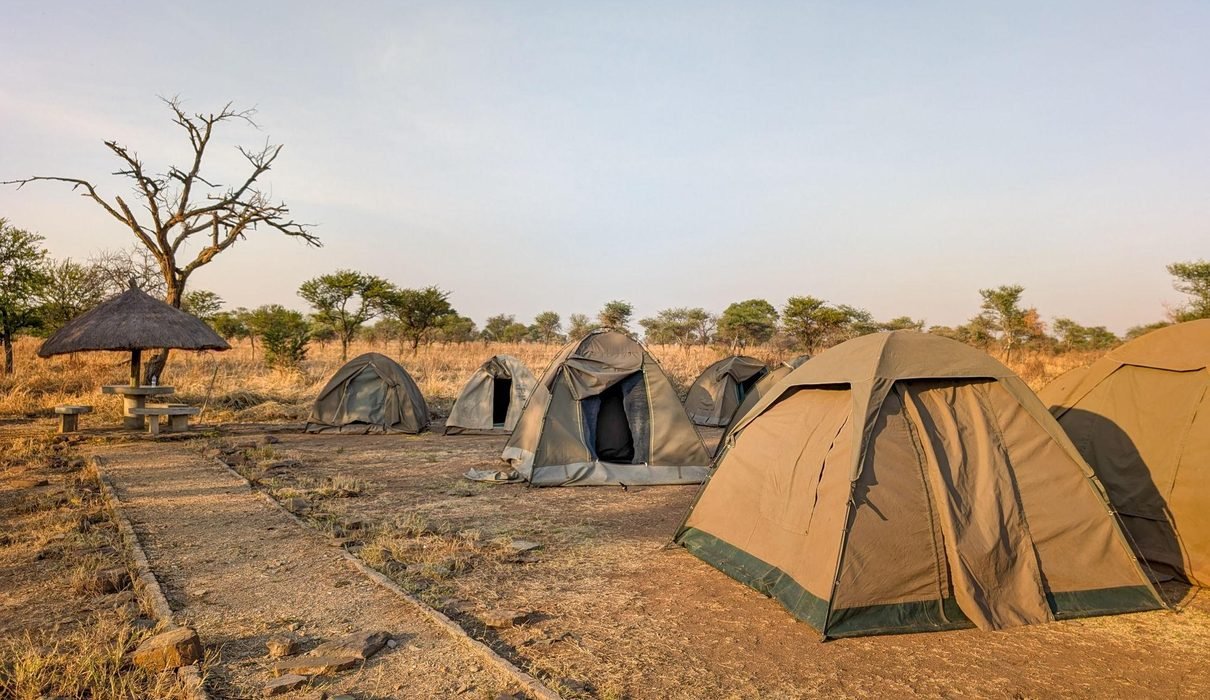
Many travelers believe that visiting Tanzania’s national parks requires a large budget. However, a well-organized camping safari allows visitors to explore these destinations without paying for expensive luxury lodges. Instead of staying in high-end accommodation, you spend your nights at designated campsites, enjoy freshly prepared meals, and travel in a safari vehicle with a professional guide. This arrangement makes wildlife safaris more accessible to students, couples, families, solo travelers, and small groups.
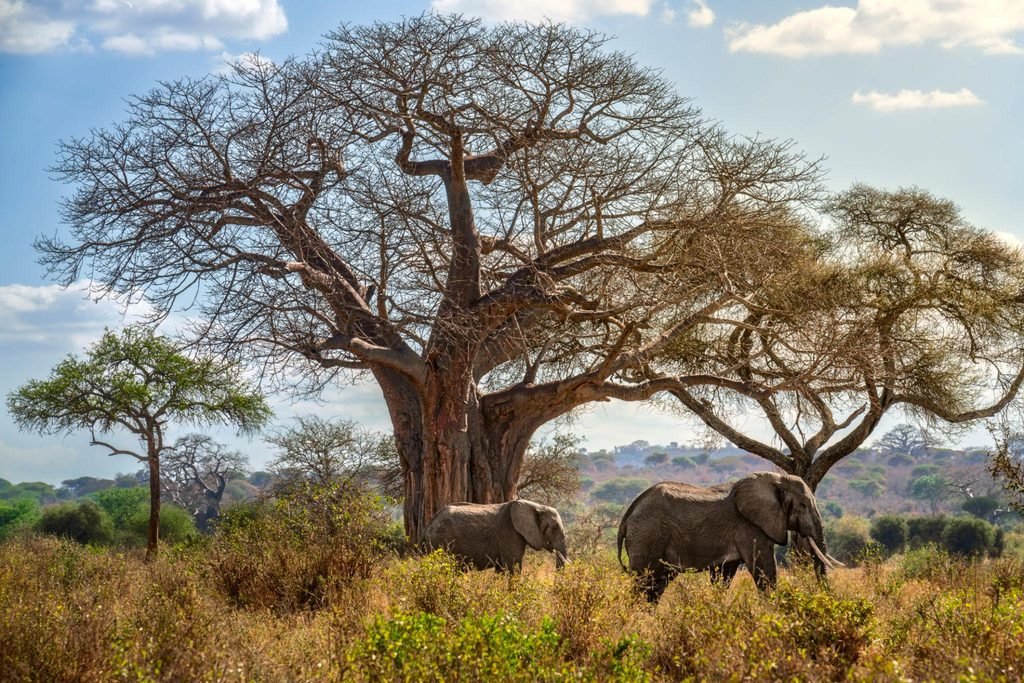
The seven-day itinerary is particularly attractive because it provides enough time to explore several national parks without rushing through every destination. You can spend time watching elephants beneath the baobab trees in Tarangire, explore the beautiful landscapes of Lake Manyara, search for predators across the Serengeti plains, and descend into Ngorongoro Crater for a memorable wildlife experience.
At Eddy Tours & Safaris, we help travelers organize affordable Tanzania safaris with experienced local guides, comfortable camping arrangements, and carefully planned wildlife activities. Whether you are visiting Tanzania for the first time or returning to explore more of the country, this seven-day budget camping safari offers an excellent introduction to northern Tanzania’s wildlife destinations.
This guide explains the complete itinerary for 2027 and 2028, including the places you will visit, camping arrangements, wildlife experiences, travel preparation, and important information about planning an affordable safari.
Overview of the 7-Day Tanzania Budget Camping Safari
| Safari information | Details |
|---|---|
| Safari package | 7-Day Tanzania Budget Camping Safari |
| Destination | Northern Tanzania |
| Duration | 7 days / 6 nights |
| Travel years | 2027 and 2028 |
| Starting location | Arusha, Tanzania |
| Ending location | Arusha, Tanzania |
| Safari type | Budget camping wildlife safari |
| Main destinations | Tarangire, Lake Manyara, Serengeti, and Ngorongoro Crater |
| Accommodation | Designated public or budget campsites |
| Transport | 4×4 safari vehicle |
| Activities | Game drives, wildlife photography, sightseeing |
| Meals | Camping safari meals as specified in the quotation |
| Suitable for | Solo travelers, couples, friends, families, and small groups |
| Price | Available on request, depending on group size, dates, and arrangements |
This itinerary includes six nights of camping and seven days of safari activities. The exact campsite locations, travel schedule, and services are confirmed when booking.
Why Choose a Budget Camping Safari in Tanzania?
A budget camping safari is an excellent choice for travelers who want to spend more time exploring Tanzania’s wildlife destinations without paying the higher accommodation costs associated with luxury lodges. The main difference between a camping safari and a luxury safari is usually the type of accommodation and certain comfort services. Both can provide access to the same national parks and wildlife viewing areas, subject to park regulations and the itinerary.
Camping also creates a different atmosphere from staying in hotels. Evenings are spent at designated campsites, where travelers can relax after game drives, share meals, and enjoy the outdoor environment. In some locations, wildlife may be heard from a distance during the night, although animals should never be approached or encouraged to enter the camping area. Your guide and camping crew will explain the rules for remaining safe throughout your stay.
Another advantage is the opportunity to travel with a small group. Sharing a safari vehicle and certain operating costs can reduce the price per person compared with a private safari. However, travelers should always compare the total package inclusions because a cheaper quotation may exclude park fees, meals, or other essential services.
For travelers who want to explore Tanzania’s northern safari circuit, seven days provides a practical balance between cost, travel time, and wildlife viewing opportunities.
Complete 7-Day Budget Camping Safari Itinerary in Tanzania
The following itinerary begins and ends in Arusha. It includes Tarangire National Park, Lake Manyara National Park, three nights in the Serengeti, and a visit to Ngorongoro Crater before returning to Arusha.
Day 1: Arusha to Tarangire National Park – Elephants and Baobab Trees
Destination: Tarangire National Park
Approximate driving time: 2–3 hours from Arusha, depending on traffic and starting point
Main activity: Afternoon wildlife game drive
Accommodation: Budget campsite near Tarangire or Mto wa Mbu
Meals: Lunch and dinner
Your seven-day Tanzania camping safari begins in Arusha, where you meet your professional safari guide before departing toward Tarangire National Park. After a short introduction to the safari program, you travel southwest through local villages, farmland, and open countryside. The journey offers an opportunity to observe everyday life in northern Tanzania before reaching the protected wildlife areas.
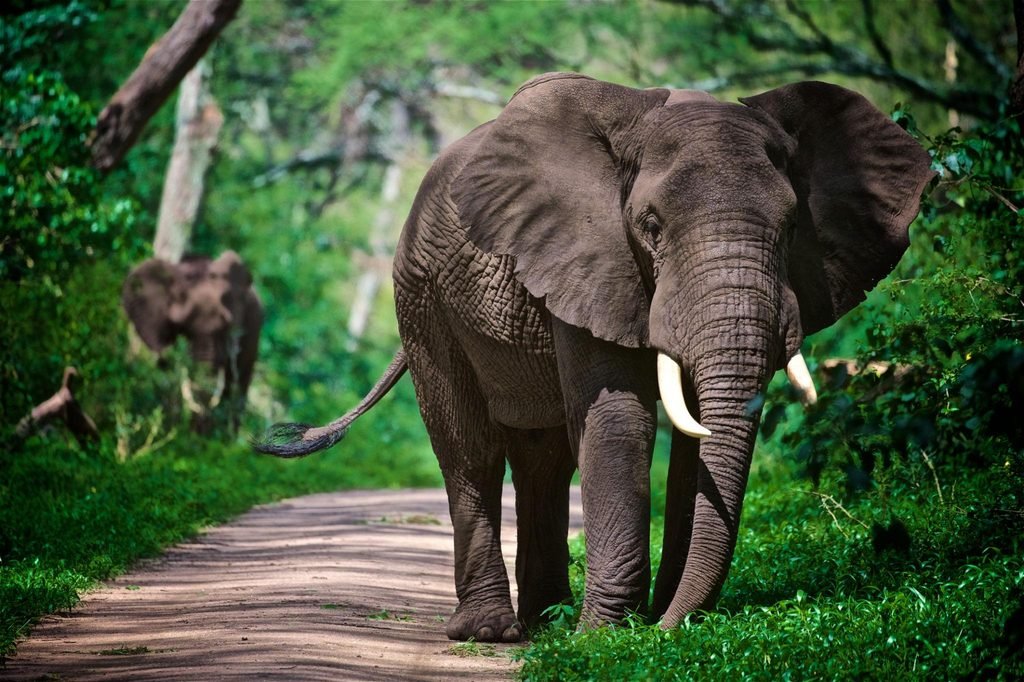
Upon arrival at Tarangire, your guide completes the park entry procedures before beginning your first game drive. Tarangire is particularly well known for its elephant populations and impressive baobab trees, which create a distinctive landscape across the park. During the drive, you may encounter elephants feeding near the road, giraffes moving between acacia trees, zebras grazing in open areas, and buffaloes resting beneath the shade.
The Tarangire River is an important source of water for wildlife, particularly during the dry season. Depending on the time of year, animals may gather near the river and surrounding vegetation, creating excellent opportunities for observation and photography. Your guide will explore suitable wildlife viewing areas while explaining the behavior of the animals and the ecological importance of the park.
After enjoying your first wildlife experience, you leave the park and travel toward your campsite. Your camping team prepares dinner while you settle into your accommodation and relax after the day’s activities. The evening provides time to discuss the wildlife you have seen and prepare for the next day’s visit to Lake Manyara.
Day 2: Lake Manyara National Park – Forest Wildlife and Rift Valley Scenery
Destination: Lake Manyara National Park
Main activity: Game drive and sightseeing
Accommodation: Budget campsite near Mto wa Mbu or Karatu
Meals: Breakfast, lunch, and dinner
After breakfast at the campsite, you travel to Lake Manyara National Park, one of northern Tanzania’s most scenic wildlife destinations. The park lies beneath the dramatic escarpment of the Great Rift Valley and contains several different habitats, including groundwater forest, open grassland, wetlands, and the alkaline lake itself. This combination of landscapes supports a variety of animals and bird species.
Your morning game drive begins through the forested sections of the park, where large trees and dense vegetation provide a cooler environment than the open plains. Baboons are frequently encountered in these areas, and you may also see blue monkeys, elephants, bushbucks, and other forest-associated wildlife. Your guide will explain how the park’s water sources and vegetation influence the distribution of animals throughout the year.
As you continue exploring, the landscape opens toward the lake and surrounding grasslands. Depending on seasonal water conditions, you may observe flamingos, pelicans, storks, herons, and other waterbirds. Lake Manyara is also known for occasional sightings of tree-climbing lions, although these animals can be difficult to find and should never be considered guaranteed.
During the afternoon, you continue exploring accessible sections of the park before returning to your campsite. If time permits, you may enjoy views of the Rift Valley escarpment and the surrounding countryside. Dinner is prepared at the campsite, where you spend another night before beginning the longer journey toward Serengeti National Park.
Day 3: Mto wa Mbu or Karatu to Serengeti National Park – Journey to the Endless Plains
Destination: Central Serengeti National Park
Approximate travel time: 5–7 hours or longer, depending on departure point, road conditions, and stops
Main activity: Scenic transfer and game drive
Accommodation: Designated public campsite in central Serengeti
Meals: Breakfast, lunch, and dinner
After an early breakfast, you begin the journey toward Serengeti National Park, one of Africa’s most famous wildlife destinations. The route takes you through the Ngorongoro Conservation Area, where the landscape gradually changes from cultivated highlands to open grasslands and wide plains. Along the way, you may enjoy scenic views of the Ngorongoro highlands, although the day’s main objective is to reach the Serengeti with enough time for wildlife viewing.
As you continue toward the park, the landscape becomes increasingly open, revealing the grasslands that have made the Serengeti famous. The name Serengeti is commonly associated with the idea of endless plains, and the scenery reflects this description as grasslands stretch toward the horizon. The park supports a remarkable variety of wildlife, including lions, leopards, cheetahs, elephants, giraffes, buffaloes, zebras, and wildebeest.
After entering the Serengeti, your guide begins a game drive toward the central region, commonly known as Seronera. This area is particularly attractive for wildlife viewing because its river systems, grasslands, and rocky outcrops provide suitable habitats for many species. Depending on the season and animal movements, you may encounter grazing herds, predators resting beneath trees, or giraffes feeding on acacia vegetation.
By late afternoon, you arrive at your designated campsite, where the camping team prepares dinner and organizes the overnight arrangements. Camping in the Serengeti provides a memorable experience because you remain within the wider wildlife landscape rather than returning to a town outside the park. Your guide will explain campsite safety procedures, including the importance of remaining within permitted areas and never approaching wild animals.
Day 4: Full-Day Serengeti Safari – Lions, Leopards, and Wildlife Photography
Destination: Central Serengeti
Main activity: Full-day game drive
Accommodation: Public campsite in Serengeti
Meals: Breakfast, lunch, and dinner
Today is dedicated to exploring Serengeti National Park, allowing you to spend more time observing wildlife without the pressure of a long transfer between destinations. After breakfast, you depart with your guide for a morning game drive, when temperatures are often cooler and some animals may be more active. Your guide will select suitable routes based on recent wildlife observations, road conditions, and the group’s interests.
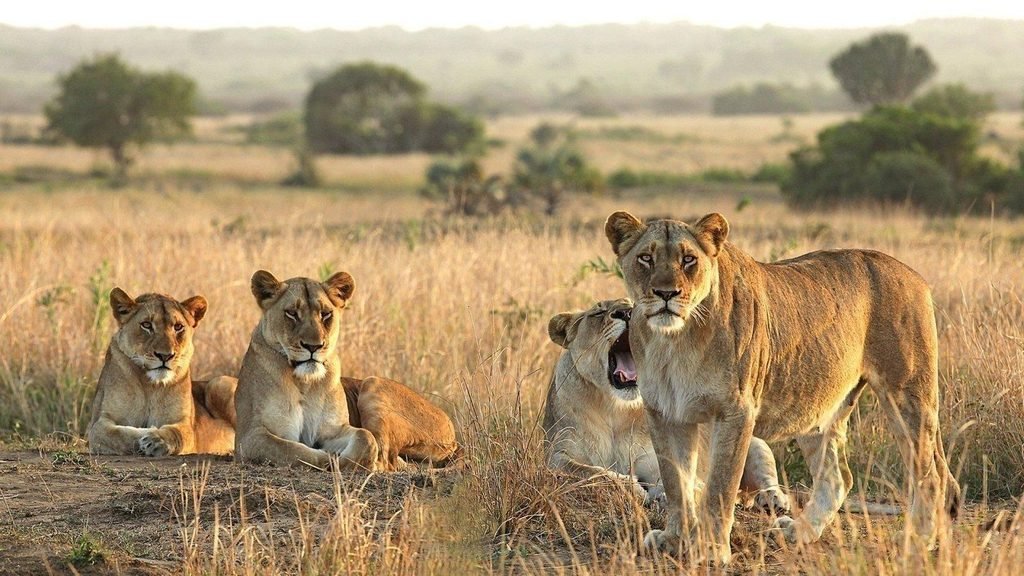
The central Serengeti is well known for its predator populations, particularly lions, leopards, and cheetahs. Lions may be seen resting near rocky outcrops or moving through grassland areas, while leopards are sometimes observed in trees along river systems. Cheetahs generally prefer more open areas where they can scan the landscape for prey. Sightings depend on natural animal behavior, so your guide will take time to search suitable habitats rather than promising specific encounters.
During the game drive, you may also encounter elephants, buffaloes, giraffes, zebras, wildebeest, antelopes, and many bird species. The Serengeti is an excellent destination for wildlife photography because of its open landscapes and varied habitats. Your guide can help position the safari vehicle in permitted areas for photography while maintaining a respectful distance from animals.
Lunch may be enjoyed at an approved picnic location before continuing with the afternoon game drive. As the day progresses, the changing light creates different photographic opportunities across the plains. You return to the campsite later in the day for dinner and relaxation, with another night spent in the Serengeti.
Day 5: Another Full Day in Serengeti – Exploring Different Wildlife Areas
Destination: Serengeti National Park
Main activity: Full-day wildlife exploration
Accommodation: Public campsite in Serengeti
Meals: Breakfast, lunch, and dinner
Your fifth day provides another opportunity to explore the Serengeti, which is especially valuable because wildlife movements change throughout the year. Spending multiple days in the park allows your guide to visit different areas rather than concentrating all wildlife viewing into a single afternoon. The exact route will depend on seasonal conditions, wildlife reports, and the distance that can reasonably be covered during the day.
If you are traveling during a period when migrating wildebeest and zebras are present in accessible parts of the park, your guide may focus on areas where herds are moving or grazing. The Great Migration is a continuous seasonal movement influenced by rainfall and fresh grass, so the location of the animals cannot be guaranteed for a particular date. Even when the main migration herds are elsewhere, the Serengeti remains home to resident wildlife throughout the year.
This day also provides opportunities to observe smaller details of the ecosystem. You may see vultures gathering near a carcass, hyenas moving across open plains, antelopes feeding in grassland areas, or birds hunting insects and small animals. These encounters help visitors understand that a safari involves much more than searching for the Big Five.
During the afternoon, you continue exploring suitable wildlife areas before returning to camp. After dinner, you can relax and prepare for the next day’s journey toward Ngorongoro. Having spent three nights in the Serengeti, you will have experienced different parts of the park and enjoyed more time for wildlife observation than is possible on a short safari.
Day 6: Serengeti to Ngorongoro Conservation Area – Final Serengeti Game Drive
Destination: Ngorongoro Conservation Area
Main activity: Morning game drive and scenic transfer
Accommodation: Designated campsite near the Ngorongoro Crater rim, subject to availability
Meals: Breakfast, lunch, and dinner
After breakfast, you leave the campsite and begin a final game drive through the Serengeti. This is another opportunity to observe wildlife before departing the park, and your guide may choose routes where animals have recently been seen. Depending on the time of departure and road conditions, you may encounter grazing herbivores, predators resting in the grass, or birds moving across the plains.
The journey continues toward the Ngorongoro Conservation Area, passing through open grasslands and gradually rising into the highlands. The change in scenery is noticeable as the wide Serengeti plains give way to higher elevations and more varied vegetation. Your guide will explain the importance of the Ngorongoro landscape and how its conservation arrangements differ from those of a national park.
As you approach the crater highlands, the temperature may become cooler, particularly during the late afternoon and evening. When conditions allow, you may stop at an approved viewpoint to appreciate the enormous volcanic caldera and the surrounding highland scenery. Ngorongoro Crater is one of Tanzania’s most famous wildlife attractions because its floor contains grasslands, wetlands, woodland, and permanent water sources that support many animals.
You continue to your designated campsite, where the camping team prepares dinner. Because the crater highlands can be cold at night, warm clothing and a suitable sleeping bag are important. You spend the evening preparing for the following day’s descent into Ngorongoro Crater before returning to Arusha.
Day 7: Ngorongoro Crater Game Drive – Return to Arusha
Destination: Ngorongoro Crater
Main activity: Crater game drive and return transfer
Approximate return journey: 3–4 hours or longer from the crater highlands to Arusha, excluding the crater visit
Meals: Breakfast and lunch
End of safari: Arusha
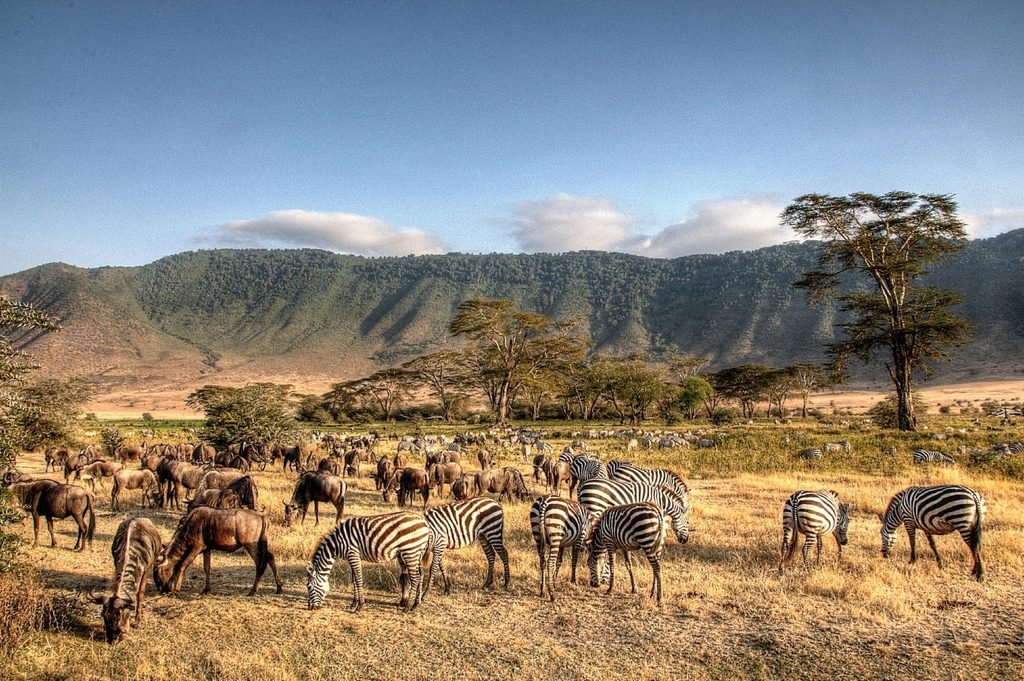
Your final safari day begins early with breakfast before descending into Ngorongoro Crater for a wildlife game drive. The crater is one of the most remarkable natural landscapes in Tanzania, formed by the collapse of an ancient volcano. Its floor contains grassland, freshwater and seasonal wetlands, woodland, and other habitats that support a wide variety of animals throughout the year.
During the game drive, you may encounter large herds of buffaloes, zebras, wildebeest, gazelles, and other grazing animals. Lions are also found in the crater, while elephants are sometimes seen moving through wooded areas. Ngorongoro is one of the places in northern Tanzania where visitors may have an opportunity to see the endangered black rhinoceros, although sightings are uncommon and never guaranteed.
Your guide will explore permitted wildlife viewing areas while explaining the relationships between predators, herbivores, and the crater’s different habitats. Depending on the day’s route, you may also observe hippos in water pools, flamingos in suitable wetland areas, and various birds across the crater floor. The combination of scenery and wildlife makes Ngorongoro an excellent destination for completing a northern Tanzania safari.
After enjoying your crater game drive and lunch, you ascend from the crater and begin the journey back to Arusha. The drive passes through the Ngorongoro highlands and the surrounding countryside before reaching the town later in the afternoon or evening, depending on road conditions and the time spent in the crater. Your guide drops you at the agreed location, marking the end of your seven-day budget camping safari in Tanzania.
Seven-Day Tanzania Budget Camping Safari Summary
| Day | Destination | Main activity | Overnight |
|---|---|---|---|
| Day 1 | Tarangire National Park | Wildlife game drive | Campsite near Tarangire/Mto wa Mbu |
| Day 2 | Lake Manyara National Park | Wildlife viewing and sightseeing | Campsite near Mto wa Mbu/Karatu |
| Day 3 | Serengeti National Park | Transfer and afternoon game drive | Serengeti campsite |
| Day 4 | Central Serengeti | Full-day game drive | Serengeti campsite |
| Day 5 | Serengeti National Park | Full-day wildlife exploration | Serengeti campsite |
| Day 6 | Serengeti to Ngorongoro | Morning game drive and transfer | Ngorongoro-area campsite |
| Day 7 | Ngorongoro Crater | Crater game drive and return to Arusha | End of safari |
How Much Does a 7-Day Budget Camping Safari Cost in Tanzania?
The cost of a seven-day budget camping safari depends on several factors, including the number of travelers, travel season, accommodation arrangements, park fees, and whether you choose a private or shared safari. Group camping safaris are generally more affordable per person because travelers share certain expenses, including the safari vehicle, guide, and camping services.
A private camping safari may cost more because the vehicle and guide are reserved for your group. However, private arrangements provide greater flexibility with departure dates, daily activities, and the pace of the itinerary. Families and groups of friends may find private camping safaris particularly attractive when the total cost is divided among several travelers.
When comparing quotations, it is important to check whether the price includes national park entrance fees, Ngorongoro Crater service fees, accommodation, meals, and transportation. These expenses can make a significant difference to the final safari cost. Travelers should also remember that park fees and other operating expenses may change before 2027 or 2028.
For a quotation based on your preferred travel dates and group size, see our 7-day budget camping safari package. The final itinerary and price should be confirmed in writing before booking.
What Is Included in a Budget Camping Safari?
A properly organized budget camping safari normally includes the main services needed for wildlife viewing and overnight camping. These may include a professional safari driver-guide, a suitable 4×4 safari vehicle, designated camping accommodation, camping equipment, meals, and park entrance fees. The exact services depend on the package purchased, so travelers should review the written quotation before making a payment.
The safari vehicle is an important part of the experience because it provides transport between destinations and allows wildlife observation inside the national parks. Many safari vehicles are equipped with a pop-up roof for viewing and photography, although the exact vehicle specifications should be confirmed with the operator.
Camping equipment may include sleeping tents, mattresses, cooking equipment, and other basic supplies. Some operators provide sleeping bags, while others require guests to bring or rent them. Meals are normally prepared at designated camping or picnic areas, depending on the day’s schedule.
Typical Package Inclusions
- Professional English-speaking safari driver-guide.
- 4×4 safari vehicle for the scheduled game drives and transfers.
- Camping accommodation for six nights.
- Camping equipment as specified in the quotation.
- Meals during the safari according to the itinerary.
- Drinking water according to the package arrangements.
- National park and conservation area fees, when expressly included.
- Ngorongoro Crater descent and applicable vehicle fees, when expressly included.
- Scheduled wildlife game drives.
- Pick-up and drop-off in Arusha.
Typical Package Exclusions
- International and domestic flights.
- Tanzania visa fees.
- Travel insurance.
- Accommodation before or after the safari.
- Alcoholic beverages and personal purchases.
- Tips for the safari guide and camping crew.
- Optional cultural activities.
- Additional services not mentioned in the confirmed itinerary.
Important: These are typical budget safari arrangements, not a guarantee that every item is included in a particular quotation. Always confirm the final inclusions and exclusions with your tour operator.
What Is Camping Like During a Tanzania Budget Safari?
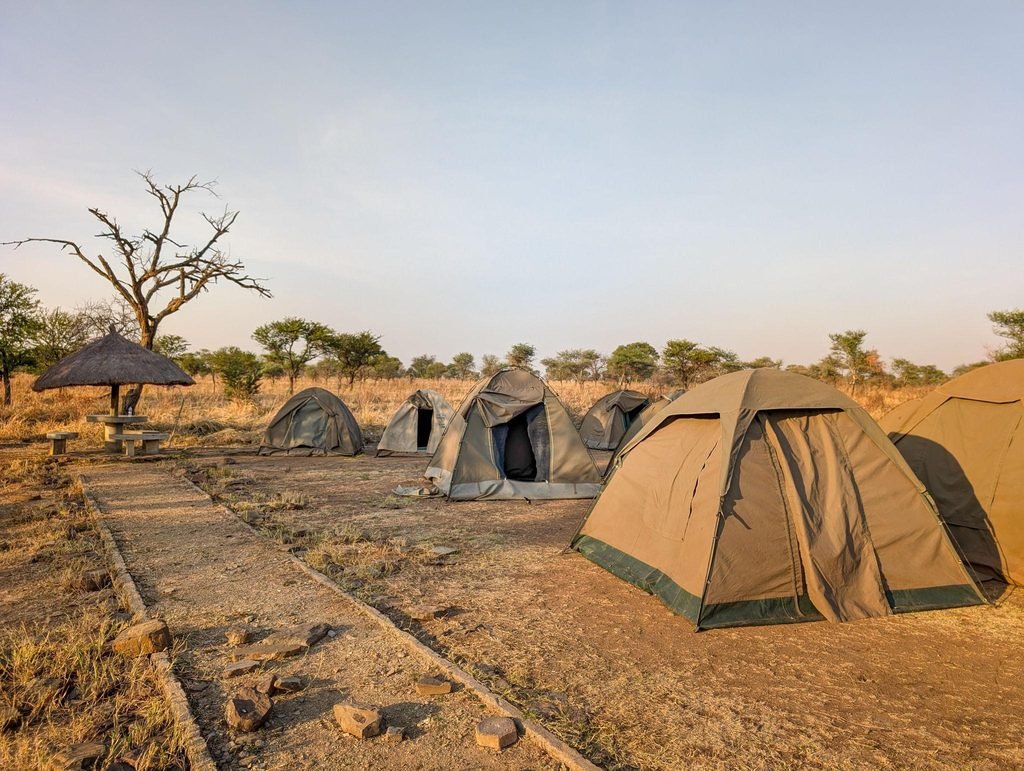
Camping during a Tanzania safari is different from staying in a luxury lodge, but it can be a comfortable and enjoyable experience when properly organized. Most budget camping packages use designated public or budget campsites, where visitors sleep in tents and share certain facilities. Depending on the campsite, toilets, showers, dining areas, and water facilities may be available, although the quality and condition of these services can vary.
The camping crew normally helps prepare the campsite and organize meals, allowing travelers to focus on wildlife viewing and relaxation. After a long game drive, returning to camp for a warm meal and a place to rest can be one of the most enjoyable parts of the day. Travelers should bring comfortable clothing for the evening, a flashlight or headlamp, personal toiletries, and suitable sleeping equipment.
Camping also requires following important safety rules. Wildlife may move near campsites in protected areas, so visitors should never walk around at night without following the guide’s instructions. Food should be stored appropriately, and animals should never be fed or approached. Respecting these rules helps protect both visitors and wildlife.
For travelers who enjoy outdoor experiences and do not require luxury facilities, camping is an excellent way to reduce accommodation costs while spending more time in Tanzania’s national parks.
Best Time for a 7-Day Camping Safari in Tanzania
Tanzania offers wildlife viewing throughout the year, but the experience changes according to the season. The dry season, generally from June to October, is popular because vegetation is often less dense and animals may gather around reliable water sources. Tarangire is particularly attractive during this period because elephants and other wildlife are frequently found near the Tarangire River.
From approximately November to May, many parts of northern Tanzania receive seasonal rainfall, although the timing and intensity vary. During greener periods, the landscape becomes more lush, bird activity can be excellent, and some animals give birth to their young. These months can provide beautiful photographic opportunities, but rain may affect certain roads and travel schedules.
The Serengeti’s Great Migration is another consideration for travelers planning their safari. Wildebeest and zebras move through different parts of the wider Serengeti ecosystem during the year, following seasonal rainfall and grazing conditions. Because these movements vary, no particular location or river crossing can be guaranteed on a specific date.
For travelers visiting in 2027 or 2028, the best month depends on the wildlife experience you prefer, your budget, and your available travel dates. A knowledgeable local guide can help you select a suitable itinerary without making unrealistic promises about animal sightings.
What Animals Can You See During the Safari?
A seven-day safari across Tanzania’s northern circuit provides opportunities to observe many of Africa’s most recognizable wildlife species. Tarangire is particularly famous for elephants, while the Serengeti is known for its predators and large herbivore populations. Ngorongoro Crater provides opportunities to see animals in a relatively concentrated landscape, while Lake Manyara offers a different combination of forest wildlife and birdlife.
Lions are among the animals many visitors hope to see, and they occur in several of the destinations included in this itinerary. Leopards are more difficult to observe because they are often solitary and may spend time resting in trees or dense vegetation. Cheetahs are commonly associated with open grassland habitats, particularly in suitable parts of the Serengeti.
Elephants, giraffes, buffaloes, zebras, wildebeest, hippos, hyenas, antelopes, and numerous bird species may also be encountered. However, wildlife sightings are always influenced by natural animal movements, weather conditions, and the amount of time spent exploring each habitat.
The most enjoyable approach is to appreciate the entire ecosystem rather than concentrating only on a checklist of famous animals.
How to Save Money on a Tanzania Camping Safari
Traveling on a budget does not mean sacrificing the quality of your wildlife experience. One of the most effective ways to reduce costs is to join a small-group safari, where expenses such as vehicle hire and guiding are shared among travelers. This arrangement is particularly useful for solo travelers and couples who may find a private safari more expensive.
Another useful approach is to plan your travel dates carefully. Some periods attract higher demand for accommodation and safari services, while other months may provide more flexible arrangements. However, travelers should not assume that every low-season departure is cheaper, because park fees and other operating expenses may remain unchanged.
Choosing camping accommodation rather than luxury lodges can also reduce the overall package cost. Travelers should compare packages based on what is included rather than simply choosing the lowest advertised price. A quotation that excludes park fees, meals, or essential transport may become more expensive once these items are added.
Booking with an experienced local safari operator can also help simplify the planning process. A local team can explain realistic travel times, recommend suitable camping arrangements, and prepare an itinerary that makes practical use of the available days.
What to Pack for a Seven-Day Budget Camping Safari
Packing appropriately makes a camping safari more comfortable, particularly because travelers spend several hours each day inside a safari vehicle and sleep in different locations throughout the journey. Lightweight clothing is useful during warm afternoons, while a fleece or warm jacket is important for cooler mornings and evenings, especially around the Ngorongoro highlands.
Comfortable walking shoes, sunscreen, sunglasses, a hat, insect repellent, and personal toiletries should be included in your luggage. A camera or smartphone with sufficient storage is also useful for capturing wildlife and landscapes. Binoculars can make animal observation more enjoyable, particularly when wildlife is resting at a distance from the road.
Travelers should also carry any required personal medication, a small daypack, charging equipment, and suitable travel documents. If your package does not include a sleeping bag, confirm whether you should bring one or arrange a rental before departure.
Is a 7-Day Tanzania Camping Safari Suitable for Families?
A seven-day camping safari can be suitable for families who enjoy outdoor activities and are comfortable with basic accommodation. Children often find wildlife viewing exciting, particularly when they have opportunities to observe elephants, giraffes, zebras, and other familiar animals in their natural habitats. However, parents should consider the age of their children, the length of daily drives, and the facilities available at the campsites before booking.
Some days involve several hours of driving, especially when traveling between the Serengeti and Ngorongoro. Younger children may find long transfers tiring, so families should discuss the itinerary with their operator and consider whether a private safari would provide greater flexibility.
Camping arrangements should also be reviewed carefully to ensure that tents, bedding, meals, and safety procedures are appropriate for the family. A private safari may be particularly useful because it allows the guide to adjust the pace and stop for breaks when necessary.
Frequently Asked Questions About the 7-Day Tanzania Budget Camping Safari
1. Is seven days enough for a Tanzania safari?
Yes. Seven days provides enough time to visit several major destinations in northern Tanzania, including Tarangire, Lake Manyara, Serengeti, and Ngorongoro Crater.
2. Is a camping safari cheaper than a lodge safari?
Camping safaris are generally more affordable because basic camping accommodation costs less than many lodges and permanent tented camps.
3. Is camping safe in Tanzania’s national parks?
Camping can be safe when visitors use authorized campsites and follow the instructions of professional guides and park authorities.
4. Do I need to bring my own tent?
Not usually when camping equipment is included in the package, but you should confirm the arrangements before departure.
5. Are sleeping bags provided?
Some packages include sleeping bags, while others require guests to bring or rent them. Check your quotation.
6. Are meals included?
Meals are commonly included during camping safaris, although the exact meal plan should be confirmed.
7. Can I see the Big Five during this safari?
The itinerary provides opportunities to see several Big Five species, but sightings of all five are not guaranteed.
8. Can I see lions in the Serengeti?
Yes. Lions live in the Serengeti, although individual sightings depend on their movements and behavior.
9. Is the Great Migration included?
The itinerary visits Serengeti National Park, but seeing the main migration herds depends on the season and their location.
10. Can I see a wildebeest river crossing?
River crossings are unpredictable and cannot be guaranteed. A specific migration-focused itinerary may be needed.
11. Is Ngorongoro Crater worth visiting?
Yes. It is one of Tanzania’s best-known wildlife destinations and offers a distinctive combination of scenery and animals.
12. Can I see elephants in Tarangire?
Tarangire is particularly well known for elephants, although sightings depend on wildlife movements.
13. Are there toilets at public campsites?
Many designated campsites have shared toilet facilities, but the standard varies by location.
14. Can I charge my phone during the safari?
Charging may be available in the safari vehicle or at certain campsites, depending on the arrangements.
15. Is Wi-Fi available at campsites?
Wi-Fi should not be expected at basic campsites. Mobile coverage also varies between locations.
16. What is the best month for a budget safari?
The best month depends on your preferred wildlife experience, weather expectations, and travel budget.
17. Can I travel alone?
Yes. Solo travelers can request a private safari or enquire about joining a suitable group departure.
18. Are children allowed on camping safaris?
Children may join suitable camping safaris, subject to the operator’s arrangements and applicable campsite rules.
19. Do I need travel insurance?
Travel insurance is strongly recommended for medical emergencies, travel disruption, and other covered circumstances.
20. What should I wear on safari?
Comfortable, lightweight clothing in neutral colors is practical, along with warm layers for cooler mornings and evenings.
21. Are safari vehicles comfortable?
A properly maintained safari vehicle should be suitable for game drives, although road conditions can be rough in some areas.
22. Can I book a private seven-day camping safari?
Yes. Private camping arrangements can be requested for couples, families, and groups.
23. Can I book the safari for 2027?
You can request a quotation for your preferred 2027 travel dates, subject to availability and confirmation.
24. Can I book the safari for 2028?
Yes. You can enquire about 2028 arrangements, although final prices and services must be confirmed.
25. Can I combine the safari with Zanzibar or Kilimanjaro?
Yes. Travelers can arrange a Zanzibar beach holiday or a Mount Kilimanjaro climbing expedition before or after their safari.
Book Your 7-Day Budget Camping Safari in Tanzania for 2027 or 2028
A seven-day budget camping safari is an excellent way to explore Tanzania’s northern wildlife destinations without paying for expensive luxury accommodation. The itinerary combines Tarangire’s elephant country, Lake Manyara’s varied landscapes, the wildlife-rich Serengeti plains, and the remarkable Ngorongoro Crater. Together, these destinations provide a diverse safari experience that is suitable for many first-time visitors to Tanzania.
Camping makes the journey more affordable while allowing travelers to spend time close to the natural environment. With professional guiding, suitable camping arrangements, and a carefully planned itinerary, visitors can enjoy wildlife viewing, photography, and the experience of traveling through some of Tanzania’s most famous protected areas.
At Eddy Tours & Safaris, we help travelers organize affordable camping safaris for 2027 and 2028. Whether you are traveling alone, with friends, as a couple, or with your family, our team can help you explore suitable safari arrangements based on your travel dates, group size, and budget.
For more information about our safari packages, visit our Tanzania budget camping safari page or contact our safari team to request a personalized quotation.
WhatsApp: +255 711 906 664
Email: sales@eddytours-safaris.com
Plan your Tanzania camping safari with a realistic budget, suitable travel dates, and enough time to enjoy the wildlife and landscapes that make northern Tanzania such a special destination.