
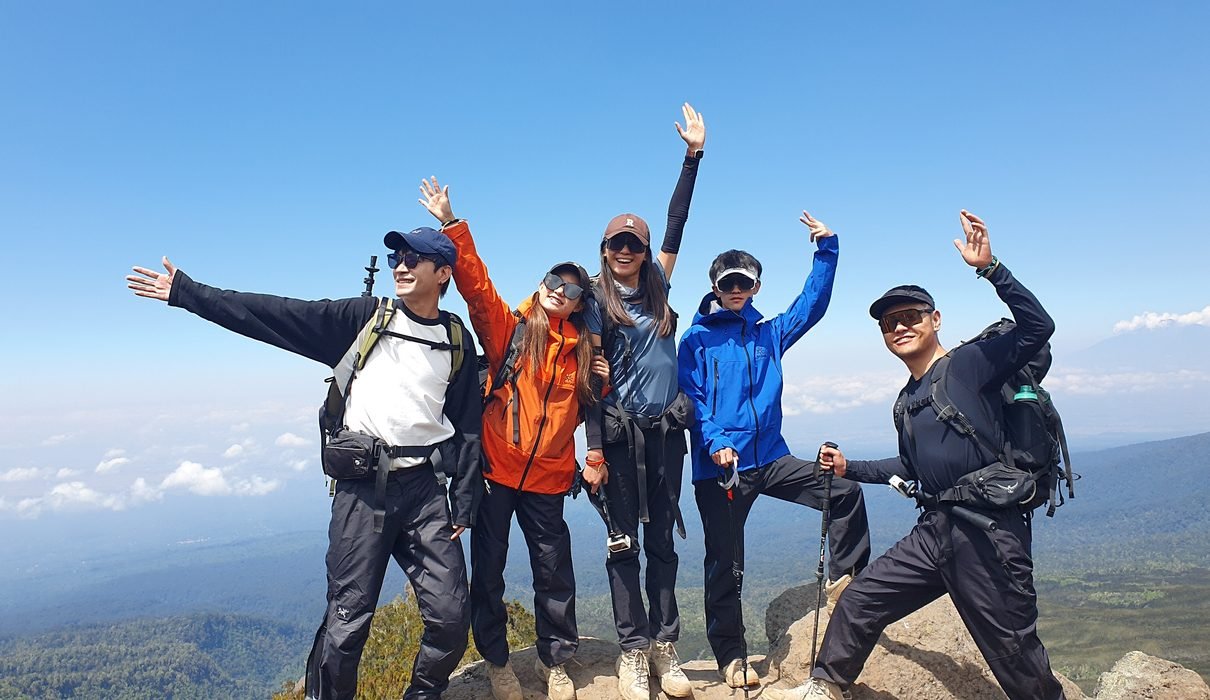
The 8 Days Lemosho Route Kilimanjaro Group Join 2027/2028 is a good choice for travellers who want to climb Mount Kilimanjaro with other hikers while sharing the cost of guides, porters, camping equipment, and mountain services. The Lemosho Route begins on the western side of Kilimanjaro and passes through rainforest, open moorland, the Shira Plateau, alpine desert, and the cold upper slopes before reaching Uhuru Peak at 5,895 metres above sea level. The eight-day itinerary gives climbers more time to adjust to the altitude than many shorter climbing programmes, making it a sensible option for people who want a steady pace and enough time to prepare for summit night.
Joining a Kilimanjaro climbing group is particularly suitable for solo travellers, couples, and small groups who do not want to pay the full cost of a private expedition. Instead of arranging an individual climbing team, participants join other climbers on a scheduled departure and follow the same mountain itinerary. The group is supported by professional mountain guides, porters, and a cook, while each climber remains responsible for their own physical preparation and personal equipment. At Eddy Tours & Safaris, travellers can enquire about Lemosho group departures for 2027 and 2028 and receive information about the available dates, group arrangements, and package costs.
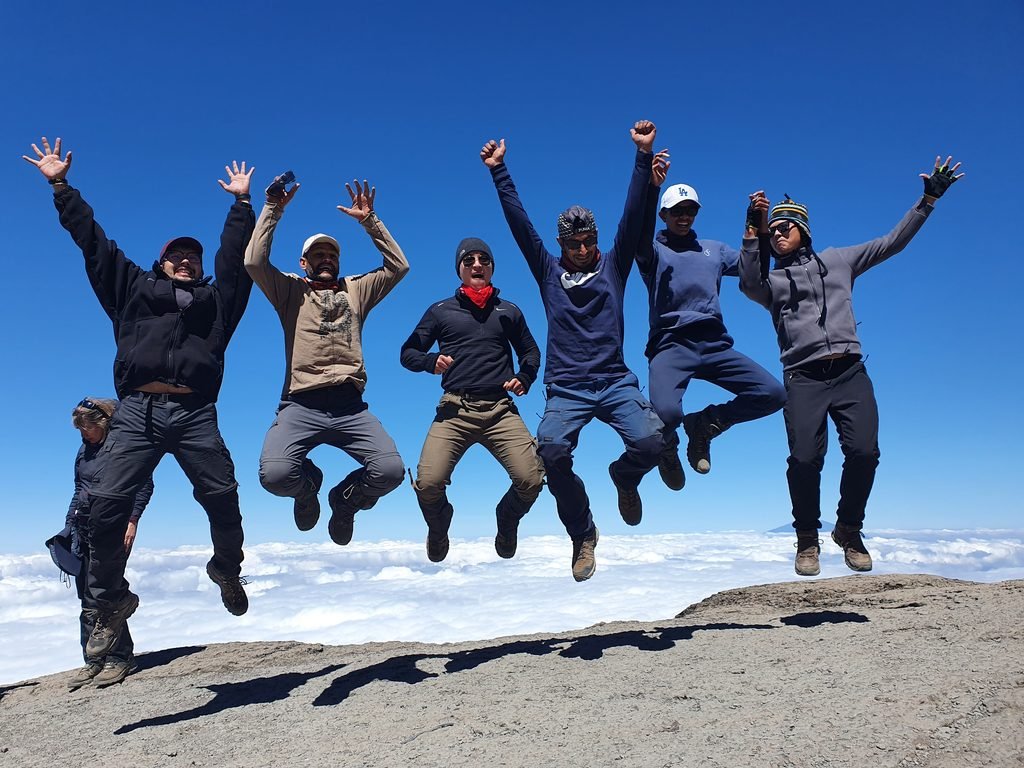
The eight-day Lemosho Route is popular because it allows climbers to see several sides of Kilimanjaro without following the shortest possible route to the summit. The trail crosses the Shira Plateau, passes Lava Tower, descends into Barranco Valley, climbs the Barranco Wall, and continues through Karanga and Barafu camps before the final summit attempt. Although the route does not require technical mountaineering under normal trekking conditions, it is physically demanding, particularly at high altitude. Good preparation, suitable clothing, experienced guides, and careful attention to health are important throughout the climb.
8 Days Lemosho Route Kilimanjaro Group Join 2027/2028 – Trip Overview
| Trip Information | Details |
|---|---|
| Climbing destination | Mount Kilimanjaro, Tanzania |
| Route | Lemosho Route |
| Duration | 8 mountain days and 7 nights |
| Climbing type | Group joining |
| Highest point | Uhuru Peak, 5,895 metres |
| Starting point | Londorossi Gate and Lemosho Trailhead |
| Finishing point | Mweka Gate |
| Accommodation | Mountain camping in tents |
| Main climbing areas | Shira Plateau, Lava Tower, Barranco, Karanga and Barafu |
| Summit approach | Barafu Camp via Stella Point |
| Departure town | Moshi, Tanzania |
| Recommended fitness | Good general fitness and hiking preparation |
| Group departure dates | Available on enquiry and subject to confirmation |
| 2027/2028 package price | Quotation based on confirmed departure and inclusions |
The eight days refer to the time spent on the mountain and do not automatically include international arrival, hotel accommodation before the climb, or departure arrangements after descending. Travellers should ideally arrive in Moshi at least one day before the climb to meet the mountain team, check their equipment, and receive a briefing. Anyone planning a flight immediately after the descent should allow sufficient time for the transfer from Mweka Gate and possible delays.
Why Choose the 8 Days Lemosho Route for Kilimanjaro in 2027 or 2028?
The Lemosho Route is one of the established ways of reaching Kilimanjaro’s summit and is particularly attractive to travellers who prefer a longer mountain itinerary. It starts through the forest on the western side of the mountain before joining the southern circuit, where climbers walk beneath Kibo’s upper slopes and pass through several different landscapes. The first days are generally quieter than the busier sections where Lemosho joins other climbing routes, although the number of people on the mountain changes according to the season.
One of the main reasons to choose eight days is the additional time available for acclimatization. As climbers gain altitude, the amount of oxygen available to the body decreases, and walking becomes more demanding. The Lemosho itinerary includes gradual changes in sleeping elevation and a visit to Lava Tower, where climbers reach a higher altitude before descending to Barranco Camp. This approach gives the body more time to adjust, although it does not remove the risk of altitude sickness or guarantee that everyone will reach the summit.
The route is also suitable for travellers who enjoy spending time outdoors and do not mind sleeping in tents. Unlike the Marangu Route, where climbers stay in mountain huts, the Lemosho Route uses designated camping areas. The mountain team carries communal equipment and prepares meals, allowing participants to concentrate on walking and looking after their health. Travellers who want to compare different options can read the Kilimanjaro climbing routes guide before deciding which route best suits their available time and experience.
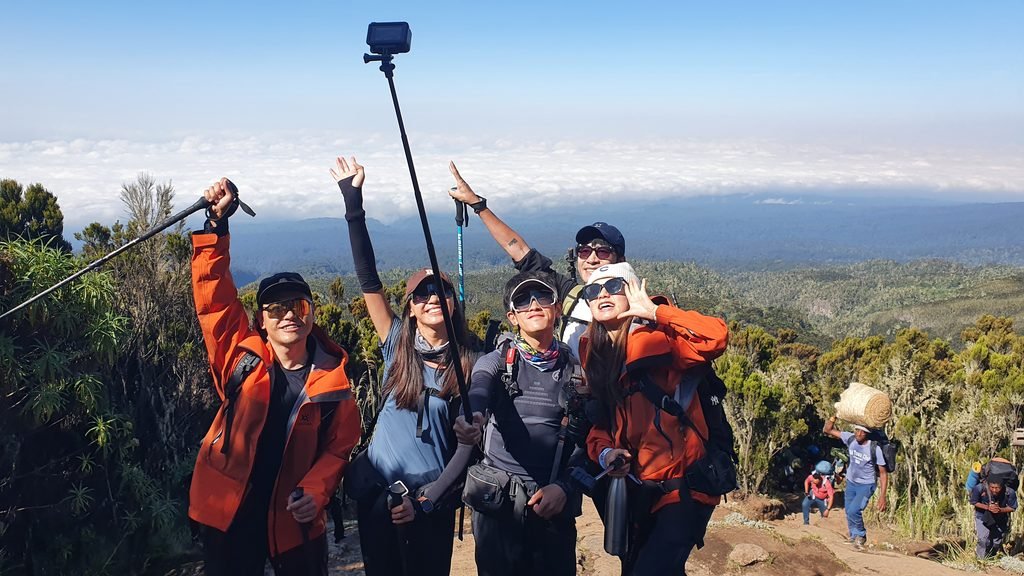
Complete 8 Days Lemosho Route Kilimanjaro Group Joining Itinerary
The following itinerary follows the usual eight-day Lemosho camping route, beginning at the western trailhead and descending through Mweka Gate. Distances, elevations, and walking times are approximate because campsite locations, weather, trail conditions, and the group’s pace may differ. The guide may also adjust the walking schedule when necessary for safety.
Day 1: Moshi – Londorossi Gate – Lemosho Trailhead – Mti Mkubwa Camp
- Starting elevation: Approximately 2,100–2,400 metres
- Overnight elevation: Approximately 2,650–2,895 metres
- Walking distance: Approximately 6 kilometres
- Hiking time: 3–4 hours
- Habitat: Montane rainforest
- Accommodation: Mti Mkubwa Camp
Your first climbing day begins with breakfast at your hotel in Moshi, followed by a transfer to Londorossi Gate on the western side of Mount Kilimanjaro. At the gate, the mountain team completes registration, checks the equipment, and organises the loads carried by the porters. Once the formalities are complete, you continue by vehicle towards the Lemosho Trailhead, where the walking portion of the expedition begins. The first section passes through rainforest with tall trees, thick vegetation, and shaded paths. Depending on the conditions, you may hear or see birds and monkeys along the way, although wildlife sightings are never guaranteed.
The walking pace on the first day is deliberately steady because the purpose is to begin adjusting to the mountain rather than covering the distance quickly. Your guide will explain how the group should walk, when to stop for short breaks, and why drinking water regularly is important. After reaching Mti Mkubwa Camp, the porters will have prepared the camping area, and you will have time to rest before dinner. The evening is usually spent organising clothing for the following day, checking your equipment, and discussing the next stage of the climb with your guide.
Day 2: Mti Mkubwa Camp to Shira 1 Camp
- Starting elevation: Approximately 2,650–2,895 metres
- Overnight elevation: Approximately 3,500 metres
- Walking distance: Approximately 8 kilometres
- Hiking time: 5–7 hours
- Habitat: Rainforest, heath and moorland
- Accommodation: Shira 1 Camp
After breakfast, you leave Mti Mkubwa Camp and continue uphill through the remaining forest before entering the heath and moorland zone. The vegetation becomes shorter as the altitude increases, and the trail opens towards the Shira Plateau. This section involves more climbing than the first day, and you may notice that walking requires greater effort. Your guide will encourage a slow and consistent pace, particularly on steeper sections where climbers can become tired if they move too quickly.
As you approach Shira 1 Camp, the landscape becomes more open, with wide views across the western side of Kilimanjaro when the weather is clear. The Shira Plateau is part of the remains of an ancient volcanic structure and provides one of the most distinctive landscapes along the Lemosho Route. After arriving at camp, you will have time to rest, change into warm clothing, and enjoy a prepared meal. Because you are now sleeping at a considerably higher elevation than the previous night, your guide will pay close attention to how you are feeling and whether you are experiencing any symptoms associated with altitude.
Day 3: Shira 1 Camp to Shira 2 Camp
- Starting elevation: Approximately 3,500 metres
- Overnight elevation: Approximately 3,850 metres
- Walking distance: Approximately 7–10 kilometres
- Hiking time: 4–6 hours
- Habitat: Moorland and high-altitude plateau
- Accommodation: Shira 2 Camp
The third day takes you across the Shira Plateau towards Shira 2 Camp. Compared with some of the steeper sections of the route, the walking is more gradual, although the altitude continues to affect breathing and energy levels. The landscape is open, with volcanic rocks, low vegetation, and views towards Kibo when the clouds allow. You may also see Mount Meru in the distance on a clear day. This section provides time to appreciate the mountain environment while continuing the process of acclimatization.
Your guide will maintain a manageable pace and encourage the group to take regular breaks rather than trying to finish the day’s walk as quickly as possible. On arrival at Shira 2 Camp, the mountain team will prepare lunch or dinner according to the day’s schedule, and you will have the afternoon or evening to rest. Temperatures can fall considerably after sunset, so warm clothing is important even when the daytime walk has been comfortable. This is also a useful time to check your headlamp, batteries, gloves, and other equipment needed later in the expedition.
Day 4: Shira 2 Camp – Lava Tower – Barranco Camp
- Starting elevation: Approximately 3,850 metres
- Highest point during the walk: Lava Tower, approximately 4,600 metres
- Overnight elevation: Approximately 3,900–3,960 metres
- Walking distance: Approximately 10 kilometres
- Hiking time: 6–8 hours
- Habitat: Alpine desert and moorland
- Accommodation: Barranco Camp
Day four is an important stage of the Lemosho Route because the trail climbs towards Lava Tower before descending to Barranco Camp. After breakfast, you begin walking through increasingly rocky terrain, with less vegetation and more exposed sections. The route gradually gains altitude until reaching the Lava Tower area at approximately 4,600 metres. Many climbers find this part of the trek challenging because the air is thinner, and even a steady walking pace can feel tiring. Your guide will monitor the group and encourage everyone to report headaches, nausea, dizziness, or unusual fatigue rather than ignoring the symptoms.
After spending time around Lava Tower, the route descends towards Barranco Valley, where the landscape changes again and giant groundsels may be seen along the trail. The descent to Barranco Camp is an important part of the itinerary because climbers reach a higher altitude during the day and sleep lower that night. This can support acclimatization, although the response varies between individuals. Barranco Camp sits beneath the impressive Barranco Wall, which you will climb the following morning. After a long day of walking, dinner and rest are particularly important, and the guide will explain what to expect from the next section.
Day 5: Barranco Camp – Barranco Wall – Karanga Camp
- Starting elevation: Approximately 3,900–3,960 metres
- Overnight elevation: Approximately 4,000–4,035 metres
- Walking distance: Approximately 5–6 kilometres
- Hiking time: 4–5 hours
- Habitat: Alpine desert
- Accommodation: Karanga Camp
After breakfast, you begin climbing the Barranco Wall, one of the most recognised sections of the Lemosho Route. The wall looks steep when viewed from camp, but the established trail follows a series of rocky steps and ledges that climbers can normally negotiate without technical climbing equipment. There are places where you need to use your hands for balance, and the guides will help the group move carefully through the narrower sections. Anyone uncomfortable with heights should discuss this with the guide before starting, as the climb requires attention and patience.
Once you reach the top of Barranco Wall, the route continues across ridges and valleys towards Karanga Camp. Although the walking distance is relatively short, the repeated ascents and descents can be tiring, particularly after several days at altitude. The afternoon at Karanga provides time to recover before the next day’s walk to Barafu Camp. Your guide will review your health, explain the summit arrangements, and remind you to keep eating and drinking even if your appetite has decreased. The night can be cold, and good rest is important because the most demanding part of the expedition is approaching.
Day 6: Karanga Camp to Barafu Camp
- Starting elevation: Approximately 4,000–4,035 metres
- Overnight elevation: Approximately 4,640–4,673 metres
- Walking distance: Approximately 4 kilometres
- Hiking time: 3–5 hours
- Habitat: Alpine desert
- Accommodation: Barafu Camp
The sixth day takes you from Karanga Camp to Barafu Camp, the usual starting point for the final summit attempt on the Lemosho Route. The landscape is dry, rocky, and exposed, with limited vegetation and increasingly cold conditions. Although the walking distance is shorter than on several previous days, the altitude makes the climb demanding, and the guide will maintain a slow pace. On reaching Barafu, you will have time to rest and prepare for the summit walk, which normally begins late at night or shortly after midnight.
The mountain team will serve an early meal, and your guide will explain the planned departure time, clothing requirements, expected weather, and procedures for the summit attempt. You should organise your warm layers, waterproof clothing, headlamp, gloves, water, snacks, and any necessary personal medication before resting. Sleeping may be difficult at this altitude, but lying down and conserving energy is still useful. The guide will also assess whether each climber is fit to continue. Reaching Barafu does not automatically mean that every participant should attempt the summit, especially if symptoms of altitude illness are present.
Day 7: Barafu Camp – Stella Point – Uhuru Peak – Mweka Camp
- Starting elevation: Approximately 4,640–4,673 metres
- Summit elevation: Uhuru Peak, 5,895 metres
- Overnight elevation: Approximately 3,080–3,100 metres
- Total walking distance: Approximately 16–17 kilometres
- Hiking time: Approximately 12–16 hours
- Habitat: Arctic summit zone and alpine desert
- Accommodation: Mweka Camp
Summit day is usually the longest and most physically demanding part of the eight-day Lemosho climb. The group begins walking during the night, using headlamps to follow the trail towards Stella Point on the crater rim. The ascent is steep in places, with loose volcanic material and very cold temperatures. The altitude can make breathing difficult, and the slow pace is important because the body has less oxygen available than at lower elevations. Your guide will monitor the group closely and make decisions based on weather conditions, individual health, and the progress of the climb.
After reaching Stella Point at approximately 5,756 metres, climbers who are well enough to continue follow the crater rim towards Uhuru Peak, the highest point on Mount Kilimanjaro and in Africa. The final section may take longer than expected because of the altitude and fatigue. Reaching the summit is a major personal achievement, but safety remains the priority, and anyone who develops serious symptoms must descend rather than continue towards the top. After the summit attempt, the group returns to Barafu Camp for a short rest before continuing downhill to Mweka Camp, where the lower altitude and warmer conditions usually provide some relief after the demanding day.
Day 8: Mweka Camp – Mweka Gate – Return to Moshi
- Starting elevation: Approximately 3,080–3,100 metres
- Finishing elevation: Approximately 1,640–1,680 metres
- Walking distance: Approximately 10 kilometres
- Hiking time: 3–4 hours
- Habitat: Montane rainforest
- Accommodation: Hotel in Moshi, if included in the booking
After breakfast, you begin the final descent through the forest towards Mweka Gate. The trail can be muddy or slippery, particularly after rainfall, so trekking poles and suitable footwear remain useful even though you are descending. The lower altitude makes breathing easier, but your legs may feel tired after the previous day’s long summit attempt. Your guide will keep the group together and allow time for short breaks as you make your way through the forest.
At Mweka Gate, the team completes the required park exit procedures, and eligible climbers receive their official climbing certificates according to the highest point reached. You will then meet your transfer vehicle and return to Moshi, where you can shower, rest, and enjoy a proper meal after eight days on the mountain. Travellers who are continuing to a Tanzania safari or Zanzibar holiday should arrange their next activity with enough time to recover from the climb.
How Does the 8 Days Lemosho Group Joining Work?
A group joining Kilimanjaro climb brings together travellers who have booked the same route and departure date. Participants may come from different countries and have different hiking backgrounds, but everyone follows the same mountain itinerary under the supervision of the climbing team. The main advantage is that the operating costs are shared among several people, which can make the expedition more affordable than organising a private climb for one person or a couple.
Before departure, the operator confirms the group arrangements, accommodation, meeting point, equipment requirements, and services included in the package. On the mountain, climbers walk with the guides while porters transport communal equipment and permitted personal luggage. Meals are prepared by the mountain cook, and the group stays at designated camps along the route. The pace should be appropriate for safe trekking, and participants must communicate openly with the guides about their physical condition. A responsible climbing team should not pressure someone who is unwell to continue simply because the rest of the group is moving ahead.
For travellers comparing different departure options, Eddy Tours & Safaris also has a Kilimanjaro group joining routes guide covering routes such as Machame, Marangu, Lemosho, and the Northern Circuit. The group joining arrangements for 2027 and 2028 should be confirmed directly before paying a deposit, particularly if you need a specific departure date.
What Is Included in the 8 Days Lemosho Route Group Join Package?
A typical organised Lemosho climbing package includes the mountain services needed to complete the eight-day itinerary, although exact inclusions vary between operators and departure arrangements. Before booking, travellers should receive a written quotation explaining which services are included in the total price and whether any additional charges apply.
Common package inclusions are:
- Professional mountain guides, porters, and a mountain cook.
- Kilimanjaro National Park entry and applicable camping fees.
- Mountain rescue fees where included in the park tariff.
- Tents and sleeping mattresses.
- Meals during the eight mountain days.
- Treated or purified drinking water during the trek.
- Transfers between Moshi and the mountain gates.
- Communal camping and cooking equipment.
- Emergency equipment according to the operator’s arrangements.
- Official climbing certificates for eligible participants.
Expenses commonly excluded from climbing packages include international flights, Tanzania visa fees, travel insurance, personal hiking clothing, sleeping bags, tips for the mountain team, alcoholic beverages, and hotel accommodation before or after the climb unless specifically included. Some operators also charge separately for airport transfers, equipment rental, or optional activities. Because inclusions differ, travellers should compare the complete package rather than selecting a climb based only on its advertised price.
For further information about package arrangements, see the existing 8 Days Lemosho Route Group Join package on the Eddy Tours & Safaris website.
8 Days Lemosho Route Group Join Price for 2027 and 2028
The price of an eight-day Lemosho group joining climb depends on the number of participants, departure season, park fees, mountain crew arrangements, camping equipment, and additional services included in the package. Group joining can reduce the cost per climber because several participants share expenses such as transport, guides, cooking services, and communal equipment. However, some costs, including park entry and camping fees, are charged for each climber and do not disappear when the group becomes larger.
For 2027 and 2028, travellers should request an updated quotation rather than relying on an old advertised price. Kilimanjaro National Park tariffs, government taxes, transport expenses, and equipment costs may change before the climbing date. A proper quotation should state the total amount per person, the number of mountain days, the hotel arrangements, the payment schedule, and any expenses that remain the responsibility of the traveller.
When comparing prices, it is also important to consider the working conditions of guides and porters, the quality of camping equipment, the availability of emergency supplies, and the experience of the climbing team. A very low price is not necessarily good value if essential services are missing or the mountain crew is not properly supported. Travellers can consult the official Kilimanjaro National Park visitor guide for information about park regulations and applicable fees.
Best Time to Climb the Lemosho Route in 2027 and 2028
Mount Kilimanjaro can be climbed throughout the year, but weather conditions differ between seasons. Many travellers prefer January to early March or June to October because these periods often provide relatively favourable trekking conditions. However, Kilimanjaro has its own mountain weather, and rain, strong winds, freezing temperatures, or poor visibility can occur at any time. The summit area is particularly exposed, so suitable cold-weather equipment is necessary regardless of the month.
January and February are popular with climbers who prefer the earlier part of the year, while June through October attracts travellers taking holidays during the northern hemisphere summer. April and May are generally wetter months on the mountain, and November can also bring increased rainfall. These wetter periods may offer quieter trails, but muddy paths and reduced visibility can make walking more difficult. The best departure date therefore depends on your availability, experience, and willingness to deal with changing weather.
| Travel Period | General Conditions | Planning Advice |
|---|---|---|
| January–February | Often relatively favourable trekking weather | Popular period; reserve suitable dates early |
| March | Conditions may become wetter as the month progresses | Prepare for changing weather |
| April–May | Generally wetter mountain conditions | Expect muddy trails and more rain |
| June–October | Often relatively favourable climbing conditions | Popular period with greater demand |
| November | Short rains may affect the mountain | Carry reliable waterproof equipment |
| December | Variable conditions, with some favourable periods | Confirm weather expectations and availability |
These are general seasonal patterns rather than forecasts for specific 2027 or 2028 departures. Even during a normally dry month, weather conditions can change quickly on the mountain.
How Difficult Is the 8 Days Lemosho Route?
The Lemosho Route is a challenging high-altitude trek, even though it does not normally require technical rock-climbing skills. Climbers walk for several hours each day, often on uneven paths, loose volcanic material, rocky slopes, and steep sections. The Barranco Wall requires careful movement and occasional use of the hands for balance, while summit night involves a long climb in cold conditions at elevations where the body receives considerably less oxygen.
The eight-day itinerary provides more time for acclimatization than shorter routes, but physical fitness alone does not protect someone from altitude sickness. A strong and experienced hiker can still become unwell at altitude, while a less experienced person may adjust well. For this reason, climbers should not measure their progress against other members of the group. Walking slowly, reporting symptoms, and following the guide’s instructions are more important than reaching camp first.
Before travelling, it is sensible to prepare through regular walking, hill hiking, stair climbing, and other suitable endurance activities. Carrying a daypack during training can help you become familiar with the weight you will carry on the mountain. Travellers who have existing medical conditions or concerns about altitude should discuss their plans with a qualified healthcare professional before booking.
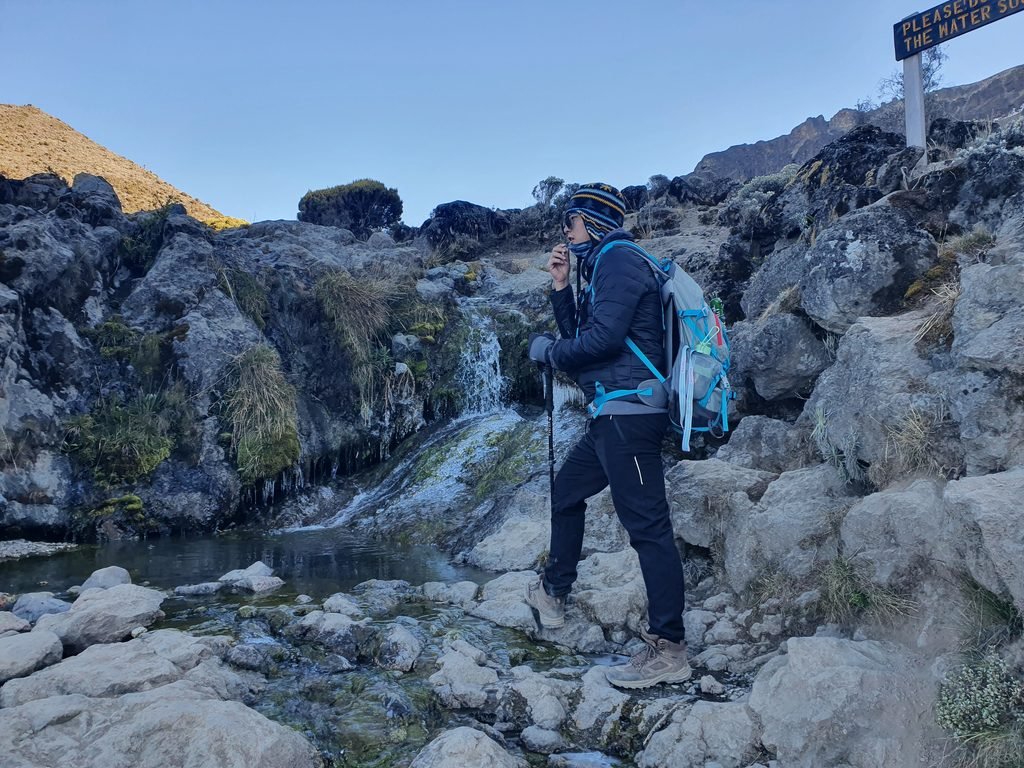
Altitude Sickness and Acclimatization on Kilimanjaro
Altitude sickness is one of the main health risks associated with climbing Mount Kilimanjaro. As elevation increases, atmospheric pressure decreases, making less oxygen available with each breath. Common early symptoms of acute mountain sickness include headache, nausea, tiredness, dizziness, and loss of appetite. These symptoms should always be reported to the mountain guide because continuing to ascend while unwell can lead to more serious problems.
The Lemosho Route includes several features that can support acclimatization, particularly the gradual approach across the Shira Plateau and the climb towards Lava Tower before descending to Barranco Camp. Nevertheless, no route or number of climbing days can guarantee protection from altitude illness. If symptoms worsen, the appropriate response may involve stopping the ascent or descending to a lower elevation. Severe confusion, loss of coordination, or breathlessness at rest can indicate a medical emergency requiring immediate action.
The CDC’s guidance on high-altitude travel explains the importance of gradual acclimatization, recognising symptoms early, and seeking appropriate medical advice. Travellers should also ask their climbing operator about emergency oxygen, first-aid arrangements, communication equipment, evacuation procedures, and the training of the mountain guides. These details are especially important when booking a group departure because each participant must be able to receive appropriate assistance if their health changes.
What to Pack for the 8 Days Lemosho Route Kilimanjaro Climb
Packing correctly is important because Kilimanjaro’s conditions change considerably between the rainforest and the summit. During the first days, climbers may walk in relatively warm and humid conditions, while the upper mountain can be extremely cold, particularly at night. The best approach is to use layers that can be added or removed according to temperature, wind, and physical activity. Clothing should be comfortable for walking and should dry reasonably quickly after exposure to moisture.
A suitable equipment list includes waterproof hiking boots that have already been worn during training, warm socks, thermal base layers, hiking trousers, fleece or insulated mid-layers, a warm down or synthetic jacket, waterproof jacket and trousers, gloves, a warm hat, and sun protection. A headlamp with spare batteries is essential for summit night, while trekking poles can provide support on steep or slippery sections. Climbers should also carry a daypack, suitable water containers, personal medication, toiletries, and a sleeping bag rated for cold mountain conditions.
Most group climbing packages provide shared mountain camping equipment, but personal equipment is usually the climber’s responsibility. Some items may be available for rental in Moshi, depending on local availability and the operator’s arrangements. Before departure, request a complete equipment checklist and confirm any luggage weight restrictions for porter-carried bags. Avoid buying expensive equipment without first checking whether suitable items can be rented or whether the operator already supplies them.
Accommodation and Meals During the Lemosho Group Climb
The Lemosho Route uses camping accommodation throughout the eight mountain days. Climbers normally sleep in mountain tents at designated camps, while meals are prepared by the expedition cook. Depending on the package, tents may be shared by two climbers or arranged differently according to availability and the booking agreement. Travellers who prefer a single tent should ask whether this is possible and whether an additional charge applies.
Meals are planned to provide energy for long walking days and may include porridge, bread, eggs, soup, rice, pasta, potatoes, vegetables, and other suitable foods. The exact menu depends on the operator, supplies, and group requirements. Travellers with allergies, dietary restrictions, or specific food requirements should communicate these before booking so the mountain team can assess what can reasonably be provided.
Water is another important part of the expedition. The mountain team normally collects water from suitable sources and treats it for drinking according to its procedures. Climbers should follow the guide’s advice about drinking water and maintaining adequate hydration without forcing excessive amounts. At higher elevations, appetite may decrease, so it is useful to bring familiar snacks that you can eat during walking breaks.
Is the 8 Days Lemosho Route Suitable for Beginners?
The eight-day Lemosho Route can be suitable for first-time Kilimanjaro climbers who are in good physical condition and have prepared properly. Previous high-altitude trekking experience can be helpful, but it is not always required. What matters is understanding the demands of the expedition, being comfortable walking for several consecutive days, and taking the altitude seriously.
Beginners should not assume that the longer itinerary makes the mountain easy. Summit day can involve more than twelve hours of walking, and temperatures near the summit may fall well below freezing. Preparing through regular hikes, testing equipment before travelling, and following the advice of professional guides will help climbers approach the expedition more confidently.
If you are unsure whether Lemosho is the best route for you, compare it with the other Kilimanjaro climbing routes and consider your available days, budget, hiking experience, and preferred accommodation style.
How to Prepare for Your Kilimanjaro Group Joining Climb
Preparing for Kilimanjaro should begin well before arriving in Tanzania. Travellers who are not accustomed to long walks can gradually increase their walking distances and include hills or stairs in their training. The purpose is to develop endurance and become comfortable spending several hours on foot, rather than training for speed. Walking with the boots and daypack you intend to use on Kilimanjaro can also help identify problems before the expedition.
Travel arrangements should be completed early enough to avoid unnecessary stress before the climb. Check your passport validity, Tanzania entry requirements, travel insurance, flight arrangements, and hotel reservation in Moshi. Insurance should specifically cover trekking at the intended maximum altitude and include appropriate emergency evacuation arrangements. Ordinary travel insurance policies do not always cover high-altitude activities, so travellers should read the policy conditions carefully.
It is also advisable to arrive in Tanzania at least one day before the scheduled mountain departure. This allows time to meet the climbing team, inspect rental equipment if needed, and replace missing items. Travellers arriving after a long international flight may benefit from additional rest before starting the climb. Information about entry and health considerations is available through the CDC Tanzania travel guidance, while park-specific rules can be checked through Tanzania National Parks Authority.
How to Book the 8 Days Lemosho Route Group Join for 2027/2028
Booking a group joining climb begins by choosing your preferred month and contacting the tour operator to ask about scheduled departures. Because a group departure depends on confirmed participants and operating arrangements, travellers should not assume that every date advertised online is guaranteed. Ask for the exact departure date, the meeting point in Moshi, the maximum group size, and the latest booking conditions before making payment.
Once a suitable departure is available, request a written quotation that explains the mountain itinerary, accommodation, equipment provided, park fees, airport and hotel transfers, and payment arrangements. The quotation should also state whether you will share a tent, whether personal equipment rental is available, and how the operator handles changes or cancellations. If you are travelling alone, ask whether there are other climbers already booked for your preferred departure.
Eddy Tours & Safaris provides information about its 8 Days Lemosho Route Group Join and related Kilimanjaro climbing programmes. Travellers interested in 2027 or 2028 can use the official contact page to request updated departure dates, package inclusions, and prices.
Can You Combine the Lemosho Route with a Tanzania Safari?
Yes. Many travellers choose to combine their Kilimanjaro climb with a wildlife safari in northern Tanzania. After spending eight days on the mountain, visiting national parks such as Tarangire, Serengeti, or Ngorongoro can provide a different experience of the country. These destinations are accessible through Tanzania’s northern safari circuit, with Arusha serving as a common starting point for wildlife trips.
However, climbing Kilimanjaro can leave travellers physically tired, particularly after the long summit day. It is sensible to allow recovery time before beginning a safari involving early morning departures and long road journeys. Travellers with only a few additional days may prefer a short Tarangire and Ngorongoro itinerary, while those with more time can consider visiting Serengeti National Park. A safari extension should be planned according to your available days, budget, and physical condition after the climb.
Frequently Asked Questions About the 8 Days Lemosho Route Group Join 2027/2028
How many days does the Lemosho Route take?
The Lemosho Route can be completed through different itineraries, but the eight-day version includes eight mountain days and seven nights of camping. This does not automatically include the hotel night before the climb or any accommodation after returning to Moshi. Travellers should confirm the total holiday duration when arranging flights and transfers.
Is the eight-day Lemosho Route better than the seven-day option?
The eight-day itinerary generally provides more time for acclimatization than a seven-day version, which can be helpful when climbing at high altitude. However, individual responses to altitude vary, and an additional day does not guarantee that a climber will reach Uhuru Peak. Fitness, health, weather, and the guide’s decisions remain important.
What is the highest point on the Lemosho Route?
The highest point is Uhuru Peak, which stands at 5,895 metres above sea level. It is the highest point on Mount Kilimanjaro and the African continent. Climbers normally approach Uhuru Peak from Barafu Camp via Stella Point on the crater rim.
Is the Lemosho Route difficult for first-time climbers?
The route is physically demanding because of the altitude, long walking days, and cold conditions near the summit. However, first-time climbers who are fit, properly prepared, and comfortable with multi-day hiking may be able to attempt it. Anyone with health concerns should seek medical advice before travelling.
Where does the Lemosho Route start and finish?
The route starts on the western side of Mount Kilimanjaro, usually through Londorossi Gate and the Lemosho Trailhead. The descent follows the Mweka Route and finishes at Mweka Gate, where climbers complete the exit procedures before returning to Moshi.
Do group joining climbers share tents?
Group joining packages commonly use shared tents, often accommodating two climbers, but the exact arrangement depends on the operator and the package booked. Solo travellers who prefer a private tent should ask whether this can be arranged and whether an additional fee applies.
What is the best month to climb Kilimanjaro in 2027 or 2028?
January, February, and June through October are commonly preferred because they often provide relatively favourable trekking conditions. However, weather can change at any time, and no month guarantees clear skies or successful summit conditions. Your preferred travel dates should be discussed with the operator before booking.
How much does an eight-day Lemosho group joining climb cost?
The price depends on the departure date, number of participants, park fees, equipment, and services included. Travellers should request an updated 2027 or 2028 quotation rather than relying on older advertised prices. A complete quotation should explain both included and excluded expenses.
Are guides and porters included in the climbing package?
Organised Kilimanjaro climbing packages normally include authorised mountain guiding services and the necessary support team. The number of guides and porters depends on the group size and operational requirements. Before booking, ask about the guide-to-climber arrangements, porter welfare, and emergency procedures.
Can I climb Kilimanjaro without a guide?
No. Kilimanjaro National Park requires climbs to be organised through authorised guiding arrangements. Independent trekking without the required guides and park procedures is not permitted. Visitors should use a properly authorised operator and follow all park regulations.
Can I join the Lemosho Route alone?
Yes. Group joining is particularly suitable for solo travellers because it allows them to join other participants on the same scheduled departure. However, the availability of a suitable group should be confirmed before booking flights or making non-refundable travel arrangements.
What happens if I cannot reach Uhuru Peak?
Not every climber reaches the summit, and turning back may be necessary because of altitude illness, exhaustion, weather, or other safety concerns. The mountain guide will assess the situation and arrange the appropriate response. Reaching a lower point or deciding to descend for health reasons should never be treated as a reason to ignore medical advice.
Can I book an eight-day Lemosho climb for 2028 now?
Travellers can enquire about 2028 departures and request information about proposed dates and booking arrangements. However, exact availability, prices, and operating conditions should be confirmed directly with the tour operator before making payment.
Book Your 8 Days Lemosho Route Kilimanjaro Group Join 2027/2028
The eight-day Lemosho Route is a suitable option for travellers who want to climb Kilimanjaro through the western approach while allowing additional time for acclimatization. The route passes through rainforest, the Shira Plateau, Lava Tower, Barranco Wall, Karanga Camp, and Barafu Camp before the final summit attempt towards Uhuru Peak. Each day presents different walking conditions, and the longer itinerary gives climbers an opportunity to prepare gradually for the demands of the upper mountain.
Joining a group can help reduce the cost of the expedition while allowing travellers to share the experience with other climbers. However, choosing a reliable operator, understanding the package inclusions, and preparing properly remain essential. Travellers should also remember that reaching the summit is never guaranteed and that health and safety must take priority throughout the expedition.
Eddy Tours & Safaris is a local tour company in Arusha, Tanzania, arranging Kilimanjaro climbing expeditions, Tanzania wildlife safaris, and private holidays. If you are planning to join an eight-day Lemosho Route climb in 2027 or 2028, our team can provide information about proposed group departure dates, mountain services, accommodation arrangements, equipment requirements, and package quotations.
Visit Eddy Tours & Safaris to learn more about our climbing programmes, or contact our team with your preferred departure month, number of climbers, and any questions about the route.
Contact Eddy Tours & Safaris
Location: Arusha, Tanzania
Email: sales@eddytours-safaris.com
Website: Eddy Tours and Safaris
Group climbing enquiries: Eddy Tours and Safari Contact