
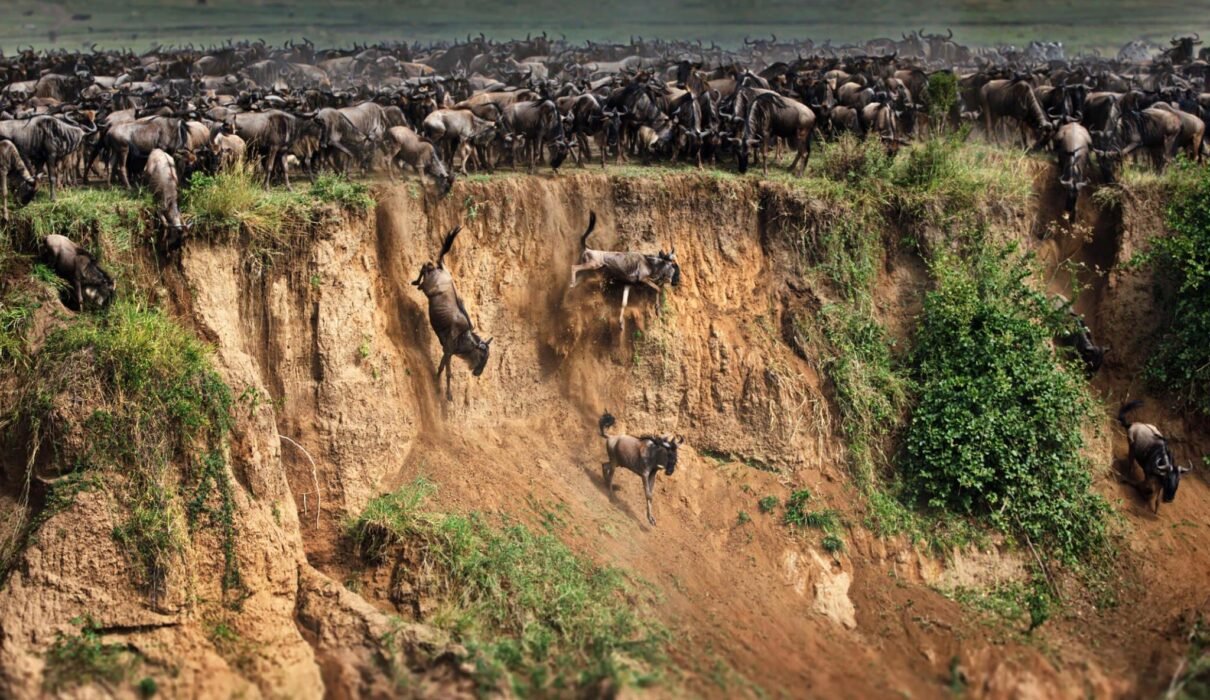
The Serengeti Wildebeest Migration Safari is one of the most remarkable wildlife experiences available in Tanzania. Every year, enormous herds of wildebeest, accompanied by zebras and gazelles, move across the Serengeti ecosystem in search of fresh grazing and water. Their journey takes them through open grasslands, woodland, river valleys, and the northern plains near the border with Kenya. Along the way, predators such as lions, cheetahs, leopards, hyenas, and crocodiles create some of the most memorable wildlife encounters in East Africa.
For travelers planning a Serengeti Great Migration Safari in 2027, 2028, or 2029, choosing the right travel period is one of the most important decisions. The migration does not remain in one location throughout the year. Between January and March, large herds generally gather on the southern plains around Ndutu for the calving season. As the grass begins to dry, the animals move toward the central and western Serengeti before reaching the northern plains, where the famous Mara River crossings may occur between July and October.
Although the migration follows a recognizable seasonal pattern, its exact movements are never completely predictable. Rainfall, vegetation growth, water availability, and local environmental conditions influence where the animals travel. This means that planning a successful migration safari requires more than selecting a popular month. Travelers should choose accommodation near the expected herd movements, allow sufficient time for game drives, and work with a knowledgeable safari guide who can adjust the daily plan according to wildlife activity.
At Eddy Tours & Safaris, we help travelers plan private Serengeti wildlife safaris, Great Migration expeditions, and customized Tanzania holidays. Whether you want to witness the wildebeest calving season in Ndutu, follow the herds through the western Serengeti, or search for Mara River crossings in the north, our team can help you choose an itinerary suited to your travel dates and interests.
This comprehensive guide explains the best time to see the Great Migration in 2027, 2028, and 2029, the most important wildlife locations, a recommended seven-day safari itinerary, accommodation options, expected costs, travel preparation, and practical advice for making the most of your Serengeti experience.
Serengeti Wildebeest Migration Safari 2027–2029 Overview
| Safari information | Details |
|---|---|
| Safari destination | Serengeti National Park and the wider Serengeti ecosystem, Tanzania |
| Travel years | 2027, 2028 and 2029 |
| Recommended duration | 6–8 days, depending on season and travel arrangements |
| Suggested itinerary | 7-day private migration safari |
| Main wildlife | Wildebeest, zebras, gazelles, lions, cheetahs, elephants, giraffes, buffaloes and hyenas |
| Calving season | Generally January–March, often peaking in February |
| Western migration | Generally May–June, sometimes extending into July |
| Mara River crossing season | Generally July–October |
| Safari transport | Private 4×4 safari vehicle |
| Accommodation | Safari lodges, permanent tented camps or seasonal migration camps |
| Starting point | Arusha, with alternative fly-in arrangements |
| Tour style | Private and customized safari |
| Package price | Available upon request |
| Wildlife sightings | Natural and never guaranteed |
What Is the Great Wildebeest Migration?
The Great Wildebeest Migration is the annual movement of large numbers of grazing animals across the Serengeti–Mara ecosystem in Tanzania and Kenya. Wildebeest make up the largest part of the migrating population, while zebras and several species of gazelle also participate in the broader movement. The animals travel in response to seasonal rainfall and the availability of nutritious grasses, creating a continuous cycle that connects different parts of the ecosystem throughout the year.
Unlike a migration that follows one straight route from beginning to end, the Serengeti movement is a broad seasonal circuit. The herds may spread across large areas, separate into smaller groups, remain in one region for several weeks, or change direction when local conditions change. This is why travelers visiting during the same month in different years may encounter the migration in different locations.
The southern plains are particularly important because they provide nutrient-rich grasses used during the calving season. As conditions change, the herds gradually move toward the central and western Serengeti before continuing north toward the Mara River. Eventually, seasonal rains encourage their return toward the southern plains, beginning another annual cycle.
The migration is not only about wildebeest crossing rivers. It includes the birth of thousands of calves, long columns of moving animals, predator activity, territorial behavior, and the daily struggle to find food and water. Travelers who understand this wider cycle can enjoy an excellent migration safari even without witnessing a dramatic river crossing.

Best Time to See the Serengeti Wildebeest Migration in 2027, 2028 and 2029
The best time to visit the Serengeti depends on which part of the migration you want to experience. Travelers interested in newborn wildebeest and predator activity should generally consider January to March, particularly February. Those hoping to see the herds moving through the western Serengeti may prefer May or June, while travelers interested in Mara River crossings usually focus on July to October.
There is no single month that guarantees the best experience for every visitor. The northern Serengeti may be particularly attractive during the river-crossing season, but the southern plains can offer excellent wildlife viewing during calving. The central Serengeti also provides year-round opportunities to see resident wildlife, including lions, leopards, elephants, giraffes, and many other species.
Serengeti Great Migration Calendar 2027–2029
| Month | Typical migration location | Main wildlife experience |
|---|---|---|
| January | Southern Serengeti and Ndutu | Large herds gathering on green plains |
| February | Ndutu and southern short-grass plains | Calving season and predator activity |
| March | Southern and southeastern Serengeti | Calving continues; herds may begin dispersing |
| April | Southern and central Serengeti | Seasonal movement and green landscapes |
| May | Central and western Serengeti | Herds moving toward the Western Corridor |
| June | Western Corridor and Grumeti area | Large herds and possible Grumeti River crossings |
| July | Western and northern Serengeti | Northward migration and possible early Mara crossings |
| August | Northern Serengeti and Mara River | River-crossing opportunities |
| September | Northern Serengeti | Herds around the Mara River and surrounding plains |
| October | Northern and central Serengeti | Possible return crossings and southward movement |
| November | Central and eastern Serengeti | Herds responding to seasonal rainfall |
| December | Southern and eastern Serengeti | Return toward the calving grounds |
This calendar represents typical seasonal patterns rather than confirmed future wildlife locations. The movements in 2027, 2028, and 2029 will depend on environmental conditions during each year.
1. January to March: Serengeti Wildebeest Calving Season
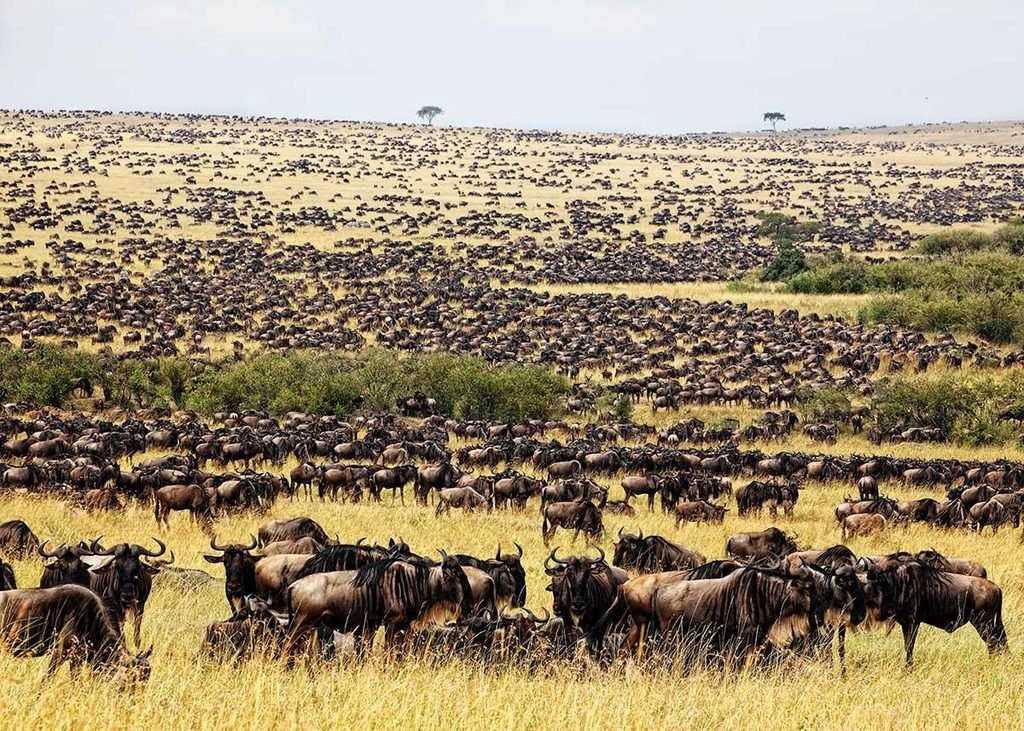
The southern Serengeti and Ndutu region provide one of the most rewarding migration experiences between January and March. During this period, the herds generally gather on the short-grass plains, where seasonal rainfall supports the growth of nutritious vegetation. The open landscape allows visitors to observe large concentrations of grazing animals, and the presence of newborn wildebeest creates an especially active wildlife environment.
February is often the most popular month for travelers interested in the calving season. Large numbers of wildebeest give birth within a relatively concentrated period, although the exact timing changes with rainfall and grazing conditions. Newborn calves may begin standing and moving shortly after birth, allowing them to remain close to their mothers as the herds continue feeding across the plains.
The concentration of young animals attracts predators, including lions, cheetahs, spotted hyenas, and jackals. Safari guests may observe hunting behavior, predator interactions, and the challenges faced by newborn animals, but individual encounters cannot be guaranteed. Wildlife viewing during this season can be particularly interesting for photographers because the green plains, dramatic skies, and large animal gatherings create varied opportunities for natural photography.
For travelers planning a calving safari in 2027 or 2028, spending several nights near Ndutu is generally more useful than visiting the region for only a few hours. The area lies within the wider Serengeti ecosystem, including land administered as part of the Ngorongoro Conservation Area, so the applicable access rules and fees depend on the exact location of your game drives.

2. April to June: The Migration Through Central and Western Serengeti
As the seasonal conditions change, the wildebeest begin moving away from the southern plains toward the central and western Serengeti. During this period, the herds may form long columns as they travel in search of fresh grazing and water. The movement is influenced by rainfall and can vary considerably between years, making flexibility important when planning a safari during these months.
The central Serengeti, including the Seronera region, is an important wildlife destination throughout the year. Its combination of grasslands, rocky kopjes, river systems, and woodland habitats supports a wide range of resident animals. Even when the main migration herds are elsewhere, visitors may encounter lions, leopards, elephants, giraffes, buffaloes, and numerous antelope species during game drives.
By May and June, substantial portions of the migration may be moving through the Western Corridor toward the Grumeti River. The river and surrounding habitats can create opportunities to observe large herds gathering near water, while crocodiles and other wildlife add to the ecological interest of the area. River crossings are possible during this period, but their timing and location are unpredictable.
For travelers who prefer a migration safari with fewer vehicles than the busiest northern river-crossing season, the western Serengeti can be an attractive option. However, road conditions may be affected by seasonal rainfall, and accommodation should be selected according to the expected herd movements.
3. July to October: Mara River Crossings in Northern Serengeti
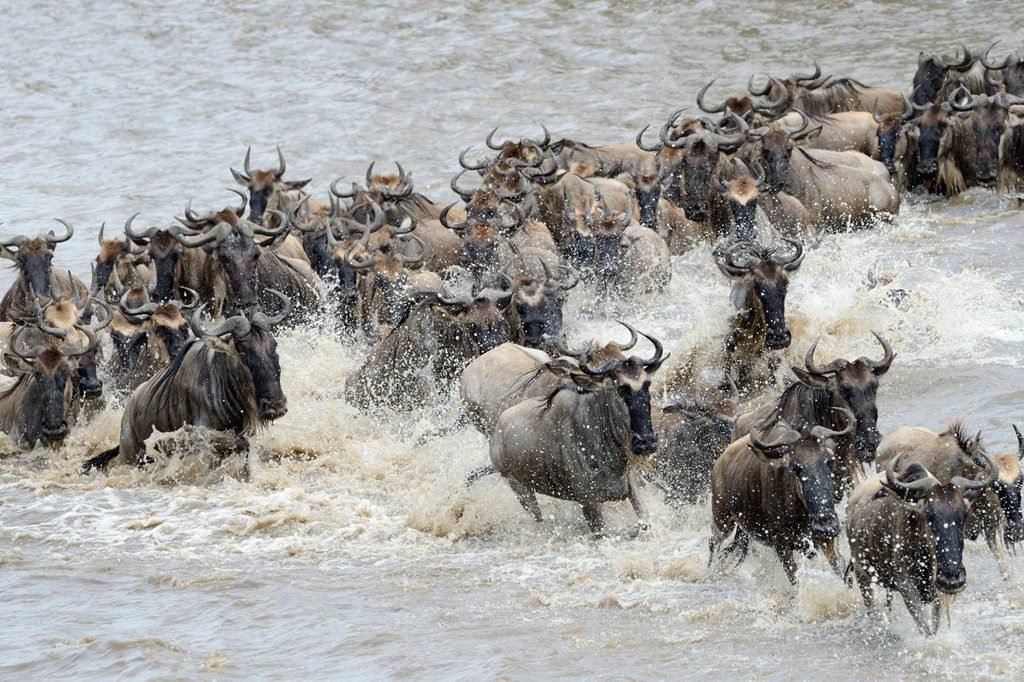
The northern Serengeti is one of the most sought-after migration destinations between July and October because of the possibility of witnessing wildebeest crossing the Mara River. During this period, large herds may gather near the riverbanks before attempting to cross, sometimes moving back and forth between Tanzania’s northern Serengeti and Kenya’s Maasai Mara ecosystem.
The Mara River presents a major obstacle for migrating animals. Strong currents, steep banks, and the presence of crocodiles make crossings particularly dangerous. Some herds may gather for hours before moving, while others may remain near the river for several days or change direction without crossing. For safari visitors, patience is essential because the timing of a crossing cannot be predicted reliably.
The Kogatende and Lamai areas of northern Serengeti are important bases for migration safaris during this season. Staying close to the northern plains allows more time for game drives and reduces the need for long daily transfers from central Serengeti. However, the region is extensive, and even accommodation near the river cannot guarantee that a crossing will occur during your stay.
For travelers planning a Mara River crossing safari in 2027, 2028, or 2029, allowing three or four nights in the northern Serengeti is often preferable to spending only one night. This provides additional opportunities to explore different river sections and observe other wildlife while waiting for possible herd movements.
4. November and December: The Migration Returns Toward Southern Serengeti
During November and December, seasonal rainfall often encourages the wildebeest herds to move away from the northern plains and return toward the central, eastern, and southern Serengeti. The movement can be widely dispersed, with different groups following separate paths according to grazing conditions and water availability.
This period can be attractive for travelers interested in green landscapes, birdlife, and a different atmosphere from the busiest dry-season months. The plains gradually recover after the dry season, and the changing weather can create dramatic skies and interesting photography conditions. Although rain may affect some game drives, wildlife viewing remains possible throughout the Serengeti ecosystem.
December can be particularly interesting as herds begin gathering closer to the southern grazing areas in preparation for the next calving season. However, the timing of their arrival varies, and visitors should not assume that the main concentrations will already be in Ndutu during every December.
Recommended 7-Day Serengeti Wildebeest Migration Safari Itinerary
The following itinerary is designed primarily for travelers visiting during the northern Serengeti migration season, generally July to October. It combines Tarangire National Park, central Serengeti, northern Serengeti, and Ngorongoro Crater. For January to March departures, the northern Serengeti portion should be replaced with additional nights in Ndutu and the southern plains, where the calving season generally takes place.
Day 1: Arrival in Arusha – Safari Briefing and Overnight Stay
Your Tanzania safari begins upon arrival at Kilimanjaro International Airport or Arusha Airport, depending on your travel arrangements. A representative meets you for the agreed transfer to your accommodation in Arusha, where you can rest after your journey and prepare for the upcoming wildlife adventure. Arusha is one of the main starting points for northern Tanzania safaris because of its location near several important national parks and conservation areas.
Depending on your arrival time, you may have an opportunity to explore parts of Arusha or simply relax at your hotel. Your safari guide will discuss the planned itinerary, expected driving times, accommodation arrangements, and important park regulations. This is also a useful opportunity to ask questions about photography, suitable clothing, wildlife viewing, and the seasonal movements of the Great Migration.
The evening is generally reserved for rest, allowing you to begin the safari the following morning feeling refreshed. Your exact hotel will depend on the selected accommodation category and confirmed booking arrangements.
Accommodation: Arusha hotel or lodge
Meals: According to confirmed arrival arrangements
Day 2: Arusha – Tarangire National Park – Karatu
After breakfast, you depart Arusha and travel toward Tarangire National Park, one of northern Tanzania’s most interesting wildlife destinations. The park is known for its baobab trees, varied landscapes, and significant elephant populations. During the dry season, the Tarangire River becomes an important water source for wildlife, attracting animals from the surrounding ecosystem.
Your game drive takes you through woodland, open grassland, and riverine habitats, where you may encounter elephants, giraffes, zebras, wildebeest, buffaloes, impalas, and other wildlife. Lions and leopards are also present, although sightings depend on their movements and the conditions during your visit. Your guide will select suitable routes based on wildlife activity and the time available.
After enjoying the day’s game viewing, you continue toward Karatu, a highland town located near the Ngorongoro Conservation Area. The surrounding landscape includes agricultural land, rolling hills, and views of the northern Tanzanian highlands. You arrive at your lodge or tented accommodation in time for dinner and rest before the journey toward Serengeti.
Accommodation: Karatu lodge or tented camp
Meals: Breakfast, lunch and dinner
Day 3: Karatu – Ngorongoro Highlands – Central Serengeti
Following breakfast, you depart Karatu and travel through the Ngorongoro highlands toward Serengeti National Park. The journey passes through changing landscapes, including highland vegetation, open plains, and the wider Ngorongoro Conservation Area. Depending on the planned route and applicable regulations, you may stop at an authorized viewpoint to appreciate the surrounding scenery.
As you continue toward Serengeti, the landscape gradually opens into extensive grasslands. The park’s name is closely associated with these seemingly endless plains, which support a remarkable diversity of wildlife. Upon entering the park, you begin a game drive toward the central Serengeti, where the Seronera region is known for its resident predators and varied habitats.
During the afternoon, your guide searches for wildlife around the grasslands, kopjes, and river systems. Lions may be found resting near rocky formations, while giraffes, elephants, antelopes, and other animals move through the surrounding habitat. The central Serengeti provides an excellent introduction to the ecosystem before you continue toward the northern migration areas.
Accommodation: Central Serengeti lodge or tented camp
Meals: Breakfast, lunch and dinner
Day 4: Central Serengeti – Northern Serengeti Migration Area
After breakfast, you depart the central Serengeti and travel toward the northern plains, where the Great Migration may be concentrated during the July-to-October period. The journey passes through extensive savanna landscapes, woodland areas, and seasonal river systems. Along the way, your guide continues searching for wildlife, and you may encounter resident animals as well as migrating wildebeest and zebras.
As you approach northern Serengeti, the landscape becomes increasingly associated with the Mara River system and the seasonal movements of the migration. Large herds may be seen grazing, traveling across open plains, or gathering near water sources, depending on current conditions. Your guide will use local wildlife information and observations to determine which areas offer suitable game-viewing opportunities.
The afternoon is dedicated to exploring the northern Serengeti, including appropriate areas near the Mara River when conditions allow. A river crossing may occur, but it is important to understand that such events cannot be scheduled. Even when the herds are present, they may hesitate, move away from the river, or cross at a different location.
You spend the night at a lodge or tented camp in the northern Serengeti, allowing you to continue exploring the migration area the following day without returning to central Serengeti.
Accommodation: Northern Serengeti lodge or migration camp
Meals: Breakfast, lunch and dinner
Day 5: Full-Day Great Migration Safari in Northern Serengeti
Today is dedicated to exploring the northern Serengeti and searching for the seasonal wildebeest migration. After an early breakfast, you depart with your guide for a full day of game viewing, focusing on areas where herds have recently been observed. The northern plains support a wide range of wildlife, and even when the main migration groups are dispersed, visitors may encounter lions, elephants, giraffes, buffaloes, and other resident species.
If large wildebeest herds are gathering near the Mara River, your guide may spend time observing their movements from permitted viewing areas. The animals sometimes approach the water, pause, and retreat several times before a crossing occurs. This behavior is part of the natural migration process, and patience is often necessary when hoping to witness the event.
The day may also include game drives away from the river, allowing you to explore quieter areas of northern Serengeti and observe wildlife in different habitats. Depending on the season and local conditions, the surrounding plains may contain large concentrations of zebras and wildebeest, while predators follow the herds or remain within their established territories.
In the late afternoon, you return to your accommodation for dinner and overnight rest. Spending a second night in the northern Serengeti provides additional opportunities to observe migration activity without the pressure of immediately leaving the region.
Accommodation: Northern Serengeti lodge or migration camp
Meals: Breakfast, lunch and dinner
Day 6: Northern Serengeti – Central Serengeti – Karatu
After breakfast, you begin the journey south through Serengeti National Park toward the Ngorongoro highlands and Karatu. This is a long travel day, particularly when departing from northern Serengeti, so an early start is important. Your guide will plan the journey around the available daylight, road conditions, park regulations, and the group’s comfort.
The drive provides additional opportunities to observe wildlife across different parts of the Serengeti ecosystem. As you travel south, the landscape changes from northern grasslands and woodland areas toward the central plains. Depending on wildlife activity and the time available, you may make suitable game-viewing stops along the route.
After leaving Serengeti, you continue through the Ngorongoro Conservation Area toward Karatu. The journey may be tiring because of the distance and road conditions, but it allows you to experience the changing landscapes of northern Tanzania. Travelers who prefer a more relaxed safari should consider adding an extra night in central Serengeti or arranging a suitable domestic flight rather than completing the full journey by road.
You arrive in Karatu for dinner and overnight accommodation, preparing for the following day’s Ngorongoro Crater visit.
Accommodation: Karatu lodge or tented camp
Meals: Breakfast, lunch and dinner
Day 7: Ngorongoro Crater Safari – Return to Arusha
After an early breakfast, you depart Karatu and travel toward Ngorongoro Crater, one of Tanzania’s most recognized wildlife destinations. The crater is part of the Ngorongoro Conservation Area and contains a variety of habitats, including grasslands, wetlands, woodland areas, and seasonal water sources. Its enclosed landscape supports a wide range of resident wildlife and provides opportunities for game viewing throughout the year.
After completing the required entry procedures, you descend into the crater for a game drive. Depending on wildlife movements, you may encounter buffaloes, zebras, wildebeest, elephants, lions, hyenas, and various antelope species. Black rhinoceroses are also present, although sightings are uncommon and cannot be guaranteed. Your guide will select appropriate routes based on the permitted game-drive period and prevailing conditions.
After the crater visit, you ascend to the rim and begin the return journey toward Arusha. The drive passes through the highland landscapes and agricultural areas of northern Tanzania before reaching the city. Depending on your onward travel arrangements, you may be transferred to your hotel or airport.
This marks the end of your seven-day Serengeti Wildebeest Migration Safari. Travelers with additional time can extend their holiday with more days in Serengeti, a visit to Lake Manyara, a Mount Kilimanjaro climbing expedition, or a Zanzibar beach holiday.
Meals: Breakfast and lunch, subject to confirmed arrangements
End of safari: Arusha
How to Adapt This Safari for the Wildebeest Calving Season
For travelers visiting between January and March, a northern Serengeti itinerary is generally not the best choice if the main objective is to see the calving season. During these months, the herds are more commonly found around Ndutu and the southern short-grass plains. A suitable calving safari should therefore spend additional nights in the southern Serengeti ecosystem rather than traveling all the way to the Mara River.
A seven-day calving itinerary can begin in Arusha, include Tarangire or another northern Tanzania destination, continue to the Ndutu region for several nights, and finish with Ngorongoro Crater before returning to Arusha. The exact route should be selected according to the time of year, road conditions, accommodation availability, and current herd movements.
Staying near Ndutu for at least two or three nights can provide more opportunities to observe wildebeest calves, grazing herds, and predator activity. However, the number of nights should reflect your overall safari duration and budget, and no particular wildlife encounter can be guaranteed.
Best Places to Stay During the Great Migration
Accommodation location is one of the most important considerations when organizing a migration safari. The Serengeti is enormous, and staying in the wrong region can result in several hours of driving each day before reaching the expected herd locations. Choosing accommodation close to the seasonal migration area allows more time for game viewing and reduces unnecessary transfers.
During the calving season, lodges and tented camps around Ndutu and the southern Serengeti are often the most practical options. For April and May, central Serengeti accommodation may provide a useful base, while western corridor camps can be suitable when the herds move toward Grumeti. Between July and October, northern Serengeti accommodation around Kogatende or other suitable northern areas is generally preferable for travelers interested in Mara River crossing opportunities.
Accommodation categories range from relatively simple tented camps to comfortable midrange lodges and high-end safari properties. Some seasonal migration camps relocate during the year to remain closer to the expected herd movements. Their locations and availability should be confirmed before booking, especially for future travel dates in 2027, 2028, and 2029.
How Much Does a Serengeti Migration Safari Cost in 2027–2029?
The cost of a Serengeti Wildebeest Migration Safari depends on several factors, including the number of travelers, duration, accommodation category, season, park fees, transport arrangements, and whether the itinerary is private or shared. A seven-day private safari with several nights in northern Serengeti may cost more than a shorter itinerary based in central Serengeti because of the additional travel distances and accommodation requirements.
Travelers visiting during the busiest Mara River crossing months may also encounter higher accommodation demand, particularly at camps located near the northern migration areas. Fly-in safaris generally involve additional transport costs but can reduce long road transfers and provide more time for wildlife viewing. Budget, midrange, luxury, and premium private arrangements can all be considered, depending on the services requested.
For 2027, 2028, and 2029, it is important to request an updated written quotation rather than relying on outdated online prices. National park fees, conservation charges, accommodation rates, and other travel costs may change before your departure date. A detailed quotation should identify all included services, exclusions, payment conditions, and any additional expenses.
What Is Included in a Serengeti Migration Safari Package?
A professionally organized private Serengeti safari commonly includes a suitable 4×4 safari vehicle, a professional driver-guide, park entry arrangements, accommodation, meals as specified in the itinerary, and drinking water during game drives. The exact services depend on the selected package and confirmed quotation.
Travelers should also understand what is excluded before making a payment. International flights, Tanzania visa fees, travel insurance, alcoholic beverages, personal expenses, optional balloon safaris, tips, and accommodation outside the confirmed itinerary may be excluded unless specifically stated.
If the itinerary includes domestic flights, seasonal migration camps, or additional activities, these should be clearly listed in the quotation. Travelers should not assume that a service is included simply because it is mentioned as a possible activity in a general safari guide.
Why Choose a Private Serengeti Migration Safari?
A private migration safari provides flexibility in planning daily game drives and choosing accommodation according to your travel dates. Instead of following a fixed group schedule, you can discuss your wildlife interests with your guide and spend more time in suitable areas when conditions permit. This can be particularly valuable during the migration because herd movements are unpredictable and may change during the safari.
Private safaris are also attractive for couples, families, photographers, and small groups who prefer a more personalized experience. Travelers interested in wildlife photography may want longer observation periods, while families with children may prefer shorter game drives and more time at the lodge. The itinerary can be designed around these preferences while respecting park regulations and wildlife welfare.
However, private travel does not guarantee better sightings or exclusive access to wildlife. The animals move freely, and guides must follow applicable park rules, including restrictions on vehicle positioning and wildlife disturbance.
What Should You Pack for a Serengeti Migration Safari?
Packing for a Serengeti safari is generally straightforward, but clothing should be suitable for changing temperatures and long periods in a vehicle. Early mornings can be cool, particularly around the Ngorongoro highlands, while afternoons on the plains may be warm. Lightweight, comfortable clothing in neutral colors is practical, along with a warm layer for early game drives.
A hat, sunglasses, sunscreen, comfortable walking shoes, insect repellent, and a reusable water bottle are useful personal items. Travelers interested in photography should bring suitable camera equipment, spare batteries, memory cards, and a protective bag to keep dust away from sensitive equipment. Binoculars can also improve wildlife viewing, especially when animals are some distance from the vehicle.
Travelers should carry any necessary medication and consult a healthcare professional about recommended travel health precautions before visiting Tanzania. It is also advisable to check luggage restrictions if your itinerary includes a domestic light-aircraft flight, as smaller aircraft may have strict baggage requirements.
Frequently Asked Questions About the Serengeti Wildebeest Migration
1. What is the best time to see the Great Migration in Serengeti?
The best period depends on the experience you want. January to March is generally suitable for calving, while July to October is commonly associated with Mara River crossing opportunities.
2. When is the wildebeest calving season?
The main calving season generally takes place between January and March, often peaking in February.
3. Where is the migration in February?
Large herds are commonly found around Ndutu and the southern short-grass plains of the Serengeti ecosystem.
4. When do wildebeest cross the Mara River?
Crossings may occur between July and October, although exact dates vary with environmental conditions.
5. Can a river crossing be guaranteed?
No. River crossings are natural events that cannot be scheduled or guaranteed.
6. Is August a good month for the migration?
August is commonly a popular month for northern Serengeti safaris because the herds may be present around the Mara River.
7. Is September good for Mara River crossings?
September can provide opportunities to observe northern migration activity, but crossings remain unpredictable.
8. Can I see the migration in January?
Yes. January is often associated with herds gathering on the southern plains.
9. Is the Great Migration visible throughout the year?
The migration is a continuous annual movement, although the location and behavior of the herds change seasonally.
10. How many days are best for a migration safari?
Six to eight days is a useful range for a safari combining Serengeti with other northern Tanzania destinations, while additional nights in the migration area can be beneficial.
11. Is a seven-day migration safari enough?
Yes. A well-planned seven-day itinerary can provide substantial wildlife viewing, although travel distances and seasonal locations must be considered.
12. Where should I stay during the Mara River crossing season?
Northern Serengeti accommodation around Kogatende and other suitable northern areas is generally preferable.
13. Where should I stay during the calving season?
Ndutu and the southern Serengeti ecosystem are commonly suitable bases.
14. Can I see lions during the migration?
Lions are present throughout the Serengeti, and migration areas can attract predators, but sightings are never guaranteed.
15. Can I see cheetahs during the calving season?
Cheetahs are among the predators found on the southern plains, although individual sightings depend on wildlife movements.
16. Are crocodiles found in the Mara River?
Yes. Crocodiles are among the animals associated with the river-crossing environment.
17. Can I visit Serengeti during the rainy season?
Yes. The park can be visited during wetter periods, although some roads may become more difficult to use.
18. Is a private safari better than a group safari?
Private safaris offer more flexibility, while shared arrangements may reduce some costs. The best choice depends on your preferences and budget.
19. Can I combine Serengeti with Ngorongoro Crater?
Yes. Many northern Tanzania itineraries include both destinations.
20. Can I combine the migration safari with Tarangire?
Yes. Tarangire can be included before or after Serengeti, depending on the route.
21. Are hot-air balloon safaris available in Serengeti?
Balloon safaris are available in selected areas, subject to operating schedules, weather, and availability.
22. Can I visit the migration with children?
Yes. Family safaris can be arranged, although accommodation policies, driving distances, and children’s needs should be considered.
23. Can I book a Serengeti migration safari for 2027?
You can request a quotation and discuss suitable travel dates for 2027, subject to confirmation.
24. Can I book a migration safari for 2028 or 2029?
Yes. Future safari arrangements can be discussed, although prices and availability must be confirmed.
25. How do I book a Serengeti Wildebeest Migration Safari?
Contact Eddy Tours & Safaris with your preferred travel dates, number of travelers, accommodation preferences, and the migration experience you want to see.
Book Your Serengeti Wildebeest Migration Safari for 2027, 2028 or 2029
The Serengeti Great Migration offers several different wildlife experiences throughout the year. From the calving season on the southern plains to the movement through the Western Corridor and the dramatic possibility of Mara River crossings in northern Serengeti, each stage provides a different perspective on the annual journey of the wildebeest herds.
The most important part of planning a migration safari is choosing the right location for your travel dates. Travelers interested in newborn wildebeest should generally focus on Ndutu and the southern plains, while those hoping to witness Mara River crossings should consider northern Serengeti during the appropriate season. Spending enough time in the selected region and choosing suitable accommodation can make the safari more enjoyable and reduce unnecessary driving.
At Eddy Tours & Safaris, we help travelers organize private Serengeti Wildebeest Migration Safaris for 2027, 2028 and 2029. Our team can discuss seasonal migration locations, safari accommodation, wildlife interests, transport arrangements, and suitable itineraries before preparing a personalized quotation.
Request Your Serengeti Migration Safari Quotation
Chat with Eddy Tours & Safaris on WhatsApp
Email: sales@eddytours-safaris.com
Contact our team to plan your Serengeti migration safari with suitable travel dates, carefully selected accommodation, and realistic expectations about wildlife movements.