
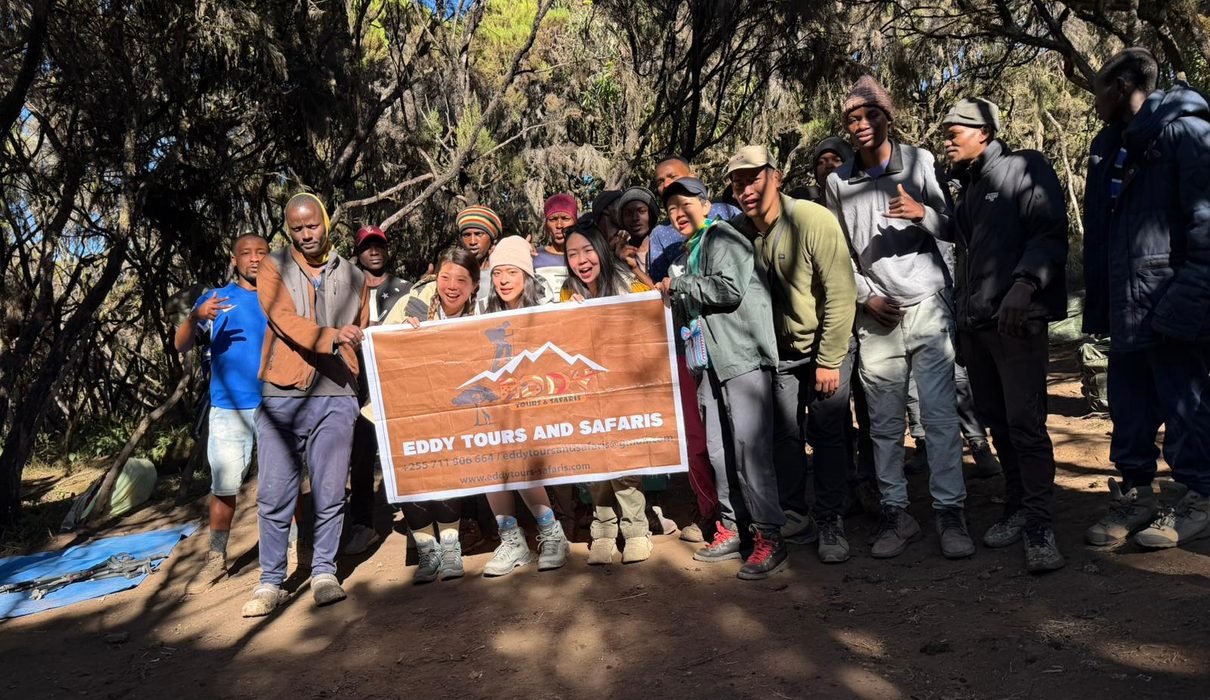
Climbing Mount Kilimanjaro is one of the most popular mountain adventures in Africa, attracting travellers who want to reach the highest point on the continent. Standing at 5,895 metres (19,341 feet), Kilimanjaro rises above the surrounding landscapes of northern Tanzania and offers several trekking routes to its summit, Uhuru Peak. Although all the main routes lead towards the same mountain, the experience of climbing each one is different. Some routes pass through thick rainforest and open moorland, while others cross volcanic plateaus, follow remote northern slopes, or involve steep ascents that require greater physical preparation.
One of the first decisions travellers must make is which Kilimanjaro climbing route to choose. This decision affects the number of days spent on the mountain, the accommodation used during the trek, the physical demands of the journey, and the amount of time available for adjusting to high altitude. Choosing the shortest route may appear attractive, particularly for travellers with limited holiday time, but reaching the summit involves much more than physical fitness. The body needs sufficient time to adapt to reduced oxygen availability, and an itinerary that allows gradual acclimatisation is generally preferable to a rushed ascent.
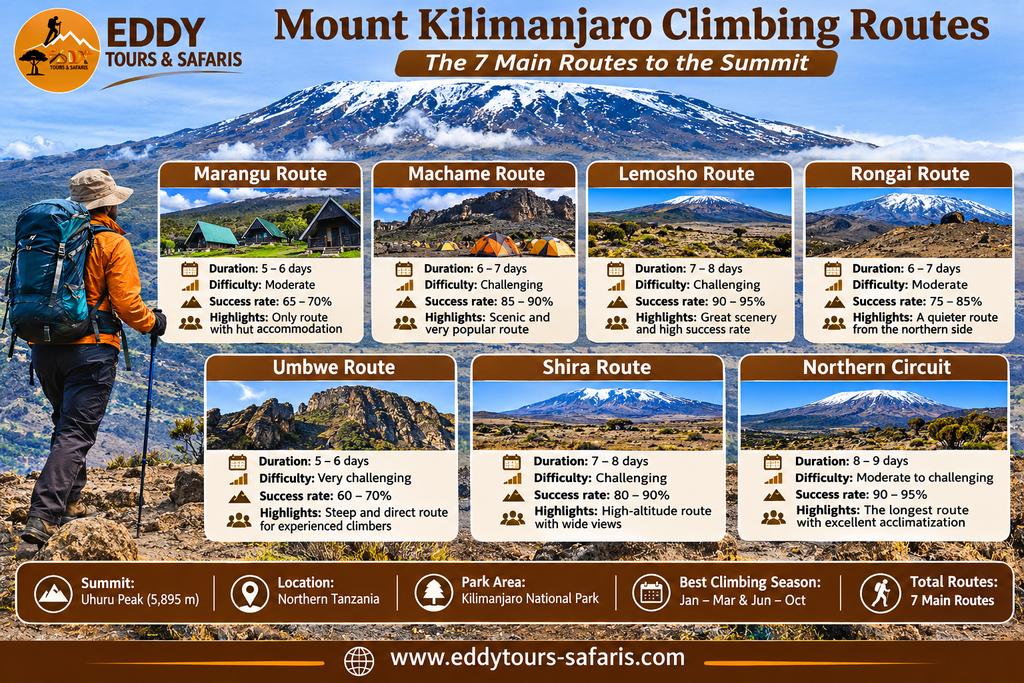
There are seven commonly recognised Kilimanjaro trekking routes: Marangu, Machame, Lemosho, Rongai, Northern Circuit, Umbwe, and Shira. Each has its own advantages, limitations, and characteristics. The Marangu Route is famous for its mountain huts, Machame is known for varied scenery, Lemosho offers a longer western approach, and the Northern Circuit travels around the quieter northern side of the mountain. Rongai approaches from the Kenyan side of Kilimanjaro, while Umbwe and Shira are generally better suited to climbers who understand their particular altitude and terrain challenges.
This guide explains the differences between all seven routes, including their typical duration, accommodation, difficulty, scenery, acclimatisation opportunities, and suitability for different travellers. It also covers the best climbing seasons, important safety considerations, equipment, estimated costs, and how to combine a Kilimanjaro climb with a Tanzania safari.
Understanding Mount Kilimanjaro Before Choosing a Route
Mount Kilimanjaro is located in northern Tanzania, close to the town of Moshi and within travelling distance of Arusha. It is Africa’s highest mountain and consists of three volcanic formations: Kibo, Mawenzi, and Shira. Kibo contains Uhuru Peak, the highest point on the mountain, while Mawenzi is known for its rugged peaks and steep rock formations. Shira is an older volcanic formation associated with the broad Shira Plateau on the western side of the mountain.
Unlike technical mountains that require ropes and specialist climbing equipment on their normal ascent routes, Kilimanjaro is generally climbed by trekking. However, this does not make the journey easy. Climbers travel through several vegetation and climatic zones, beginning in forest or moorland environments before reaching alpine desert and the cold summit area. Weather conditions can change quickly, and temperatures near the summit can fall well below freezing.
The most important challenge is altitude. As climbers ascend, the amount of oxygen available to the body decreases. Even physically fit travellers may experience headaches, nausea, tiredness, or other symptoms of altitude illness. Fitness helps with walking long distances, but it does not guarantee that someone will acclimatise successfully.
According to the Tanzania National Parks Authority’s Kilimanjaro visitor guide, climbers must use licensed guiding arrangements, follow designated routes, and take altitude-related safety precautions seriously.
Travellers preparing for their first climb can also read 10 Essential Tips for a Successful Kilimanjaro Climb for practical advice about training, equipment, acclimatisation, and mountain preparation.
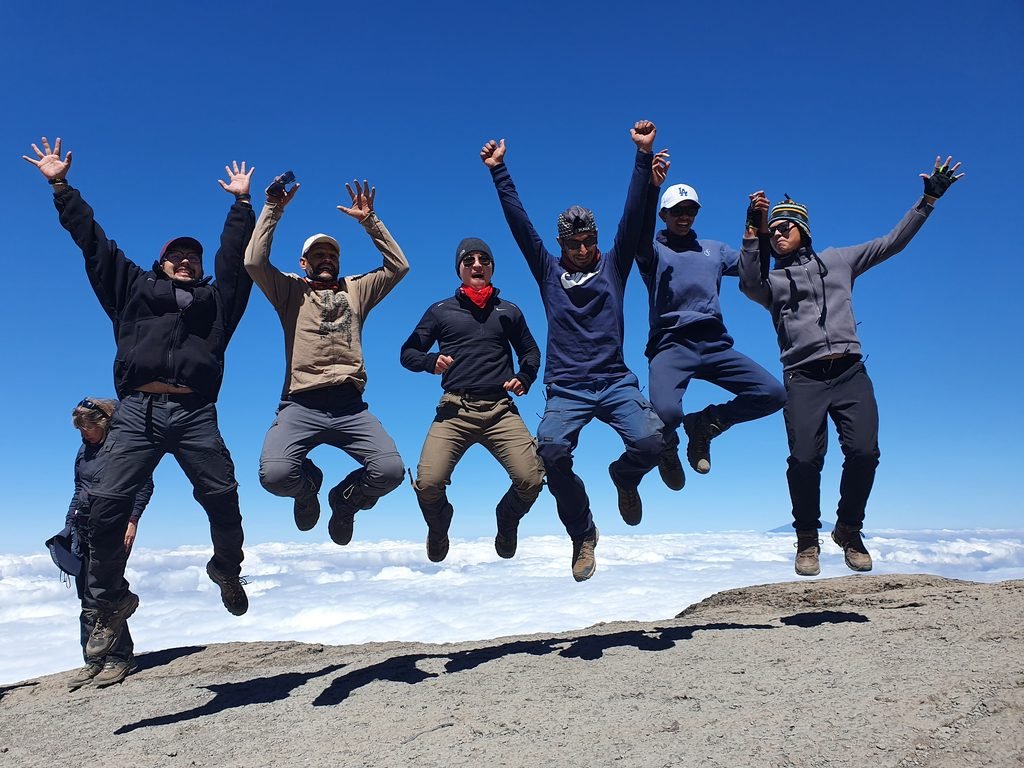
Quick Comparison of the Seven Kilimanjaro Climbing Routes
Before examining each route in detail, it helps to compare their main characteristics. The table below shows commonly offered itinerary lengths and the type of experience associated with each route. Actual distances and schedules vary according to the operator and specific itinerary.
| Kilimanjaro Route | Typical Duration | Accommodation | Main Advantage | Main Consideration |
|---|---|---|---|---|
| Marangu | 5–6 days | Mountain huts | Indoor sleeping accommodation | Shorter schedules offer limited acclimatisation |
| Machame | 6–7 days | Camping | Varied scenery and established trekking route | Steep sections and busy trails |
| Lemosho | 7–8 days | Camping | Scenic western approach and more acclimatisation time | Longer duration and higher total cost |
| Rongai | 6–7 days | Camping | Northern approach and quieter initial trails | Less varied scenery on some sections |
| Northern Circuit | 8–9 days | Camping | Long itinerary and remote northern slopes | Requires more time and a larger budget |
| Umbwe | 6–7 days | Camping | Direct, steep approach | Demanding terrain and rapid early altitude gain |
| Shira | 7–8 days | Camping | High-altitude plateau scenery | High starting elevation can make acclimatisation difficult |
For many first-time climbers, seven-day Machame, eight-day Lemosho, or nine-day Northern Circuit are sensible starting points for comparison. These itineraries provide more time on the mountain than the shortest options, although no route or duration guarantees summit success.
1. Marangu Route – Best for Climbers Who Prefer Mountain Huts
The Marangu Route is one of the oldest and best-known trekking routes on Mount Kilimanjaro. It approaches the mountain from the southeastern side and is sometimes called the Coca-Cola Route. One of its main differences from other routes is its accommodation arrangement. Instead of sleeping in tents, climbers stay in designated mountain huts at Mandara, Horombo, and Kibo, making Marangu attractive to travellers who prefer a bed and a roof over their heads.
The route begins at Marangu Gate and passes through dense montane rainforest, where climbers may encounter colobus monkeys, blue monkeys, and different bird species. As the trail climbs higher, the forest gradually gives way to heath and moorland, with more open views of the mountain. Horombo Hut is an important stopping point because it provides access to acclimatisation walks and views towards Mawenzi. The route then continues across the exposed alpine landscape towards Kibo Hut, where climbers prepare for their final ascent to Uhuru Peak.
Although Marangu is sometimes described as one of the easier Kilimanjaro routes, this description can be misleading. The walking trail is generally straightforward compared with the steepest approaches, but the short duration of some Marangu itineraries makes altitude adjustment difficult. The five-day schedule provides relatively little time for acclimatisation, especially for travellers arriving directly from lower elevations.
For this reason, the six-day Marangu itinerary is generally preferable to the five-day option. The additional day is commonly spent around Horombo Hut, allowing climbers to undertake an acclimatisation walk before continuing towards Kibo. Marangu also uses much of the same trail for ascent and descent, meaning climbers see familiar landscapes on their way down rather than following a separate descent route.
Advantages of the Marangu Route
Marangu is particularly attractive to travellers who do not want to sleep in tents. The huts provide basic shared accommodation, and the route has established facilities and a well-defined trail. It is also a practical option for visitors who prefer a shorter itinerary, provided they understand the additional altitude risks associated with limited acclimatisation time.
Disadvantages of the Marangu Route
The main disadvantage is the relatively rapid ascent, particularly on five-day itineraries. Shared mountain huts offer shelter but should not be confused with hotel accommodation, and climbers must still cope with cold temperatures, basic facilities, and the physical demands of high-altitude trekking.
Recommended duration: Six days.
Best suited for: Travellers who prefer hut accommodation and want an established trekking route.
Our advice: Choose the six-day itinerary rather than rushing the five-day climb whenever your schedule and budget allow.
2. Machame Route – Best for Scenic Landscapes and Varied Trekking
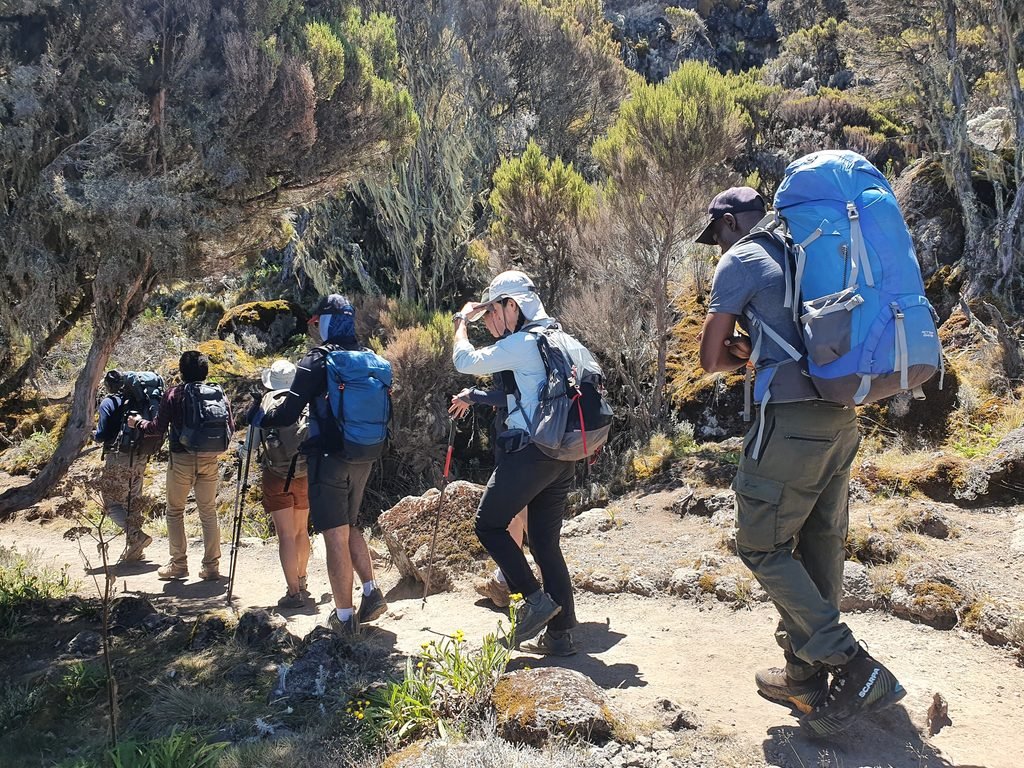
The Machame Route is one of Kilimanjaro’s most popular trekking routes and is widely recognised for its changing landscapes. Often called the Whiskey Route, it approaches the mountain from the southern side and passes through rainforest, moorland, rocky valleys, and alpine desert before reaching the summit.
The trek begins at Machame Gate, where climbers enter a thick rainforest environment. The first day generally involves a steady climb through vegetation before reaching Machame Camp. As the route continues towards Shira Camp, the landscape becomes more open, providing views across the plateau and surrounding mountain slopes. The trail then travels towards Lava Tower, an important point on the itinerary because climbers gain altitude during the day before descending to sleep at a lower elevation near Barranco.
One of Machame’s best-known features is the Barranco Wall, a steep rocky section that climbers ascend using their hands for balance in places. Although it looks intimidating from below, it is normally completed as a guided scramble rather than a technical rock climb. Climbers should nevertheless be comfortable with exposed terrain and follow their guide’s instructions carefully.
After crossing the Barranco area, the route continues towards Karanga and Barafu, where climbers prepare for the summit attempt. Most standard itineraries begin the final ascent during the night, reaching Stella Point and then continuing towards Uhuru Peak if conditions and the climber’s health permit.
Machame is commonly offered as a six- or seven-day climb. The seven-day itinerary is usually the better choice because it allows more time for acclimatisation and avoids compressing some of the mountain’s demanding stages.
Advantages of the Machame Route
Machame provides a wide variety of scenery and allows climbers to experience several distinct areas of Kilimanjaro. Its itinerary includes important altitude-adjustment opportunities, particularly around Lava Tower, and the route has a well-established trekking infrastructure.
Disadvantages of the Machame Route
Because Machame is popular, some camps and trail sections can be busy during peak climbing periods. The route also involves steep sections, including the Barranco Wall, and requires several nights of camping in mountain conditions.
Recommended duration: Seven days.
Best suited for: First-time climbers with reasonable hiking fitness who want varied scenery and a camping experience.
Our advice: The seven-day Machame Route is a strong option for travellers who want a balance between available time, scenery, and acclimatisation.
For additional route comparisons, read the Kilimanjaro Climbing Routes Guide by Eddy Tours & Safaris.
3. Lemosho Route – Best Overall Choice for Many First-Time Climbers
The Lemosho Route approaches Kilimanjaro from the western side and is widely regarded as one of the most attractive options for travellers who have enough time to complete a longer trek. It begins in a relatively remote area and passes through forest before crossing the Shira Plateau, eventually joining the southern circuit used by Machame climbers.
One of the main attractions of Lemosho is the gradual introduction to the mountain’s different landscapes. The early stages pass through forest and open moorland, while the Shira Plateau provides wide views of the mountain and surrounding terrain. Climbers then continue towards Lava Tower and Barranco before travelling through Karanga and Barafu towards the summit.
Lemosho is commonly offered as a seven- or eight-day climb, although itinerary arrangements vary. The eight-day version is particularly attractive because it provides additional time for acclimatisation and allows the walking stages to be spread over a longer period. This does not remove the risk of altitude illness, but it can provide a more reasonable ascent schedule than a shorter itinerary.
The route also offers an opportunity to experience different parts of Kilimanjaro rather than following only the shortest possible path to the summit. Early sections can feel quieter than the busiest southern approaches, although Lemosho joins other routes higher on the mountain, where climber numbers increase.
Advantages of the Lemosho Route
Lemosho combines varied scenery, a western approach, and longer itinerary options. It is particularly suitable for travellers who want time to enjoy the mountain without rushing between camps. The eight-day itinerary also provides opportunities for gradual altitude adjustment.
Disadvantages of the Lemosho Route
The route generally costs more than shorter climbs because it requires additional days of guiding, food, porter support, and park accommodation. It also involves camping throughout the trek and a longer transfer to the western starting area.
Recommended duration: Eight days.
Best suited for: First-time climbers, couples, small groups, and travellers who want a scenic route with more time for acclimatisation.
Our advice: If your schedule allows eight days on the mountain, Lemosho is one of the strongest routes to consider.
You can explore an example itinerary through Eddy Tours & Safaris’ 8-Day Lemosho Kilimanjaro Climb.
4. Rongai Route – Best for a Quieter Northern Approach
The Rongai Route approaches Kilimanjaro from the northern side, near the border between Tanzania and Kenya. It is different from the western and southern approaches because its early stages pass through a comparatively dry landscape, making it attractive to travellers interested in a less frequently used starting route.
The trek begins near Rongai Gate and gradually ascends through forest and moorland towards the higher mountain slopes. As climbers continue, the landscape opens towards Mawenzi, Kilimanjaro’s rugged secondary volcanic peak. The Mawenzi Tarn area is one of the most attractive sections of the route, with views of steep volcanic formations and surrounding high-altitude terrain.
Rongai then crosses towards Kibo Hut, where climbers prepare for the summit attempt. The final ascent commonly follows the same general summit approach used by Marangu climbers. Descent usually takes place along the Marangu Route, allowing visitors to experience a different side of the mountain on their way down.
Rongai is often described as a quieter alternative to Machame and Marangu. However, it is important not to confuse quieter trails with an easier summit. The altitude challenge remains significant, and some Rongai itineraries offer fewer opportunities for the climb-high, sleep-low approach used on other routes.
A seven-day itinerary is generally preferable to a shorter six-day schedule because it provides additional time for altitude adjustment.
Advantages of the Rongai Route
Rongai offers a different perspective of Kilimanjaro, with views towards Mawenzi and a northern approach that can be less crowded during some periods. Its early sections may also receive less rainfall than the wetter southern slopes, although rain and poor weather remain possible.
Disadvantages of the Rongai Route
Some travellers find the scenery less varied than Machame or Lemosho, particularly during the early stages. Depending on the itinerary, acclimatisation opportunities may also be less favourable than on longer western or northern circuit routes.
Recommended duration: Seven days.
Best suited for: Travellers seeking a quieter approach, visitors interested in Mawenzi scenery, and hikers who prefer an alternative to the busiest routes.
Our advice: Rongai is worth considering if you want a northern approach, but choose a schedule that provides enough time for acclimatisation.
5. Northern Circuit Route – Best for a Longer, Quieter Kilimanjaro Trek
The Northern Circuit is one of the longest commonly offered Kilimanjaro trekking itineraries. It normally begins on the western side of the mountain, often following the early stages of Lemosho before turning north and travelling around the less frequently visited northern slopes.
Instead of joining the southern circuit towards Barranco, climbers continue through areas such as Moir Hut, Buffalo Camp, and other northern camps, depending on the operator’s itinerary. These sections offer broad views of the surrounding landscape and provide a different experience from the more heavily travelled southern routes.
The Northern Circuit is particularly attractive because of its longer duration. Most itineraries take eight or nine days, with nine days being a common recommendation for travellers who want a more gradual ascent. The additional time allows climbers to spend longer at altitude before attempting the summit, although the route still requires physical preparation and careful monitoring for altitude illness.
Another advantage is the opportunity to explore areas that many Kilimanjaro climbers never visit. The northern slopes are generally quieter, and the longer journey provides time to appreciate the changing terrain and mountain scenery.
However, the Northern Circuit is not necessarily easier in terms of total effort. Climbers spend more days walking, cover a greater overall distance, and remain exposed to mountain weather for longer. It is therefore best suited to travellers who are comfortable with multi-day trekking and have sufficient time available.
Advantages of the Northern Circuit
The route offers a longer acclimatisation schedule, quieter northern trails, and varied views of Kilimanjaro. It is particularly attractive to travellers who want to spend more time exploring the mountain rather than completing the shortest possible climb.
Disadvantages of the Northern Circuit
The longer duration increases the overall cost of the trek. Climbers must also be prepared for additional days of walking, camping, and exposure to changing weather conditions.
Recommended duration: Nine days.
Best suited for: Travellers with enough time for a longer trek, hikers interested in quieter routes, and first-time climbers who prefer a gradual itinerary.
Our advice: If time and budget are not major limitations, the nine-day Northern Circuit is one of the most attractive routes to compare with eight-day Lemosho.
6. Umbwe Route – Best for Experienced and Well-Prepared Trekkers
The Umbwe Route approaches Kilimanjaro from the southern side and is known for its steep, direct ascent. Compared with routes that follow longer approaches across plateaus and valleys, Umbwe gains elevation relatively quickly during its early stages, making it one of the more physically demanding Kilimanjaro routes.
The trek begins in the forest zone and follows a steep trail towards Umbwe Camp. As the route climbs higher, the terrain becomes more exposed, and climbers encounter sections requiring careful footing and sustained physical effort. The route eventually joins the southern circuit near Barranco, where climbers continue towards the summit using established higher-altitude trails.
Umbwe is sometimes chosen by experienced hikers who enjoy steep terrain and want a less commonly used approach. However, its direct ascent presents an important challenge: climbers may gain altitude before their bodies have had enough time to adjust. For this reason, the shortest Umbwe itineraries are not a sensible choice for many visitors, regardless of their general fitness.
Travellers considering Umbwe should discuss their previous trekking experience, altitude history, and physical preparation with a qualified operator. A longer itinerary can provide additional acclimatisation time, but the route’s steep early stages remain demanding.
Advantages of the Umbwe Route
Umbwe offers a direct approach, steep terrain, and a different experience from the more frequently used routes. It may appeal to experienced hikers who prefer physically challenging trekking.
Disadvantages of the Umbwe Route
The rapid early altitude gain creates additional acclimatisation concerns, while the steep terrain requires good balance, endurance, and confidence. It is not generally the first route we would recommend to someone with no previous multi-day hiking experience.
Recommended duration: A carefully planned six- or seven-day itinerary, with longer acclimatisation arrangements considered where appropriate.
Best suited for: Experienced trekkers who understand the physical and altitude-related demands.
Our advice: Choose Umbwe because its terrain and approach suit your experience, not because it appears to offer a quicker way to reach the summit.
7. Shira Route – Best for High-Altitude Plateau Scenery
The Shira Route begins on the western side of Kilimanjaro and is associated with the broad Shira Plateau, one of the mountain’s most distinctive volcanic landscapes. It shares similarities with Lemosho, but an important difference is the elevation at which climbers begin their trek.
Unlike Lemosho, which generally starts lower and allows a gradual ascent through forest, Shira itineraries may involve vehicle access to a high starting elevation on the plateau. This allows travellers to reach the open mountain landscape relatively quickly, but it also creates an important altitude concern. Climbers who arrive directly from lower elevations may experience symptoms of altitude illness because their bodies have not had enough time to adjust.
The route travels across the Shira Plateau before joining established trails towards Lava Tower, Barranco, Karanga, and Barafu. Along the way, visitors experience broad views of Kibo and the western slopes, as well as the open moorland and alpine landscapes associated with higher elevations.
Shira is attractive to travellers interested in volcanic geology and mountain scenery, but it is not necessarily the most suitable route for first-time climbers arriving directly from sea level. Its high starting elevation makes prior acclimatisation especially important.
Advantages of the Shira Route
Shira offers attractive plateau scenery and an opportunity to explore the western side of Kilimanjaro. The route is particularly interesting for travellers who appreciate open mountain landscapes and volcanic formations.
Disadvantages of the Shira Route
The main concern is its high starting elevation. Travellers without previous acclimatisation may find the initial altitude difficult, even if they are physically fit. For many visitors, Lemosho provides a more gradual alternative with similar scenery.
Recommended duration: Seven to eight days, with appropriate prior acclimatisation.
Best suited for: Trekkers who are already acclimatised and want to explore the Shira Plateau.
Our advice: For most first-time Kilimanjaro climbers, we would recommend comparing eight-day Lemosho before selecting Shira.
Which Kilimanjaro Route Is Best for Beginners?
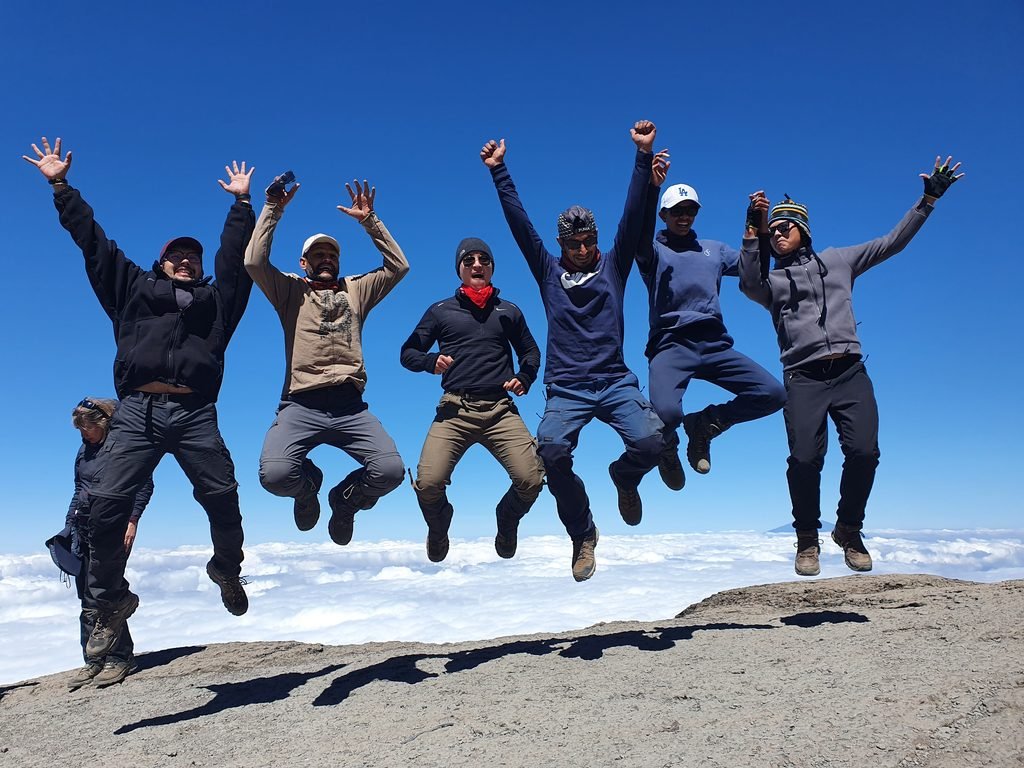
For first-time climbers, the most suitable route is generally one that provides enough time for acclimatisation, manageable daily walking stages, and a schedule that does not rush the summit attempt. Although no route can eliminate the effects of altitude, longer itineraries can provide additional opportunities for the body to adjust.
The eight-day Lemosho Route is a strong option because it combines a scenic western approach with a longer trekking schedule. Seven-day Machame is another practical choice for travellers with reasonable fitness who want varied scenery and are comfortable with camping. The nine-day Northern Circuit is attractive for visitors who have more time and prefer a longer approach around the quieter northern slopes.
Marangu can also be suitable for first-time climbers who prefer mountain huts, but the six-day version is generally preferable to the shorter five-day itinerary. Rongai may appeal to travellers interested in a northern approach, although its acclimatisation profile should be reviewed carefully.
It is important to remember that being a beginner does not automatically mean choosing the shortest or least steep route. The effects of altitude are often more important than the technical difficulty of the walking trail, and even experienced athletes can develop altitude illness.
Which Kilimanjaro Route Has the Best Summit Success Rate?
Many websites publish exact summit success percentages for different Kilimanjaro routes, but these figures should be treated carefully. There is no single universally applicable success rate for each route because results depend on the itinerary length, climber preparation, weather, guide decisions, and how success is recorded.
A six-day Machame climb and a seven-day Machame climb should not automatically be treated as having the same outcome. Similarly, an eight-day Lemosho itinerary may provide more acclimatisation time than a shorter version of the same route.
Longer itineraries are generally worth considering because they allow more time for altitude adjustment, but extra days do not guarantee that every climber will reach Uhuru Peak. Individual responses to altitude vary, and a responsible guide must be prepared to recommend descent when necessary.
Instead of choosing a route based only on advertised summit percentages, ask your operator how acclimatisation is managed, how guides monitor altitude symptoms, and what procedures are followed when a climber becomes unwell.
For official information about mountain conditions and visitor requirements, consult Kilimanjaro National Park.
How Difficult Is It to Climb Mount Kilimanjaro?
Kilimanjaro is often described as a trekking mountain because its normal routes do not generally require technical mountaineering skills. However, the climb is physically demanding and should not be underestimated. Most itineraries involve several consecutive days of walking, with some stages lasting many hours and taking place on steep, rocky, or uneven terrain.
The summit attempt is usually the most demanding part of the climb. Climbers often begin during the night and continue uphill in freezing conditions before reaching Stella Point or Gilman’s Point, depending on the route. Those who are able to continue safely then proceed towards Uhuru Peak.
The combination of altitude, cold temperatures, fatigue, and reduced oxygen makes the final ascent challenging even for travellers who have trained regularly. Good physical preparation improves walking endurance, but the ability to acclimatise remains a separate concern.
Climbers should prepare by undertaking regular hikes, including uphill walking and longer sessions carrying a daypack. Strength training and cardiovascular exercise can also help build the endurance required for several days of trekking. Where possible, practising on hills or mountains before travelling to Tanzania can provide valuable experience.
Best Time to Climb Kilimanjaro
Mount Kilimanjaro can be climbed throughout the year, but weather conditions vary considerably between seasons. The periods from January to early March and from June to October are commonly chosen because they often provide relatively favourable trekking conditions.
January and February can offer clearer mornings and comparatively dry conditions, although rainfall and cloud cover remain possible. June to October is another popular climbing period, with generally drier conditions on many routes. However, the mountain can be cold at any time of year, particularly at higher elevations.
April and May are often associated with heavier rainfall, making trails wetter and more difficult in some areas. November and December can also bring rain, although conditions vary from year to year.
Travellers should remember that weather on Kilimanjaro changes with altitude. A warm morning near the starting gate does not indicate the conditions climbers will experience near the summit.
| Travel Period | General Conditions | Planning Considerations |
|---|---|---|
| January–February | Often relatively dry with clear periods | Popular climbing season |
| March | Conditions may become wetter | Check seasonal forecasts |
| April–May | Often wetter with muddy trails | Suitable preparation and rain protection are essential |
| June–October | Generally popular dry-season period | Book accommodation and departures early |
| November–December | Variable weather with possible rainfall | Flexible planning is helpful |
The best month also depends on your preferred route, tolerance for colder or wetter weather, and whether you intend to combine the climb with a wildlife safari.
How Much Does It Cost to Climb Kilimanjaro?
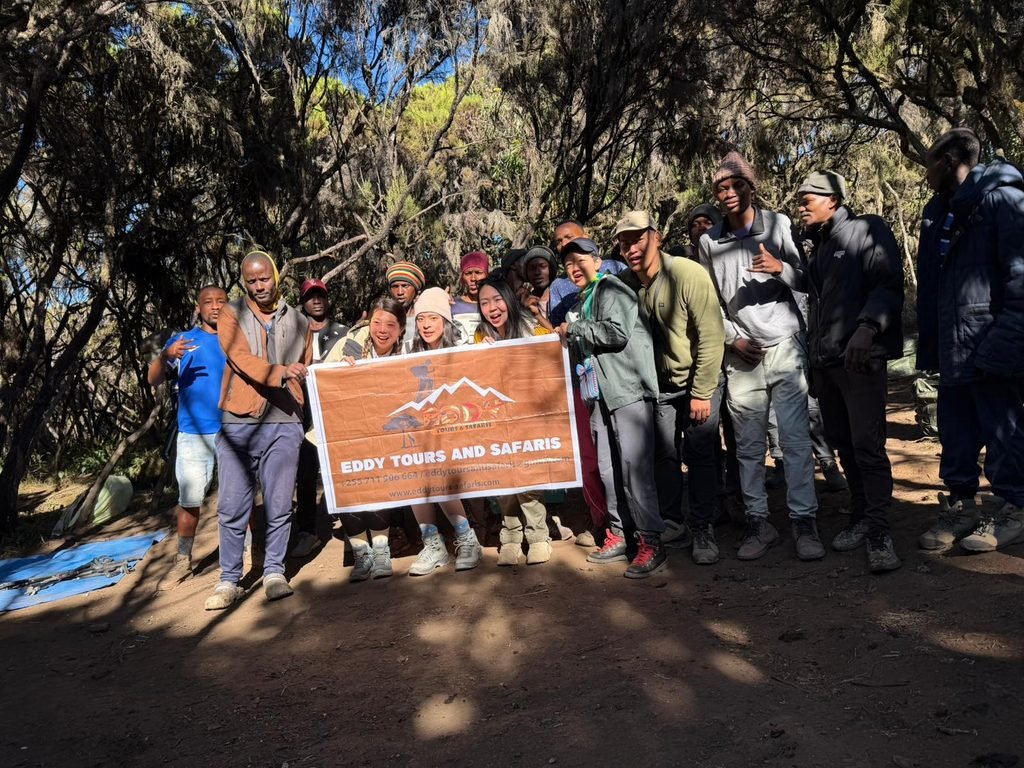
The cost of climbing Kilimanjaro depends on the route, number of days, group size, accommodation before and after the climb, equipment arrangements, and services included in the package. Longer routes usually cost more because they require additional days of park access, food, guiding, porter support, and mountain logistics.
A shorter Marangu itinerary may have a lower total price than an eight-day Lemosho or nine-day Northern Circuit climb, but the difference should not be considered in isolation. An itinerary that provides more time for acclimatisation may be better suited to your needs even when the total cost is higher.
When comparing quotations, travellers should confirm whether the price includes national park fees, camping or hut fees, rescue-related charges, professional guides, porters, meals, drinking water, airport transfers, and accommodation before or after the climb.
Equipment rental, tips, travel insurance, international flights, visas, and personal expenses may be excluded. Climbers should also ask whether the operator provides appropriate wages, food, clothing, and working conditions for mountain staff.
For 2027, 2028, and 2029, request an updated quotation rather than relying on old package prices. Park tariffs and operating costs may change before your travel dates.
What Equipment Do You Need for Kilimanjaro?
Proper equipment is essential because climbers experience different temperatures and weather conditions during the ascent. Clothing suitable for warm forest environments will not provide enough protection near the summit, where freezing temperatures and strong winds may occur.
A reliable layering system is particularly important. Climbers should carry moisture-wicking base layers, warm insulating clothing, and a waterproof outer jacket and trousers. Suitable trekking boots, warm gloves, a hat, and quality socks are also important for comfort and protection.
A warm sleeping bag is necessary for camping routes, while Marangu climbers also need appropriate sleeping equipment for the mountain huts. A headlamp with spare batteries is essential because summit attempts commonly begin during the night.
Other useful items include trekking poles, sunscreen, sunglasses, a refillable water container, personal medication, and a comfortable daypack. Climbers should test their boots and essential equipment before travelling rather than using everything for the first time on the mountain.
For further preparation advice, visit Eddy Tours & Safaris’ Kilimanjaro Climbing Tips.
Altitude Sickness and Safety on Kilimanjaro
Altitude illness is one of the most important safety concerns on Kilimanjaro. As climbers ascend, the lower oxygen availability can affect the body even when the walking pace is slow. Symptoms of acute mountain sickness may include headache, nausea, dizziness, unusual fatigue, and difficulty sleeping.
Climbers should report symptoms promptly to their guides rather than hiding them to continue towards the summit. Worsening symptoms can indicate a more serious condition, and continuing to ascend may be dangerous. A responsible guide will assess the situation and arrange descent or emergency assistance when required.
Choosing a longer route can help with acclimatisation, but it does not eliminate the possibility of altitude illness. Travellers with relevant medical conditions or concerns should seek advice from a qualified healthcare professional before the climb. Those considering preventive medication should discuss its suitability, benefits, and risks with a clinician rather than taking it without medical guidance.
Safety also depends on the quality of guiding arrangements. Climbers should use licensed operators with trained guides, suitable emergency procedures, appropriate equipment, and clear arrangements for evacuation when necessary.
Can You Combine Kilimanjaro Climbing with a Tanzania Safari?
Yes. Combining a Kilimanjaro climb with a Tanzania wildlife safari is one of the most popular ways to explore northern Tanzania. After spending several days trekking through the mountain’s different landscapes, travellers can continue towards national parks such as Tarangire, Ngorongoro Crater, Serengeti, or Lake Manyara.
Arusha is a practical starting point for many northern Tanzania safaris, while Moshi is commonly used as a base for Kilimanjaro climbs. Because the two towns are within travelling distance of each other, a mountain expedition and wildlife safari can be arranged within the same holiday.
Travellers should allow time to rest after descending from Kilimanjaro before beginning a demanding safari itinerary. Those with limited time may choose a two- or three-day safari to Tarangire and Ngorongoro, while visitors with more days available can include the Serengeti.
Tarangire National Park After Kilimanjaro
Tarangire is known for its elephants, baobab trees, and seasonal wildlife concentrations. It is a suitable destination for travellers who want a relatively short safari after their climb. The park supports giraffes, zebras, buffaloes, lions, and numerous bird species, with wildlife viewing opportunities changing according to the season.
Ngorongoro Crater After Kilimanjaro
Ngorongoro Crater is another popular addition to a Kilimanjaro holiday. Its grasslands, wetlands, and woodland support a wide range of wildlife, including lions, elephants, buffaloes, zebras, and hippos. Travellers may also have an opportunity to observe the endangered black rhinoceros, although sightings are not guaranteed.
Serengeti National Park After Kilimanjaro
The Serengeti is particularly suitable for travellers who want a longer wildlife safari after completing their climb. The park is famous for its predator populations, extensive grasslands, and seasonal Great Wildebeest Migration. Because the Serengeti is far from Arusha, visitors should allow several days to make the journey worthwhile.
Travellers interested in combining trekking with wildlife viewing can contact Eddy Tours & Safaris to discuss suitable itineraries, accommodation, transport, and travel dates.
Suggested 12-Day Kilimanjaro and Tanzania Safari Itinerary
A twelve-day itinerary can provide enough time for an eight-day Kilimanjaro climb followed by a short wildlife safari, although travellers should consider adding another day if they want more time to rest after the mountain.
Day 1: Arrival in Tanzania
Arrive at Kilimanjaro International Airport and transfer to your hotel in Moshi or Arusha. Your mountain guide will review the itinerary, inspect essential equipment, and explain the arrangements for the following morning.
Days 2–9: Eight-Day Lemosho Kilimanjaro Climb
Begin your climb on the western side of Kilimanjaro and follow the Lemosho Route through forest, moorland, and high-altitude landscapes. The itinerary continues across the Shira Plateau and towards the southern circuit before the final ascent to Uhuru Peak. After the summit attempt, descend through the designated mountain trails and return to your hotel.
Day 10: Rest and Travel Preparation
Spend the day resting after your mountain expedition. Depending on your condition and preferences, you may relax at your hotel or arrange a short local activity. This day is useful because climbers are often tired after several days of trekking.
Day 11: Tarangire National Park Safari
Travel from Arusha or Moshi towards Tarangire National Park for a wildlife game drive. Explore the park’s woodland and grassland habitats while looking for elephants, giraffes, zebras, buffaloes, and other animals. Continue to accommodation near Tarangire or Karatu.
Day 12: Ngorongoro Crater Safari and Return to Arusha
After an early breakfast, travel towards Ngorongoro Conservation Area and descend into the crater for a game drive. Explore the crater’s different wildlife habitats before returning to Arusha later in the day.
Travellers who want to include the Serengeti should consider extending this itinerary by several days rather than trying to fit the park into the same short safari schedule.
Frequently Asked Questions About Kilimanjaro Climbing Routes
Which Kilimanjaro Route Is Best for First-Time Climbers?
Eight-day Lemosho, seven-day Machame, and nine-day Northern Circuit are good options for first-time climbers to compare because they provide longer trekking schedules and useful acclimatisation opportunities. The best choice depends on your fitness, available time, preferred scenery, and comfort with camping.
What Is the Easiest Route to Climb Kilimanjaro?
No Kilimanjaro route is genuinely easy because all summit routes reach 5,895 metres. Marangu has a relatively straightforward walking trail and hut accommodation, but its shorter itineraries can create altitude challenges. A longer route with suitable acclimatisation may be a better choice than the shortest available option.
Which Kilimanjaro Route Has the Best Scenery?
Machame, Lemosho, and the Northern Circuit are commonly selected for their varied scenery. Lemosho crosses the Shira Plateau, Machame includes the Barranco Wall and southern circuit, and the Northern Circuit explores the quieter northern slopes.
Which Kilimanjaro Route Is the Shortest?
Marangu is commonly offered as a five-day climb, making it one of the shortest standard summit itineraries. However, the six-day version is generally preferable because it allows additional acclimatisation time.
Which Kilimanjaro Route Is the Longest?
The Northern Circuit is among the longest commonly offered Kilimanjaro routes, with many itineraries taking eight or nine days. Its longer duration provides additional time on the mountain and allows climbers to explore the northern slopes.
Which Route Uses Mountain Huts?
Marangu is the main Kilimanjaro route that uses designated mountain huts instead of camping accommodation. The huts provide basic shared sleeping facilities rather than hotel-style rooms.
Is the Barranco Wall Dangerous?
The Barranco Wall is a steep rocky section encountered on routes such as Machame and Lemosho. It is normally climbed as a guided scramble, but climbers must follow their guides’ instructions and take care on exposed sections. Travellers uncomfortable with scrambling should discuss the route before booking.
Can You Climb Kilimanjaro Without a Guide?
No. Kilimanjaro National Park requires guided climbing arrangements through licensed operators. Independent summit trekking without authorised guiding arrangements is not permitted.
Do You Need Previous Mountain Climbing Experience?
Previous technical mountaineering experience is not generally required for the standard trekking routes. However, good physical preparation, experience with long walks, and an understanding of altitude-related risks are important.
How Many Days Should You Spend on Kilimanjaro?
For many climbers, a seven- to nine-day itinerary is worth considering because it provides more time for acclimatisation than the shortest routes. The exact duration should be selected according to the route, personal circumstances, and professional guidance.
Can You Climb Kilimanjaro and Visit Serengeti on the Same Holiday?
Yes. Kilimanjaro climbing can be combined with a Serengeti safari, Ngorongoro Crater visit, or other Tanzania wildlife destinations. Travellers should allow enough days for the mountain, rest, and safari transfers.
Choosing the Right Kilimanjaro Route for Your 2027, 2028 or 2029 Climb
The best Kilimanjaro route is not necessarily the shortest, cheapest, or most popular. A suitable route should match your available time, hiking experience, accommodation preferences, and ability to prepare for several days of trekking at high altitude. For many first-time climbers, eight-day Lemosho provides a useful balance of scenery and acclimatisation time, while seven-day Machame offers varied landscapes within a slightly shorter itinerary. The nine-day Northern Circuit is particularly attractive for travellers who want a longer climb and quieter northern trails.
Marangu remains an important option for visitors who prefer mountain huts, while Rongai offers a different approach from the north. Umbwe is better suited to experienced trekkers who are comfortable with steep terrain, and Shira requires careful consideration because of its high starting elevation. Regardless of the route, reaching Uhuru Peak should never take priority over personal safety, and climbers must be prepared to follow their guide’s advice if altitude illness or difficult conditions develop.
Eddy Tours & Safaris is a local tour company based in Arusha, Tanzania, arranging guided Kilimanjaro climbing expeditions, Tanzania wildlife safaris, and private holidays. Our team can help you compare the seven routes, choose a suitable itinerary, understand the costs, and organise the transport and accommodation required for your trip.
If you are planning to climb Kilimanjaro in 2027, 2028 or 2029, share your preferred travel dates, number of climbers, available days, and previous hiking experience. We can help you identify a suitable route and prepare a personalised quotation based on your requirements.
Contact Eddy Tours & Safaris
Location: Arusha, Tanzania
Email: sales@eddytours-safaris.com
Phone/WhatsApp: +255 711 906 664
Website: Eddy Tours & Safaris
Climbing enquiries: Contact Our Kilimanjaro Team