

The Great Wildebeest Migration is one of the main reasons travellers visit Tanzania and Kenya for a wildlife safari. Every year, enormous herds of wildebeest, zebras and other grazing animals move through the Serengeti-Mara ecosystem in search of fresh grass and water. Along the way, they face predators, changing weather conditions, long journeys and dangerous river crossings. Two periods attract particular attention from safari travellers: the Mara River crossing season in the northern Serengeti and the wildebeest calving season on the southern plains. Although both are part of the same migration, they offer very different wildlife experiences.
For travellers planning an African safari in 2027, 2028 or 2029, choosing between river crossings and calving season is an important decision. The river-crossing period is associated with large herds gathering along the Mara River, where animals may cross strong currents and encounter crocodiles. The calving season, on the other hand, takes place mainly around Ndutu and the southern Serengeti, where large numbers of wildebeest give birth within a relatively short period. This attracts predators such as lions, cheetahs and hyenas, making it an excellent time to observe hunting behaviour, newborn animals and the interaction between mothers and their calves.
Both seasons offer excellent opportunities for wildlife photography, but the landscapes, weather conditions, accommodation locations and safari costs can differ considerably. A traveller interested in seeing a Mara River crossing may need to spend several nights in the northern Serengeti, while someone interested in the calving season should focus on the southern Serengeti and Ndutu between January and March. Understanding these differences helps visitors choose the experience that matches their interests, travel dates and available budget.
This detailed guide compares the Serengeti river crossings vs calving season, including the best months to visit, wildlife sightings, predator activity, photography opportunities, accommodation, safari costs and recommended itineraries. It also explains how to plan a Tanzania Great Migration safari for 2027, 2028 or 2029 without spending unnecessary time travelling between the wrong parts of the Serengeti.
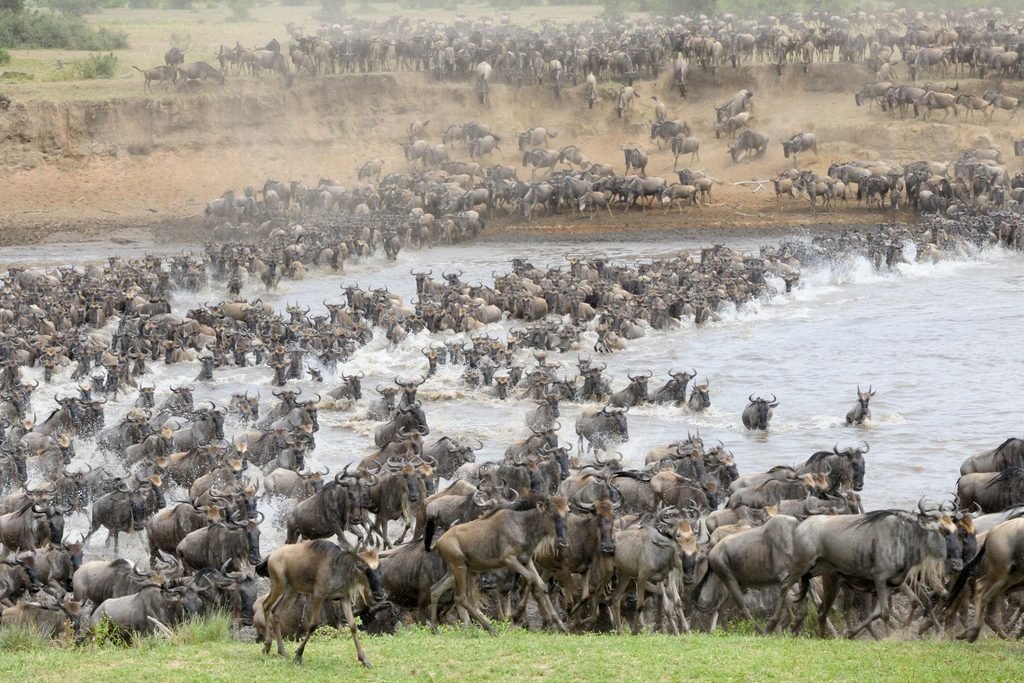
Understanding the Great Wildebeest Migration in Tanzania and Kenya
Before comparing the two seasons, it is important to understand how the Great Migration works. The migration is not a single event that takes place on a particular day or during one month. It is an annual movement of wildebeest and other grazing animals across the Serengeti-Mara ecosystem, which includes Serengeti National Park in Tanzania, neighbouring conservation areas and the Maasai Mara in Kenya. The animals follow seasonal rainfall and the availability of grazing, moving between different parts of the ecosystem throughout the year.
During the early months, large herds often gather on the southern Serengeti plains, where nutrient-rich grass provides suitable conditions for pregnant wildebeest and their newborn calves. As rainfall patterns change and grazing conditions become less favourable, the animals gradually move towards central and western areas before reaching parts of the northern Serengeti. During the northern phase, some herds cross the Mara River, while others remain on the Tanzanian side or move between grazing areas without following exactly the same route.
The migration is important not only because of the number of animals involved but also because of its ecological role. Grazing animals influence vegetation, transport nutrients across the landscape and support predator populations. Lions, cheetahs, leopards, hyenas and crocodiles depend on the wider food system associated with the movement of herbivores. The Serengeti’s ecological importance is internationally recognised by UNESCO’s Serengeti National Park World Heritage listing, which identifies the annual migration as one of the world’s major natural wildlife events.
Travellers who want to understand the complete migration cycle can read our Great Migration safari guide for Tanzania, which explains how the herds move between different Serengeti regions and how safari itineraries should be planned around these seasonal movements.

River Crossings vs Calving Season: Main Differences
Although both experiences involve the same migrating wildebeest population, the main attractions are different. River crossings are primarily about herd movement, river conditions and the behaviour of animals gathering at crossing points. Calving season focuses on reproduction, newborn animals, predator-prey interactions and the concentration of wildlife on the southern plains.
| Safari Feature | Mara River Crossings | Wildebeest Calving Season |
|---|---|---|
| Best general period | July–October | January–March |
| Main peak period | Often August–September | Often February |
| Main location | Northern Serengeti, especially Kogatende and Mara River | Ndutu and southern Serengeti plains |
| Main wildlife event | Wildebeest and zebras attempting river crossings | Large numbers of wildebeest calves being born |
| Main predators | Crocodiles, lions, hyenas and other predators | Lions, cheetahs, hyenas, jackals and other predators |
| Landscape | Generally drier grasslands and river valleys | Often green, open short-grass plains |
| Photography | Large herds, river crossings and movement | Newborn animals, predator activity and animal behaviour |
| Wildlife viewing | Can involve long periods waiting near crossing areas | Often involves searching open plains for herds and predators |
| Accommodation | Northern Serengeti lodges and migration camps | Ndutu camps and southern Serengeti accommodation |
| Safari planning | Longer northern Serengeti stay is advisable | Several nights around Ndutu are advisable |
| Main uncertainty | Whether a river crossing occurs during your visit | Whether you witness an actual birth or particular predator encounter |
| Best suited for | Travellers especially interested in river crossings | Travellers interested in newborn wildlife, big cats and photography |
The table shows why it is difficult to describe one season as universally better than the other. Both offer rewarding wildlife viewing, but the choice depends on the experience a traveller hopes to have.

1. Mara River Crossings: What Makes This Safari Experience Special?
The Mara River crossings are among the best-known wildlife events associated with the Great Migration. During the northern migration period, large herds of wildebeest and zebras may gather near the Mara River, sometimes remaining along the banks for extended periods before attempting to cross. The animals must deal with steep riverbanks, strong currents and the possibility of encountering crocodiles. Some crossings involve relatively small groups, while others involve large numbers of animals entering the water within a short period.
One of the most interesting aspects of river crossings is the behaviour of the herds before they enter the water. Wildebeest may approach the river, stop, move along the bank or suddenly retreat. A group may appear ready to cross but change direction without entering the water. At other times, one animal enters the river and others begin following. These movements are difficult to predict, even for experienced safari guides who regularly work in the northern Serengeti.
The Mara River crossing season attracts travellers because it offers an opportunity to observe animals responding to natural obstacles during their annual movement. However, the experience requires patience. Visitors may spend several hours near a crossing area without witnessing animals entering the water. This is why choosing suitable accommodation and allowing enough days in the northern Serengeti are important parts of planning a migration safari.
For travellers particularly interested in this part of the migration, our Tanzania Great Migration safari packages provide a starting point for choosing an itinerary focused on the expected location of the herds.
Best Time to See Mara River Crossings
The northern Serengeti migration period generally takes place between July and October, although the exact timing changes from year to year. August and September are often popular months for travellers interested in Mara River crossings because large herds may be present in the northern Serengeti and Maasai Mara during this period. However, rainfall patterns influence the animals’ movements, and crossings can occur earlier or later than expected.
It is important to understand that the migration does not follow a fixed calendar. The herds respond to grazing conditions rather than travel schedules, and their movements may differ between 2027, 2028 and 2029. Some animals may cross the Mara River more than once, while others may remain in suitable grazing areas without crossing during a visitor’s stay.
For this reason, travellers should avoid booking a northern Serengeti safari based on the expectation that a particular crossing will occur on a specific date. A better approach is to spend several nights in the region and allow the guide flexibility to explore different wildlife areas according to current conditions.
Best Location for Mara River Crossings
The northern Serengeti, particularly the Kogatende area and surrounding Mara River region, is one of the main destinations for travellers interested in river crossings. This part of Serengeti National Park contains river systems, open grasslands and woodland habitats that support migrating animals and resident wildlife.
Kogatende is located a considerable distance from the central Serengeti. Travellers arriving by road from Arusha must account for a long journey, particularly when visiting the northern region directly. Domestic flights to suitable northern Serengeti airstrips can reduce travel time, although they increase the overall safari cost.
Accommodation should be selected carefully because staying far from the intended wildlife area may result in several hours of unnecessary driving. Visitors who want to spend time near the Mara River should choose a camp or lodge that provides practical access to authorised crossing viewpoints.

2. Wildebeest Calving Season: Why It Is One of Africa’s Best Wildlife Experiences
The wildebeest calving season offers a different perspective on the Great Migration. Instead of watching animals attempt to cross a river, visitors explore the southern Serengeti and Ndutu plains, where large numbers of wildebeest gather to give birth. The short-grass plains provide suitable grazing for pregnant females, and the open landscape allows visitors to observe large herds and the behaviour of newborn animals.
The main calving period generally occurs during January and February, with February often being the most important month. Births can continue into March, depending on environmental conditions and the movements of the herds. During the main calving period, large numbers of calves may be born within a relatively short time, creating an important seasonal food source for predators.
Newborn wildebeest are able to stand and begin moving soon after birth, an important adaptation for animals living in open grasslands where predators are present. Visitors may observe calves following their mothers, young animals resting among the herds and interactions between adults and newborns. These experiences provide opportunities to understand wildlife behaviour that are very different from watching river crossings.
The southern Serengeti is particularly attractive during this period because rainfall often produces green grasslands and clear views across the open plains. Wildlife photographers may find opportunities to photograph calves, hunting predators and large herds against the landscape. However, witnessing an actual birth is not guaranteed, and predator encounters remain unpredictable.
Best Time to Visit Ndutu for Calving Season
January to March is the general period associated with wildebeest calving in the southern Serengeti ecosystem. February is often considered the main calving month, although seasonal rainfall may influence the exact timing and location of the herds.
Travellers visiting in January may encounter pregnant wildebeest and the beginning of the main calving activity. February often provides opportunities to observe large numbers of newborn calves, while March may still offer rewarding wildlife viewing as the herds begin responding to changing grazing conditions.
For travellers planning a calving safari in 2027, 2028 or 2029, accommodation around Ndutu or the southern Serengeti is generally more practical than staying in the northern Serengeti. Selecting accommodation close to the expected herds can reduce daily driving and provide more time for game drives.
Why Ndutu Is Important During Calving Season
Ndutu lies within the southern Serengeti ecosystem, with important wildlife areas extending through the Ngorongoro Conservation Area and neighbouring parts of Serengeti National Park. The region contains short-grass plains, woodland and seasonal water sources that support large numbers of migrating animals during suitable periods.
The grasslands are particularly important because the soils contain nutrients associated with the area’s volcanic history. These conditions support nutritious grasses used by wildebeest during the calving period. As a result, the southern plains become an important seasonal breeding area for the migrating herds.
Ndutu also provides opportunities to observe predators. Lions, cheetahs and hyenas may be encountered in areas where wildebeest and other grazing animals are concentrated. The open landscapes can make wildlife observation and photography rewarding, although the exact location of predators and herds changes daily.
Travellers interested in this experience can explore our Serengeti migration safari tours for first-time visitors to understand how a southern Serengeti itinerary can be arranged.
3. Which Season Is Better for Seeing Predators?
Predator sightings are one of the main reasons travellers choose either a river-crossing safari or a calving-season safari. Both periods provide opportunities to observe predator activity, but the types of encounters and the surrounding habitats are different.
During the river-crossing season, crocodiles are among the animals most closely associated with the Mara River. Large crocodiles inhabit the river, and some may attempt to catch wildebeest or zebras during crossings. Lions and hyenas may also be present in surrounding habitats, although visitors should not assume that every river crossing will involve a predator attack.
The northern Serengeti also supports resident wildlife populations, meaning travellers can enjoy game drives even when the migrating herds are not crossing. Depending on the location, visitors may encounter lions, elephants, giraffes, buffaloes and other animals while exploring the region.
During calving season, predator activity is often associated with the concentration of newborn wildebeest and other grazing animals on the southern plains. Lions, cheetahs, hyenas and jackals may take advantage of opportunities to hunt vulnerable animals. Visitors may observe predators resting, moving through the grasslands, watching herds or attempting to hunt.
For travellers whose main interest is observing big cats and predator-prey behaviour, calving season can be particularly rewarding because the open southern plains provide suitable habitats for cheetahs and other predators. However, neither season guarantees a hunt or a successful predator encounter.

4. River Crossings vs Calving Season for Wildlife Photography
Photography is another important consideration when deciding between the two seasons. The Mara River crossing period and southern Serengeti calving season provide different subjects, backgrounds and lighting conditions.
During river-crossing season, photographers often focus on large herds gathering near the river, animals moving through the water and the surrounding river landscape. These scenes can be particularly interesting for photographers who want to capture movement and interactions between large numbers of animals. However, crossing points can attract several safari vehicles, and the position of the animals may limit the available camera angles.
Calving season offers opportunities to photograph newborn animals, mothers with calves, predator activity and large herds across green grasslands. The open plains around Ndutu can provide clear backgrounds, particularly when photographing cheetahs, wildebeest and other animals in grassland habitats. Photographers interested in animal behaviour may prefer this period because it provides opportunities to observe interactions over longer periods.
For both seasons, a camera with a suitable zoom lens is useful because wildlife should be observed from a safe distance. Binoculars can also help identify animals before attempting to photograph them. Travellers who want additional flexibility may prefer a private safari vehicle, allowing more time at particular sightings without following a fixed group schedule.
5. Which Season Has Better Weather?
Weather conditions differ between the northern Serengeti river-crossing period and the southern Serengeti calving season. The river-crossing months generally fall within Tanzania’s dry season, while the calving period takes place during months when seasonal rainfall often produces greener landscapes.
Between July and October, the northern Serengeti commonly experiences relatively dry conditions. Grass may become shorter in some areas, and animals may gather near important water sources. Early mornings can still be cool, particularly during game drives, so visitors should carry warm clothing.
Between January and March, the southern Serengeti and Ndutu region often have greener landscapes because of seasonal rainfall. The open plains can provide attractive photography conditions, although rain may affect road conditions and travel times. Visitors should be prepared for both warm daytime temperatures and cooler mornings.
Neither season offers guaranteed weather. Rainfall patterns can vary considerably, and travellers should select suitable clothing and accommodation based on the expected conditions rather than assuming that every day will be dry.
6. Which Safari Season Is More Expensive?
Safari costs depend on the number of days, accommodation category, transport arrangements, group size and travel dates. Both the river-crossing period and calving season can attract high demand because they are popular wildlife experiences.
Northern Serengeti accommodation may be particularly expensive during August and September because many travellers visit the region hoping to observe Mara River crossings. Some seasonal migration camps operate in locations selected for their proximity to expected herd movements, and availability can become limited during popular periods.
Calving-season accommodation around Ndutu can also experience high demand, especially during February. Although January and February are sometimes described as green-season months, this does not necessarily mean that accommodation near the calving herds will be inexpensive.
The northern Serengeti may involve higher transport expenses for travellers beginning their safari in Arusha because of the long driving distance. Domestic flights can reduce travel time but generally increase the package price. A calving safari focused on Ndutu may be easier to combine with Ngorongoro Crater and other destinations on Tanzania’s northern safari circuit.
Travellers comparing costs should request quotations for the same number of days, accommodation category and group size. Comparing a five-day Ndutu safari with an eight-day northern Serengeti safari does not provide a fair indication of the difference between the two seasons.
For customised arrangements, travellers can contact Eddy Tours & Safaris and request separate quotations for the river-crossing and calving periods.
7. Which Experience Is Better for First-Time Safari Travellers?
First-time safari travellers often want to see a wide variety of animals, including lions, elephants, giraffes, zebras, wildebeest and other species. Both seasons can provide rewarding wildlife experiences, but the most suitable choice depends on the traveller’s expectations.
River-crossing safaris are particularly attractive to visitors who have watched documentaries about the Great Migration and want an opportunity to see animals crossing the Mara River. However, travellers should understand that the experience may involve considerable waiting, and crossings cannot be scheduled.
Calving-season safaris may be more suitable for visitors interested in observing wildlife behaviour throughout the day. Even when an actual birth does not occur, the southern plains can provide opportunities to observe newborn animals, predators and large grazing herds. This makes the experience attractive to wildlife enthusiasts who want more than one particular event.
For first-time visitors with limited travel time, the southern Serengeti can also be practical because it can be combined with Ngorongoro Crater and other northern Tanzania destinations. Travellers visiting the northern Serengeti should generally allow additional days to account for longer travel distances.

8. River Crossings vs Calving Season for Families with Children
Families planning a Tanzania safari should consider the age of the children, travel distances, accommodation facilities and the amount of time spent inside the safari vehicle. Both migration seasons can be suitable for family travel, but the daily activities may differ.
A river-crossing safari may involve long periods waiting near the Mara River. Younger children may find it difficult to remain interested when the herds are not moving or when the guide needs to wait for suitable wildlife activity. Families should therefore balance crossing-focused game drives with opportunities to observe other animals.
During calving season, families may encounter newborn wildebeest, zebras, giraffes and predators across the southern plains. These experiences can provide opportunities for children to learn about wildlife behaviour and the importance of conservation. However, families should also be prepared for the possibility of seeing predators hunting or feeding on animals.
Accommodation should be selected according to family requirements, including suitable rooms, meal arrangements and any minimum-age restrictions. Parents travelling with young children may prefer private safaris because the daily schedule can be adjusted according to the family’s needs.
9. How Many Days Do You Need for a River-Crossing Safari?
Travellers interested in Mara River crossings should allow enough time in the northern Serengeti. Because crossings are unpredictable, a short visit may provide limited opportunities to observe the event.
A six- to eight-day Tanzania safari can include the northern Serengeti and other destinations, depending on the route and transport arrangements. However, visitors travelling entirely by road from Arusha should account for considerable travel time.
Spending at least three nights in the northern Serengeti is often a practical approach for travellers who want several opportunities to visit suitable crossing areas. Four nights may provide additional flexibility, particularly for photographers or visitors whose main priority is the migration.
A fly-in safari can reduce time spent travelling between Arusha and the northern Serengeti. However, travellers should confirm flight schedules, baggage restrictions and transfer arrangements before booking.
10. How Many Days Do You Need for a Calving-Season Safari?
A calving-season safari can be arranged over five to seven days, depending on the destinations included. Travellers focusing mainly on Ndutu may choose to spend three nights in the southern Serengeti ecosystem, allowing several game drives across the plains.
A five-day itinerary can combine Ndutu with Ngorongoro Crater, while a six- or seven-day safari provides additional time for wildlife viewing or visits to Tarangire National Park.
Spending more than one night in Ndutu is particularly useful because the location of the herds may change. Additional time allows the guide to explore different areas rather than rushing between accommodation properties.
Travellers should also consider whether they want to include central Serengeti. The central region offers resident wildlife viewing throughout the year, but adding it increases driving distances and may require additional accommodation nights.
11. Suggested 7-Day Mara River Crossing Safari Itinerary
The following itinerary is designed for travellers who want to focus on the northern Serengeti during the expected river-crossing season. It uses domestic flights to reduce long road transfers and allow more time for wildlife viewing.
Day 1: Arrival in Arusha
Upon arrival at Kilimanjaro International Airport, your driver will meet you and transfer you to your accommodation in Arusha. Depending on your arrival time, you may relax after your journey or explore part of the town. Your safari guide will explain the itinerary and provide information about the northern Serengeti.
Day 2: Fly from Arusha to Northern Serengeti
After breakfast, transfer to the airport for a scheduled or charter flight to a suitable northern Serengeti airstrip. Your safari guide will meet you upon arrival and begin a game drive through the surrounding wildlife areas. Depending on the season and animal movements, you may encounter migrating herds, lions, elephants, giraffes and other wildlife.
Day 3: Full-Day Northern Serengeti Safari
Spend the day exploring the northern Serengeti, including suitable areas near the Mara River. Your guide will monitor wildlife movements and select appropriate viewing locations. If large herds are present near the river, you may spend time observing their behaviour while following national park regulations.
Day 4: Mara River Migration Safari
Continue exploring the northern Serengeti, with particular attention to areas where migrating animals may be gathering. A river crossing may occur, but there is no guarantee. Your guide will also look for resident wildlife and other interesting animal behaviour.
Day 5: Additional Northern Serengeti Game Drive
An additional day provides more flexibility to explore different wildlife areas. Depending on current conditions, your guide may revisit suitable crossing viewpoints or concentrate on lions, elephants, giraffes and other animals. This extra day is particularly useful for travellers interested in wildlife photography.
Day 6: Fly to Arusha
After a final morning game drive, transfer to the airstrip for your flight back to Arusha, subject to the confirmed schedule. Upon arrival, continue to your accommodation for dinner and an overnight stay.
Day 7: Departure
After breakfast, enjoy free time depending on your departure schedule. Your driver will transfer you to the airport for your onward flight.
This itinerary can be extended to include Ngorongoro Crater, Tarangire National Park or additional nights in the Serengeti.
12. Suggested 6-Day Wildebeest Calving Season Safari Itinerary
The following itinerary is suitable for travellers visiting Tanzania during the main calving period, generally between January and March. It focuses on Ndutu and the southern Serengeti while including other wildlife destinations.
Day 1: Arrival in Arusha
Upon arrival at Kilimanjaro International Airport, your driver will meet you and transfer you to your hotel in Arusha. Your guide will explain the safari arrangements and provide information about the southern Serengeti and Ndutu region.
Day 2: Arusha to Tarangire National Park
After breakfast, travel to Tarangire National Park for a game drive. The park is known for elephants, baobab trees and seasonal wildlife concentrations. During the day, you may encounter giraffes, zebras, buffaloes, antelopes and various bird species before continuing to your accommodation near Karatu.
Day 3: Karatu to Ndutu
After breakfast, travel through the Ngorongoro highlands towards Ndutu. The journey passes through changing landscapes before reaching the southern plains. Depending on the location of the herds, you may begin observing large wildebeest groups and other wildlife during the afternoon game drive.
Day 4: Full-Day Ndutu Calving Safari
Spend the day exploring the Ndutu region and surrounding plains. Your guide will search for wildebeest herds, newborn calves and predator activity. The open landscape provides opportunities for wildlife observation and photography, although the location of the animals will depend on seasonal conditions.
Day 5: Another Day in Ndutu
Continue exploring the southern Serengeti ecosystem, allowing more time to observe wildlife behaviour. Depending on the movements of the herds, your guide may visit different grassland or woodland areas. This additional day improves flexibility and reduces the need to rush between sightings.
Day 6: Ndutu to Ngorongoro Crater and Arusha
Depart early for Ngorongoro Crater, where you will enjoy a game drive through its grasslands, wetlands and woodland habitats. The crater supports lions, elephants, buffaloes, zebras, wildebeest and numerous bird species. After the visit, travel back to Arusha, arriving later in the day. An additional overnight stay may be advisable if your international flight departs early.
13. Can You Experience Both River Crossings and Calving Season on One Safari?
Because the main river-crossing and calving periods occur during different parts of the year, travellers cannot normally experience both events during a single short safari. River crossings are associated with the northern migration period, while calving takes place mainly on the southern plains several months later.
Travellers who want to experience both may consider visiting Tanzania twice during different seasons. A January or February safari can focus on Ndutu and the calving herds, while a second visit between July and October can concentrate on the northern Serengeti and Mara River.
Another option is to plan a longer East African wildlife holiday that includes different parts of the Serengeti-Mara ecosystem, although this does not mean both seasonal events will occur during the same visit.
For travellers who can visit Tanzania only once, the best approach is to choose the season that most closely matches their interests rather than attempting to include distant migration regions without a clear reason.
14. Wildlife Viewing Rules During Mara River Crossings
Responsible wildlife viewing is particularly important during Mara River crossings because large numbers of animals may gather near relatively narrow crossing points. Safari vehicles can disturb the herds if they approach too closely or block the animals’ natural routes.
Tanzania National Parks Authority has established specific guidelines for Mara River crossing areas. Vehicles must remain in designated viewing locations, and visitors should not attempt to approach animals during crossings. These measures are intended to protect wildlife while allowing visitors to observe the migration.
Travellers should choose guides who understand and follow the regulations rather than operators who promise unusually close access to crossing animals. Responsible viewing protects the animals and helps preserve the natural behaviour that makes the migration important.
The official TANAPA Mara River Crossing Guidelines explain the rules for safari vehicles and visitors at crossing locations.
15. How to Choose the Right Migration Safari for Your Budget
Budget is an important consideration when deciding between river crossings and calving season. Travellers should begin by identifying the experience they want, then compare suitable itineraries rather than choosing a package based only on the advertised price.
A northern Serengeti river-crossing safari may require more travel time, particularly when using road transport from Arusha. Travellers who prefer to fly may pay more for domestic flights, while those using road transport should allow enough days to avoid spending most of the holiday travelling.
A calving-season safari focused on Ndutu may be easier to combine with Ngorongoro Crater and Tarangire. However, accommodation around Ndutu can be in high demand during the main calving period, so travellers should not assume that February is always an inexpensive time to visit.
When comparing quotations, ask whether the price includes national park fees, conservation charges, accommodation, meals, safari transport, guiding services and airport transfers. It is also important to confirm the accommodation location because a cheaper camp far from the expected migration area may result in additional driving and less time for wildlife viewing.
For travellers planning a safari in 2027, 2028 or 2029, accommodation rates and park fees should be confirmed before booking. Prices published for earlier years may not reflect the final cost of future travel.
16. Which Migration Safari Should You Choose?
The best choice depends on what you most want to see during your African safari. If your main interest is watching large herds gather along the Mara River and possibly cross into another grazing area, the northern Serengeti river-crossing season is the more suitable option. However, you should be comfortable with the possibility of spending considerable time waiting without witnessing a crossing.
If you are more interested in newborn wildlife, big cats, animal behaviour and photography across open grasslands, the calving season may be a better choice. The southern Serengeti and Ndutu provide opportunities to observe a different stage of the migration, particularly during January and February.
Travellers who want a combination of wildlife viewing and visits to other national parks may also find the calving period practical because Ndutu can be included alongside Ngorongoro Crater and Tarangire. However, visitors whose main goal is the Mara River should prioritise sufficient time in the northern Serengeti rather than adding too many other destinations.
Final Comparison: Which Season Is Best for You?
| Your Main Interest | Recommended Safari Season |
|---|---|
| Watching possible Mara River crossings | July–October |
| Seeing newborn wildebeest calves | January–March |
| Photographing crocodiles and river activity | Northern Serengeti crossing season |
| Observing cheetahs and big-cat behaviour | Calving season is particularly attractive |
| Photographing green plains and young animals | Calving season |
| Watching large herds gather near riverbanks | River-crossing season |
| Combining Ndutu with Ngorongoro | Calving season |
| Spending several days near the Mara River | River-crossing season |
| Wildlife photography focused on animal behaviour | Both, depending on preferred subjects |
| First-time Tanzania safari | Either season, with a suitable itinerary |
Neither season is automatically better for every traveller. Both are important parts of the Great Migration, and both provide opportunities to observe wildlife in its natural environment.
Frequently Asked Questions About River Crossings and Calving Season
What Is the Main Difference Between River Crossings and Calving Season?
River crossings involve migrating wildebeest and zebras attempting to cross rivers during their seasonal movement, particularly the Mara River in the northern Serengeti. Calving season takes place mainly on the southern Serengeti and Ndutu plains, where large numbers of wildebeest give birth. River-crossing safaris focus on herd movement and river behaviour, while calving safaris focus on newborn animals, predators and wildlife interactions.
Which Is Better: River Crossings or Calving Season?
Neither is universally better. River crossings are suitable for travellers particularly interested in the Mara River and large herd movements, while calving season is attractive for visitors interested in newborn wildlife, big cats and photography. The best choice depends on your travel dates and personal interests.
What Is the Best Month for Mara River Crossings?
August and September are commonly popular months for northern Serengeti river-crossing safaris, although crossings may occur between July and October depending on rainfall and herd movements. No specific date can be guaranteed.
What Is the Best Month for Wildebeest Calving?
February is often considered the main wildebeest calving month in the southern Serengeti and Ndutu region. However, births may occur during January and March, depending on seasonal conditions.
Can You See Lions During Both Seasons?
Yes. Lions occur in different parts of the Serengeti throughout the year, including northern and southern regions. However, sightings and hunting activity depend on animal movements and local conditions.
Is the Calving Season Good for Wildlife Photography?
Yes. The southern Serengeti and Ndutu plains provide opportunities to photograph newborn wildebeest, predators, large herds and green grassland landscapes. Photographers interested in animal behaviour may find this period particularly rewarding.
Are Mara River Crossings Guaranteed During a Safari?
No. River crossings are natural events that cannot be predicted precisely. Herds may gather near the river without crossing, and crossings can occur when visitors are elsewhere. Spending several nights in the northern Serengeti provides more opportunities but does not guarantee a crossing.
How Many Days Are Recommended for a River-Crossing Safari?
A safari of approximately six to eight days can be suitable, depending on transport arrangements and the destinations included. Spending at least three nights in the northern Serengeti is often advisable for travellers who want several opportunities to observe migration activity.
How Many Days Are Recommended for a Calving-Season Safari?
A five- to seven-day safari can provide enough time to explore Ndutu and combine the experience with other northern Tanzania destinations. Spending several nights in the southern Serengeti allows more flexibility for wildlife viewing.
Can I Book a Serengeti Migration Safari for 2027, 2028 or 2029?
Yes. Travellers can begin planning future Serengeti migration safaris according to their preferred travel dates and accommodation category. However, migration timing, park fees and accommodation availability should be confirmed as the travel dates approach.
Book Your Serengeti River Crossing or Calving Season Safari with Eddy Tours & Safaris
Choosing between Mara River crossings and the wildebeest calving season depends on the kind of wildlife experience you want. The northern Serengeti offers opportunities to observe large herds gathering near the Mara River and possibly crossing during their seasonal movements. The southern Serengeti and Ndutu provide a different experience, with newborn wildebeest, predator activity and large herds spread across open grasslands. Both seasons are important parts of the Great Migration, and both deserve careful planning.
The most important decision is selecting the correct location for your travel dates. Booking accommodation in the wrong Serengeti region can result in long journeys and fewer opportunities to observe the wildlife activity you came to see. A properly planned itinerary should allow enough time in the intended migration area, with suitable accommodation and an experienced guide who understands the seasonal movements of the animals.
Eddy Tours & Safaris is a local tour company based in Arusha, Tanzania, offering private wildlife safaris, Great Migration tours, Kilimanjaro climbing trips and customised Tanzania holidays. We help travellers choose suitable safari itineraries according to their preferred travel dates, wildlife interests, group size and budget.
Whether you want to visit the northern Serengeti during the Mara River crossing period or explore Ndutu during the wildebeest calving season, our team can help you arrange a safari for 2027, 2028 or 2029.
Explore our Tanzania Great Migration safari packages, read our complete Great Migration guide or contact Eddy Tours & Safaris to request a personalised quotation.
Eddy Tours & Safaris
Arusha, Tanzania
Email: sales@eddytours-safaris.com
Phone/WhatsApp: +255 711 906 664
Website: Eddy Tours & Safaris