
Have you ever wondered what is actually at the top of Mount Kilimanjaro? Is it covered in snow? Are there glaciers? Can you see the whole of Tanzania from the summit? These are some of the questions travelers ask before planning a Kilimanjaro climbing adventure. The answer is more interesting than many people expect because the summit is not simply a pointed mountain peak. It is a high volcanic landscape with an enormous crater, rocky ground, ancient ice formations, and views stretching across the surrounding region when the weather is clear.
Mount Kilimanjaro stands 5,895 metres (19,341 feet) above sea level, making it the highest mountain in Africa and the world’s tallest free-standing mountain. Located in northern Tanzania, it rises above the surrounding plains and attracts climbers from different parts of the world. Unlike mountains that form part of long ranges, Kilimanjaro stands largely on its own, making its summit especially impressive when viewed from below.
At the very top is Uhuru Peak, the highest point on the rim of Kibo, Kilimanjaro’s tallest volcanic cone. From here, climbers may see large ice walls, the inside of the volcanic crater, Mawenzi Peak, distant mountain landscapes, and clouds far below. However, the experience depends on the weather, and reaching the summit requires several days of demanding high-altitude trekking.
At Eddy Tours & Safaris, we help travelers plan guided Kilimanjaro climbing expeditions, including the popular Machame, Lemosho, Marangu, Rongai, and Northern Circuit routes. In this guide, we explain what you can expect to find at the top of Kilimanjaro, why glaciers exist near the equator, what the summit views look like, and how to prepare for the final climb to Uhuru Peak.
Quick Facts About the Top of Mount Kilimanjaro
| Feature | Information |
|---|---|
| Highest point | Uhuru Peak |
| Summit elevation | 5,895 metres (19,341 feet) |
| Location | Kilimanjaro National Park, Tanzania |
| Volcanic cone | Kibo |
| Volcano status | Dormant |
| Main summit features | Crater rim, volcanic rock, glaciers and ice fields |
| Famous glaciers | Furtwängler, Rebmann and other remaining ice formations |
| Nearby volcanic landmark | Mawenzi Peak |
| Summit environment | Very cold, windy and high altitude |
| Popular climbing routes | Machame, Lemosho, Marangu, Rongai and Northern Circuit |
| Main attraction | Reaching Africa’s highest point |
1. Uhuru Peak: The Highest Point in Africa
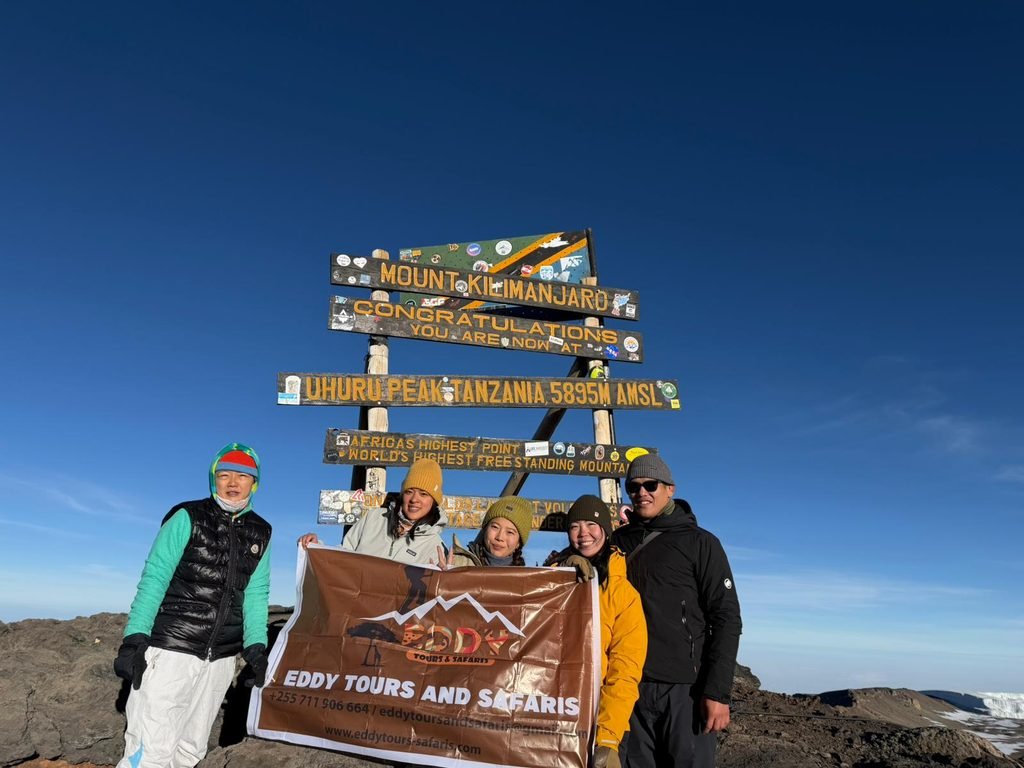
Uhuru Peak is the main destination for most people climbing Mount Kilimanjaro. At 5,895 metres above sea level, it is the highest point on the African continent. The name Uhuru means freedom in Swahili, giving the summit an important connection to Tanzania’s history and independence.
When climbers reach Uhuru Peak, they usually find the famous summit sign marking the highest point. This is where many visitors take photographs after several days of trekking. Reaching the sign can be an emotional moment, especially after the physical effort required during summit night. For some travelers, it represents the achievement of a long-held personal goal, while others simply enjoy the satisfaction of completing one of Africa’s most famous mountain challenges.
However, Uhuru Peak does not look like the sharp, narrow summit that some people imagine. It lies on the broad rim of Kibo’s volcanic crater, where the landscape consists of exposed rock, volcanic material, and patches of snow or ice depending on the conditions. The summit area is open and exposed, which means strong winds and freezing temperatures can make it difficult to remain there for long.
Most climbing groups spend only a short period at Uhuru Peak before beginning the descent. This is partly because of the cold and partly because the reduced oxygen availability at this elevation places considerable strain on the body. Your mountain guide will determine how long it is safe to remain at the summit based on the weather and the condition of the group.
2. The Incredible Views from the Summit of Kilimanjaro
One of the biggest rewards of climbing Kilimanjaro is the opportunity to look out over the surrounding landscapes from an elevation of nearly 6,000 metres. When the sky is clear, the views can extend across large parts of northern Tanzania and toward the Kenyan highlands. The mountain rises so far above the surrounding terrain that climbers may find themselves looking down onto layers of clouds rather than looking up at them.
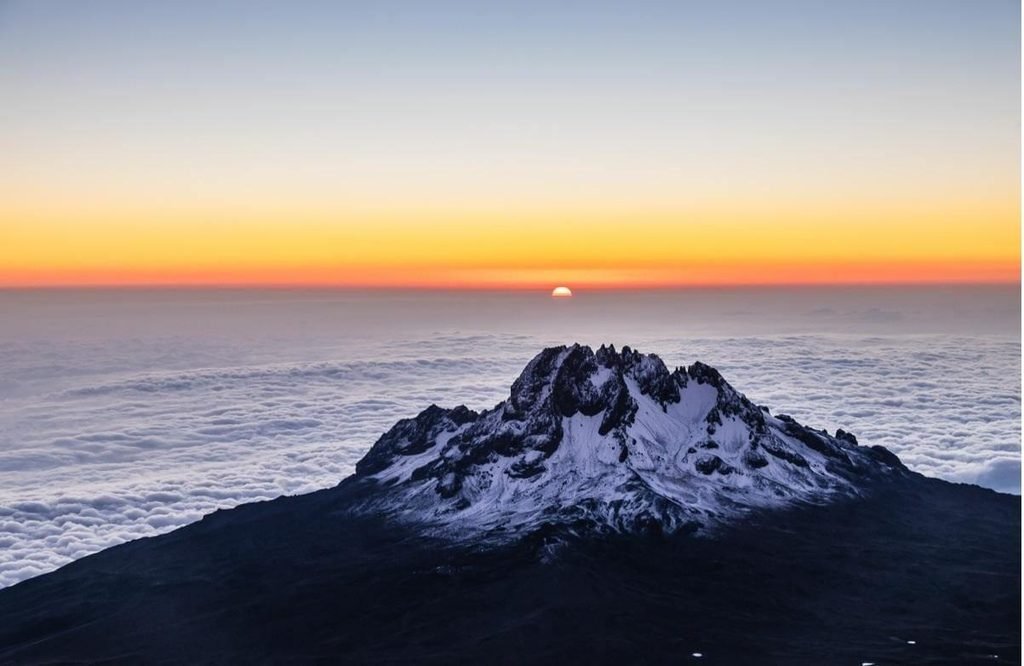
Sunrise is particularly memorable because many climbing itineraries schedule the final ascent during the night. If the weather and timing allow, climbers may reach Stella Point, Gilman’s Point, or the upper crater rim as the first light appears over the horizon. The changing colors can reveal the mountain’s rocky slopes, distant plains, and nearby volcanic formations.
Mawenzi Peak is another important feature visible from parts of the summit area. Its sharp ridges and rugged appearance contrast with the broad volcanic dome of Kibo. On exceptionally clear days, climbers may also see Mount Meru to the west, although clouds, haze, and weather conditions can limit visibility.
The summit views are never guaranteed. Some climbers reach Uhuru Peak under clear skies, while others experience fog, snow, or strong winds that restrict what they can see. For this reason, the experience should be appreciated as a high-altitude mountain adventure rather than a promise of perfect panoramic photographs.
3. Kilimanjaro’s Famous Glaciers and Ice Fields
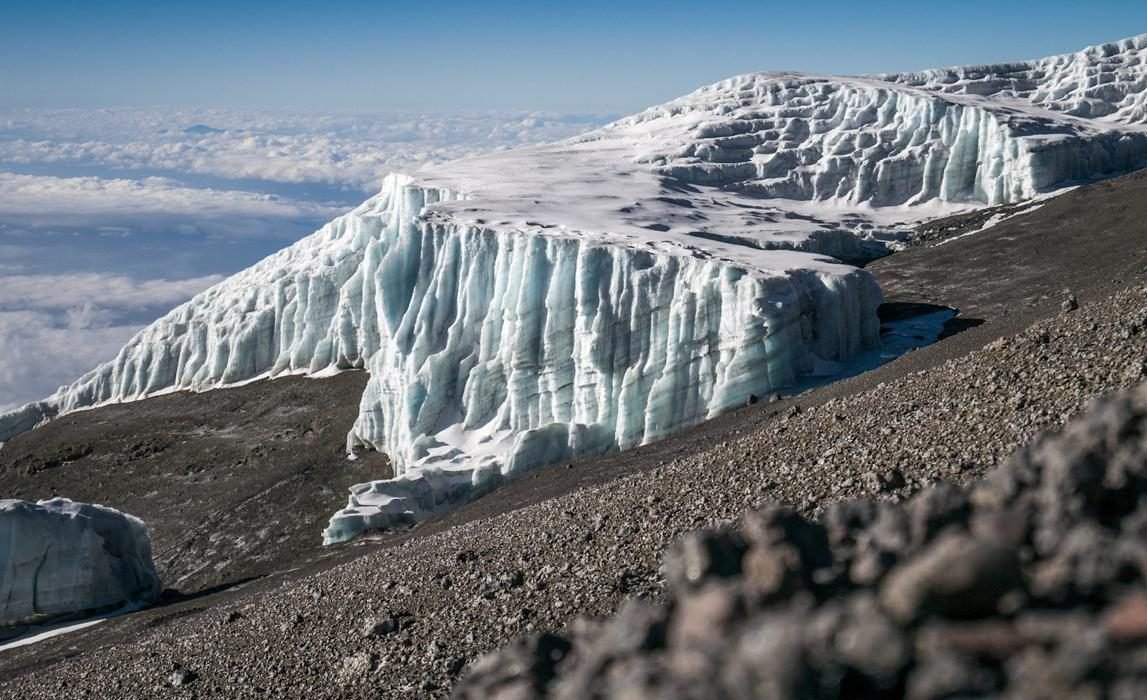
One of the most surprising things about Mount Kilimanjaro is that glaciers still exist near its summit despite the mountain’s location close to the equator. These ice formations are remnants of a much larger ice cover that once extended across substantial parts of Kibo. Today, the remaining glaciers are smaller and more fragmented, but they remain among the mountain’s most distinctive natural features.
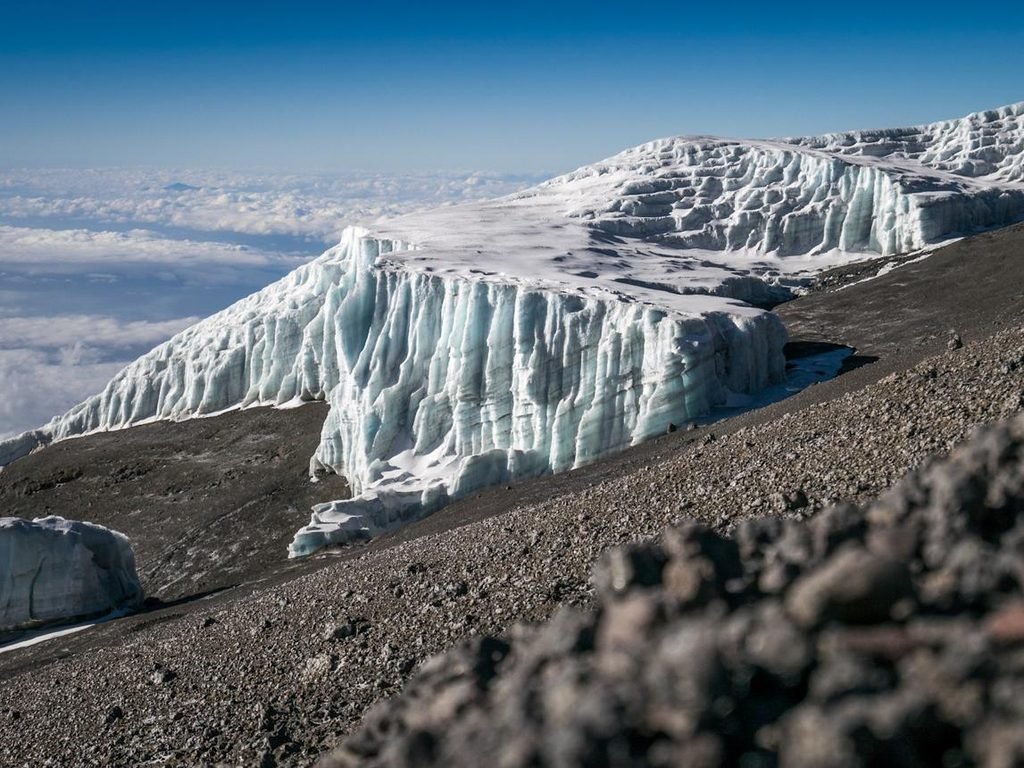
The glaciers can appear as tall walls of ice rising above dark volcanic rock. Their surfaces may show layers, cracks, and different shades of white and blue, depending on the light and ice conditions. From certain sections of the summit route, climbers can see these formations standing above the crater slopes, creating a striking contrast between the cold ice and the surrounding volcanic landscape.
Among Kilimanjaro’s well-known glaciers are the Furtwängler Glacier, Rebmann Glacier, and ice formations associated with the Northern and Southern Ice Fields. Their visibility depends on the route, the exact location of the climber, and the condition of the remaining ice. Not every climber will approach a glacier closely, and standard summit itineraries do not normally involve walking directly onto the ice.
Why Are There Glaciers on Kilimanjaro?
Kilimanjaro’s extreme elevation creates a very different environment from the warm plains below. At high altitude, temperatures can remain low enough for snow and ice to persist, even though the mountain lies close to the equator. The glaciers developed under past climatic conditions and have survived as remnants of earlier, more extensive ice coverage.
However, the remaining glaciers have been shrinking for many decades. Changes in snowfall, atmospheric moisture, solar radiation, and temperature all influence their condition. The mountain’s ice cover is therefore an important subject of scientific research and environmental monitoring.
Travelers planning to climb Kilimanjaro in 2027 or 2028 should understand that the glaciers are changing. Their exact appearance and size cannot be guaranteed for future expeditions, and visitors should follow park rules to avoid damaging these fragile formations.
4. Kibo Crater: The Volcanic Landscape at the Top
Mount Kilimanjaro is a volcanic mountain made up of three main volcanic cones: Kibo, Mawenzi, and Shira. Kibo is the highest and contains Uhuru Peak, while Mawenzi is known for its rugged ridges and Shira forms part of the mountain’s older volcanic landscape. Although Kilimanjaro is not currently erupting, Kibo is classified as dormant rather than extinct.
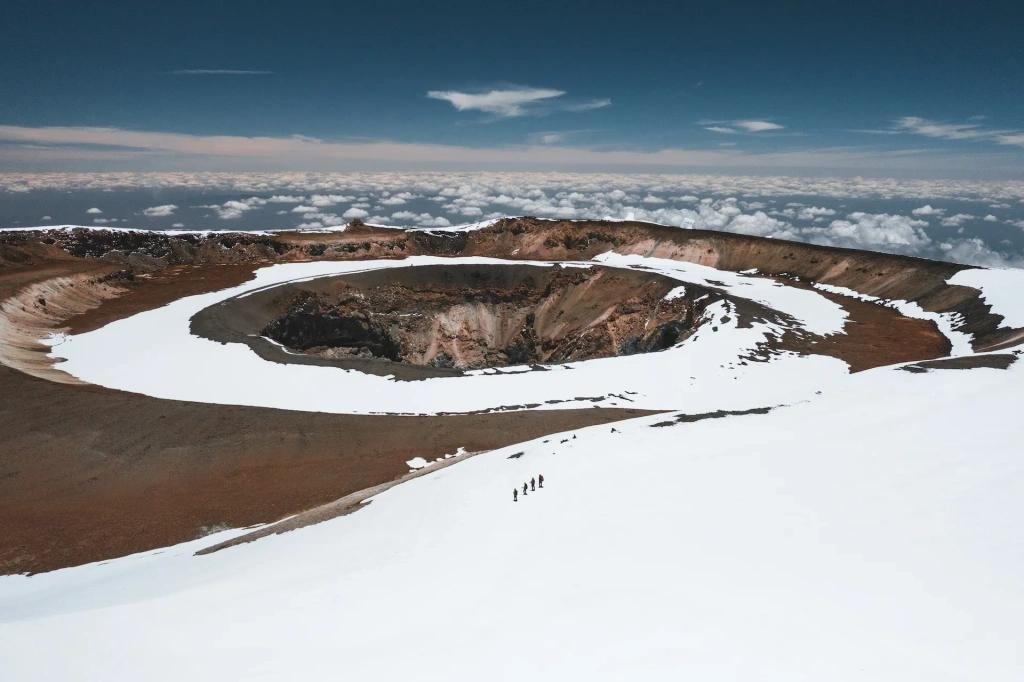
Near the top of Kibo is a large volcanic crater, which is one of the mountain’s most fascinating geological features. From certain points along the crater rim, climbers can look toward the interior of the volcano and observe a landscape formed by volcanic activity over a very long period. The terrain includes rocky slopes, ash deposits, and the inner crater area.
The crater is different from the summit itself. Most climbers aim to reach Uhuru Peak and then descend without entering the crater. Special itineraries may include visits to the crater area or an overnight stay at Crater Camp, but these arrangements require appropriate permissions and careful planning because the elevation is extremely high.
What Is the Ash Pit on Kilimanjaro?
Inside Kibo’s crater is an inner volcanic feature commonly known as the Ash Pit. It is associated with the mountain’s volcanic history and provides evidence of the geological processes that formed Kilimanjaro.
The Ash Pit is not part of the normal walking route to Uhuru Peak. Visiting the crater interior involves additional time at extreme altitude and should only be considered through an appropriately authorized itinerary with experienced guides. It is not a suitable addition for every climber, particularly those who have difficulty acclimatizing.
5. Stella Point and Gilman’s Point: Important Summit Landmarks
Many travelers hear about Stella Point and Gilman’s Point when researching Kilimanjaro climbing routes. These are important landmarks on the crater rim, but neither is the mountain’s highest point. Uhuru Peak remains the ultimate summit destination for climbers who are medically fit to continue.
Stella Point is located at approximately 5,756 metres and is commonly reached by climbers ascending from Barafu Camp on routes such as Machame and Lemosho. From Stella Point, the trail continues along the crater rim toward Uhuru Peak. Although this final section is less steep than some parts of the ascent, walking remains demanding because of the altitude.
Gilman’s Point, at approximately 5,685 metres, is generally reached by climbers following the Marangu or Rongai approaches from Kibo Hut. From there, climbers continue along the crater rim toward Stella Point and Uhuru Peak if their condition and the weather allow.
Reaching either point is a major achievement, but travelers should understand the difference between reaching the crater rim and reaching the highest summit. When comparing tour operators’ summit success statistics, it is useful to ask whether the figures refer specifically to Uhuru Peak or include other crater-rim landmarks.
6. Is There Snow at the Top of Mount Kilimanjaro?
Yes, snow can be found near the summit of Kilimanjaro, although the amount varies with the season and recent weather conditions. The mountain is famous for its snow-covered appearance, but this does not mean that the entire summit is permanently covered by deep snow. Some areas consist mainly of exposed volcanic rock, while others contain snow patches or the remaining glacier ice.
Snowfall can occur during different parts of the year, and fresh snow may temporarily cover sections of the upper mountain. In other periods, climbers may see more exposed ground around the summit. The glaciers are different from temporary snowfall because they consist of long-lasting ice that developed over much longer periods.
For travelers hoping to photograph snow on Kilimanjaro, it is important to maintain realistic expectations. Weather conditions change, and there is no guarantee that a particular climbing date will provide heavy snow or clear views of the glaciers.
7. How Cold Is It at the Top of Kilimanjaro?
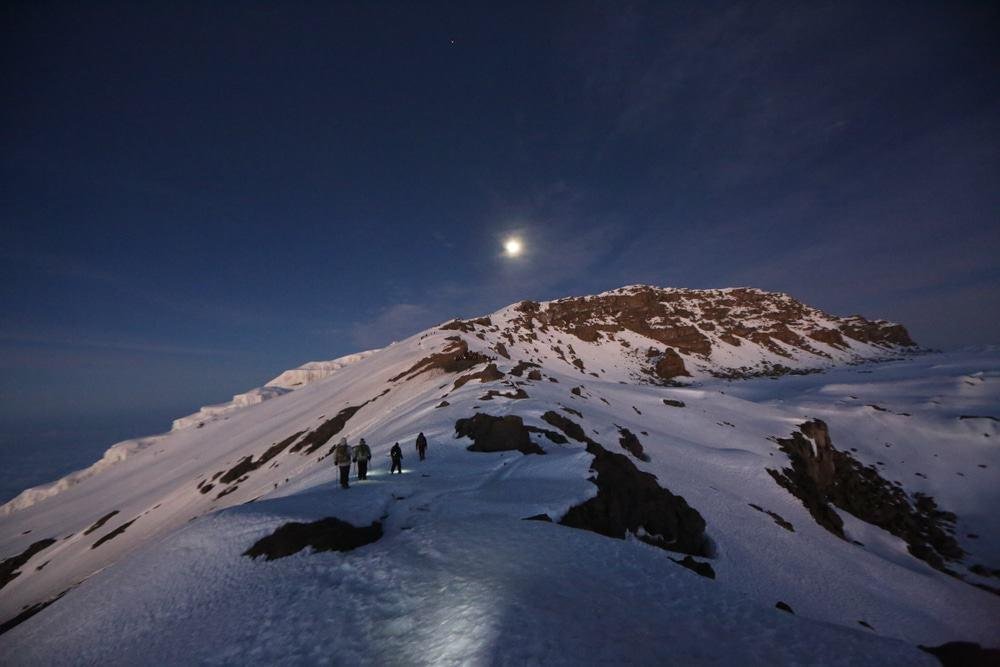
The summit of Kilimanjaro can be extremely cold, especially during the night and early morning when many climbers make their final ascent. Temperatures can fall well below freezing, and strong winds may make conditions feel even colder. The exposed volcanic landscape provides little shelter, so appropriate clothing is essential.
Most summit attempts begin during the night, which means climbers spend several hours walking in darkness before sunrise. A warm insulated jacket, thermal layers, waterproof outerwear, insulated gloves, suitable headwear, and a reliable headlamp are important parts of summit preparation. The exact equipment should be selected according to the season and the guidance provided by your mountain operator.
Cold weather is only one of the challenges. At nearly 6,000 metres, the reduced oxygen availability can make simple physical movements feel difficult. Climbers may experience fatigue, headaches, nausea, or other symptoms of altitude illness, making careful health monitoring essential throughout the ascent.
8. How Long Does It Take to Reach the Top of Kilimanjaro?
Most standard Kilimanjaro trekking itineraries take approximately five to nine days, depending on the route and the number of acclimatization days included. Longer itineraries generally provide more time for the body to adjust to altitude, which is an important consideration when planning a climb.
For many first-time climbers, seven- to nine-day itineraries are worth considering because they provide additional acclimatization opportunities compared with shorter schedules. However, the number of days alone does not determine safety. The daily elevation gains, sleeping altitudes, physical demands, and individual response to altitude all matter.
Popular Routes to Uhuru Peak
| Kilimanjaro route | Common duration | Main attraction |
|---|---|---|
| Machame | 6–7 days | Scenic landscapes and Barranco Wall |
| Lemosho | 7–8 days | Western approach and varied scenery |
| Marangu | 5–6 days | Mountain hut accommodation |
| Rongai | 6–8 days | Northern approach and Mawenzi views |
| Northern Circuit | 8–9 days | Longer route and quieter northern slopes |
| Umbwe | 6–7 days, with shorter versions offered | Steep, demanding approach |
Travelers interested in the Machame approach can explore our Machame Route Kilimanjaro guide for more information about its scenery and climbing stages. You can also read our Machame Route full itinerary to understand the daily journey toward Uhuru Peak.
9. What Does It Feel Like to Stand at Uhuru Peak?
Standing at Uhuru Peak is a different experience for every climber. Some people feel excited and energetic after reaching the summit, while others are exhausted and eager to begin descending. The final hours of climbing can be physically demanding, and the combination of cold weather, thin air, and limited sleep often makes the summit feel very different from an ordinary mountain viewpoint.
For many travelers, the most memorable moment is seeing the summit sign after spending several days walking through Kilimanjaro’s changing landscapes. Others remember the sunrise, the remaining ice formations, or the view of the crater. These experiences depend on the weather, the chosen route, and the condition of the climber.
However, reaching Uhuru Peak is not the end of the expedition. Climbers must still descend safely to a lower camp, often on the same day. The descent can be long and tiring, particularly after the effort required during summit night. It is therefore important to conserve energy, follow the guide’s instructions, and avoid treating the summit as the final physical challenge.
10. Can You Sleep at the Top of Mount Kilimanjaro?
Most climbers do not sleep at Uhuru Peak. Standard itineraries involve reaching the summit and then descending to a lower camp on the same day. This reduces the amount of time spent at extreme altitude and allows climbers to recover in an environment with greater oxygen availability.
There is a high-altitude campsite known as Crater Camp, located within Kibo’s summit area. Some specialized expeditions include an overnight stay there, but this is not a standard arrangement and requires appropriate park permissions and experienced guiding. Sleeping at such a high elevation involves additional risks, including serious altitude illness.
For most travelers, particularly first-time climbers, a standard itinerary with an appropriate acclimatization schedule is the more sensible option. The goal should be to reach the summit safely and descend rather than spending unnecessary time at extreme altitude.
11. Can You See Wildlife at the Top of Kilimanjaro?
Wildlife is much more common on Kilimanjaro’s lower slopes than in the summit zone. The rainforest supports various bird species and mammals, including monkeys, while the higher ecological zones contain fewer animals because of the colder temperatures, limited vegetation, and harsh environmental conditions.
At Uhuru Peak, climbers should not expect to see large wildlife species. The summit environment consists mainly of volcanic rock, snow or ice, and exposed terrain. The main attractions are the mountain’s geological features and surrounding views rather than animal sightings.
Travelers interested in Tanzania’s wildlife can combine a Kilimanjaro climb with a safari to destinations such as Serengeti National Park, Tarangire National Park, Ngorongoro Crater, or Lake Manyara National Park. This allows visitors to experience both the mountain and the country’s wildlife landscapes during the same holiday.
12. Best Time to Visit the Summit of Kilimanjaro
Mount Kilimanjaro can be climbed throughout the year, although some periods generally offer more favorable trekking conditions. January to March and June to October are commonly popular because they often experience relatively drier weather. However, conditions can change quickly at high altitude, and clear skies or good summit visibility cannot be guaranteed.
April and May are generally associated with heavier rainfall, which can make the lower trails muddy and slippery. November and December may also bring seasonal rain, although conditions vary between years. Even during relatively dry periods, freezing temperatures, strong winds, and snow are possible near the summit.
For travelers planning a Kilimanjaro expedition in 2027 or 2028, the best time depends on personal availability, preferred conditions, and the confirmed climbing arrangements. It is advisable to discuss your travel dates with your tour operator before booking international flights.
13. How to Prepare for the Final Climb to Uhuru Peak
Preparation for Kilimanjaro should begin several months before departure. Regular hill walking, cardiovascular exercise, and strength training can help climbers develop the endurance needed for several consecutive trekking days. Practicing long hikes with a daypack is particularly useful because it prepares the body for the sustained walking required on the mountain.
Choosing the right route is equally important. Longer itineraries such as eight-day Lemosho and nine-day Northern Circuit generally provide more time for acclimatization than shorter climbs. The seven-day Machame Route is another popular option because it includes an additional overnight stay at Karanga Camp compared with the six-day version.
Travelers should also understand the symptoms of altitude illness and consult a qualified healthcare professional before attempting high-altitude trekking. Physical fitness does not prevent altitude sickness, and climbers should never continue ascending with worsening symptoms. Professional guiding, appropriate equipment, and a willingness to descend when necessary are essential parts of responsible mountain preparation.
Frequently Asked Questions About the Top of Mount Kilimanjaro
1. What is at the very top of Mount Kilimanjaro?
Uhuru Peak, the highest point in Africa, located on the crater rim of Kibo volcano.
2. How high is the top of Kilimanjaro?
5,895 metres, or 19,341 feet, above sea level.
3. Is there snow at the top of Kilimanjaro?
Yes, snow can occur near the summit, although the amount changes with weather and season.
4. Are there glaciers on Kilimanjaro?
Yes. Kilimanjaro still has remaining glaciers and ice fields near the summit, although they have been shrinking.
5. What is the most famous glacier on Kilimanjaro?
Furtwängler Glacier is one of the best-known remaining ice formations.
6. Can you see the crater from Uhuru Peak?
Parts of the volcanic crater and surrounding summit landscape may be visible depending on the weather and your location.
7. Is Kilimanjaro an active volcano?
Kibo is classified as dormant, while the mountain is not currently erupting.
8. What does Uhuru mean?
Uhuru means freedom in Swahili.
9. Is Uhuru Peak the highest point in Africa?
Yes. Uhuru Peak is the highest point on the African continent.
10. Can you see Kenya from Kilimanjaro?
On clear days, views may extend toward the Kenyan highlands.
11. Can you see Mount Meru from Kilimanjaro?
Yes, Mount Meru may be visible to the west when conditions are exceptionally clear.
12. Is the top of Kilimanjaro flat?
The summit is part of a broad volcanic crater rim rather than a narrow pointed peak.
13. What is Stella Point?
Stella Point is a crater-rim landmark at approximately 5,756 metres, commonly reached from the southern climbing routes.
14. What is Gilman’s Point?
Gilman’s Point is a crater-rim landmark at approximately 5,685 metres, commonly reached from the Marangu and Rongai approaches.
15. Is Stella Point the same as Uhuru Peak?
No. Uhuru Peak is higher and is the mountain’s true summit.
16. How cold is Uhuru Peak?
Temperatures can fall well below freezing, particularly during summit night.
17. Can beginners reach the top of Kilimanjaro?
Physically prepared beginners can attempt Kilimanjaro on suitable guided itineraries, but reaching the summit is not guaranteed.
18. How long does it take to climb Kilimanjaro?
Most standard itineraries take approximately five to nine days, depending on the route.
19. Which route is best for reaching Uhuru Peak?
Longer itineraries such as eight-day Lemosho and nine-day Northern Circuit are strong options to consider because of their acclimatization opportunities.
20. Can you sleep at Uhuru Peak?
Standard climbs do not include sleeping at Uhuru Peak. Specialized crater-area camping arrangements may be available with appropriate permissions.
21. Is there an airport at the top of Kilimanjaro?
No. Climbers reach the summit on foot using established mountain trekking routes.
22. Can you drive to the top of Kilimanjaro?
No. The summit is reached by trekking rather than by road.
23. Are the Kilimanjaro glaciers disappearing?
Yes. The remaining glaciers have been retreating for many decades.
24. Can you climb Kilimanjaro in 2027 or 2028?
You can plan an expedition for those years, subject to confirmed park arrangements, operator availability, and travel requirements.
25. How can I book a Kilimanjaro climb?
Contact Eddy Tours & Safaris to discuss your preferred route, travel dates, group size, and preparation requirements.
Plan Your Kilimanjaro Summit Adventure with Eddy Tours & Safaris
The top of Mount Kilimanjaro is much more than a place to take a summit photograph. It is a remarkable volcanic landscape where Uhuru Peak rises above the African continent, ancient glaciers stand beside dark volcanic rock, and the crater of Kibo reveals the mountain’s geological history. When the weather is clear, the surrounding views can make the final hours of climbing particularly memorable.
However, reaching this environment requires careful planning and preparation. Climbers must manage cold temperatures, demanding trails, and the effects of high altitude. Choosing a suitable route with enough acclimatization time is one of the most important decisions you can make before attempting the summit.
At Eddy Tours & Safaris, we help travelers organize guided Kilimanjaro expeditions for 2027, 2028, and beyond. Our team can discuss Machame, Lemosho, Marangu, Rongai, Northern Circuit, and other route options before providing a detailed quotation based on your preferred travel dates and requirements.
Request Your Kilimanjaro Climbing Quotation
Chat with Eddy Tours & Safaris on WhatsApp
Email: sales@eddytours-safaris.com
Contact our team to plan your climb to Uhuru Peak with suitable preparation, realistic expectations, and mountain safety as the priority.