
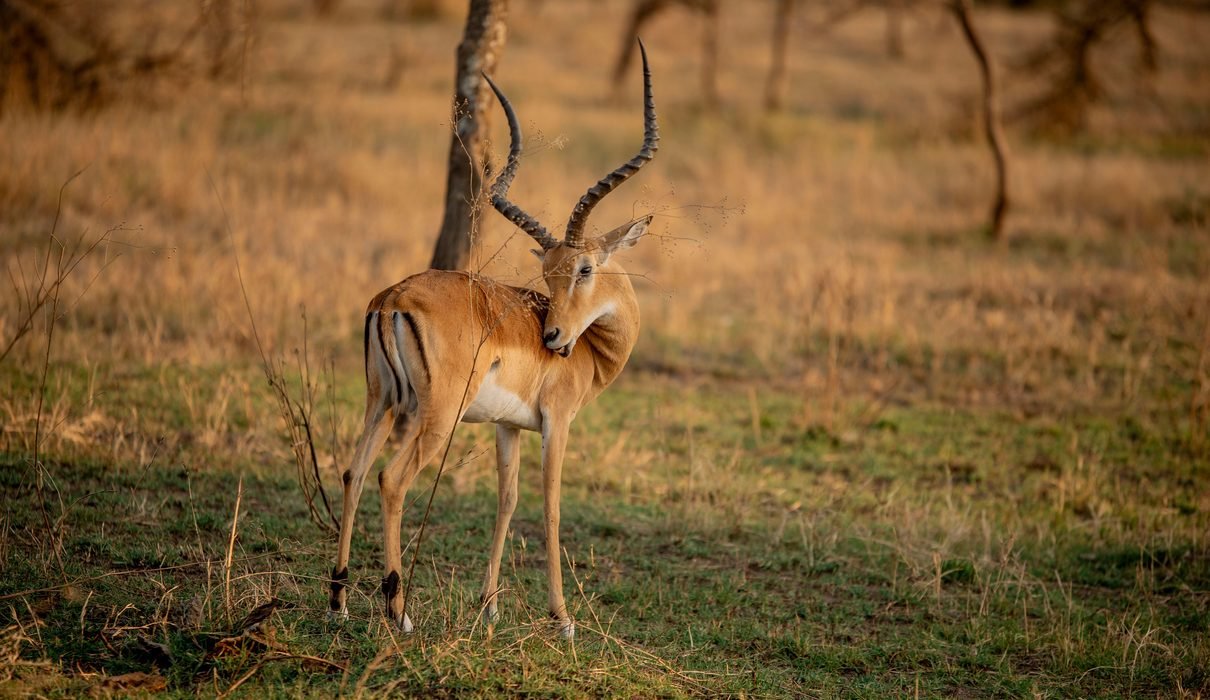
A full day on a Tanzania safari is very different from what most travellers imagine before arriving in Africa. Wildlife photographs and travel videos often show lions resting beneath trees, elephants crossing dusty roads, and giraffes walking through beautiful landscapes. What these pictures rarely show are the early mornings, long hours inside a safari vehicle, quiet moments when no animals appear, and the excitement of suddenly discovering wildlife in places where you least expect it. A real safari includes all these experiences, and understanding what happens throughout the day can help you prepare for your first wildlife holiday.
When you book a Tanzania safari with Eddy Tours & Safaris, your daily activities depend on the national parks included in your itinerary, the location of your accommodation, and the wildlife you hope to see. Some days involve travelling between destinations, while others are dedicated entirely to game drives. A full-day safari in Serengeti National Park, for example, may begin before sunrise and continue until late afternoon. Along the way, you might encounter elephants, lions, zebras, wildebeest, giraffes, buffaloes, and many smaller animals that are equally interesting to observe.
This guide explains what a typical full day on safari actually feels like, from waking up early at your lodge to returning in the evening. It also covers the practical details that travellers often overlook, including travelling conditions, meals, bathroom breaks, wildlife sightings, photography, and the importance of having an experienced safari guide.
5:30 AM – Waking Up Before Sunrise
A full safari day often begins much earlier than a normal holiday morning. Depending on your accommodation and the day’s programme, you may receive a wake-up call between 5:00 AM and 6:00 AM. At first, getting out of a comfortable bed while it is still dark can feel difficult, especially after spending the previous day travelling. However, early mornings are among the most interesting times to explore Tanzania’s national parks.
The air is usually cooler before sunrise, particularly in destinations such as the Serengeti and Ngorongoro highlands. You may hear birds calling outside your room or the distant sounds of wildlife. At some lodges and tented camps, staff members help guests prepare for early departures by arranging breakfast or packed meals.
Before leaving your room, you will normally have time to wash, dress, and organise your personal belongings. Comfortable clothing, a light jacket, sunscreen, binoculars, and a camera are useful items to carry. Even during warmer months, early mornings can feel surprisingly cold, especially when travelling in an open-roof safari vehicle.
One of the first things you notice is how peaceful the surroundings can be. There is no city traffic, and the usual sounds of everyday life are replaced by birds, insects, and occasionally larger animals moving in the distance.
6:00 AM – Breakfast and Preparing for the Game Drive
Breakfast arrangements depend on the lodge and your safari itinerary. Some travellers enjoy an early breakfast at their accommodation before departure, while others carry packed breakfast boxes to eat later in the national park. Your safari guide will normally explain the day’s programme, including the planned game-drive areas, meal arrangements, and approximate return time.
This is also a good opportunity to ask questions about the animals you hope to see. If you are particularly interested in lions, elephants, cheetahs, or birdwatching, tell your guide before leaving. Although wildlife sightings cannot be guaranteed, your guide can consider your interests when planning the route.
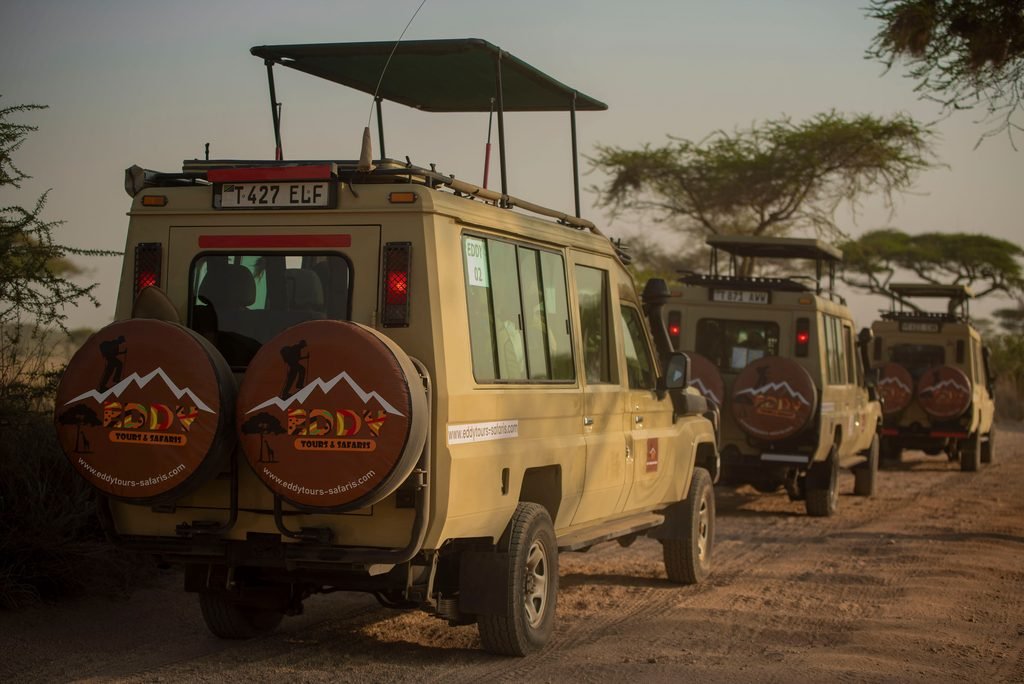
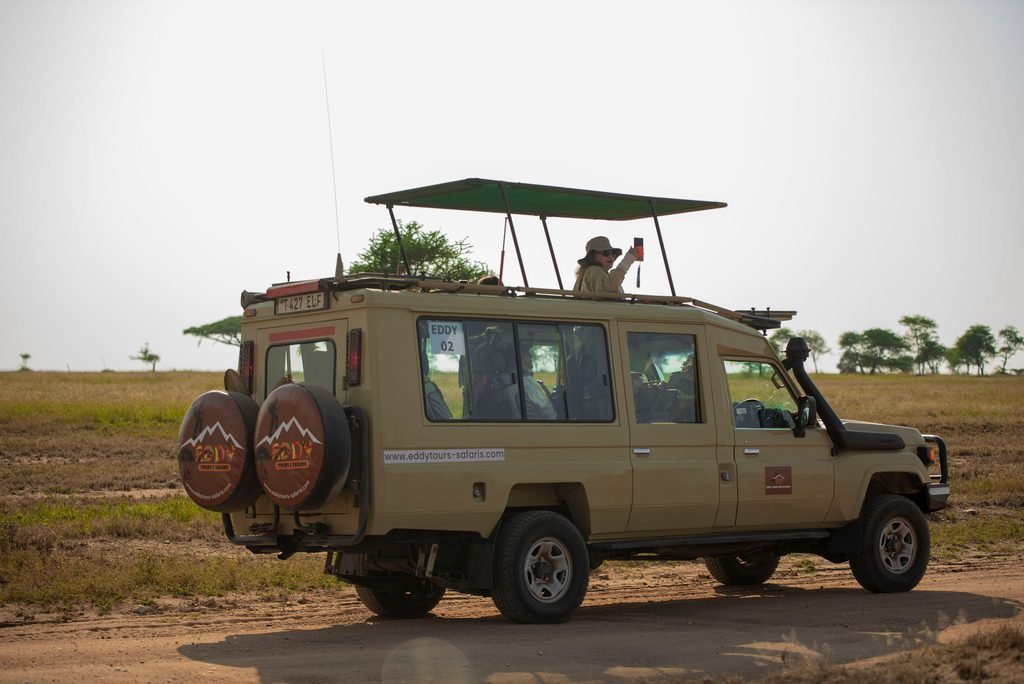
A full-day game drive usually involves spending several hours inside a four-wheel-drive safari vehicle. Most vehicles used for northern Tanzania safaris have large windows and a roof that can be raised in suitable conditions, allowing passengers to observe wildlife and take photographs.
Before departure, check that you have enough drinking water, your camera batteries are charged, and your personal belongings are securely stored. It is also wise to use the bathroom at your lodge because facilities inside national parks are limited to designated areas.
6:30 AM – Entering the National Park
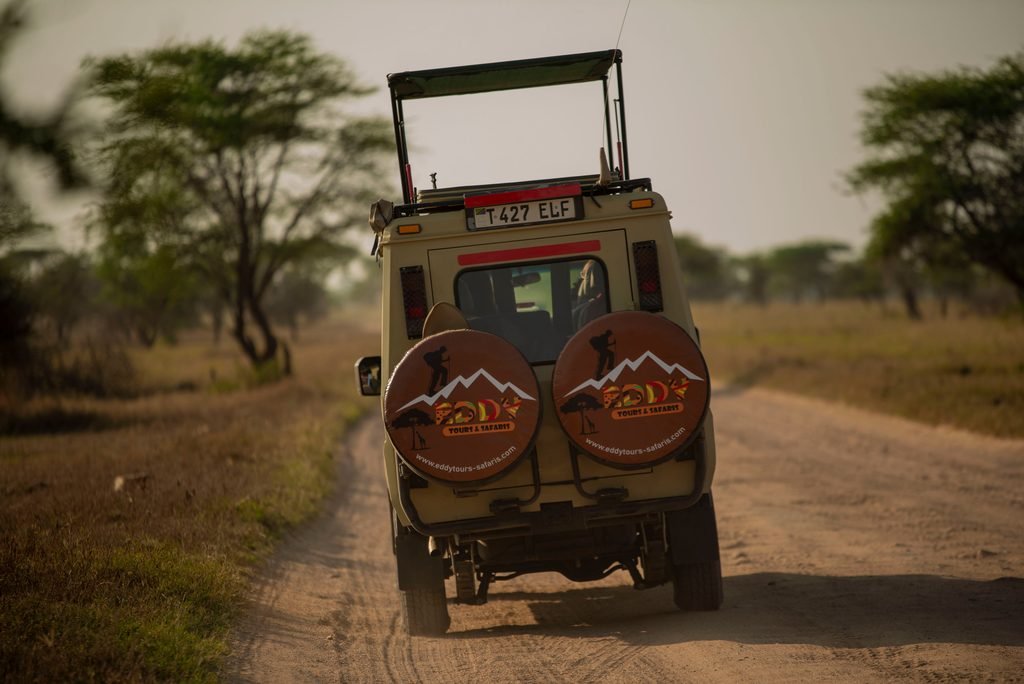
The first part of a morning game drive is often one of the most memorable experiences of the day. As the vehicle moves along the park roads, the landscape gradually becomes brighter. The early sunlight creates beautiful colours across the grasslands, trees, and distant hills.
In Serengeti National Park, you may see zebras grazing near the road, wildebeest moving across open plains, or giraffes feeding on acacia trees. In Tarangire National Park, elephants may be travelling between feeding areas and water sources. Every destination offers a different environment, and the wildlife you encounter depends on the season and natural animal movements.
During the first hour, you may find yourself looking in every direction, hoping to spot something interesting. Even animals that are relatively common in Tanzania can feel extraordinary when you see them in their natural habitat for the first time.
Your guide will help identify different species and explain their behaviour. You may learn why giraffes feed on particular trees, how elephants communicate, or why certain antelope species remain close to one another.
The experience is not simply about seeing animals. It is also about understanding the environment in which they live.
7:30 AM – The Excitement of Your First Major Wildlife Sighting
At some point during the morning, your guide may notice something that everyone else has missed. The vehicle slows down, and your guide points towards a distant tree, a patch of grass, or an animal resting beside the road.
Sometimes it is a lion lying beneath a tree. On another day, it might be a leopard resting on a branch, a herd of elephants crossing the road, or a cheetah watching the surrounding grasslands.
The excitement usually begins before you can clearly identify the animal. Everyone looks in the same direction, cameras come out, and conversations become quieter.
What makes wildlife viewing special is that the animals are not following a schedule. A lion may remain asleep for an hour, while an elephant might suddenly approach the road. A cheetah could spend several minutes watching distant antelopes before deciding to move elsewhere.
You cannot predict exactly what will happen, and that uncertainty is part of the safari experience.
However, it is important to understand that not every game drive produces dramatic wildlife encounters. Some mornings are quiet, and certain animals may remain hidden. A good safari experience is not measured only by the number of lions or leopards you see.
8:30 AM – Discovering the Smaller Details of the African Bush
After the excitement of seeing larger animals, many travellers begin noticing wildlife they initially overlooked. Birds, insects, reptiles, and smaller mammals are important parts of Tanzania’s ecosystems, and observing them can be just as interesting as watching elephants or lions.
You might see a secretary bird walking through the grass, a colourful lilac-breasted roller resting on a branch, or a group of mongooses searching for food. Termite mounds, animal tracks, and different tree species also become more interesting when your guide explains their importance.
This is where the knowledge of an experienced safari guide becomes particularly valuable. Guides often notice animal tracks, unusual movements, and distant sounds that visitors would otherwise miss.
For example, the behaviour of antelopes or birds may indicate that a predator is nearby. Your guide may stop the vehicle to observe the surroundings before deciding which direction to travel.
These quiet moments help you appreciate that a safari involves much more than searching for the Big Five.
9:30 AM – Realising That a Safari Involves Plenty of Driving
One thing many first-time travellers underestimate is the amount of time spent driving during a safari. Tanzania’s national parks cover large areas, and animals move freely throughout their habitats. Finding wildlife sometimes requires travelling considerable distances along gravel or dirt roads.
In Serengeti National Park, you may drive for thirty minutes without seeing a large animal before suddenly encountering a herd of elephants or a pride of lions. In other situations, wildlife may be visible almost continuously along the road.
The driving conditions can also be different from what you are used to at home. Some roads are dusty, uneven, or affected by seasonal rainfall. The vehicle may move slowly over rough sections, and you will occasionally feel bumps as it crosses uneven ground.
This is normal during many African wildlife safaris.
If you are prone to motion sickness, it is worth discussing suitable precautions with a healthcare professional before travelling. Carrying drinking water and wearing comfortable clothing can also make long game drives more enjoyable.
Despite the occasional discomfort, travelling through these landscapes provides opportunities to see places that would otherwise remain inaccessible to most visitors.
10:30 AM – A Short Break in the National Park
After several hours of wildlife viewing, your guide may stop at a designated picnic area or visitor facility for a short break. This provides an opportunity to stretch your legs, use the bathroom, drink water, and enjoy a snack.
Bathroom facilities are available at selected locations inside major national parks, but they are not found everywhere. Some game-drive routes involve long distances between designated stops, so it is sensible to use facilities whenever the opportunity arises.
Travellers should follow their guide’s instructions and avoid leaving the vehicle in areas where stopping is not permitted. Wild animals can be dangerous, even when they appear calm or are some distance away.
A short break also provides time to review photographs, discuss wildlife sightings, and prepare for the next part of the game drive.
11:30 AM – Watching Wildlife Without Rushing
By late morning, many travellers begin to understand that patience is an important part of a safari. Unlike visiting a zoo, you cannot move directly from one animal enclosure to another. Wildlife is free to travel, rest, hunt, and feed according to natural conditions.
Sometimes your guide may suggest remaining in one location for an extended period. You might watch elephants feeding, lions resting beneath a tree, or a group of giraffes moving slowly through the woodland.
At first, spending twenty or thirty minutes observing animals that appear to be doing very little may seem unusual. However, these moments often reveal interesting behaviour.
Elephants may communicate through body movements and sounds. Young animals may play while adults remain nearby. Predators may watch passing herbivores without attempting to hunt.
For wildlife photographers, patience can be particularly rewarding. Remaining in one place provides opportunities to capture natural behaviour rather than taking photographs only when the vehicle first arrives.
A private safari is useful in these situations because the guide can consider your interests when deciding how long to remain at a sighting, provided park rules and the day’s schedule allow it.
12:30 PM – Lunch in the African Wilderness
Lunch during a full-day safari is usually arranged at a designated picnic area. Depending on the package, your lodge may prepare a packed lunch containing sandwiches, chicken, rice, fruit, vegetables, or other suitable meals.
Some luxury safari arrangements offer more elaborate meals, but a simple packed lunch is common on standard wildlife tours.
Eating lunch inside a national park feels different from dining at a hotel or restaurant. You may be surrounded by open landscapes, distant mountains, or trees filled with birds. Other safari vehicles may also stop at the same picnic area.
Your guide will help you identify a suitable place to sit and explain any safety precautions. It is important not to feed wild animals or leave food unattended where wildlife may reach it.
After lunch, you may have time to relax briefly before continuing the afternoon game drive.
1:30 PM – The Warmest Part of the Day
Early afternoon can be one of the quieter periods for wildlife viewing, particularly during hot weather. Some animals seek shade, while predators may spend several hours resting.
This does not mean there is nothing to see. Elephants may continue feeding, giraffes may browse on trees, and large herds of zebras or wildebeest may remain active across the plains.
However, visitors should not expect dramatic wildlife activity throughout every hour of the day.
Inside the safari vehicle, temperatures can become warmer, especially when the sun is directly overhead. Wearing light clothing, drinking water regularly, and using sunscreen can help you remain comfortable.
Your guide may also adjust the route to explore areas where animals are more likely to gather during warmer periods, such as rivers, wetlands, or shaded woodland.
This is often when travellers begin to appreciate the physical demands of a full-day safari. Spending several hours in a vehicle, concentrating on wildlife, and travelling over uneven roads can be tiring.
2:30 PM – Unexpected Wildlife Encounters
One of the most interesting things about a safari is that wildlife sightings can happen when you least expect them. After a quiet period, your guide may suddenly notice a leopard moving through the grass or a group of elephants approaching a waterhole.
Sometimes a herd of animals crosses the road directly in front of the vehicle. On other occasions, you may watch a predator following distant prey.
These encounters remind travellers why wildlife viewing cannot be guaranteed or arranged according to a fixed schedule.
A safari guide’s experience is valuable when interpreting animal behaviour and deciding where to position the vehicle safely. Guides must also follow national park regulations, maintain appropriate distances, and avoid disturbing wildlife.
Travellers should remain patient and avoid asking guides to drive too close to animals simply to obtain photographs. Respectful wildlife viewing protects both visitors and the animals.
3:30 PM – Enjoying the Changing Afternoon Light
As the afternoon progresses, the sunlight begins to soften, and the landscape often becomes particularly attractive for photography. The colours of the grasslands, trees, and distant hills change as the sun moves lower in the sky.
Animals may also become more active as temperatures decrease. Elephants may move towards water sources, herbivores may continue grazing, and some predators may begin changing their resting locations.
For photographers, late afternoon can provide excellent opportunities to capture wildlife in warm natural light.
Even when there are no animals nearby, the scenery itself can be worth photographing. The Serengeti’s open plains, Tarangire’s baobab trees, and the highlands surrounding Ngorongoro provide beautiful landscapes throughout the year.
Many travellers find that the final hours of a game drive are among the most enjoyable because they have become more comfortable with the rhythm of the safari.
4:30 PM – Beginning the Journey Back to Your Lodge
Towards the end of the afternoon, your guide will normally begin travelling towards your accommodation or the national park exit. The exact departure time depends on the park regulations, the distance to your lodge, and the day’s itinerary.
This final part of the drive can still produce interesting wildlife sightings. You may encounter giraffes feeding near the road, elephants moving through the woodland, or antelopes gathering in open areas.
However, it is important to respect the park’s operating hours. Standard daytime game drives must finish according to the applicable regulations, and night game drives are only available where specifically authorised.
By this stage, many travellers feel pleasantly tired after spending most of the day outdoors. The excitement of wildlife encounters is mixed with the physical effects of travelling and concentrating for several hours.
You may also begin comparing your favourite moments of the day with other passengers.
5:30 PM – Returning to Your Safari Accommodation
Returning to your lodge or tented camp after a full day in the national park can feel particularly rewarding. After hours of driving, you finally have time to shower, change clothes, and relax.
Depending on the accommodation, you may enjoy a drink in the lounge, sit outside watching the surrounding landscape, or spend some time reviewing photographs.
Some safari lodges are located in areas where wildlife occasionally moves nearby. Guests should always follow the property’s safety instructions, particularly after dark. At certain tented camps, staff members may escort visitors between their rooms and shared facilities.
The evening provides an opportunity to reflect on the day’s experiences. You may have seen several lions, a large elephant herd, or a rare bird species. Alternatively, the most memorable moment might have been watching the sunrise over the plains.
Every safari day is different.
7:00 PM – Dinner and Sharing Safari Stories
Dinner is usually served in the lodge restaurant or dining area. Meals vary according to the accommodation category, but many safari properties offer a selection of local and international dishes.
After spending the day exploring the national park, dinner provides a welcome opportunity to relax. Travellers often discuss their wildlife sightings, compare photographs, and ask their guide questions about the animals they encountered.
Your guide may also explain the following day’s programme, especially if you will be travelling to another national park.
For example, visitors staying in the Serengeti may depart the next morning for the Ngorongoro Conservation Area, while those on longer itineraries may continue exploring different sections of the Serengeti.
The evening is generally quieter than the daytime, and many travellers choose to return to their rooms early because another early departure may be scheduled.
9:00 PM – Falling Asleep After a Full Safari Day
By the time you return to your room, you may feel more tired than expected. Although a safari involves spending much of the day sitting inside a vehicle, the combination of early mornings, road conditions, changing temperatures, and constant attention can be physically demanding.
At the same time, the experience can be deeply satisfying.
You may remember the moment an elephant crossed the road, the sound of birds in the morning, or the excitement of finding a lion hidden in the grass.
At some accommodations, you may hear insects, birds, or distant animal calls during the night. These sounds are part of staying close to Tanzania’s natural landscapes.
After a long day, most travellers are ready to sleep and prepare for another morning in the national park.
What Does a Full-Day Tanzania Safari Actually Cost?
The cost of a full-day safari depends on the national park, starting location, number of travellers, transport arrangements, and services included. A day trip from Arusha to Tarangire National Park, for example, has different operating costs from a full-day game drive in the Serengeti when accommodation is already included in a longer safari package.
For a private day trip, expenses may include the safari vehicle, professional guide, fuel, national park entrance fees, lunch, and drinking water. The total price is normally divided among the participants, which means the cost per person may decrease when more travellers share the same private vehicle.
Travellers should request a quotation showing the exact inclusions rather than relying on a general advertised price. Park fees and operating costs can change, particularly when planning holidays several years ahead.
For a personalised quotation, visitors can contact Eddy Tours & Safaris with their preferred travel dates and the number of participants.
What Surprises First-Time Safari Travellers the Most?
Many first-time visitors arrive in Tanzania expecting to see animals throughout the entire day. In reality, wildlife viewing involves periods of excitement mixed with quieter moments. Some animals are easy to observe, while others may remain hidden despite several hours of searching.
Another surprise is the size of the national parks. Serengeti National Park covers an enormous area, and travelling between wildlife locations can take considerable time. Visitors who understand these distances before arrival are often better prepared for the daily schedule.
The weather can also be surprising. Although Tanzania is often associated with warm temperatures, mornings and evenings can be cool, particularly around Ngorongoro. Dusty roads, strong sunlight, and occasional rainfall are normal parts of safari travel.
Perhaps the biggest surprise is how interesting the smaller details become. Many travellers begin their safari hoping to see lions and elephants but finish the day talking about birds, animal tracks, unusual behaviour, and the landscapes they explored.
Is a Full-Day Safari Better Than a Half-Day Game Drive?
A full-day safari provides more time to explore different areas of a national park and increases the opportunities to encounter wildlife. It is particularly suitable for large destinations such as Serengeti National Park, where animals may be spread across extensive habitats.
A half-day game drive can still be enjoyable, especially when travelling with young children or visitors who prefer shorter activities. It may also be suitable when arriving at a lodge in the afternoon or departing for another destination.
However, travellers should understand that spending more hours inside a national park does not guarantee more sightings. Wildlife behaviour depends on natural conditions, and some of the best encounters happen during short periods.
For visitors planning a multi-day Tanzania safari, combining full-day and shorter game drives can provide a comfortable balance between wildlife viewing and relaxation.
What Should You Wear During a Full-Day Safari?
Comfortable clothing is important because most safari days involve several hours inside a vehicle. Lightweight trousers, breathable shirts, and comfortable shoes are suitable for most daytime game drives. Neutral colours such as beige, brown, olive, and khaki are practical choices, although special safari clothing is not essential for ordinary vehicle-based tours.
A light jacket or fleece is useful for early mornings, especially in the Ngorongoro highlands. A wide-brimmed hat, sunglasses, and sunscreen can help protect against strong sunlight during the day.
Travellers should also carry a small bag containing personal items such as medication, tissues, a reusable water bottle, and camera accessories. Avoid bringing unnecessary luggage into the safari vehicle because storage space may be limited.
Is It Safe to Spend the Whole Day in a Safari Vehicle?
A professionally organised Tanzania safari is designed to allow visitors to observe wildlife while following national park safety regulations. Safari guides are familiar with local conditions and understand the importance of maintaining appropriate distances from wild animals.
Travellers should remain inside the vehicle unless their guide confirms that stopping and leaving the vehicle are permitted. Feeding animals, approaching wildlife on foot without authorisation, and making unnecessary noise near sensitive sightings should be avoided.
It is also important to follow instructions when staying at lodges or tented camps located in wildlife areas. Wild animals can move near accommodation facilities, particularly after dark.
The Tanzania National Parks Authority provides official information about national parks and visitor regulations. Travellers should follow the guidance of park authorities and their safari guides throughout the trip.
Why an Experienced Safari Guide Makes a Difference
A professional safari guide does much more than drive visitors through a national park. Guides help identify wildlife, interpret animal behaviour, explain local ecosystems, and organise daily activities according to the itinerary.
An experienced guide may notice subtle signs that indicate the presence of animals, including tracks, bird calls, and unusual movements among herbivores. This knowledge can make the game drive more interesting, even when major wildlife sightings are limited.
Guides also help manage practical arrangements such as picnic stops, park entry procedures, and travelling times. Their understanding of road conditions and park regulations contributes to a more comfortable and organised experience.
Travellers should feel comfortable asking questions throughout the day. Learning about animal behaviour, conservation, and the surrounding environment is an important part of a wildlife safari.
Frequently Asked Questions About a Full-Day Tanzania Safari
How many hours is a full-day safari in Tanzania?
A full-day safari may involve approximately eight to ten hours away from the lodge, including game drives, meals, and rest stops. The actual duration depends on the national park, accommodation location, and itinerary. Some game drives are shorter because of travelling distances or park operating hours.
Do you see animals all day during a safari?
No. Wildlife sightings vary throughout the day, and there may be long periods when few animals are visible. Some game drives produce numerous sightings, while others are quieter. Animals move freely, so their location and behaviour cannot be predicted precisely.
What time do Tanzania safaris normally start?
Many morning game drives begin between 6:00 AM and 7:00 AM, depending on park access rules and accommodation arrangements. Early departures are popular because temperatures are cooler and some animals are more active.
Is a full-day safari tiring?
A full-day safari can be tiring because it involves early mornings, long hours inside a vehicle, and travelling over uneven roads. However, regular breaks, comfortable clothing, and adequate drinking water can help make the experience more enjoyable.
Can children enjoy a full-day safari?
Yes, many children enjoy wildlife safaris, particularly when the itinerary includes regular breaks and suitable activities. However, very young children may find long game drives difficult. Families should discuss children’s ages and preferred schedules with their safari operator.
Are there toilets inside Tanzania’s national parks?
Yes, designated picnic areas and visitor facilities in many national parks have toilets. However, facilities may be far apart, so travellers should use them when available and follow their guide’s instructions.
Do safari vehicles have air conditioning?
Safari vehicle facilities vary. Many traditional four-wheel-drive safari vehicles use opening windows and raised roofs for ventilation rather than relying on air conditioning during game drives. Travellers should confirm the vehicle arrangements before booking.
Can I leave the safari vehicle to take photographs?
Visitors should only leave safari vehicles in designated areas or when specifically permitted by park regulations and their guide. Leaving the vehicle near wild animals can be dangerous and may violate national park rules.
What happens if it rains during a safari?
Game drives can often continue during light rainfall, although heavy rain may affect visibility and road conditions. Safari guides may adjust routes or activities according to the weather and safety requirements.
Is it possible to see lions and elephants in one day?
Yes, it is possible to see both lions and elephants during a single game drive in destinations where these species occur. However, sightings cannot be guaranteed because wildlife movements are unpredictable.
Should I choose a private or group safari?
Private safaris provide exclusive use of the vehicle and greater flexibility when organising game drives. Group joining safaris allow travellers to share transport expenses but generally follow a fixed schedule. The best option depends on your budget and preferred travel experience.
Which Tanzania national park is best for a full-day safari?
Serengeti National Park is particularly suitable for full-day game drives because of its extensive landscapes and diverse wildlife. Tarangire, Lake Manyara, and other national parks also offer excellent wildlife experiences. The best choice depends on the season and your interests.
Experience a Full Day on Safari with Eddy Tours & Safaris
A full day on safari is not simply about travelling from one wildlife sighting to another. It involves early mornings, changing landscapes, quiet periods, unexpected encounters, and opportunities to learn about animals in their natural environment. Some moments are exciting, while others require patience, but together they create a much clearer understanding of what an African wildlife safari actually involves.
Eddy Tours & Safaris is a local tour company in Arusha, Tanzania, highly recommended by travellers who have explored the country with its team. The company arranges private Tanzania wildlife safaris, Kilimanjaro climbing expeditions, and personalised holidays for visitors interested in experiencing the country’s natural attractions.
Whether you want to spend a full day exploring Tarangire National Park, enjoy several days in the Serengeti, or combine wildlife viewing with the Ngorongoro Crater, the team can help you plan a suitable itinerary based on your travel dates, accommodation preferences, and budget.
To organise your Tanzania safari for 2027, 2028, or 2029, contact Eddy Tours & Safaris for a personalised quotation.
Company: Eddy Tours & Safaris
Location: Arusha, Tanzania
Website: Eddy Tours & Safaris
Safari Enquiries: Contact Our Safari Team
Email: sales@eddytours-safaris.com
WhatsApp: +255 711 906 664