
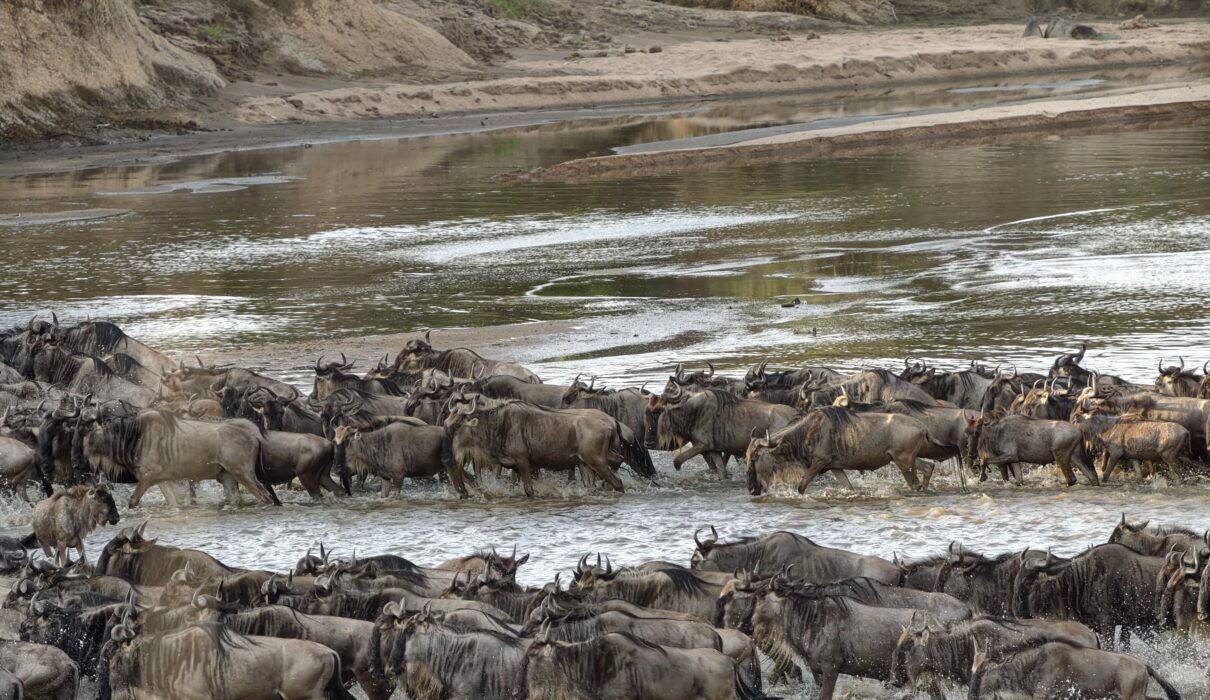
Planning a Wildebeest Migration Safari in Tanzania for 2027 is an exciting opportunity to experience one of Africa’s most remarkable wildlife movements. Every year, enormous herds of wildebeest travel across the Serengeti ecosystem in search of fresh grazing and water, accompanied by zebras and other grazing animals. Their journey attracts predators such as lions, cheetahs, hyenas and crocodiles, creating a wildlife experience that draws visitors from around the world.
However, planning a successful migration safari requires more than simply booking a trip to Serengeti National Park. The wildebeest do not remain in one place throughout the year, and their movements depend largely on rainfall, grazing conditions and seasonal changes. A traveler visiting the northern Serengeti in February may miss the large calving herds gathering farther south, while someone visiting the southern plains in August may be too far from the Mara River crossings.
The most important decision is therefore choosing the right location for your travel dates. You also need to consider the number of safari days, accommodation location, transportation, budget and the type of migration experience you hope to see. Some travelers want to photograph wildebeest crossing the Mara River, while others prefer the calving season around Ndutu, when thousands of young animals are born and predators are particularly active.
At Eddy Tours & Safaris, we help travelers plan Tanzania wildlife safaris based on their interests, travel dates and preferred accommodation. Whether you are visiting Tanzania for the first time or returning to experience another stage of the migration, this guide explains how to plan your 2027 Serengeti safari with realistic expectations and enough time to explore the right wildlife areas.
Understanding the Great Wildebeest Migration in Tanzania
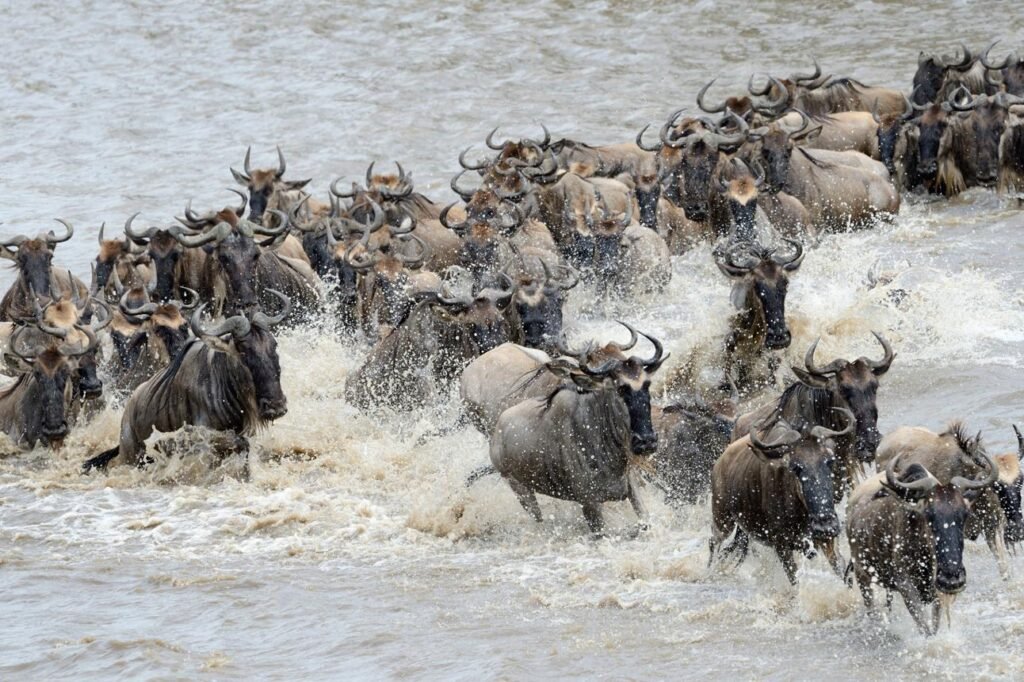
The Great Wildebeest Migration is a continuous movement of large grazing herds through the Serengeti-Mara ecosystem, which extends across northern Tanzania and southwestern Kenya. The migration is mainly driven by rainfall and the availability of nutritious grass. Wildebeest travel in search of suitable grazing conditions, while zebras and other herbivores move through many of the same landscapes.
The migration is not a single event that takes place during one particular month. Different stages occur throughout the year, including calving on the southern plains, northward movement through the central and western Serengeti, river crossings in the north and the eventual return toward the southern grasslands. This means travelers can experience migration-related wildlife activity during many different months, provided they visit the appropriate region.
Although the general seasonal pattern is well understood, the exact movement of the herds changes from year to year. Rainfall may arrive earlier or later than expected, affecting where animals gather and how quickly they move. For a 2027 safari, the traditional migration calendar should therefore be treated as a planning guide rather than a fixed schedule.
1. Choose the Best Time for Your 2027 Wildebeest Migration Safari
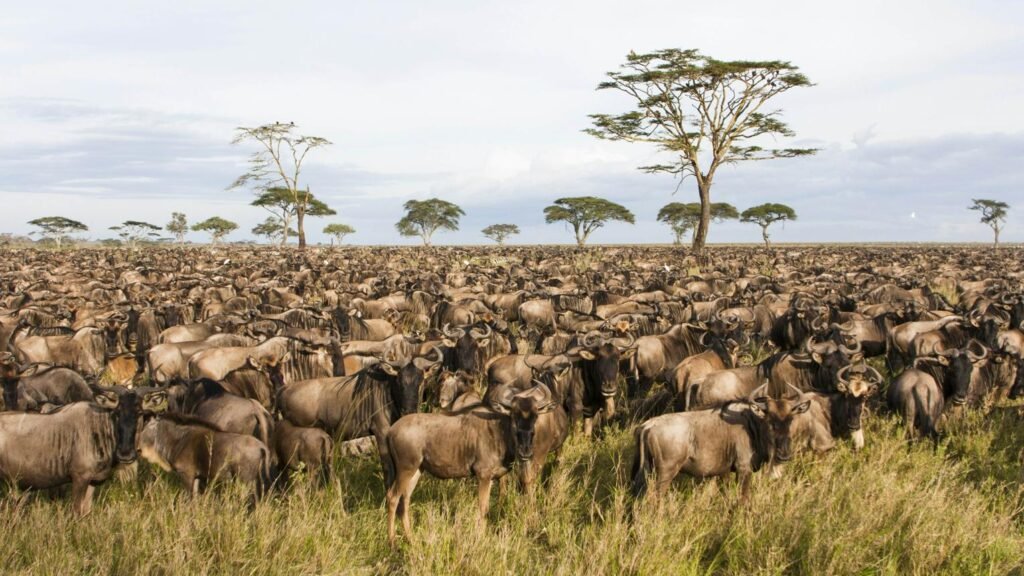
The best time to visit the Serengeti depends on which stage of the migration you want to experience. Travelers interested in newborn wildebeest and predator activity often choose the southern plains during the early months of the year. Those hoping to see river crossings usually plan their safari between July and October, when the herds are often concentrated in the northern Serengeti.
Between these periods, the animals generally move through the central and western regions of the ecosystem. This can provide excellent opportunities to see large herds traveling across open landscapes, although their precise location remains dependent on seasonal conditions.
2027 Wildebeest Migration Calendar
| Month | Expected migration region | Main wildlife experience |
|---|---|---|
| January | Southern Serengeti and Ndutu | Large grazing herds and beginning of calving |
| February | Ndutu and southern plains | Main calving period and predator activity |
| March | Southern Serengeti | Calving activity and herds beginning to spread |
| April | Southern and central Serengeti | Green landscapes and changing herd movements |
| May | Central and western Serengeti | Large herds moving toward western areas |
| June | Western Corridor and Grumeti | Northward movement and possible river crossings |
| July | Western and northern Serengeti | Herds approaching the Mara River region |
| August | Northern Serengeti | Mara River crossing opportunities |
| September | Northern Serengeti | River crossing opportunities and large herds |
| October | Northern Serengeti, with some southward movement | Possible later crossings |
| November | Central and eastern Serengeti | Herds moving toward southern grazing areas |
| December | Southern Serengeti and Ndutu | Returning herds and renewed grazing |
These are typical seasonal patterns, not confirmed locations for 2027. Actual movements will depend on rainfall and grazing conditions.
2. Decide Whether You Want River Crossings or Calving Season
One of the biggest mistakes travelers make is assuming that every Serengeti migration safari offers the same wildlife experience. The dramatic river crossings shown in documentaries are very different from the calving season on the southern plains. Both can be rewarding, but they occur in different regions and generally require different travel dates.
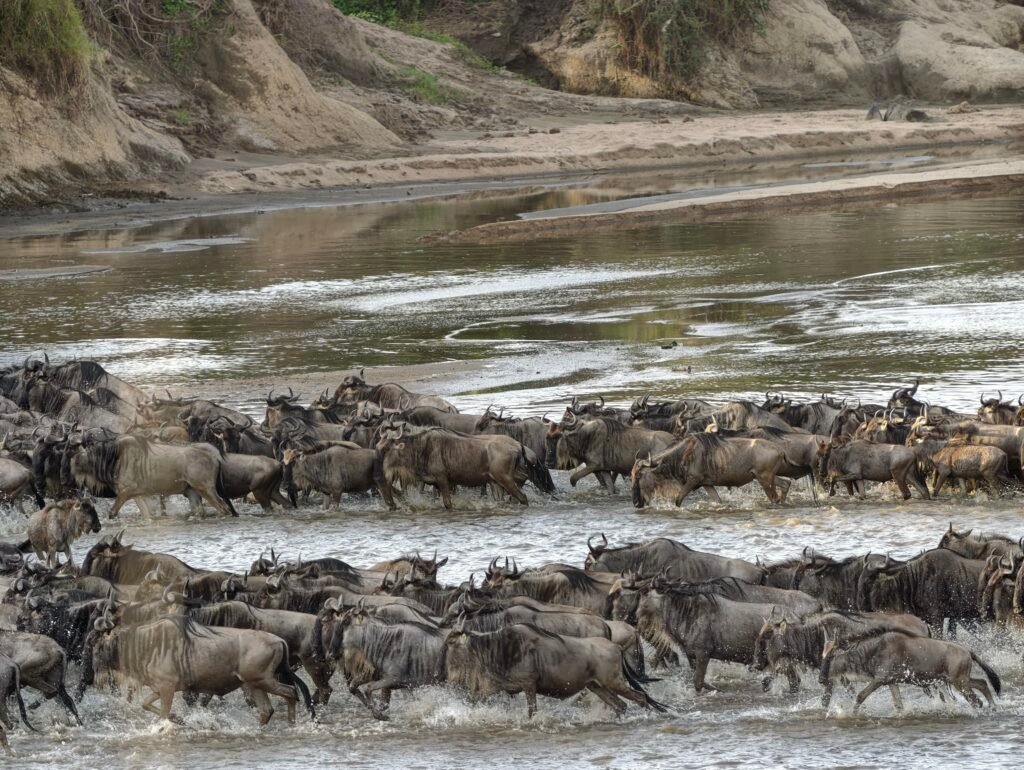
Mara River Crossings: July to October
The Mara River crossings are among the most famous events associated with the Great Migration. During the northern migration period, large groups of wildebeest may gather along the riverbanks before attempting to cross the water. Some animals hesitate for long periods, while others suddenly begin moving, creating intense activity as the herds enter the river.
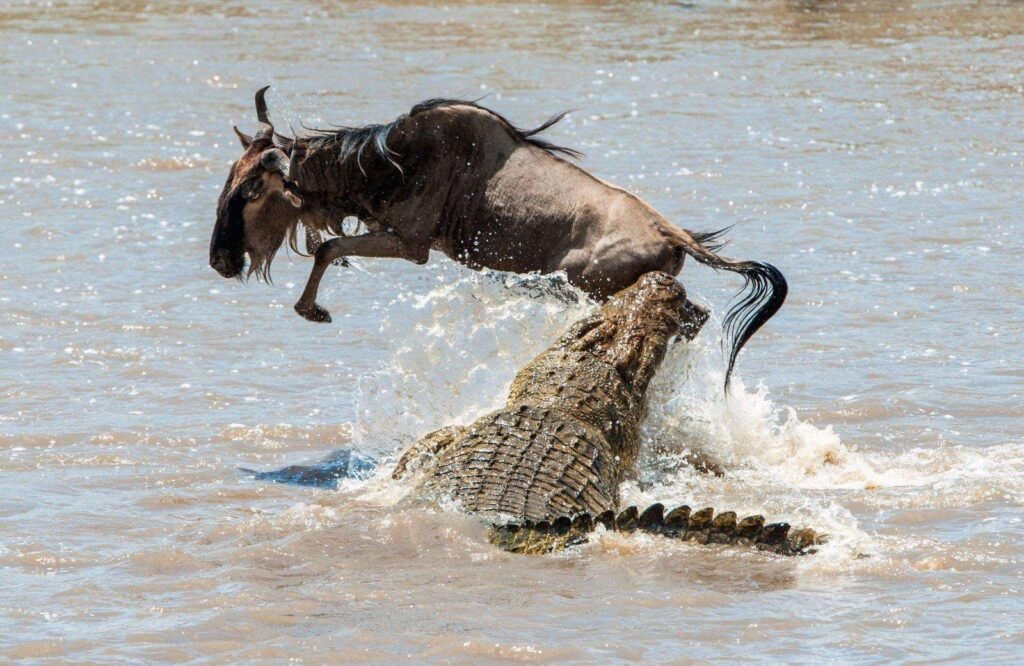
The river presents several challenges, including strong currents, steep banks and crocodiles. However, crossings are unpredictable. A herd may approach the river and turn away, remain nearby for several hours, or cross at a different location. Even during August and September, travelers should never assume that a crossing will happen during a particular game drive.
For travelers planning a 2027 river crossing safari, the northern Serengeti around Kogatende and the Mara River is generally the most appropriate area to consider. Spending several nights in this region improves the opportunity to observe wildlife activity without requiring a rushed visit.
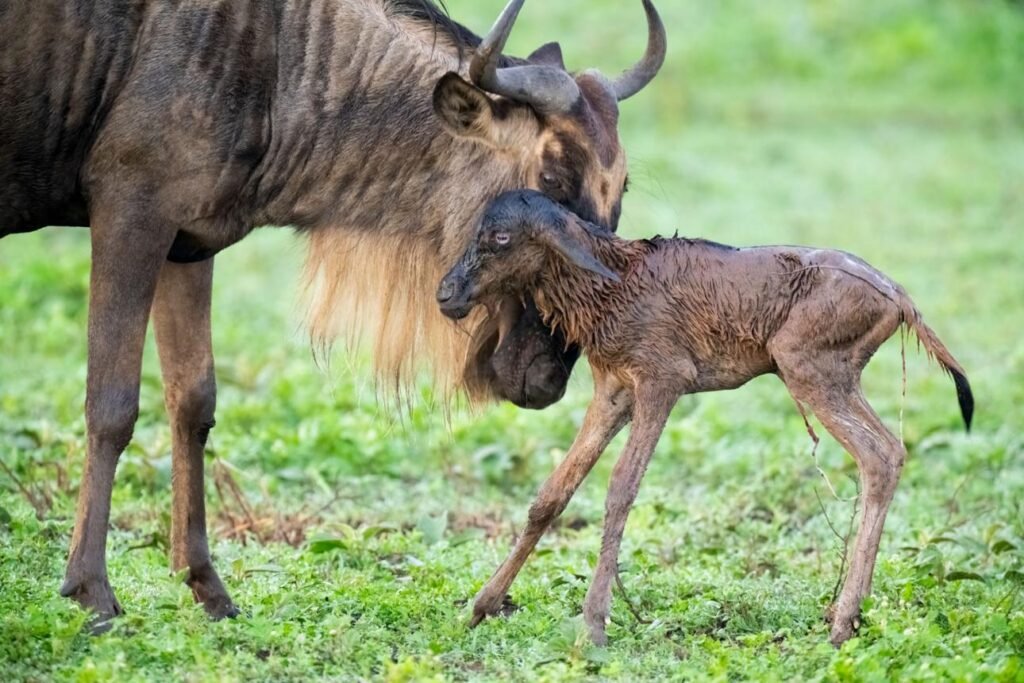
Wildebeest Calving Season: January to March
The southern Serengeti and Ndutu area are especially important during the wildebeest calving season. The open, short-grass plains provide grazing conditions that attract large herds, and many wildebeest calves are born during a relatively concentrated period, commonly around February.
This season is particularly attractive for wildlife photographers because the landscape is often green, the herds are spread across open plains and predators may be active around the young animals. Lions, cheetahs, hyenas and other carnivores can be seen hunting or moving through the same areas, although specific encounters cannot be guaranteed.
Travelers interested in calving should plan their safari around Ndutu and the southern Serengeti rather than automatically booking accommodation in the north. The exact distribution of the herds will depend on rainfall, so some flexibility is valuable.
3. Choose the Right Serengeti Region for Your Safari
Serengeti National Park covers a vast area, and different regions provide different wildlife experiences. Choosing accommodation in the wrong part of the park can mean spending many hours driving toward the migration herds instead of enjoying game drives close to your camp.
Northern Serengeti: Kogatende and the Mara River
The northern Serengeti is generally the main destination for travelers hoping to experience the Mara River crossings between July and October. This region includes riverine vegetation, open grassland, rolling hills and important wildlife corridors near the Tanzania–Kenya border.
The area is particularly attractive during the northern migration period, but visitors should understand that crossings are not continuous. A well-planned itinerary should allow time for ordinary wildlife viewing as well as opportunities to visit suitable river observation areas when conditions permit.
Central Serengeti: Seronera
Central Serengeti is known for year-round wildlife viewing and is often included in Tanzania safari itineraries regardless of the migration season. The Seronera area contains grasslands, river systems and rocky kopjes that provide habitats for a variety of wildlife.
Lions, leopards, elephants, giraffes, zebras and numerous antelope species may be encountered during game drives. Although the main migrating herds move through different regions during the year, central Serengeti remains an important safari destination because of its resident wildlife.
For travelers booking with Eddy Tours & Safaris, combining central Serengeti with the region where the migration is expected can provide a more varied wildlife experience.
Southern Serengeti and Ndutu
The southern Serengeti and Ndutu area are particularly important during the calving season. These landscapes are dominated by open plains that become attractive grazing areas following seasonal rainfall.
Visitors traveling between January and March often focus on this region because it provides opportunities to observe large wildebeest herds, young animals and predator activity. Ndutu also offers a different photographic environment from the northern Serengeti, with wide landscapes and relatively open views across the grasslands.
Western Serengeti and Grumeti
The Western Corridor is associated with the movement of herds toward the Grumeti River, commonly during May and June. The landscape includes woodland, grassland and river systems, providing a different safari environment from the open southern plains.
Travelers visiting during this period may observe large groups of wildebeest moving through the region, along with other wildlife. River crossings may occur, but their timing and location remain unpredictable.
4. How Many Days Should You Spend on a 2027 Migration Safari?
The number of safari days is one of the most important decisions when planning a Serengeti migration holiday. Because the park is large and wildlife movements are unpredictable, a very short itinerary can limit your opportunities to reach the most suitable areas and spend enough time observing the animals.
For travelers combining Serengeti with other northern Tanzania destinations, a six- to eight-day safari often provides a useful balance between travel time and wildlife viewing. Longer itineraries can include several nights in the region where the migration is expected, as well as visits to Ngorongoro Crater and Tarangire National Park.
A three- or four-day safari may be possible, especially with domestic flights, but it generally provides less flexibility. If witnessing the Mara River crossings is your main goal, spending three or more nights in the northern Serengeti is worth considering because the animals may take considerable time to approach or cross the river.
| Safari duration | Recommended experience |
|---|---|
| 3–4 days | Short Serengeti safari, often with flights to reduce travel time |
| 5 days | Central Serengeti and one additional wildlife area |
| 6 days | Serengeti migration region and Ngorongoro Crater |
| 7 days | More time in the migration region with additional northern Tanzania wildlife viewing |
| 8–10 days | Extended migration safari with several nights near the expected herds |
The most appropriate duration depends on your travel dates, budget and whether you prefer driving or domestic flights.
5. Sample 7-Day Serengeti Wildebeest Migration Safari Itinerary for 2027
The following itinerary is an example of a July–September safari focused on the northern Serengeti and possible Mara River crossings. It should be adjusted for other months, particularly during the southern calving season.
Day 1: Arrival in Tanzania and Transfer to Arusha
Your safari begins with arrival at Kilimanjaro International Airport or another agreed entry point in northern Tanzania. After meeting your representative, you travel to your accommodation in Arusha, where you can rest after your journey and prepare for the wildlife adventure ahead. Depending on your arrival time, your guide may provide a briefing covering the itinerary, expected driving distances, accommodation arrangements and general safari procedures.
Arusha is a convenient starting point for northern Tanzania safaris because it connects travelers with the major wildlife destinations in the region. Spending a night here before beginning a long safari journey can be particularly useful after an international flight.
Day 2: Arusha to Tarangire National Park
After breakfast, you depart Arusha and travel toward Tarangire National Park, a destination known for its baobab trees, varied landscapes and important elephant populations. During the game drive, you may encounter elephants, giraffes, zebras, wildebeest, antelopes and other wildlife moving through the park’s grasslands and woodland areas.
Tarangire provides an excellent introduction to Tanzania’s wildlife before continuing toward the Serengeti. After the game drive, you travel to your selected accommodation for dinner and an overnight stay.
Day 3: Tarangire Area to Central Serengeti
Following breakfast, you continue toward Serengeti National Park, traveling through the highlands and the Ngorongoro Conservation Area according to the planned route. The landscape changes gradually as you approach the Serengeti, with wide grasslands and open savannah replacing the cultivated highland areas.
Upon entering the park, your guide begins a game drive through the central Serengeti. Depending on the time available and wildlife activity, you may encounter lions, elephants, giraffes, zebras and other animals before continuing to your accommodation.
Day 4: Central Serengeti to Northern Serengeti
After breakfast, you begin traveling toward the northern Serengeti, following a route that allows wildlife viewing along the way. The journey passes through different habitats, and your guide will look for wildlife while progressing toward the Kogatende area.
The northern Serengeti is the main focus of this migration itinerary because the herds are often found near the Mara River during the July–September period. After reaching the area, you continue with a game drive before arriving at your selected lodge or tented camp.
Day 5: Full-Day Migration Safari in Northern Serengeti
Today is dedicated to exploring the northern Serengeti and looking for wildebeest herds near the Mara River. Your guide will use available local information and wildlife observations to select suitable game-drive routes, taking into account park regulations, weather and the movements of the animals.
If large herds gather near the river, there may be an opportunity to observe their behavior before a possible crossing. However, crossings cannot be predicted or guaranteed, and animals may remain near the river without entering the water. Even when a crossing does not occur, the northern Serengeti offers opportunities to see other wildlife, including predators and grazing animals.
Day 6: Northern Serengeti to Ngorongoro Area
After breakfast, you begin the journey toward the Ngorongoro area, with wildlife viewing during the early stages of the drive where practical. The route passes through the Serengeti and the surrounding highland landscapes, providing a final opportunity to enjoy the park’s scenery.
Because the northern Serengeti is far from Ngorongoro, this can be a long travel day. Travelers who prefer a slower itinerary should consider adding an extra night in the Serengeti or arranging a suitable domestic flight. Upon arrival near Ngorongoro, you continue to your accommodation for dinner and rest.
Day 7: Ngorongoro Crater Safari and Return to Arusha
After an early breakfast, you travel toward Ngorongoro Crater for a game drive inside the conservation area. The crater contains a variety of habitats, including grassland, woodland and wetlands, which support many wildlife species. Depending on conditions, you may encounter lions, buffaloes, zebras, wildebeest, elephants and other animals.
After the game drive and lunch arrangements, you begin the return journey to Arusha. Your safari ends with a transfer to your hotel or another agreed location, depending on your onward travel plans.
Important: This is a sample itinerary, not a confirmed departure or accommodation booking. The route, overnight stops and travel times should be adapted to the selected dates and actual lodge availability.
6. Choose Accommodation Near the Expected Migration Herds
Accommodation location can have a major effect on the quality of your Serengeti migration safari. A lodge may look attractive in photographs but still be several hours away from the area where the herds are expected during your travel month. This is especially important for river crossing safaris, where the opportunity to spend time near the Mara River can be reduced by long daily transfers.
During the northern migration season, travelers often choose accommodation around Kogatende and other suitable northern Serengeti locations. During the calving season, accommodation near Ndutu and the southern plains is generally more appropriate. Central Serengeti lodges can provide good access to resident wildlife and are useful for itineraries that combine several regions.
There are different accommodation categories, including public camping, budget tented camps, mid-range lodges, luxury tented camps and high-end safari lodges. The best choice depends on your budget, comfort preferences and the time you want to spend on game drives. When comparing accommodation, ask about the actual location, distance to important wildlife areas, meal arrangements and cancellation conditions rather than relying only on photographs.
7. Understand the Cost of a Serengeti Migration Safari in 2027
The cost of a Serengeti migration safari depends on several factors, including the number of travelers, trip duration, accommodation category, travel season, park fees, transport arrangements and whether the itinerary includes domestic flights. A private safari for two travelers generally has a different per-person cost from a larger group sharing one vehicle, while luxury lodges and fly-in arrangements can increase the total price substantially.
The northern Serengeti can be particularly expensive during the popular river crossing months because accommodation demand is often high. Travelers visiting during other periods may find more flexibility, although prices depend on the specific properties and services selected. A budget safari can still provide an excellent wildlife experience, but it is important to understand the accommodation standard and how much time will be spent driving between destinations.
For 2027, avoid relying on old price lists or assuming that current park fees will remain unchanged. Ask for a written quotation that identifies the total cost, included services, excluded expenses and payment conditions. At Eddy Tours & Safaris, travelers can request a personalized quotation based on their preferred dates, number of guests and accommodation category.
8. Decide Between a Private Safari and a Group Joining Safari
A private safari offers greater flexibility because the vehicle and guide are arranged for your booking. This can be useful during the migration season, particularly for travelers who want to spend more time photographing wildlife or waiting near suitable river observation areas. Families, couples and photographers may appreciate the ability to adjust game-drive priorities according to their interests and the guide’s recommendations.
A group joining safari can be a more affordable option because some transport and guiding costs are shared among travelers. However, fixed group itineraries may provide less flexibility, especially when participants have different interests or when the migration herds are located far from the scheduled route.
Before choosing either option, compare the actual itinerary, number of safari days, accommodation arrangements and time allocated to the migration region. A lower price is not necessarily better value if the itinerary includes very little time near the wildlife you most want to see.
9. Book Early but Keep Realistic Expectations
Planning early is especially useful for travelers hoping to visit the northern Serengeti during July, August or September. These months attract considerable interest because of the Mara River crossing opportunities, and well-located camps may have limited availability. Booking ahead gives you more time to compare accommodation, arrange flights and select an itinerary that matches your preferred travel dates.
However, early booking does not mean the migration can be predicted precisely. The herds respond to natural conditions, and no safari company can guarantee a particular river crossing, predator hunt or wildlife sighting. The most effective approach is to plan around the typical seasonal pattern while allowing enough time for game drives and reasonable flexibility within the itinerary.
Before paying a deposit, review the written quotation, cancellation terms and payment arrangements. It is also sensible to purchase suitable travel insurance and confirm entry requirements for Tanzania.
10. Choose a Safari Operator That Explains the Itinerary Clearly
A responsible safari operator should help you understand why a particular region is recommended for your travel dates. Instead of promising guaranteed migration sightings, the company should explain the normal seasonal movements, the limitations of wildlife predictions and the amount of time needed to reach the relevant areas.
Travelers should also ask about the safari vehicle, guide arrangements, accommodation, park fees and the services included in the quotation. A well-planned itinerary should balance wildlife viewing with reasonable travel distances, particularly when visiting the northern Serengeti.
When researching a company, independent traveler feedback can provide useful additional context. You can explore the Eddy Tours & Safaris Tripadvisor listing and search for Eddy Tours & Safaris on Google to review publicly available business information and traveler feedback. Reviews should be considered alongside the actual itinerary, written quotation and direct communication with the operator.
11. What to Pack for a 2027 Serengeti Migration Safari
Packing for a Serengeti safari is generally straightforward, but choosing suitable clothing and equipment can make long game drives more comfortable. Lightweight, breathable clothing in neutral colors is practical for warm daytime conditions, while a fleece or light jacket is useful for cooler mornings and evenings. A comfortable pair of shoes, a sun hat, sunglasses and sunscreen are also important.
Travelers interested in photography should bring a camera with a suitable zoom lens, spare batteries and enough storage for wildlife photographs. Binoculars can be particularly useful when observing animals at a distance, including predators resting in grassland or wildebeest gathering near a riverbank. A small day bag is convenient for carrying water, personal medication, charging equipment and other essentials during game drives.
Because conditions vary by season and location, check the expected weather before departure. During wetter months, a light waterproof jacket can be useful, while travelers staying in higher-elevation areas such as Ngorongoro should prepare for cooler temperatures.
12. Common Mistakes to Avoid When Planning a Migration Safari
One of the most common mistakes is booking the Serengeti without considering the location of the herds. The park is enormous, and staying in the central region during the peak northern crossing period may require long drives to reach the Mara River. Similarly, travelers hoping to see newborn wildebeest in February should focus on the southern plains rather than automatically booking northern accommodation.
Another mistake is allowing too little time for wildlife viewing. River crossings are unpredictable, and a single afternoon near the river may not provide a meaningful opportunity to observe the herds. Spending several nights in the relevant region allows more time to explore and reduces the pressure to see a particular event immediately.
Travelers should also avoid itineraries that attempt to cover too many distant destinations in a short period. Long transfers can reduce the time available for game drives and make the holiday tiring. A carefully planned six- or seven-day safari with appropriate overnight stops can sometimes provide a better experience than a rushed itinerary visiting more parks.
Finally, be cautious of operators who guarantee dramatic wildlife events. Migration movements, predator hunts and river crossings are natural behaviors that cannot be scheduled. A professional safari guide can help you look for wildlife in suitable areas, but the animals ultimately determine what happens.
Frequently Asked Questions About the 2027 Wildebeest Migration Safari
1. What is the best month for a Wildebeest Migration Safari in 2027?
The best month depends on the experience you want. February is commonly associated with calving in the southern plains, while August and September are popular for Mara River crossing opportunities in the northern Serengeti.
2. Can I see the Great Migration throughout the year?
The migration is a year-round movement, but the main herds occupy different regions during different seasons.
3. Where can I see the Mara River crossings?
The northern Serengeti around Kogatende and the Mara River is generally the main Tanzanian destination for crossing opportunities.
4. Are Mara River crossings guaranteed?
No. Crossings depend on the animals’ behavior, rainfall, grazing conditions and other natural factors.
5. When is the wildebeest calving season?
Calving is generally concentrated between January and March, with much of the activity commonly occurring around February.
6. Where is the best place to see wildebeest calves?
The southern Serengeti and Ndutu area are important calving destinations.
7. How many days should I spend on a migration safari?
Six to eight days is a useful range for many travelers combining Serengeti with other northern Tanzania destinations.
8. How many nights should I spend in northern Serengeti?
Three or more nights is worth considering if Mara River crossings are your main priority.
9. Is a five-day migration safari enough?
It can be suitable for a focused itinerary, particularly with domestic flights, but it provides less flexibility than a longer safari.
10. Can I see lions during a migration safari?
Lions inhabit the Serengeti, and sightings are possible, but no particular encounter is guaranteed.
11. Are cheetahs common during calving season?
Cheetahs are among the predators found in the southern Serengeti ecosystem, and sightings are possible during the calving period.
12. Can I combine Serengeti with Ngorongoro Crater?
Yes. Ngorongoro Crater is commonly included in northern Tanzania safari itineraries.
13. Can I include Tarangire National Park?
Yes. Tarangire can provide additional wildlife viewing, particularly for travelers interested in elephants and varied landscapes.
14. Is a private safari better for migration photography?
A private safari generally provides more flexibility for photography and game-drive priorities.
15. Are group joining safaris available?
Group joining arrangements may be available depending on departure dates, itinerary and operator schedules.
16. Is the Serengeti suitable for families?
Yes. Many families visit the Serengeti, although the itinerary should account for children’s ages, travel distances and accommodation suitability.
17. What type of vehicle is used for a Serengeti safari?
Many operators use purpose-built 4×4 safari vehicles, often with viewing roofs, although specifications should be confirmed before booking.
18. Can I fly directly into the Serengeti?
Domestic flights serve several Serengeti airstrips, subject to schedules and availability.
19. Is August a good month for migration?
August is commonly a popular month for northern Serengeti river crossing safaris.
20. Is September suitable for a migration safari?
Yes. September is often a good period to consider for northern Serengeti migration activity.
21. Can I visit during April or May?
Yes. These months may offer green landscapes and fewer visitors, although rainfall can affect conditions.
22. How much does a migration safari cost in 2027?
The cost depends on duration, group size, accommodation, season and transport. Request a written quotation for accurate pricing.
23. Should I book my 2027 migration safari early?
Early booking is advisable, particularly for popular northern Serengeti travel periods and well-located accommodation.
24. Can I combine the safari with Kilimanjaro climbing?
Yes. Many travelers combine a Kilimanjaro expedition with a Serengeti wildlife safari, allowing appropriate recovery time between activities.
25. How can I book a migration safari with Eddy Tours & Safaris?
Contact the team with your travel dates, number of guests, preferred accommodation standard and the migration experience you want to prioritize.
Plan Your 2027 Wildebeest Migration Safari with Eddy Tours & Safaris
Planning a Serengeti Wildebeest Migration Safari requires an understanding of the animals’ seasonal movements, the size of the ecosystem and the different wildlife experiences available throughout the year. The most important decision is matching your travel dates with the region where the herds are most likely to be found. Whether you prefer the calving season in Ndutu or the Mara River crossing period in northern Serengeti, choosing the right location and allowing enough time for game drives can make a major difference to your experience.
A well-organized safari should also consider accommodation location, travel distances, budget and the interests of everyone in your group. Instead of trying to visit every destination in a limited number of days, focus on a realistic itinerary that provides meaningful time in the wildlife areas you most want to explore.
At Eddy Tours & Safaris, we help travelers organize private Tanzania wildlife safaris, Serengeti migration experiences and customized northern Tanzania itineraries. Our team can discuss your preferred travel dates, accommodation choices and safari arrangements before providing a detailed quotation for 2027.
Request Your 2027 Wildebeest Migration Safari Quotation
Chat with Eddy Tours & Safaris on WhatsApp
Email: sales@eddytours-safaris.com
You can also learn more about Eddy Tours & Safaris through our Tripadvisor listing and Google Business Profile Reviews.
Contact our team to discuss a Serengeti migration itinerary that matches your travel dates, preferred wildlife experience and budget.