
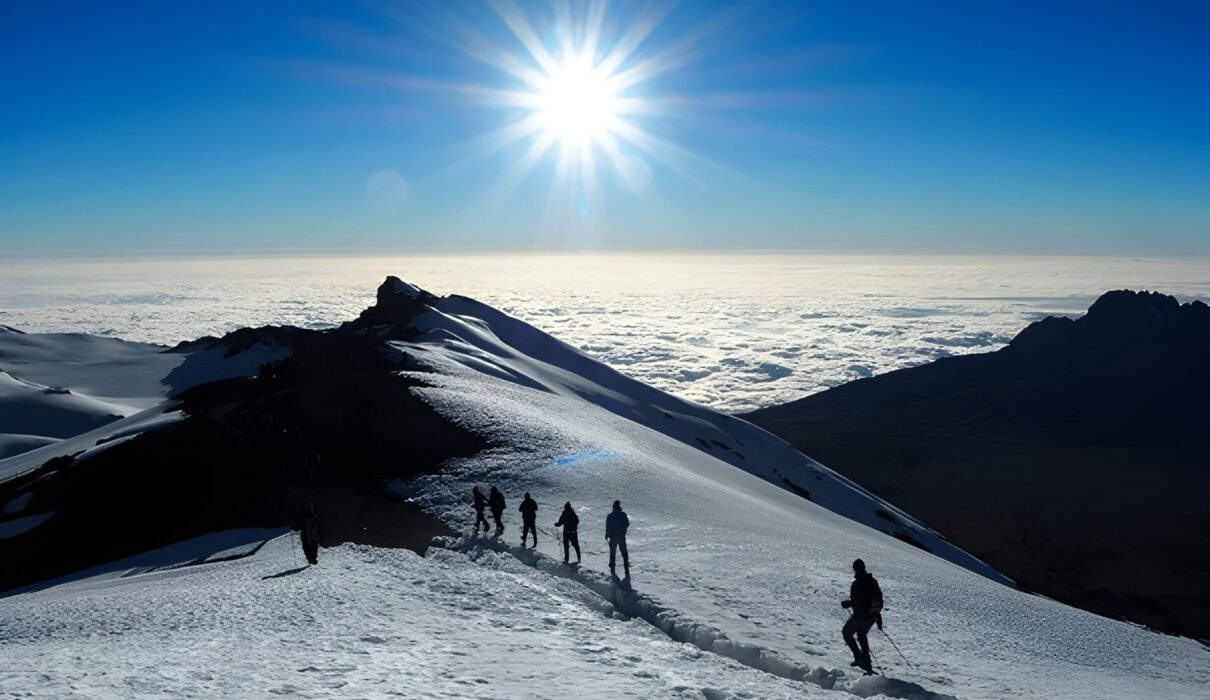
The world’s highest mountains rise above 8,000 metres, with Mount Everest leading the list at approximately 8,849 metres above sea level. These peaks belong to the Himalaya and Karakoram ranges in Asia, where enormous elevations create some of Earth’s most striking mountain landscapes.
But enjoying a mountain does not always mean attempting its summit. Travelers can explore valleys, follow trekking routes, visit viewpoints, or photograph distant peaks. A summit expedition is a separate undertaking with very different preparation and experience requirements.
For travelers planning adventures in 2027 or 2028, understanding those differences helps turn an inspiring mountain list into a realistic journey.
This guide introduces the ten highest mountains above sea level, explains why “highest” and “tallest” can mean different things, and shows where Tanzania’s Mount Kilimanjaro fits.
What Is the World’s Tallest Mountain?
The answer depends on how you measure it.
Highest above sea level: Mount Everest
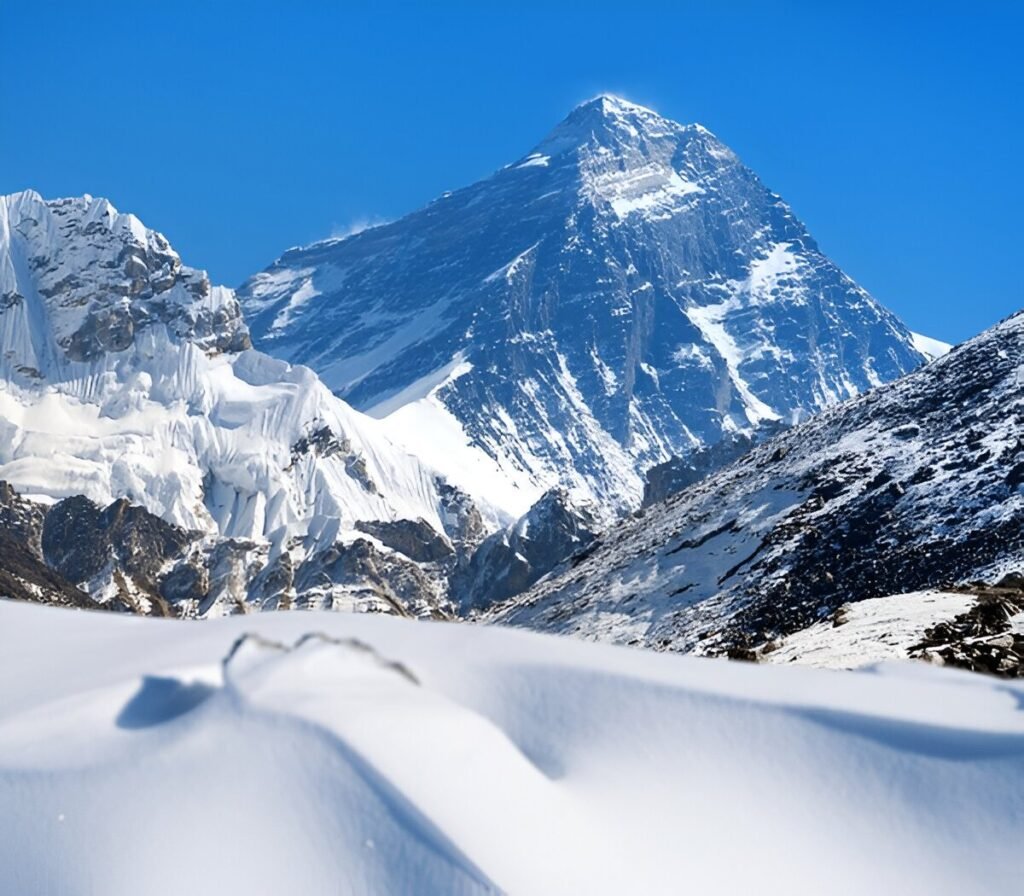
Everest has the highest summit elevation above sea level. This is the measurement normally used when ranking the world’s highest mountains.
Tallest from its underwater base: Mauna Kea
Hawaii’s Mauna Kea rises more than 10,000 metres from its base on the ocean floor. Much of that height is underwater, so it does not lead the above-sea-level ranking.
Summit farthest from Earth’s center: Chimborazo
Ecuador’s Chimborazo takes this distinction because Earth bulges around the equator. Its summit is farther from Earth’s center than Everest’s, despite having a lower elevation above sea level.
NOAA explains these three different measurements in its mountain-height guidance.
For the list below, height means summit elevation above sea level.
The 10 Highest Mountains in the World
| Rank | Mountain | Approximate elevation | Location |
|---|---|---|---|
| 1 | Mount Everest | 8,849 m | Nepal–China border |
| 2 | K2 | 8,611 m | Pakistan-administered territory–China border |
| 3 | Kangchenjunga | 8,586 m | Nepal–India border |
| 4 | Lhotse | 8,516 m | Nepal–China border |
| 5 | Makalu | 8,485 m | Nepal–China border |
| 6 | Cho Oyu | 8,188 m | Nepal–China border |
| 7 | Dhaulagiri I | 8,167 m | Nepal |
| 8 | Manaslu | 8,163 m | Nepal |
| 9 | Nanga Parbat | 8,126 m | Pakistan-administered territory |
| 10 | Annapurna I | 8,091 m | Nepal |
These are commonly used elevations, rounded to whole metres. Published measurements can differ between surveys and references; small differences do not change this ordering.
The list ranks mountains by height, not climbing difficulty, popularity, or suitability for visitors.
1. Mount Everest: The Highest Summit Above Sea Level
Everest’s position at the top makes it the best-known name in high-altitude mountaineering.
For travelers, it is essential to distinguish an Everest-region trek from an Everest summit expedition. Walking to a viewpoint or base camp does not involve the same objective, equipment, or expedition arrangements as climbing the mountain.
If Everest inspires your travel plans, first decide what you actually want to experience. Mountain scenery, a multiday trek, and a summit attempt require very different proposals.
Request the daily itinerary, overnight elevations, and exact endpoint before comparing prices.
2. K2: The Karakoram’s Highest Mountain
K2 ranks second by elevation and stands in the Karakoram.
Its name often attracts travelers interested in dramatic mountain landscapes. However, visiting the surrounding region and attempting the summit are fundamentally different journeys.
An approach trek still needs careful planning. Ask about trail conditions, expedition support, permits, transport, and the time required to reach the intended destination.
Do not select a trip simply because its title includes “K2.” Establish whether it is a sightseeing journey, trekking programme, or mountaineering expedition.
3. Kangchenjunga: The Third-Highest Peak
Kangchenjunga rises along the Nepal–India border.
Its mountain region can appeal to travelers who want to explore beyond the most familiar Himalayan itineraries. Nepal Tourism Board includes Kangchenjunga among the country’s eight-thousand-metre peaks.
When planning a visit, specify which side and which trekking route you intend to explore. The mountain’s name alone does not explain access, overnight stops, or walking demands.
Ask how the proposed programme accommodates your available time and previous trekking experience.
4. Lhotse: Another Giant of the Everest Region
Lhotse ranks fourth in the above-sea-level list.
Travelers researching the Everest region will frequently encounter its name alongside other surrounding peaks. Seeing a mountain from a trail should always be distinguished from climbing it.
For a photography-focused journey, ask about viewpoints, the direction of the light, and how much time the itinerary allows for observation.
Weather can obscure mountain views. Choose a journey you will enjoy for its wider landscape and walking experience rather than depending on one clear summit photograph.
5. Makalu: A High Mountain Beyond the Familiar Names
Makalu completes the world’s five highest mountains.
It is another of the major peaks identified by Nepal Tourism Board.
For travelers considering its region, a detailed itinerary is more useful than a general promise of adventure.
Review the number of walking days, access arrangements, accommodation, and contingency time. Discuss how the team responds if weather or trail conditions change.
A mountain’s lower public profile does not make its surroundings a simpler destination to organize.
6. Cho Oyu: Sixth in the Elevation Ranking
Cho Oyu stands on the Nepal–China border and ranks sixth.
Descriptions comparing one eight-thousander with another can be misleading for inexperienced travelers. A mountain described as less demanding than another can still require substantial mountaineering experience.
Define your goal before researching operators. A trek with mountain views and an expedition to an 8,000-metre summit need separate preparation.
NASA’s overview of the eight-thousanders provides useful geographical context for Cho Oyu and the other peaks in this group.
7. Dhaulagiri I: One of Nepal’s Highest Mountains
Dhaulagiri I occupies seventh place.
The “I” identifies the main summit in the name used for this ranking. Travelers should pay attention to these distinctions when comparing mountain descriptions and itinerary endpoints.
If you are interested in trekking nearby, ask about the actual route rather than assuming all programmes carrying the Dhaulagiri name have similar demands.
Check pass crossings, overnight elevations, and the services available along the way. An attractive landscape can still involve a challenging journey.
8. Manaslu: A Mountain and a Wider Trekking Region
Manaslu ranks eighth, as confirmed by Nepal Tourism Board. Its tourism information distinguishes the mountain from the trekking route around the massif.
That distinction matters when choosing a trip. A circuit itinerary explores a wider landscape; it is not a summit expedition.
Request an exact route, walking schedule, and permit explanation. Confirm how many days belong to trekking and how many are transfers or sightseeing.
Avoid comparing two packages by total holiday duration alone.
9. Nanga Parbat: A Himalayan Peak in Pakistan
Nanga Parbat ranks ninth by elevation.
Travelers interested in the mountain should begin with a clear objective: viewing it, trekking in its surroundings, or undertaking a climbing expedition.
Each option requires different arrangements. Ask where the journey starts, how access is organized, and which services are included.
For any remote itinerary, review communication and emergency arrangements before payment. A reassuring slogan is less useful than a practical explanation.
10. Annapurna I: The Tenth-Highest Mountain
Annapurna I completes the top ten. Nepal Tourism Board identifies it as the world’s tenth-highest mountain.
“Annapurna” also appears in the names of several trekking journeys. These should not be confused with climbing Annapurna I.
Check whether a proposal describes a circuit, a base-camp trek, another walking route, or a summit expedition.
The best choice is the itinerary that fits your interests and preparation, rather than the one with the most impressive mountain name.
What Are the Eight-Thousanders?
The term refers to the fourteen conventionally recognized mountains with summits above 8,000 metres.
The four outside the top ten are:
- Gasherbrum I.
- Broad Peak.
- Gasherbrum II.
- Shishapangma.
NASA’s eight-thousanders collection introduces these mountains and their geographical setting.
This group is different from the Seven Summits, which refers to the highest mountains on the continents. Confusing the two lists can lead to incorrect claims about a mountain’s worldwide position.
Where Does Kilimanjaro Fit?
Mount Kilimanjaro is Africa’s highest mountain, with Uhuru Peak at 5,895 metres. It is not one of the world’s ten highest mountains or an eight-thousander.
TANAPA gives its summit elevation as 5,895 metres.
Its appeal is different from the Asian peaks above 8,000 metres. Standard Kilimanjaro routes offer guided trekking expeditions through changing mountain environments, making it an option for travelers interested in a high summit without choosing an eight-thousander expedition.
That does not make it easy. Kilimanjaro still requires walking preparation, appropriate equipment, and careful altitude planning.
Choosing a Kilimanjaro Route
If Tanzania is your preferred destination, discuss the actual itinerary with Eddy Tours & Safaris.
Marangu uses mountain huts, while standard Machame and Rongai expeditions use camping arrangements. Route duration and overnight elevations deserve attention alongside accommodation preference.
Ask for a proposal showing:
- Actual trekking days.
- Daily overnight stops.
- Approximate walking demands.
- Accommodation and equipment.
- Guiding arrangements.
- Emergency and early-descent procedures.
- Complete inclusions and exclusions.
A route name or advertised summit percentage does not answer these questions.
Planning Mountain Travel for 2027/2028
The years in this guide refer to your travel planning period. They do not create a new mountain ranking or establish future access conditions.
Permits, borders, transport, prices, and local rules must be checked for the particular destination and departure.
Before making nonrefundable commitments, establish:
- The exact activity and endpoint.
- Your required experience and preparation.
- The confirmed daily itinerary.
- Access and permit arrangements.
- The operator’s responsibilities.
- Insurance appropriate to the activity and elevation.
- Cancellation and itinerary-change terms.
For a summit expedition, obtain an assessment suited to its demands. Completing a lower trek does not automatically establish readiness for a higher mountain.
The CDC explains that fitness does not protect against altitude illness and recommends gradual ascent. Use its high-altitude guidance when preparing questions for a qualified clinician.
Frequently Asked Questions
Is Everest the world’s tallest mountain?
It is the highest above sea level. Mauna Kea and Chimborazo hold different distinctions under other measurements.
Is Kilimanjaro among the ten highest mountains?
No. It is Africa’s highest mountain, but its elevation is below the Asian peaks in the top ten.
Are the Seven Summits the seven highest mountains worldwide?
No. They represent continental high points, rather than the seven highest elevations globally.
Can travelers enjoy these mountains without climbing them?
Yes. Depending on the destination, trekking, viewpoints, and landscape travel provide other ways to experience mountain regions.
Does a lower elevation mean an easier climb?
No. Terrain, technical requirements, weather, access, and itinerary also affect difficulty.
Does this guide offer Everest or K2 expeditions?
No. This is an informational mountain guide. Contact Eddy Tours & Safaris for Tanzania mountain itineraries.
Plan a Tanzania Mountain Adventure
If Kilimanjaro is your next goal, contact Eddy Tours & Safaris for a climbing proposal for 2027 or 2028.
Share your available dates, group size, hiking experience, and accommodation preferences. Request a complete itinerary and compare route durations before deciding.
Website: eddytours-safaris.com
Email: sales@eddytours-safaris.com
Alternative email: eddytoursandsafaris@gmail.com
Phone and WhatsApp: +255 711 906 664
For further reading, explore NASA’s eight-thousanders guide and NOAA’s explanation of mountain-height measurements.