
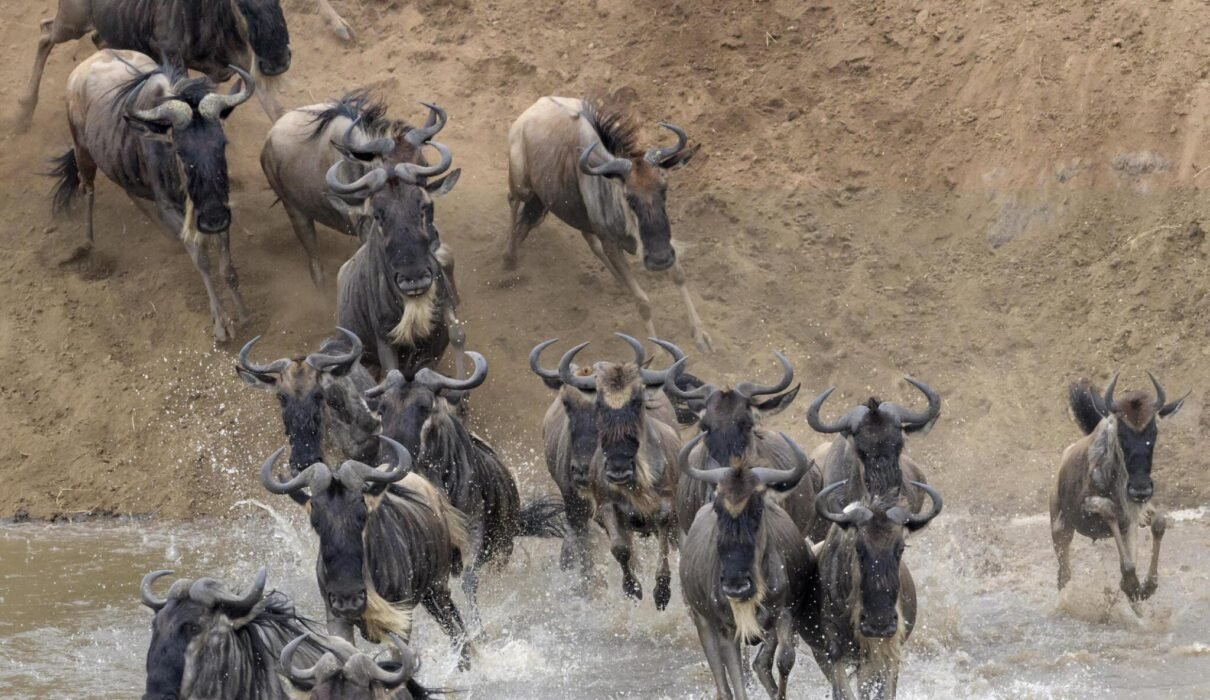
Imagine waking up in the Serengeti to the sound of birds, watching the sunrise over endless grasslands, and spending your day searching for thousands of wildebeest moving across the plains. In the distance, lions may be resting in the grass while zebras graze nearby.
This is the kind of experience that makes a 4-Day Serengeti Migration Safari one of the most exciting ways to explore Tanzania.
The Serengeti is famous for the Great Wildebeest Migration, an annual movement of enormous herds of wildebeest, zebras, and other grazing animals searching for fresh grass and water.
The migration takes place throughout the year, but the animals move between different parts of the Serengeti ecosystem depending on rainfall and grazing conditions.
During the early months of the year, large herds often gather on the southern Serengeti and Ndutu plains for the calving season. Later, many move toward the western and northern Serengeti, where some attempt to cross rivers.
For travelers who want a private wildlife experience without spending an entire week on safari, an exclusive four-day itinerary offers a practical way to explore the Serengeti.
With a private safari vehicle, you can enjoy game drives arranged around your interests, spend more time photographing wildlife, and travel with your own driver-guide.
At Eddy Tours and Safaris, we help travelers plan Serengeti migration safaris according to their travel dates, preferred accommodation, and budget.
This guide explains the complete four-day Serengeti Migration Safari itinerary for 2027 and 2028, including estimated costs, wildlife highlights, accommodation options, the best travel months, and important information to consider before booking.
Why Choose an Exclusive 4-Day Serengeti Migration Safari?
A private Serengeti migration safari offers several advantages for travelers who want a more personal wildlife experience.
Unlike a group joining safari, where travelers share a vehicle with other participants, an exclusive safari provides a private vehicle for your booking.
This allows more flexibility during game drives.
For example, if you enjoy wildlife photography, you may prefer to spend additional time watching lions or photographing wildebeest herds.
Families may want a more relaxed pace, while couples may prefer comfortable tented camps and quieter surroundings.
A four-day itinerary also provides an opportunity to spend several nights in or near the Serengeti rather than visiting the park for only a few hours.
However, the Serengeti is enormous, and four days cannot cover every migration area.
For the best experience, the itinerary should focus on the region where the herds are most likely to be found during your travel dates.
4-Day Serengeti Migration Safari Overview
| Safari details | Information |
|---|---|
| Destination | Serengeti ecosystem, northern Tanzania |
| Duration | 4 days and 3 nights |
| Safari style | Exclusive private safari |
| Starting point | Arusha |
| Main destinations | Southern and central Serengeti, adjusted by season |
| Main activity | Wildlife game drives |
| Accommodation | Mid-range or luxury tented camps and lodges |
| Transport | Private 4×4 safari vehicle |
| Main wildlife | Wildebeest, zebras, lions, elephants, cheetahs and other animals |
| Best months | Depends on migration location |
| Ending point | Arusha or an agreed onward destination |
Complete Exclusive 4-Day Serengeti Migration Safari Itinerary
This itinerary is designed primarily for the southern Serengeti and Ndutu migration season, generally between December and March.
It can be adjusted for other months, but travelers hoping to visit the northern Serengeti for Mara River crossings should consider the alternative fly-in itinerary explained later.
Day 1: Arusha to Southern Serengeti or Ndutu – Your Migration Adventure Begins
Your Tanzania safari begins in the morning with pickup from your hotel in Arusha.
After meeting your private safari driver-guide, you begin traveling toward the southern Serengeti and Ndutu region.
The journey passes through the beautiful countryside of northern Tanzania, including villages, farmland, and the highlands around Karatu.
Depending on the chosen route, you may travel through the Ngorongoro Conservation Area before continuing toward the southern plains.
The drive is long, so an early departure is important.
Along the way, you can enjoy views of the Great Rift Valley and the changing landscapes of northern Tanzania.
After completing the necessary conservation area and park entry procedures, you continue toward your accommodation or begin searching for wildlife in suitable areas.
First Wildlife Encounters
During the calving season, the southern Serengeti and Ndutu plains may support large concentrations of wildebeest and zebras.
As you approach the migration areas, you may see herds grazing on the short grass.
The landscape is often green during this period, creating beautiful scenery for wildlife photography.
Lions, cheetahs, and hyenas may also be present, following the grazing animals.
Your guide will look for wildlife while explaining the seasonal movement of the herds.
In the late afternoon, you travel to your selected tented camp or lodge.
After checking in, you can relax, enjoy dinner, and prepare for the following day’s game drive.
Day 1 highlights
- Private transfer from Arusha.
- Scenic drive through northern Tanzania.
- Arrival in the southern Serengeti or Ndutu region.
- Afternoon wildlife viewing, time permitting.
- Overnight at a selected safari camp or lodge.
Accommodation: Mid-range or luxury tented camp or lodge.
Day 2: Full-Day Great Migration Safari in Ndutu and Southern Serengeti
Your second day begins with an early breakfast before heading out for a full day of wildlife viewing.
The southern Serengeti and Ndutu region are particularly important during the wildebeest calving season.
Large herds gather on the short-grass plains when rainfall creates suitable grazing conditions.
During the main calving period, many wildebeest give birth within a relatively short time.
This creates opportunities to observe newborn calves taking their first steps and moving alongside their mothers.
Watching the Wildebeest Herds
One of the most impressive experiences during the migration is seeing large numbers of animals spread across the plains.
Wildebeest may gather in groups that stretch far into the distance.
Zebras often graze nearby, and other antelope species may also be present.
Your guide will search for active herds while taking weather and road conditions into account.
Predator Activity
The abundance of grazing animals attracts predators.
Lions may be seen resting near the herds or moving through the grass.
Cheetahs are particularly associated with the open plains, where they rely on speed when hunting.
Spotted hyenas are also common in the Serengeti ecosystem.
Although predator encounters are exciting, they cannot be guaranteed.
Your guide will follow park regulations and avoid disturbing the animals.
Wildlife Photography
A private safari gives you more flexibility to spend time photographing wildlife.
You may want to capture large herds against the landscape, newborn calves, or close-up photographs of animals resting near the road.
The early morning and late afternoon often provide attractive natural light.
During the day, you enjoy a picnic lunch or return to your accommodation, depending on the planned game-drive schedule.
After an exciting day exploring the plains, you return to your camp for dinner and overnight accommodation.
Day 2 highlights
- Full-day private migration game drive.
- Wildebeest and zebra herds.
- Possible newborn calves during calving season.
- Opportunities to observe lions, cheetahs, and hyenas.
- Wildlife photography.
Accommodation: Selected safari camp or lodge.
Day 3: Southern Serengeti to Central Serengeti – Exploring the Seronera Valley
After breakfast, you continue your safari toward central Serengeti.
The exact route depends on the location of the migration herds and the accommodation selected.
Central Serengeti is known for its beautiful savannah landscapes and resident wildlife populations.
The Seronera Valley is particularly popular because it provides opportunities to observe predators and other animals throughout the year.
Searching for Lions and Leopards
Lions are frequently sought by visitors exploring central Serengeti.
They may be seen resting beneath trees, walking across the plains, or watching grazing animals.
Leopards are more difficult to find because they are often solitary and spend time resting in trees or hidden vegetation.
Your guide may search areas where leopards are sometimes observed, but sightings are never guaranteed.
Elephants, Giraffes and Other Wildlife
Central Serengeti also supports elephants, giraffes, buffaloes, zebras, antelopes, and numerous bird species.
Depending on the season, migration herds may be passing through the region.
Even when the main migration is elsewhere, the central Serengeti offers excellent opportunities for general wildlife viewing.
During the afternoon, you continue exploring the park before traveling to your accommodation.
In the evening, you can enjoy dinner and relax while reflecting on the day’s wildlife encounters.
Day 3 highlights
- Scenic transfer through Serengeti landscapes.
- Game drives in central Serengeti.
- Opportunities to see lions, elephants, giraffes, and other wildlife.
- Photography in the Seronera region.
- Overnight in central Serengeti.
Accommodation: Mid-range or luxury tented camp or lodge.
Day 4: Morning Serengeti Game Drive and Return to Arusha
Your final safari day begins with an early breakfast.
Depending on your departure arrangements, you may enjoy a short morning game drive before beginning the return journey.
The early morning is an interesting time to look for wildlife because some predators are more active during cooler hours.
You may see lions resting after a night of activity, giraffes feeding on trees, or herds of zebras moving across the plains.
After the game drive, you begin traveling toward Arusha.
The road journey from central Serengeti is long and commonly takes approximately seven to nine hours or more, depending on the route, stops, road conditions, and park procedures.
If you prefer to avoid the long return drive, a scheduled or chartered domestic flight from a Serengeti airstrip to Arusha may be arranged at an additional cost.
Upon arrival in Arusha, you are transferred to your hotel or another agreed location.
Your four-day Serengeti Migration Safari comes to an end.
Day 4 highlights
- Optional early morning game drive, subject to departure schedule.
- Final wildlife photography opportunities.
- Return journey to Arusha.
- Optional domestic flight arrangement.
Accommodation: Not included after the safari unless arranged.
Alternative 4-Day Northern Serengeti Migration Safari: Mara River Crossings
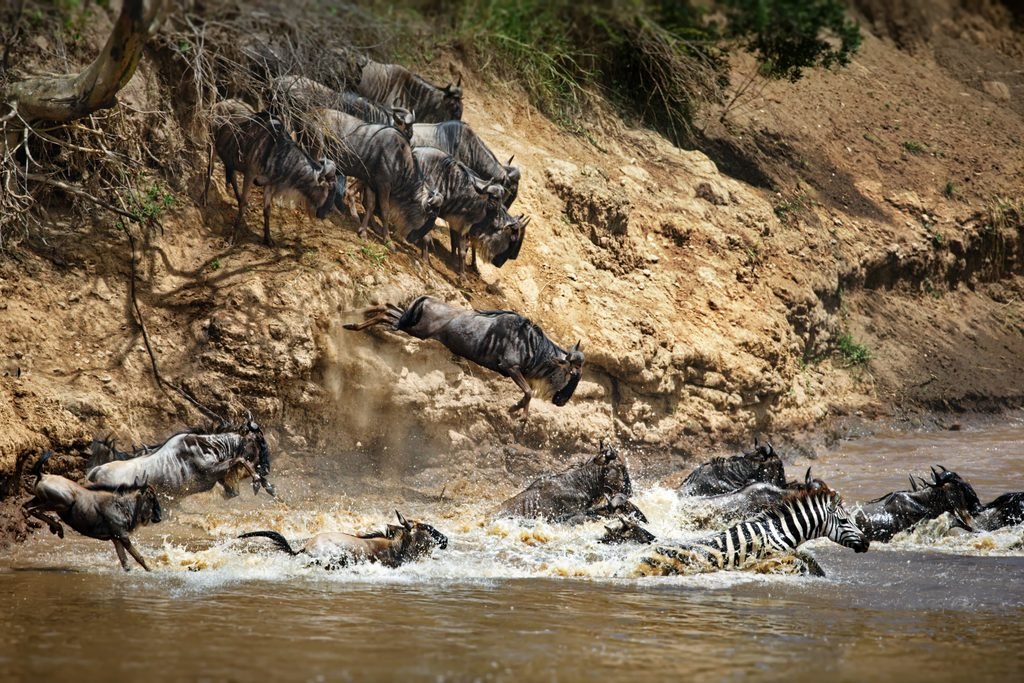
For travelers visiting between approximately July and October, the northern Serengeti is often a more suitable area for a migration-focused safari.
During these months, many wildebeest herds move toward the Mara River.
The river crossings are among the most famous wildlife events in East Africa.
However, northern Serengeti is far from Arusha.
A four-day road-only itinerary can involve substantial driving and leave limited time for wildlife viewing.
For this reason, a fly-in safari is often a more practical choice when the main objective is to look for Mara River crossings.
Suggested Northern Serengeti Fly-In Itinerary
| Day | Activities |
|---|---|
| Day 1 | Fly from Arusha to northern Serengeti, transfer to camp, afternoon game drive |
| Day 2 | Full-day migration safari around the Mara River |
| Day 3 | Additional northern Serengeti game drives and crossing-area exploration |
| Day 4 | Morning activity if time permits, transfer to airstrip, flight to Arusha |
A river crossing cannot be guaranteed, even during the most popular months.
Wildebeest may gather near the river for hours or days without crossing.
Spending several nights in northern Serengeti provides more opportunities to search for herds and respond to their movements.
When Is the Best Time for a 4-Day Serengeti Migration Safari?
The Great Migration takes place throughout the year, but the animals move between different regions.
Understanding the general seasonal pattern helps you choose the right safari destination.
| Months | Typical migration location | Main attraction |
|---|---|---|
| January–March | Ndutu and southern Serengeti | Calving season and predator activity |
| April–May | Southern, central and western Serengeti | Moving herds and green landscapes |
| June–July | Western and northern Serengeti | Herd movement and possible river crossings |
| August–September | Northern Serengeti | Mara River crossing opportunities |
| October | Northern and central Serengeti | Late crossings and southward movement |
| November–December | Central and southern Serengeti | Herds returning toward southern plains |
These movements are approximate and depend on rainfall and grazing conditions.
No operator can guarantee that the migration will be in a particular location on an exact date.
How Much Does an Exclusive 4-Day Serengeti Migration Safari Cost in 2027/2028?
The cost depends on the season, number of travelers, accommodation category, transport arrangements, and whether domestic flights are included.
An exclusive private safari generally costs more per person than a shared group safari because the vehicle and guide are reserved for your booking.
However, when two or more travelers share a private safari, the cost per person may be lower than for a solo traveler.
For initial planning, the following broad estimates may be useful.
| Safari category | Illustrative total cost per person |
|---|---|
| Standard private camping safari | $1,000–$1,500 |
| Mid-range private lodge or tented camp | $1,400–$2,200 |
| Luxury private migration safari | $2,200–$3,800 |
| Premium fly-in northern Serengeti safari | $3,000–$5,000+ |
These are general budgeting illustrations, not confirmed Eddy Tours and Safaris prices for 2027 or 2028.
Actual prices may vary depending on park fees, accommodation availability, seasonal supplements, flight schedules, and group size.
For a personalized quotation, contact Eddy Tours and Safaris.
What Is Included in a 4-Day Serengeti Migration Safari?
The exact inclusions depend on the package selected.
A typical private safari package may include:
- Private 4×4 safari vehicle.
- Professional safari driver-guide.
- Serengeti National Park entry fees.
- Ngorongoro Conservation Area transit fees, where applicable.
- Three nights of accommodation.
- Meals according to the itinerary.
- Scheduled wildlife game drives.
- Drinking water during game drives.
- Transport between the agreed destinations.
Domestic flights, airport transfers, and premium activities may be included in some packages but excluded from others.
Always request a written list of inclusions before confirming your booking.
What Is Usually Not Included?
Additional expenses may include international flights, Tanzania visa fees, travel insurance, alcoholic beverages, guide tips, personal purchases, and optional activities.
Hot-air balloon safaris and domestic flights are often charged separately unless specifically included in the quotation.
Accommodation before and after the safari may also be excluded.
Accommodation During the Serengeti Migration Safari
The Serengeti offers different accommodation options, from basic campsites to luxury tented camps and lodges.
For an exclusive safari, many travelers prefer mid-range or luxury tented camps that provide comfort while maintaining a close connection with the surrounding wilderness.
Mid-Range Tented Camps
Mid-range tented camps generally provide comfortable beds, private or shared bathroom facilities depending on the property, and meals in a dining area.
They can be a suitable option for travelers who want comfort without the higher cost of premium accommodation.
Luxury Tented Camps
Luxury tented camps may offer spacious suites, private bathrooms, comfortable furnishings, and attractive views of the surrounding landscape.
Some camps operate seasonally and move or open in locations that provide access to different migration areas.
Permanent Safari Lodges
Permanent lodges provide established accommodation facilities and may offer restaurants, lounges, and additional services.
However, lodge location is especially important for a short migration safari.
A beautiful lodge far from the current migration area can lead to long daily drives.
For this reason, the best accommodation is not always the most expensive one. It is the property that suits your budget and places you near the wildlife areas you want to explore.
Wildlife You May See During the Serengeti Migration Safari
The Serengeti is home to an impressive variety of wildlife.
Wildebeest
Wildebeest are the main animals associated with the Great Migration.
Large herds move through the ecosystem in search of fresh grazing areas.
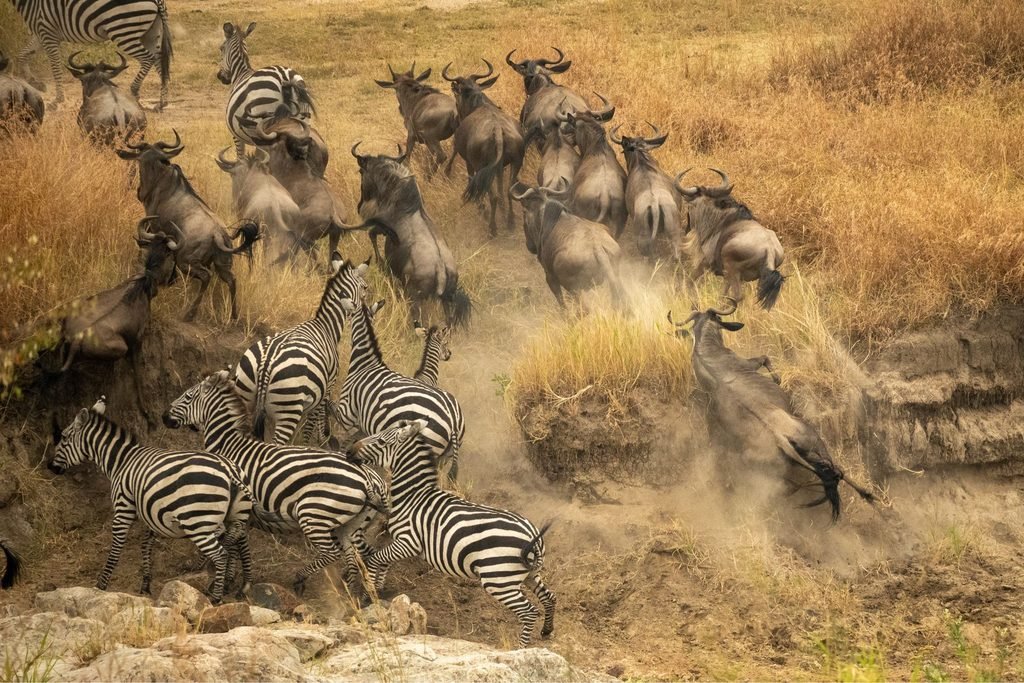
Zebras
Zebras frequently travel alongside wildebeest.
Their contrasting stripes create beautiful scenes when large groups gather on the plains.
Lions
Lions are among the Serengeti’s most famous predators.
They may be seen resting in the grass, moving through open areas, or hunting.
Cheetahs
Cheetahs are particularly associated with open grasslands.
The southern Serengeti and Ndutu region can provide opportunities to observe these fast-moving predators.
Leopards
Leopards are often found in areas with trees and suitable cover.
They can be difficult to spot because of their secretive behavior.
Elephants
Elephants can be encountered in different parts of the Serengeti.
They may be seen moving in family groups or feeding in woodland areas.
Giraffes, Buffaloes and Antelopes
The Serengeti also supports giraffes, buffaloes, gazelles, topis, hartebeest, and many other grazing animals.
Crocodiles
Nile crocodiles inhabit river systems such as the Mara and Grumeti.
They are particularly associated with river-crossing scenes.
Wildlife sightings depend on location, season, and animal movements.
Is a 4-Day Serengeti Migration Safari Enough?
Four days can provide an enjoyable Serengeti safari, particularly when the itinerary is carefully planned around the migration area.
However, the Serengeti is a large national park, and traveling between distant regions takes time.
A four-day safari works best when you focus on one main migration region rather than attempting to cover the entire park.
For example, travelers visiting during the calving season may focus on Ndutu and the southern Serengeti.
Those visiting during the Mara River crossing season may prefer to fly into northern Serengeti and spend several nights there.
Travelers who want to combine northern Serengeti, central Serengeti, and Ngorongoro Crater may benefit from a longer itinerary.
A six- or seven-day safari generally provides more flexibility.
Private Safari vs Group Joining Safari
An exclusive safari provides a private vehicle and guide for your booking.
This can be particularly attractive for couples, families, photographers, and travelers who prefer a personalized experience.
You can discuss your preferred game-drive pace and interests with your guide.
A group joining safari can be more affordable because travelers share certain operating costs.
However, group tours usually follow fixed schedules and provide less flexibility.
For a short migration-focused trip, a private safari can be especially useful because you may want to spend additional time searching for the herds.
What Should You Pack for a 4-Day Serengeti Safari?
Packing suitable clothing and equipment helps make your safari comfortable.
Recommended items include:
- Lightweight safari clothing.
- Warm jacket for early morning game drives.
- Comfortable walking shoes.
- Sun hat.
- Sunglasses.
- Sunscreen.
- Binoculars.
- Camera and spare batteries.
- Power bank.
- Reusable water bottle.
- Insect repellent.
- Personal medication.
- Small daypack.
- Travel documents and insurance information.
Neutral-colored clothing is practical for wildlife viewing.
Early mornings can be cool, especially during the dry season.
Layered clothing is useful because temperatures may rise during the day.
Can You Add a Hot-Air Balloon Safari?
A hot-air balloon safari is one of the optional activities available in selected areas of the Serengeti.
Balloon flights normally take place early in the morning, allowing travelers to enjoy views of the landscape from above.
Depending on the location and season, you may see wildlife moving across the plains.
However, sightings are not guaranteed.
Balloon safaris require advance booking and depend on weather conditions and availability.
They are usually charged separately unless included in your package.
Can You Combine the Serengeti Migration Safari with Ngorongoro Crater?
Yes, but adding Ngorongoro Crater to a four-day migration safari requires careful planning.
If your main interest is the southern Serengeti, it may be possible to include Ngorongoro, although this reduces the time available for migration viewing.
If you want to focus on northern Serengeti and Mara River crossings, adding Ngorongoro to the same four-day trip is generally less practical.
A longer safari is usually better for combining these destinations without rushing.
Can You Combine the Safari with Kilimanjaro Climbing?
Yes. Many travelers combine a Serengeti wildlife safari with Mount Kilimanjaro climbing.
After spending several days climbing Kilimanjaro, a safari can provide an opportunity to relax and enjoy Tanzania’s wildlife.
However, it is important to allow enough time for rest after the climb.
You can also arrange the safari before your mountain expedition, depending on your travel schedule.
Eddy Tours and Safaris can be contacted about combining Kilimanjaro climbing with Serengeti wildlife experiences.
Why Book Your Serengeti Migration Safari with Eddy Tours and Safaris?
Planning a Great Migration safari requires an understanding of seasonal wildlife movements, travel distances, accommodation locations, and park regulations.
At Eddy Tours and Safaris, we help travelers explore safari itineraries according to their preferred dates and interests.
Whether you want to visit the southern Serengeti during calving season or the northern Serengeti during the river-crossing period, our team can help you discuss suitable arrangements.
We can also assist with planning additional Tanzania experiences, including Ngorongoro Crater, Tarangire National Park, Mount Kilimanjaro, and Zanzibar.
Travelers can request information about private safari arrangements, accommodation categories, and available travel dates.
For more information, visit Eddy Tours and Safaris or contact our team.
Frequently Asked Questions About the 4-Day Serengeti Migration Safari
How much does a 4-Day Serengeti Migration Safari cost in 2027/2028?
Prices depend on accommodation, travel season, group size, and transport. Broad planning estimates range from approximately $1,000 per person for some private camping arrangements to $5,000 or more for premium fly-in safaris.
Is four days enough to see the Great Migration?
Four days can provide a rewarding migration safari when you visit the right region for the season. However, sightings and river crossings cannot be guaranteed.
What is the best month for a Serengeti Migration Safari?
February is popular for the calving season, while August and September are popular for northern Serengeti river-crossing opportunities.
Can I see the Mara River crossings during a four-day safari?
Yes, it is possible during the northern migration season. However, a crossing is not guaranteed, and a fly-in itinerary is often more practical for a short trip.
What is the difference between a private and group safari?
A private safari provides a dedicated vehicle and guide for your booking, while a group joining safari involves sharing transport and following a fixed schedule.
Where will I sleep during the safari?
Accommodation may include mid-range tented camps, luxury tented camps, or permanent lodges, depending on the package selected.
Can I see lions and cheetahs during the migration?
Yes, both species occur in the Serengeti. However, sightings depend on location, season, and wildlife movements.
Is the Great Migration visible throughout the year?
The migration is a year-round movement, but the herds travel between different parts of the Serengeti ecosystem.
Can I see the Big Five during this safari?
The Serengeti is home to lions, leopards, elephants, buffaloes, and black rhinos. However, black rhinos are rare, and seeing all five during a four-day safari is unlikely to be guaranteed.
Is a fly-in Serengeti safari worth it?
A fly-in safari can save considerable travel time, particularly when visiting northern Serengeti for a short period.
When should I book my 2027/2028 migration safari?
Booking several months in advance is advisable, particularly for July, August, September, and the popular calving season.
Can I customize the itinerary?
Private safaris can often be adjusted according to your travel dates, accommodation preferences, and interests, subject to park regulations and availability.
Final Thoughts: Is the Exclusive 4-Day Serengeti Migration Safari Worth It?
An exclusive four-day Serengeti Migration Safari offers a wonderful opportunity to experience Tanzania’s wildlife in one of Africa’s most famous national parks.
From the large wildebeest herds on the southern plains to the dramatic river-crossing areas of northern Serengeti, the migration provides remarkable wildlife experiences throughout the year.
However, the best safari itinerary depends on the season.
Travelers visiting during the calving season should focus on the southern Serengeti and Ndutu region.
Those hoping to witness Mara River crossings should consider northern Serengeti and allow enough time to search for the herds.
With a private vehicle, suitable accommodation, and a well-planned itinerary, four days can provide an enjoyable introduction to the Great Migration.
The most important thing is to choose a safari that matches your travel dates and expectations rather than relying on promises of guaranteed wildlife events.
Book Your Exclusive 4-Day Serengeti Migration Safari for 2027/2028
Are you planning a Serengeti migration safari in 2027 or 2028?
Eddy Tours and Safaris can help you explore private safari arrangements, accommodation options, and itineraries based on your preferred travel dates.
Whether you want to experience the Ndutu calving season or search for Mara River crossings in northern Serengeti, contact our team to discuss your travel plans.
Website: Eddy Tours and Safaris
Contact page: Plan Your Serengeti Migration Safari
Email: sales@eddytours-safaris.com
WhatsApp: +255 711 906 664
1 Comment
Comments are closed.