
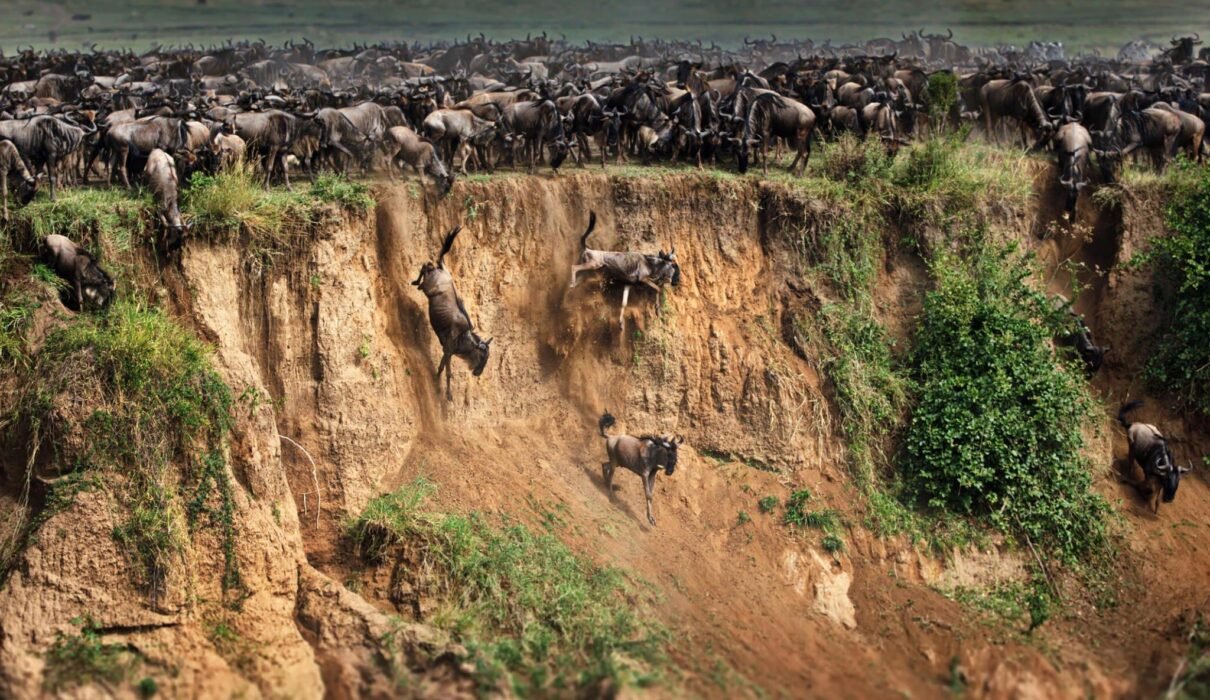
Experience the Serengeti at a pace that gives you time to watch, listen, and appreciate the wildlife around you. This 4-day Serengeti migration safari in 2027 combines flights into the safari area, three nights in a carefully located camp, and private game drives focused on the seasonal movements of the great herds.
Instead of spending much of your short holiday driving from Arusha, fly to an appropriate airstrip and meet your safari guide on arrival. Your wildlife experience begins with the journey from the airstrip to camp.
Over the following days, explore landscapes where wildebeest and zebras gather, predators patrol, and the migration changes direction in response to fresh grazing and water. There is time to pause at a promising sighting, enjoy a picnic lunch, and return to camp as the afternoon light softens.
Plan your journey with Eddy Tours & Safaris, with the safari area and accommodation selected around your 2027 travel dates.
Safari Overview
This is a proposed private fly-in and fly-out itinerary. Your vehicle and guide are reserved for your traveling party during the scheduled game drives. Flights and accommodation facilities may be shared with other guests.
| Safari detail | Arrangement |
|---|---|
| Duration | 4 days / 3 nights |
| Travel year | 2027 |
| Starting and ending point | Arusha, with other connections available by quotation |
| Main destination | Serengeti ecosystem |
| Safari style | Private guided game drives |
| Access | Flights to and from a suitable safari airstrip |
| Accommodation | Three nights in a seasonally appropriate tented camp or lodge |
| Main interests | Migration herds, predators, photography, and landscapes |
| Departure dates | Arranged on request, subject to availability |
The itinerary concentrates on one safari region. The exact location depends on the season; it does not attempt to cover southern, western, and northern Serengeti within four days.
Why Choose a Four-Day Fly-In Safari?
A short safari works best when the journey leaves enough time for wildlife viewing.
Flying into the Serengeti reduces the long overland transfer from Arusha and makes it practical to spend three consecutive nights near your chosen wildlife area. Tanzania National Parks confirms that Serengeti is accessible by air and road, with Arusha a common departure point.
This arrangement gives you two full safari days between arrival and departure. Those days can be adapted around sightings, weather, and your interests.
For photographers, that means more freedom to wait for an animal to move into better light. For couples, it allows a quieter pace with time at camp. For families, the guide can discuss suitable breaks and the length of each outing.
“Exclusive” refers to the private guiding and vehicle arrangements. Wildlife areas remain shared spaces, and popular sightings can attract several vehicles.
Choosing Your Migration Area for 2027
The Great Migration follows changing rainfall, grazing, and water availability. The seasonal pattern helps with planning, but it cannot predict the animals’ precise position on a particular date.
Use the following as a general planning guide:
| Approximate period | Area to consider | Main interest |
|---|---|---|
| January–March | Southern Serengeti and Ndutu | Calving-season herds and predator activity |
| April–May | Southern-to-central transition areas | Moving herds and greener landscapes |
| May–June | Central and western Serengeti | Herd concentrations and movement toward the Grumeti area |
| July–October | Northern Serengeti | Migration herds and opportunities to observe Mara River crossings |
| November–December | Central, eastern, or southern return areas | Herd movement toward the southern plains |
These periods overlap, and conditions vary between years. TANAPA identifies January–February for calving and June–October as a broad migration-viewing period. Your specific camp and airstrip should be selected more precisely around your interests and dates.
For a southern calving-season version, accommodation may be in Ndutu within the Ngorongoro Conservation Area. That changes the applicable access arrangements and fees, which should be reflected in your quotation.
Day 1: Fly to the Safari Area and Enjoy Your First Game Drive
From Arusha to the Serengeti Landscapes
After breakfast, transfer to Arusha Airport for your scheduled safari flight. The departure time, flight routing, and arrival airstrip will be confirmed during booking.
From the air, watch the landscape change as you travel toward the safari region. Depending on the route and visibility, you may see broad plains, scattered settlements, and the highlands of northern Tanzania.
Your guide meets you at the airstrip and introduces the plan for the next four days.
Continue toward camp with wildlife viewing along the way. This first drive offers an opportunity to settle into the safari rhythm: scanning the grasslands, listening to your guide, and stopping when something catches your attention.
After lunch and time to settle into your room, head out for an afternoon game drive if the flight schedule allows. Search for grazing herds, elephants, giraffes, and predators in suitable habitat.
Return to camp for dinner. Beyond the dining area, the sounds of the bush provide a different perspective on the landscape you explored during the day.
Accommodation: Selected tented camp or safari lodge
Meals: Lunch and dinner
Main experience: Flight arrival and introductory wildlife viewing
Day 2: Full-Day Serengeti Migration Safari
Spend Time Among the Great Herds
Begin early, when the temperature is cooler and the morning light brings detail to the grasslands.
Your guide plans the route using current observations, recent sightings, and accessible tracks. The aim is to spend meaningful time in the areas where the migration is present.
When you encounter a large herd, pause to appreciate more than its size. Watch zebras grazing alongside wildebeest, young animals staying close to adults, and groups gathering before moving across the plains.
Migration viewing can be surprisingly varied. One moment the animals may appear settled; later, a section of the herd begins moving and a long line forms across the landscape.
Predators add another dimension to the day. Lions may rest near grazing animals, while cheetahs scan open country and hyenas move between feeding opportunities. Sightings depend on the location and conditions.
Carry a picnic lunch if you plan to remain out for the day. Your guide will stop at a permitted location, allowing you to enjoy a break before continuing.
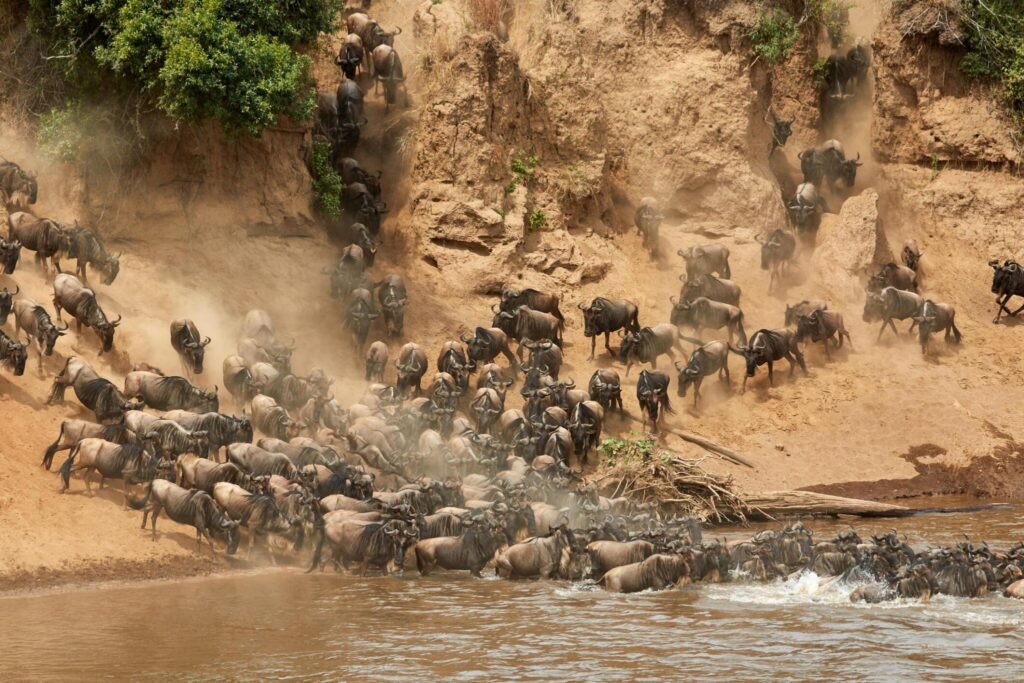
During a northern Serengeti itinerary, part of the day may be spent near designated Mara River viewing areas when the herds are nearby. River crossings remain unpredictable: animals can gather without entering the water, turn away, or cross outside your viewing period.
Return to camp before evening, with time to relax over dinner and discuss what you observed.
Accommodation: Same tented camp or lodge
Meals: Breakfast, lunch, and dinner
Main experience: Full-day migration and predator viewing
Day 3: A Second Full Day to Explore
Follow New Sightings and Your Personal Interests
A second full safari day provides flexibility that a single outing cannot.
You may revisit an area where the herds were gathering, explore a different habitat, or spend longer watching an animal you encountered the previous day. Your guide will discuss the options before departure.
For photographers, early light can reveal dust rising around moving wildebeest or pick out the shape of an animal against the grass. Later, focus on details: a zebra’s markings, an elephant feeding, or the interaction between animals in a herd.
For birdwatchers, quieter moments offer opportunities to observe raptors, ground birds, and species associated with the habitat around your camp.
The day can be arranged as one longer outing with a packed lunch or separate morning and afternoon drives when camp location makes that practical. Share your preferences with the guide, while allowing room for wildlife conditions to shape the schedule.
If visiting during calving season, look for young wildebeest among the southern herds. If traveling in the western or northern migration season, focus on the relevant herd movements and surrounding wildlife.
An optional balloon safari may be available in your chosen region. It requires separate booking, depends on weather and operating arrangements, and can change the day’s schedule. The balloon’s route follows the wind, so migration sightings from the air cannot be guaranteed.
Enjoy your final evening at camp, with time to reflect on how much the landscape has changed between outings.
Accommodation: Same tented camp or lodge
Meals: Breakfast, lunch, and dinner
Main experience: Flexible wildlife exploration and photography
Day 4: Final Wildlife Viewing and Flight Back to Arusha
A Last Morning in the Bush
Wake for breakfast and prepare for departure.
If your flight time allows, enjoy a short morning game drive before traveling to the airstrip. For an early departure, wildlife viewing may be limited to the transfer itself.
This final journey offers a chance to notice details that felt unfamiliar on arrival: the calls of particular birds, the difference between grazing animals, or the tracks crossing the road.
Board your flight back to Arusha, where the four-day safari ends. An onward hotel transfer can be included in the booking arrangements.
If continuing to Zanzibar or connecting to an international flight, the full schedule needs to be planned in advance. Arusha Airport and Kilimanjaro International Airport are separate airports, and transfers between them require time.
Accommodation: Not included unless added
Meals: Breakfast; lunch depends on the confirmed departure schedule
Main experience: Airstrip transfer and return flight
Accommodation: Location Comes First
On a migration safari, a beautiful room is only part of the decision. The camp’s position affects how much time you spend reaching wildlife areas each day.
For this itinerary, choose accommodation that fits the expected seasonal herd location and provides practical access to your arrival airstrip.
Options may include smaller tented camps, permanent lodges, or higher-comfort properties. A tented camp can offer proper beds and private bathroom facilities, but amenities differ.
Before confirming, review the named property, room type, bathroom arrangements, charging facilities, and dining setup. Families should also check age policies and suitable room configurations.
Three nights in one camp provide a settled base, allowing you to unpack once and focus on the safari.
What Your Safari Quotation Should Cover
A complete quotation for this itinerary should clearly identify:
- Return safari flights and the applicable baggage allowance.
- Three nights in the named accommodation.
- A private safari vehicle and driver-guide for scheduled game drives.
- Applicable park, conservation, and accommodation-related fees.
- Meals specified in the itinerary.
- Drinking water arrangements.
- Airstrip transfers.
- Arusha transfers included in the package.
- Applicable taxes and compulsory charges.
Optional activities, international flights, visa costs, travel insurance, gratuities, premium drinks, and additional hotel nights should be listed separately unless included explicitly.
Private guiding does not automatically mean a private aircraft. Scheduled safari flights usually carry other passengers; a charter can be quoted separately.
How Much Does the Safari Cost?
The price of your 4-day Serengeti migration safari in 2027 depends on the travel period, number of guests, accommodation, flight routing, and room arrangements.
Peak-season availability can also affect which properties and flight seats are available.
Rather than relying on a headline price without context, request a quotation for your actual dates. Compare proposals that include equivalent flights, accommodation, private guiding, and compulsory fees.
For solo travelers, check both the room supplement and the cost of a private vehicle. For larger parties, confirm vehicle capacity and seating arrangements before booking.
What to Pack for a Fly-In Safari
Use a manageable soft-sided bag where required by your airline. Confirm the baggage allowance, including whether it combines checked luggage and hand luggage.
Bring:
- Lightweight clothing in neutral colors.
- A warm layer for early mornings.
- Comfortable closed shoes.
- Sun protection and insect repellent.
- Binoculars.
- Camera equipment, spare batteries, and memory cards.
- Personal medication and essential documents.
- A small day bag for game drives.
Photographers should discuss heavy equipment before flights are booked. Additional baggage may require advance arrangements.
Responsible Migration Viewing
Good wildlife viewing gives animals space.
Remain quiet near sightings, follow your guide’s instructions, and stay inside the vehicle except at permitted locations. Avoid asking the driver to block an animal’s route or approach more closely for a photograph.
At river-viewing areas, patience matters. The animals decide when and where to move. Responsible viewing respects that uncertainty.
For official destination guidance, visit Tanzania National Parks and its Serengeti visitor guide.
Frequently Asked Questions
Is this safari private?
The proposed package includes a private vehicle and guide for your traveling party. Scheduled flights and camp facilities may be shared.
Are migration sightings guaranteed?
No. Seasonal planning and suitable camp placement improve your opportunities, but wildlife movements remain unpredictable.
Can we see a river crossing?
A northern Serengeti version may offer opportunities during the relevant season. A crossing cannot be promised, even when large herds are nearby.
Does this safari include Ngorongoro Crater?
No. The four-day itinerary concentrates on the migration area. A crater visit can be added by extending or redesigning the trip.
Can the safari start from Zanzibar?
A Zanzibar departure can be explored, subject to available flight schedules and routing for your dates. It requires a separate quotation.
Is four days enough?
Four days offers a focused visit with three nights and two full game-drive days. Additional nights provide more flexibility for uncertain herd movements and photography.
Book Your Exclusive Serengeti Migration Safari for 2027
Share your preferred dates, number of travelers, accommodation budget, and main wildlife interests with Eddy Tours & Safaris.
Whether you want southern calving-season landscapes, western migration herds, or northern Serengeti river-viewing opportunities, the starting point is choosing the right region for your visit.
Website: eddytours-safaris.com
Email: sales@eddytours-safaris.com
Alternative email: eddytoursandsafaris@gmail.com
Phone and WhatsApp: +255 711 906 664