
This 5-day Tanzania joining group safari is one of the best-length shared routes for travellers who want to see the Northern Circuit properly without committing to a week or more. It begins in Arusha and visits Tarangire National Park, Lake Manyara National Park, Central Serengeti and Ngorongoro Crater. Each destination brings a different habitat and a different style of wildlife viewing, from elephant herds beneath baobabs to the wide plains of Serengeti and the high-walled volcanic caldera of Ngorongoro.
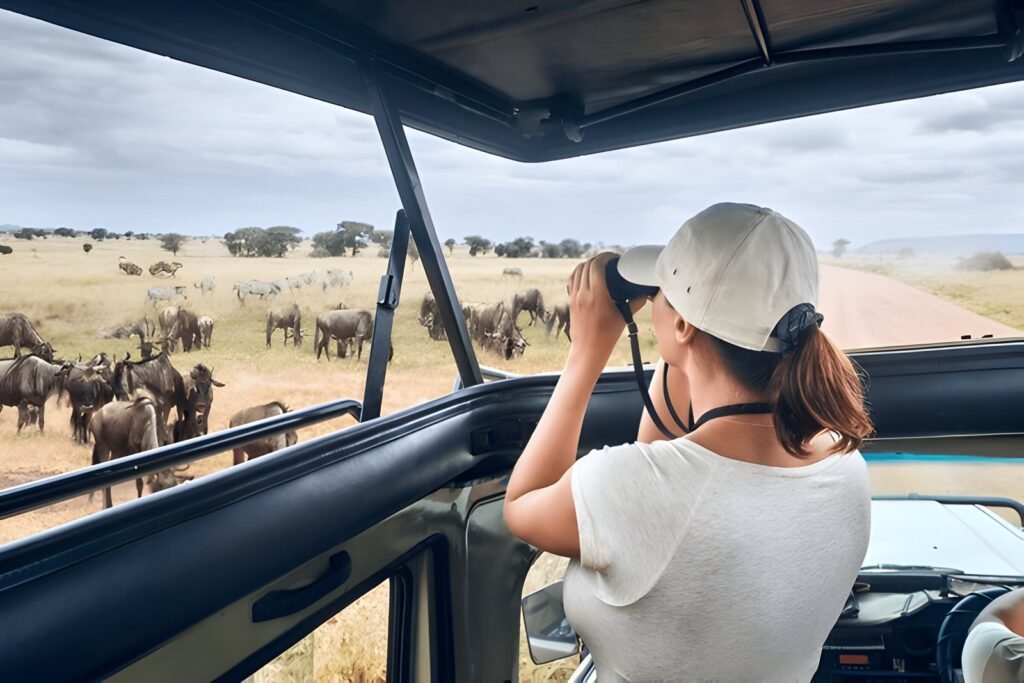
On a joining group safari, you share the vehicle and guide with other travellers on the same confirmed departure. The price is generally lower than a private safari because core costs are shared. It is particularly suitable for solo travellers, couples and friends who enjoy meeting people, while still receiving proper park fees, game drives, accommodation and a professional English-speaking guide. The same itinerary can be booked privately if you want exclusive use of the vehicle.
At a glance
- Duration: 5 days / 4 nights
- Start and finish: Arusha
- Parks: Tarangire, Lake Manyara, Serengeti and Ngorongoro Crater
- Travel style: Shared joining-group departure
- Vehicle: 4×4 safari Land Cruiser with pop-up roof
- Accommodation: Camping, tented camp or lodge according to the confirmed package
Day-by-day itinerary
Day 1: Arusha – Tarangire National Park
Meet the guide and group in Arusha after breakfast, then drive toward Tarangire National Park. The journey is normally two to three hours. Tarangire is known for its ancient baobab trees, river systems and elephant populations. Start the game drive after entering the park and take a picnic lunch at an official site.
Look for elephant, giraffe, buffalo, zebra, wildebeest, impala, warthog and birdlife. During drier periods, animals are often drawn to water. Predators occur but cannot be guaranteed. The guide will move at a measured pace and use the park’s changing habitats rather than chasing a fixed checklist.
Later, travel to the Mto wa Mbu or Karatu area for dinner and overnight.
Meals: Lunch and dinner
Overnight: Camp or lodge near Mto wa Mbu / Karatu
Day 2: Lake Manyara – Central Serengeti
After breakfast, visit Lake Manyara National Park. The entrance road enters a shaded groundwater forest, where baboons are often visible and blue monkeys may be seen in the trees. The habitat opens toward grassland, acacia woodland and lake views. Elephant, buffalo, giraffe, hippo and water birds are all possible.
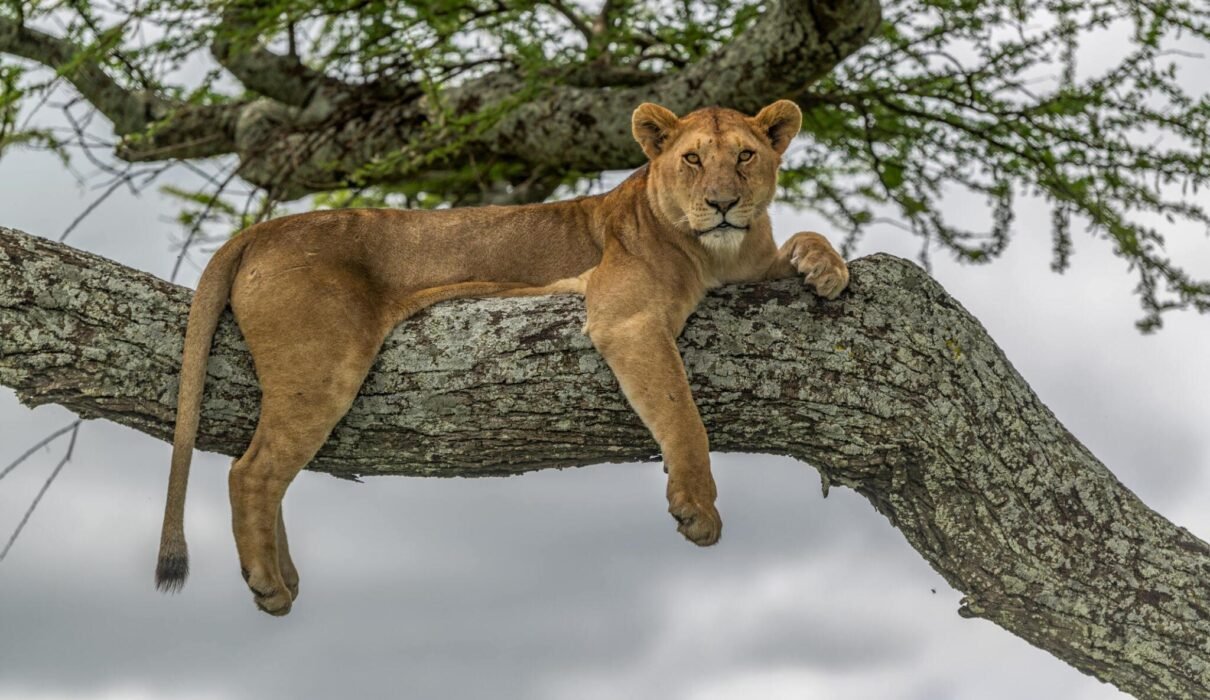
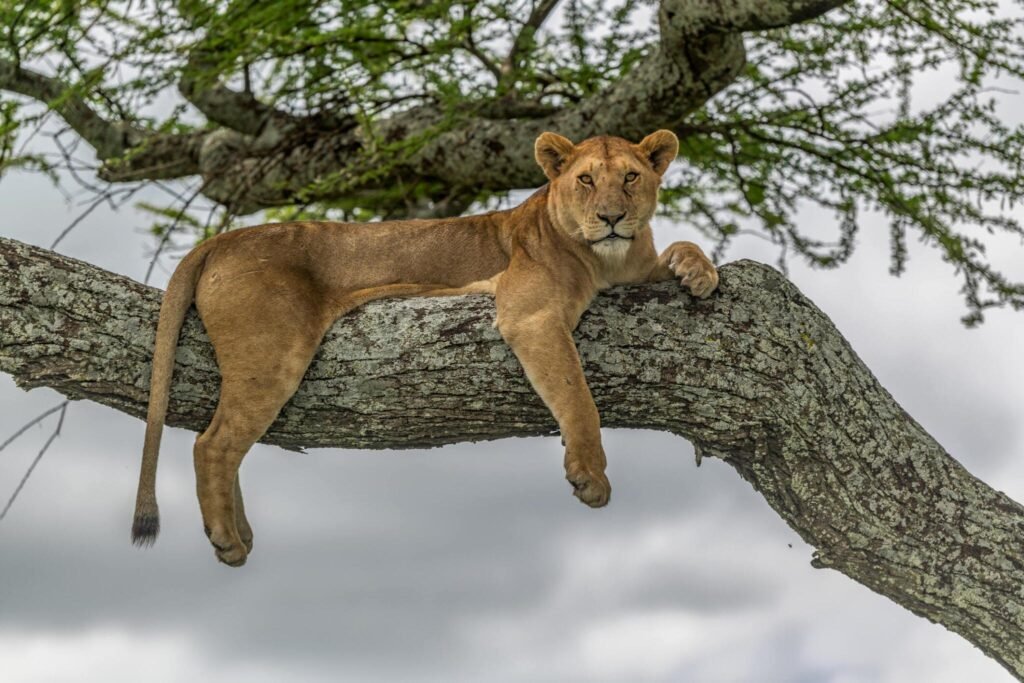
The park is associated with tree-climbing lions, although there is no guarantee that they will be seen or resting in trees. The guide will look in suitable areas while also giving time to the forest and lakeshore scenery. After a packed lunch, continue through the Ngorongoro highlands toward Central Serengeti.
Arrive at camp in time for dinner. Listen to staff safety guidance after dark because remote camps can have wildlife moving nearby.
Meals: Breakfast, lunch and dinner
Overnight: Central Serengeti camp or lodge
Day 3: Full-day Serengeti wildlife drive
Central Serengeti, often called Seronera, offers reliable wildlife viewing throughout the year. Its river valleys, open plains and granite kopjes support resident lions, leopard, cheetah, hyena, giraffe, buffalo, zebra and many species of antelope. Leave camp early to use the cool part of the day.
Leopards may use large riverine trees, cheetahs often favour open plains, and lions may rest around kopjes or in long grass. Your guide looks for tracks, vultures, alarm calls and fresh activity, then decides how long to stay at each sighting. Have a picnic lunch in the park or return to camp according to the group schedule, before continuing with an afternoon drive.
Meals: Breakfast, lunch and dinner
Overnight: Central Serengeti camp or lodge
Day 4: Serengeti – Ngorongoro Highlands
After breakfast, take a final morning game drive in Central Serengeti, then begin travelling east through the wider Serengeti ecosystem toward Ngorongoro. The road is a game drive in itself. Wildlife may appear on the way, and the scenery changes from open plains to the cooler highlands.
The Great Migration may be in a nearby part of the ecosystem depending on month and rain. Its movement cannot be fixed to a calendar, and no ethical operator will promise an exact crossing or herd location. The route is planned for good resident wildlife even when the migration is elsewhere.
Arrive in Karatu or the crater-highland area for dinner and an early night.
Meals: Breakfast, lunch and dinner
Overnight: Karatu / Ngorongoro Highlands camp or lodge
Day 5: Ngorongoro Crater – Arusha
Start early and descend into Ngorongoro Crater for a full morning game drive. The crater floor contains grassland, woodland, swamp and Lake Magadi. It has a high concentration of wildlife, including lion, buffalo, zebra, wildebeest, hippo, hyena, jackal and many birds. Elephants may be found near the forest, while black rhino remains a special but rare sighting.
Enjoy a picnic lunch at the official site, then complete the drive, ascend the crater road and return to Arusha. Arrival time depends on traffic, weather and wildlife sightings. An extra hotel night is recommended if you have a major flight.
Meals: Breakfast and lunch
End of safari: Arusha hotel or agreed drop-off
What is included?
- Shared 4×4 safari vehicle and professional English-speaking driver-guide
- Four nights of accommodation in the confirmed category
- Meals listed above and drinking water during game drives
- Park fees and Ngorongoro conservation/crater fees for the stated route
- All game drives listed in the itinerary
- Arusha pick-up and drop-off as confirmed
- Government taxes and VAT where applicable
What is excluded?
- International flights, visa fees and travel insurance
- Alcoholic beverages, soft drinks and personal snacks unless stated
- Tips for guide and accommodation staff
- Balloon safari and other optional activities
- Personal purchases, laundry, calls and souvenirs
- Additional hotel nights unless included in the quotation
Why choose a five-day group safari?
Five days is long enough to avoid reducing Serengeti to a drive-through stop. You have a complete wildlife day in Central Serengeti, which makes the distance from Arusha worthwhile. You also experience Tarangire, Lake Manyara and Ngorongoro rather than repeating the same environment every day.
The shared departure works well when guests are organised and cooperative. Be ready for early starts, keep luggage compact and allow every guest room at wildlife sightings. The guide is responsible for the route and safety, and the best group experiences come when everyone respects that role.
Best travel time in 2027, 2028 and 2029
The route can operate year-round. June to October is generally dry and popular. January and February can be warm and rewarding, with possible route adjustments for the southern migration/calving season. March to May is greener and quieter but wetter. November and December often have short rains, fresh landscapes and changing weather.
Instead of choosing a date based only on a generic migration calendar, share your exact month and travel priorities. The camp location and detailed route can then be matched to likely wildlife conditions.
Accommodation and packing
A budget camp, tented camp and lodge offer different comfort levels. Camping is the simplest and most economical. Tented camps often provide beds and more privacy, while lodges typically have en-suite rooms and added facilities. Your quotation should name the accommodation or clearly explain the category.
Bring light neutral-coloured clothing, a fleece for early drives and Ngorongoro evenings, sunhat, sunscreen, sunglasses, closed shoes and a rain jacket in wetter months. Carry a small day pack with camera, power bank, water and medication. A soft-sided bag is easier to store in a shared vehicle.
Responsible safari conduct
Keep noise low at sightings, never feed wildlife and follow the guide’s instructions. The guide stays on permitted tracks and keeps safe distance from animals. These rules protect wildlife and give everyone a better, more natural viewing experience. Carry reusable water bottles where possible and ask before taking close photographs of people outside the parks.
Wildlife expectations and guide knowledge
Across five days, you have a strong chance of seeing a wide range of wildlife: elephants in Tarangire, baboons and birds in Lake Manyara, lions and plains animals in Serengeti, then buffalo, hippos and possibly rhino in Ngorongoro. But no animal belongs to a timetable. Leopard, cheetah and black rhino are all naturally difficult, and the migration may be in a different part of the ecosystem from the camp location.
A professional guide makes the difference by using habitat knowledge and patience. They read tracks, watch vultures, listen for alarm calls and understand how animals behave near water, shade or prey areas. Ask questions as you drive. You will learn much more from understanding a sighting than from taking one quick photograph and moving on.
Food, water and day-to-day comfort
Breakfast and dinner are served at the overnight camp or lodge, while lunches are usually packed for the game drive. Menus depend on the selected accommodation and supplies in remote areas. Tell us about dietary requirements—including vegetarian, halal, vegan, gluten-free or allergies—before booking so the appropriate arrangements can be confirmed.
Drinking water is provided in the vehicle. It is still wise to carry your own refillable bottle and drink regularly, because game drives involve strong sun even when the morning starts cool. Keep personal medication, a power bank, rain layer and camera in a small day pack where they are easy to reach.
Before you travel
Plan to arrive in Arusha at least one night before the departure. That protects the safari against international flight delays and gives you a calmer start on Day 1. On the final day, do not arrange a tight flight connection; travel from Ngorongoro can be affected by roads, weather, traffic and time spent at wildlife sightings.
Check passport validity, Tanzania visa requirements, insurance and travel-health information directly with official and qualified sources. Bring copies of your booking, insurance information and important prescriptions. Travel insurance is strongly recommended for medical support and delays.
Frequently asked questions
Can I join alone?
Yes. Joining-group safaris are a good option for solo travellers because the vehicle and guide are shared with other guests, reducing the individual cost.
Is the vehicle private for our group?
No. On a shared departure, the vehicle is used by all confirmed guests. A private option is available if your party wants exclusive use and a flexible schedule.
Can children join?
Yes, if they are comfortable with long drives and early starts. Share their ages before booking so the accommodation and seating can be checked.
What happens if it rains?
The guide adapts the driving route for safe conditions. Rain is a normal part of safari travel and can produce green scenery, dramatic skies and excellent wildlife activity.
Shared safari etiquette
A few simple habits make the group experience better: be ready at the stated time, keep your luggage neat, use headphones for personal audio, give other guests their turn at sightings and communicate kindly if you have a concern. The driver-guide is responsible for safety and route decisions, and following their advice keeps the safari smooth for everyone.
Respect the camps and parks as well. Use water and electricity thoughtfully, do not leave rubbish behind and follow after-dark rules at wildlife camps. Tanzania’s landscapes are more rewarding when they are treated as living places rather than simply travel products.
Why a shared group safari can be excellent value
Park fees and the Ngorongoro Crater service fee are substantial, and a 4×4 vehicle with an experienced guide is essential for a good safari. Sharing these fixed costs lets more people visit the parks without reducing the time spent inside them. The aim of a good value trip is not to remove important services; it is to use a well-planned route, straightforward accommodation and a shared vehicle intelligently.
When you compare quotations, check the essentials line by line. Does the price include all national-park fees? Is the accommodation inside or close to the wildlife areas? Are meals and water included? Is the vehicle comfortable for the number of guests? These details matter more than a low headline figure with unclear extras.
Extending beyond five days
Five days is a strong first route, but you may want to extend it if Serengeti is your priority. An extra night gives more time for early game drives and allows the group to explore a wider section of the park. Guests travelling during a key migration period may also choose a camp location in the south or north rather than Central Serengeti, depending on the likely herd movement.
Zanzibar is another natural extension. After several early safari starts, beach time gives travellers a chance to rest, swim and experience Stone Town’s history. We can coordinate domestic flights and accommodation so the transition is simple rather than making you backtrack unnecessarily through Arusha.
Private alternative
The route can be booked as a private 5-day Tanzania safari. Private travel is especially useful for families, honeymooners, photographers or friends who want to set their own pace. It costs more for one or two people, but the price becomes more comparable when several travellers share the vehicle. Ask for both group and private quotations if you are unsure which is right for you.
Whether you choose shared or private travel, no safari should promise every animal or perfect weather. A well-designed trip gives you time, a knowledgeable guide, clear communication and realistic expectations. Those are the ingredients that make the days in Tanzania’s parks genuinely worthwhile.
Simple checklist for the morning of departure
- Keep passport, insurance details and contact information in your day bag.
- Wear comfortable clothes and closed shoes; pack a fleece where it is easy to reach.
- Use sunscreen before the first drive and carry sunglasses and a hat.
- Confirm the pick-up time and be ready a few minutes early.
- Tell the guide about any food requirements, medication or mobility issue.
- Bring a reusable bottle, charged phone and camera, but leave valuable jewellery at the hotel.
Once the vehicle leaves Arusha, relax into the rhythm of the safari. The road, the camps, the wildlife sightings and the people around you become part of the story. Keep an open mind, take time to look closely and let the guide handle the logistics. That is the best way to enjoy a group adventure without rushing through it.
Safari travel rewards attention. Some of the best moments are quiet ones: elephants drinking at a river, a giraffe crossing a pale morning plain, birds calling from camp and the shared silence when the Serengeti horizon opens ahead. They are not planned, but they are exactly why visitors come.
With the route, group arrangements and expectations explained clearly before booking, you can arrive prepared, travel responsibly and focus fully on the experience rather than worrying about hidden details.
Every well-planned safari starts with honest information and careful timing.
Book a confirmed 2027–2029 group departure
Group dates and available places change, so confirm current availability before booking travel. Contact Eddy Tours & Safaris for the latest scheduled departures, group size, accommodation level and exact price. We can arrange this route privately when a shared departure does not fit your dates.
Visit our contact page, call or WhatsApp +255 711 906 664, or email eddytoursandsafaris@gmail.com or sales@eddytours-safaris.com. For guided Kilimanjaro climbs, see Kilimanjaro Climb Specialist.