
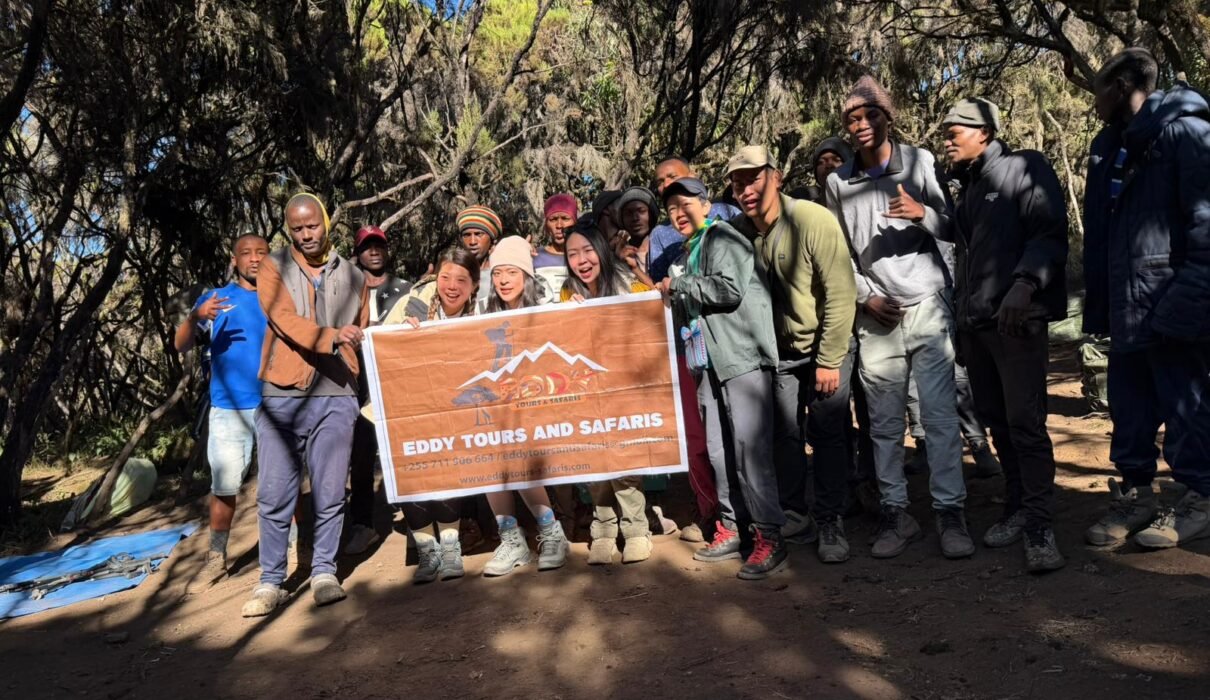
A Kilimanjaro group joining departure lets individual travellers, couples and small parties climb together on a confirmed route and start date. Instead of organising a private mountain team alone, you share the expedition with other trekkers while receiving the same essential support: qualified guides, porters, cook, park procedures, meals, mountain accommodation and daily safety checks.
It is a sensible option for hikers who want company on the trail and a more accessible price than a private climb. It is not a shortcut, though. Kilimanjaro rises to 5,895 metres, and every group member needs good preparation, the right equipment and respect for altitude. The best group departure is one with enough days for acclimatisation, a route that suits your experience and an operator that makes safety decisions before summit pressure.
How Kilimanjaro joining departures work
Guests join a scheduled climb on a chosen route such as Machame, Lemosho, Marangu, Rongai or Northern Circuit. The group begins together from Moshi or Arusha, travels to the gate, meets the mountain team and follows the same daily itinerary. Personal bags are carried by porters within the permitted weight limit, while each climber carries a day pack with water, layers, snacks and medication.
Exact departure dates, available places and minimum group size change as travellers book. For that reason, confirmed availability must be checked before flights are purchased. Publishing a long list of dates that may already be full is not useful to guests. Eddy Tours & Safaris can confirm the current joining departures, route length, accommodation and total inclusions for your preferred month.
Why join a Kilimanjaro group?
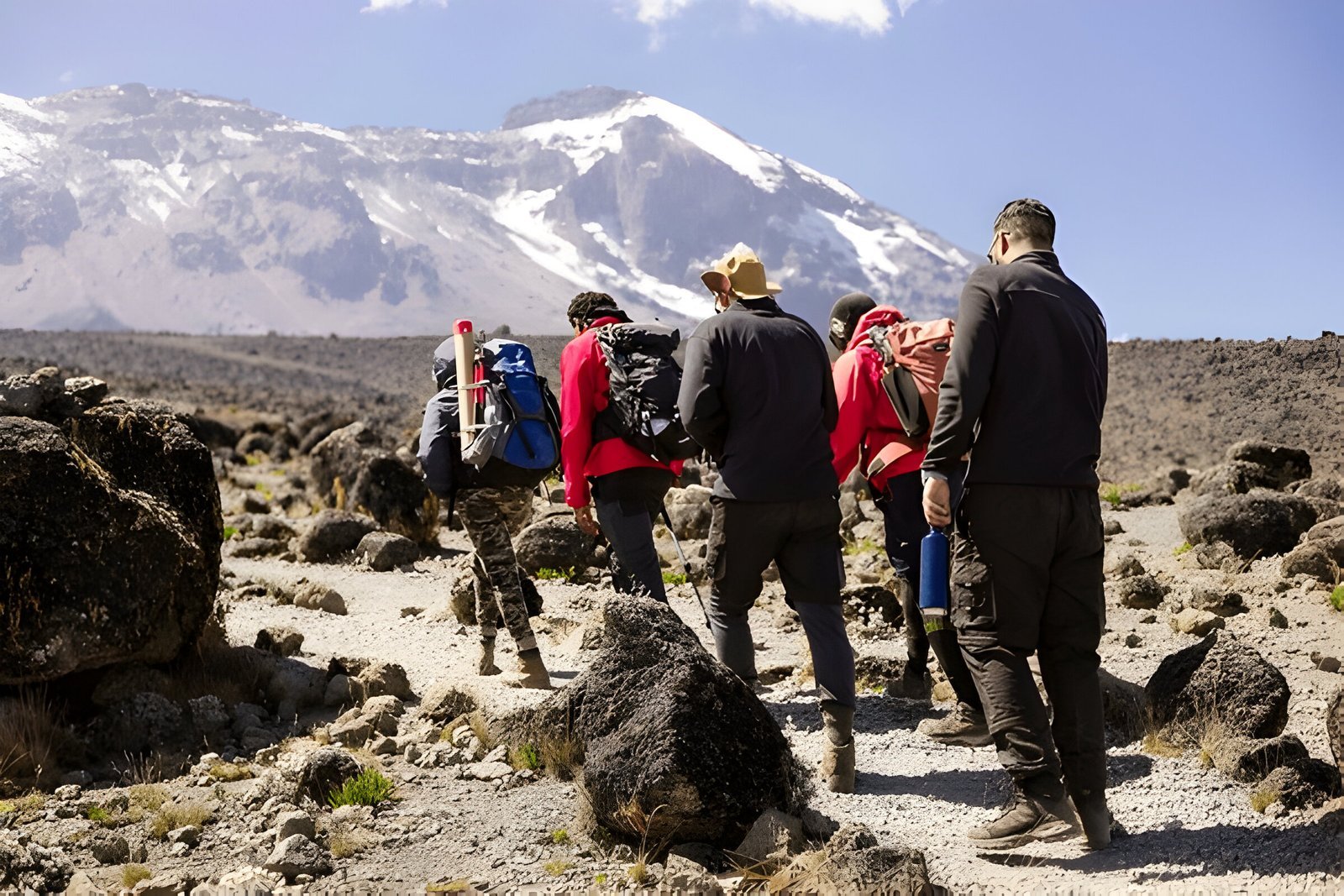
Group climbs bring a natural sense of support. Everyone understands the early mornings, slow uphill pace and uncertainty of summit night. On difficult sections, encouragement from another trekker can help morale. Camp life is also enjoyable: you share meals, compare weather layers and celebrate each day’s progress with people from different backgrounds.
Shared departures can reduce the per-person cost because transport, mountain staff and camp arrangements are planned for several hikers. But value should never be measured by price alone. Park fees, fair porter treatment, adequate food, tents, safety equipment and experienced guides are all essential. Ask what is included in writing and avoid offers that are unusually cheap without an explanation.
Choosing the right route
Machame Route
Machame is scenic and popular. It usually takes six or seven days, passing through rainforest, moorland, the Shira Plateau and high desert before the summit approach. The seven-day version is generally the better choice because it provides more time to acclimatise. It is often easier to find a joining group on Machame because there are many departures.
Lemosho Route
Lemosho normally takes seven or eight days and begins on the quieter western side of the mountain. It crosses the Shira Plateau and later joins parts of the Machame route. The longer schedule and gradual approach make it popular with climbers who prioritise acclimatisation and scenery.
Marangu Route
Marangu uses mountain huts rather than tents, which appeals to climbers who prefer solid accommodation. It commonly takes five or six days; the six-day itinerary is the safer choice for altitude adjustment. Marangu is sometimes called easy, but that is misleading—no Kilimanjaro route is easy at summit altitude.
Rongai and Northern Circuit
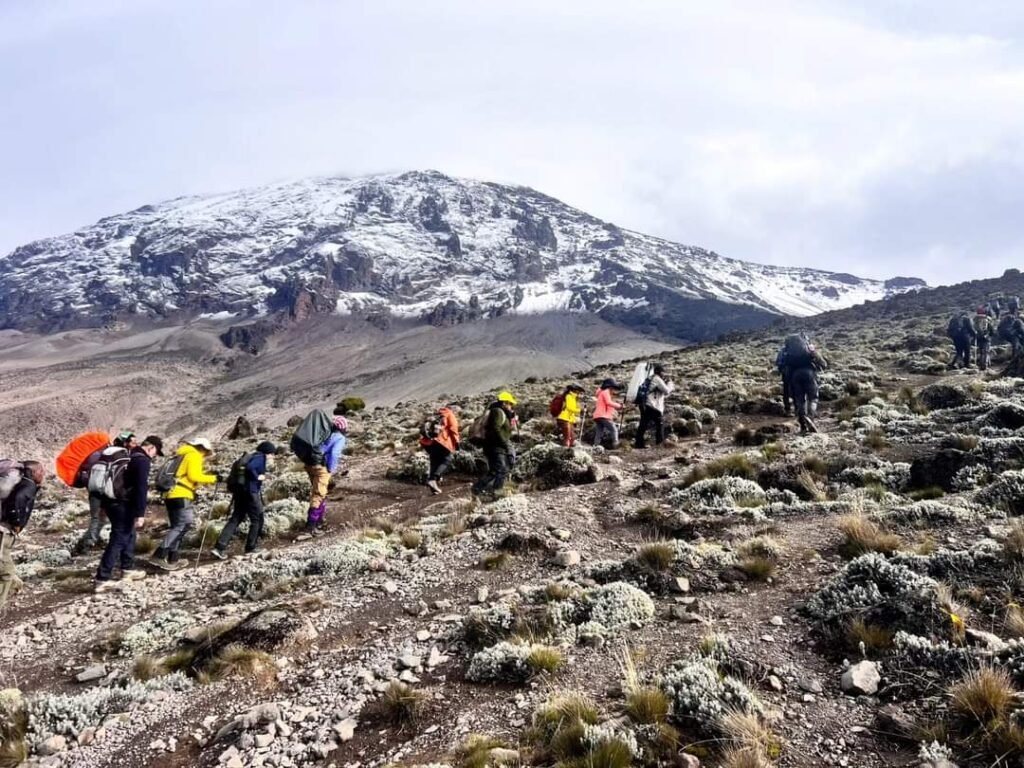
Rongai approaches from the drier northern side and is generally quieter than Machame. Northern Circuit is the longest standard route, commonly eight or nine days, and offers the most time for acclimatisation. Both can be excellent group choices when the dates and budget fit.
Best seasons for a group climb
The main dry periods are generally January to early March and June to October. These months are popular for group departures because trails are often drier and views can be clearer. June to October is cooler, while January and February can be warmer on the lower slopes. Mountains still create their own weather, so rain gear and warm summit layers are necessary in every season.
March to May brings the long rains. Climbs remain possible but trails can be muddy and cloud may be more frequent. November and December often have shorter rains and fewer people on the route. A quieter departure can suit travellers who are comfortable with variable weather and do not need peak-season conditions.
Altitude is the main challenge
Kilimanjaro does not require technical climbing equipment on its standard routes, but altitude makes it serious. As elevation increases, the air contains less oxygen. Headache, fatigue, nausea, dizziness and loss of appetite can occur even in very fit people. Fitness helps, but it does not protect you from altitude illness.
Good guides use a slow pace, encourage drinking and eating, check each person daily and treat symptoms seriously. Tell the guide early if you are unwell. The safe response to serious altitude sickness is descent. A summit is optional; returning safely is not. Do not let the presence of a group make you hide a symptom because you do not want to hold others back.
Training before your departure
Start training eight to twelve weeks before the climb where possible. Regular long walks, hills, stair sessions and incline treadmill work prepare you for sustained climbing. Add cardiovascular exercise such as cycling or jogging, then include leg-strength exercises: step-ups, squats, lunges and calf raises. Practise walking in your boots and use trekking poles before the trek if you intend to take them.
Train for endurance and control, not speed. Kilimanjaro rewards people who can walk steadily for several hours on consecutive days while carrying a day pack. A controlled pace—often called “pole pole”—is not a weakness; it is the correct acclimatisation strategy.
What should be included?
- Kilimanjaro National Park fees, camping or hut fees and rescue-related charges as applicable
- Professional lead guide, assistant guides, cook and porters
- Tents and camp equipment, or Marangu hut accommodation
- All meals on the mountain and safe drinking water
- Routine health monitoring and group safety equipment
- Transfers from Moshi or Arusha hotel to the park gate and back
- Pre-climb briefing and equipment check
- Government taxes where applicable
What is normally excluded?
- International flights and Tanzanian visa fees
- Hotel accommodation before and after the climb unless quoted
- Travel and medical insurance, including evacuation cover
- Personal trekking equipment, sleeping bag and clothing
- Tips for guides, porters and cooks
- Personal snacks, alcoholic drinks and laundry
Essential packing advice
You need warm, layered clothing for Kilimanjaro: broken-in waterproof boots, quality socks, base layers, fleece, insulated jacket, waterproof shell, trekking trousers, gloves, warm hat, sunhat, sunglasses and a reliable headlamp. A cold-weather sleeping bag, day pack and water bottles are essential. Summit night can be extremely cold, so do not treat thermal layers as optional.
Keep your medication, rain gear, water, snacks and warm layer in your day pack. Porters carry the main duffel but you need access to essentials during the walk. Gear can sometimes be rented in Moshi, but fit and quality should be checked before the briefing—not on the morning you enter the park.
Group life on the mountain
A joining group works best when everyone is considerate. Be on time for meals and departures, keep your gear organised, use your headlamp carefully around shared tents and respect quiet time. You do not need to be the fastest trekker; you need to listen to the guide and hike safely at the agreed pace.
Groups naturally spread out a little on the trail, but the guides keep track of every climber. The shared experience can be motivating, yet each person acclimatises differently. Do not compare your body too closely with another hiker’s response to altitude.
Before you confirm your place
Ask for a written itinerary that shows every camp or hut, the route duration, transfers, meals and hotel nights included. Confirm whether the departure is already guaranteed or needs further bookings. Check cancellation and postponement terms before you buy flights, because a group plan can change if travellers cancel or a route is affected by park conditions.
Arrive in Tanzania at least one day before the climb. That day allows time for airport delays, a proper briefing and a careful equipment check. After the climb, keep at least one recovery night in Moshi or Arusha. Summit day is long and tiring, and it is far better to rest, shower and celebrate before a safari or long international flight.
Food, water and camp routine
Mountain food is prepared to support effort at altitude. Typical meals include porridge, eggs, soup, rice, pasta, vegetables, potatoes, fruit and a protein source. Appetite can drop higher on the mountain, but eating and drinking regularly still matters. Tell the team about vegetarian, vegan, halal, gluten-free or allergy needs before booking so the cook can plan properly.
Drink consistently through the day. Dehydration can worsen headache and fatigue. Water is treated or provided by the mountain team; carry bottles or a hydration system with enough capacity for the daily walk. At high camp and on summit night, keep bottles insulated where possible because conditions can be very cold.
After Kilimanjaro
Many group climbers extend their Tanzania visit with a safari. Tarangire, Ngorongoro Crater, Lake Manyara and Serengeti are natural choices after a rest day. A safari gives your legs time to recover while you still experience the country’s wildlife and landscapes. Others finish with Zanzibar beach time, which is a calm contrast to the cold, early summit morning.
Plan the mountain before the safari, not the other way around. If weather or altitude requires a change to your trek, flexible onward arrangements will make the whole journey easier. Share all your dates at the time of enquiry, and the itinerary can be built around them sensibly.
Respecting the mountain team
Guides, cooks and porters are central to a safe Kilimanjaro climb. Treat them with respect, listen to their instructions and avoid carrying more than you need in your main duffel. The crew works hard to establish camp, prepare meals and monitor the route ahead. Tipping is customary on Kilimanjaro, but it should be handled transparently according to the guidance provided by the lead guide.
Leave no rubbish on the trail, use toilets as directed and stay on the authorised route. Kilimanjaro’s environment is fragile at high altitude. Good trekking is not only reaching the summit; it is leaving the mountain in good condition for the next group.
Frequently asked questions
Can I join alone?
Yes. Joining groups are ideal for solo travellers. You receive a full mountain team and share the journey with other trekkers rather than needing to form your own group.
Do I need climbing experience?
Technical climbing experience is not required on the standard routes, but you need good fitness, suitable equipment and the ability to walk for several days at altitude. Training is essential.
What happens if I cannot continue?
The guide assesses your condition and arranges a safe descent with the required support. This is a normal safety procedure, not a personal failure. Health always comes first.
Choosing a departure by month
January and February suit hikers who want warmer lower slopes and can travel early in the year. June through October is popular for drier conditions and often clearer views, but it can be colder at camp and busier on well-known routes. The exact weather will always vary, so a dry-season departure still needs waterproof clothing and a warm sleeping system.
For travellers with flexible dates, shoulder-season group departures can offer a quieter mountain. November and December may bring shorter rains, while March to May is generally wetter. A quiet route is not automatically easier, but it can appeal to hikers who prefer fewer camps and do not mind muddy sections. The guide can help match a route to your date rather than making a broad claim that one month suits everyone.
How group safety is managed
Each day, guides observe how people are walking, eating, drinking and speaking. They may use routine health checks, ask about symptoms and decide whether someone should remain at camp or descend. The lead guide also considers weather, trail conditions and the strength of the whole team. A safe group is not one that forces every hiker to the same speed; it is one where decisions are made early and clearly.
On summit night, the team starts slowly and keeps breaks short to avoid getting cold. Guides watch for unusual fatigue, poor coordination or severe headache. If someone cannot continue safely, a descent plan is put in place. This is why choosing an operator with enough support staff matters more than choosing a schedule only because it is cheap.
Private climb option
If a joining departure does not match your work leave, preferred route or travel companions, a private climb can be arranged. You choose the start date and route, while the same essential safety and crew support applies. It can be especially useful for families, photographers, friends travelling together or climbers who want a specific acclimatisation plan.
A private climb costs more for a solo traveller because the vehicle and staff are not shared with other bookings. For a group of friends or family, the difference may be smaller. We can quote both options clearly so you can decide based on flexibility, budget and comfort.
A final planning checklist
- Confirm the departure is operating and the route duration is clear.
- Book flights only after receiving written confirmation.
- Arrive one day before the briefing and allow a rest night after the trek.
- Train on hills, stairs and long walks in your own hiking boots.
- Arrange suitable insurance and review personal health requirements early.
- Pack proper waterproof and cold-weather layers for summit night.
- Tell the operator about dietary needs, medication and rental-gear requirements.
With those details handled early, you can focus on the trek itself: walking steadily, listening to the mountain team and enjoying each change of landscape on the way to Uhuru Peak.
Why live availability is better than a static date list
Group departures are affected by other guests’ bookings, airline changes and route demand. A live confirmation protects you from arriving for a departure that has changed or from paying for an itinerary with an unsuitable group size. It also allows the team to advise whether a longer route has space in the same month, which may be a better choice for acclimatisation.
Once a departure is confirmed, keep copies of the route plan, hotel details and contact number with you. This keeps airport arrival, gear briefing and park transfer simple, particularly after a long international journey.
Good preparation gives every climber a calmer, safer and more enjoyable beginning on the mountain.
From day one.
Book a confirmed group departure
For the current Kilimanjaro joining departures, route options and confirmed spaces, contact Eddy Tours & Safaris. We will check the route length, accommodation, group size and what is included before you make travel plans. A private climb can also be arranged if a scheduled group does not suit your dates.
Visit our contact page, call or WhatsApp +255 711 906 664, or email eddytoursandsafaris@gmail.com or sales@eddytours-safaris.com. You can also explore dedicated climbing options at Kilimanjaro Climb Specialist.