
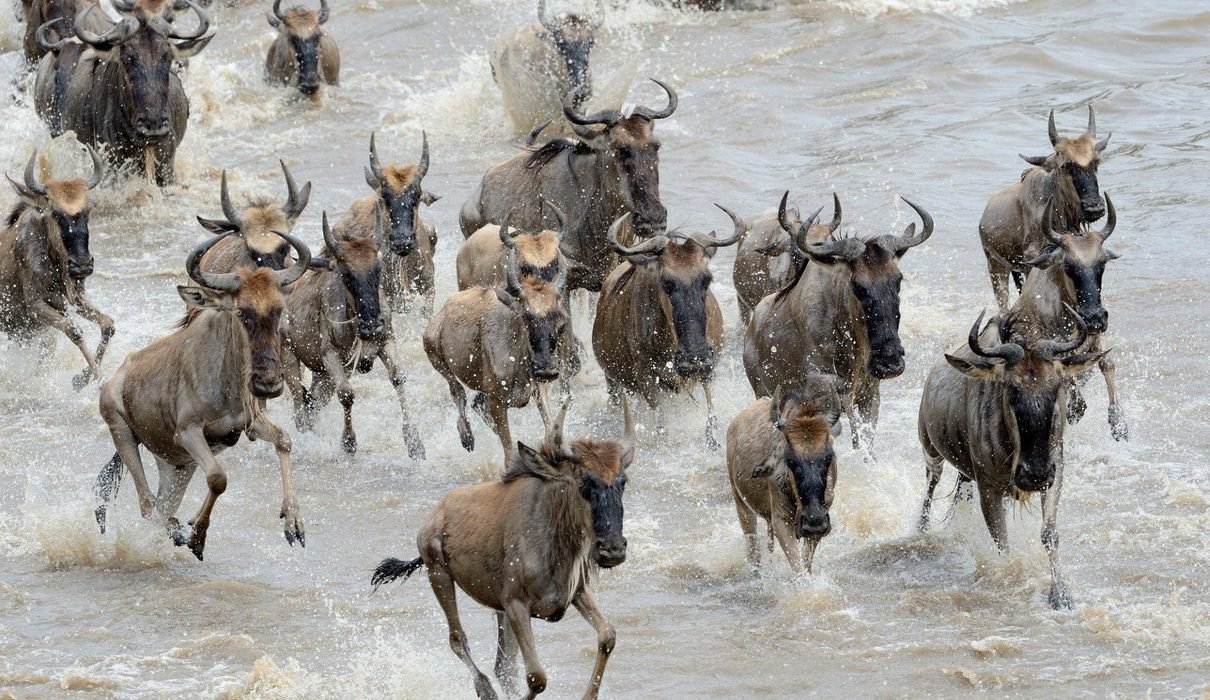
The 7 Days Serengeti Migration Safari is a seven-day wildlife adventure through northern Tanzania, designed for travellers who want to experience the famous Great Wildebeest Migration while exploring some of Africa’s most beautiful national parks. This safari takes you through Tarangire National Park, the Serengeti plains, and the Ngorongoro Crater, combining excellent wildlife viewing, comfortable accommodation, and guided game drives with opportunities to witness one of nature’s greatest animal movements.
Organised by Eddy Tours & Safaris, this journey is suitable for couples, families, photographers, small groups, and anyone visiting Tanzania for the first time. The itinerary allows enough time to explore different wildlife habitats without rushing from one destination to another. From large elephant herds in Tarangire to lions resting on the Serengeti plains and the remarkable concentration of animals inside the Ngorongoro Crater, each destination offers a different experience.
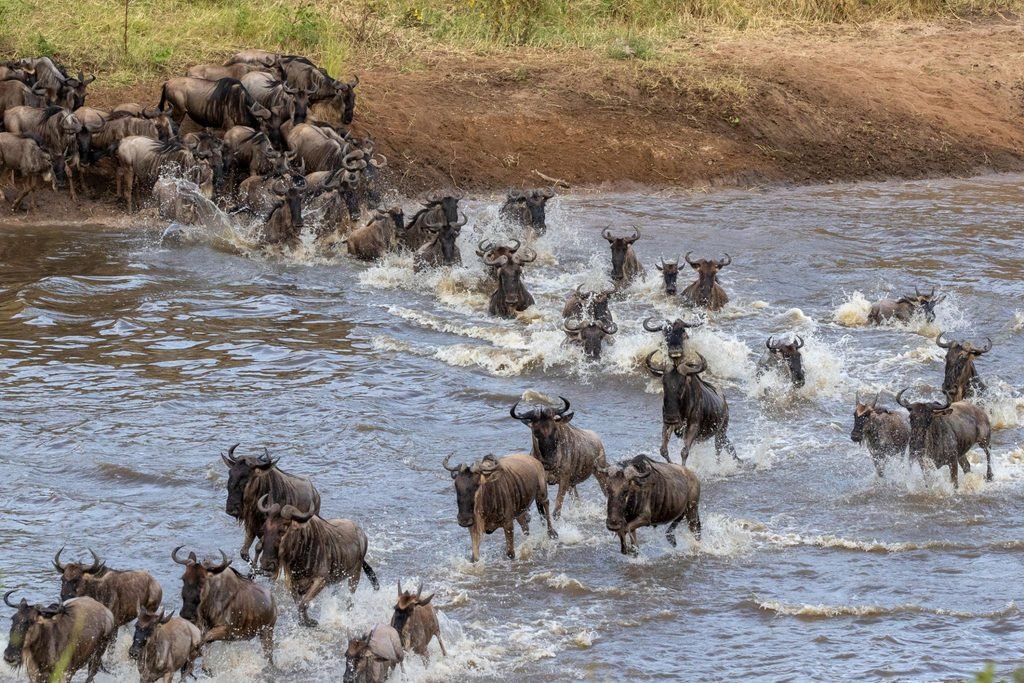
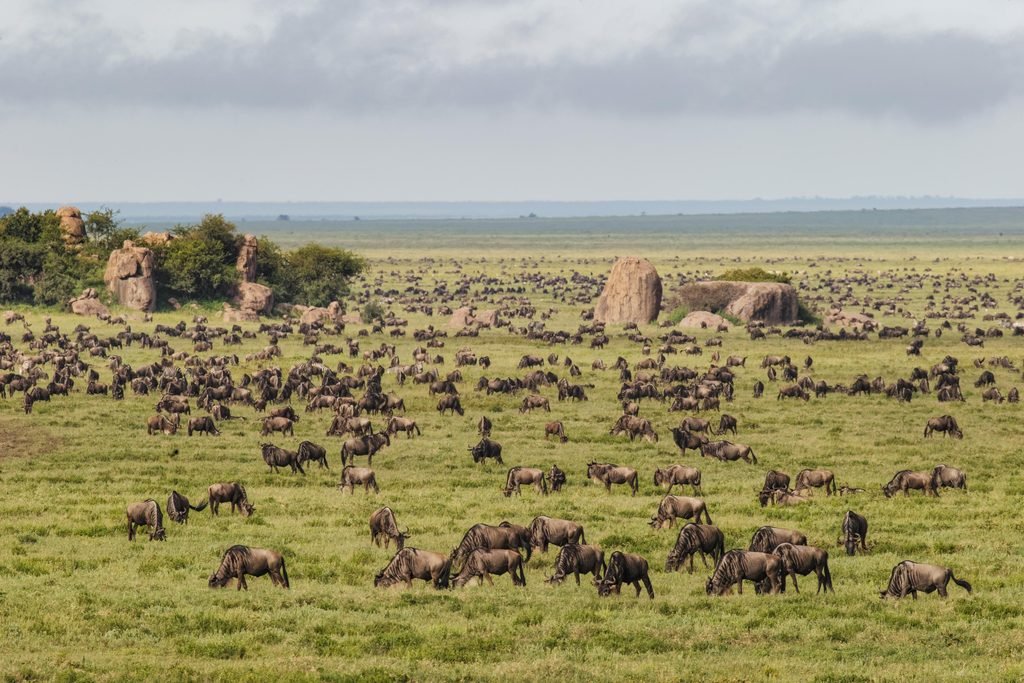
The Great Migration is the main attraction of this package. Every year, enormous herds of wildebeest, zebras, and gazelles travel through the Serengeti ecosystem in search of fresh grass and water. Their movement attracts predators such as lions, cheetahs, leopards, and hyenas, creating excellent opportunities to observe natural wildlife behaviour. Depending on the month of travel, the safari can be adjusted to visit the southern, central, western, or northern Serengeti, where migration activity is most likely to occur.
This seven-day itinerary is designed to provide a balanced safari experience with a strong focus on the Serengeti. Travellers spend several days exploring the park, allowing more time to search for migrating herds and observe resident wildlife. The itinerary can also be adapted for guests who want to spend additional nights in northern Serengeti during the Mara River crossing season or in the southern plains during the wildebeest calving season.
Detailed 7 Days Serengeti Migration Safari Itinerary
Day 1: Arrival in Arusha – Welcome to Tanzania
Your Tanzania safari begins upon arrival at Kilimanjaro International Airport or Arusha Airport, where a representative from Eddy Tours & Safaris will welcome you and arrange your transfer to your accommodation in Arusha. Depending on your arrival time, you may have an opportunity to explore parts of the city, relax at the lodge, or enjoy views of Mount Meru, which rises above the surrounding landscape.
Arusha is the main starting point for wildlife safaris in northern Tanzania. The city is conveniently located for journeys to Tarangire, Lake Manyara, Serengeti, and Ngorongoro, making it an ideal place to prepare for the days ahead. During your stay, our team will provide a safari briefing covering the planned route, daily activities, wildlife viewing expectations, and important travel information. You will also have an opportunity to ask questions and discuss any special interests with your guide.
The remainder of the day is reserved for relaxation after your journey. You can enjoy dinner at your accommodation and prepare your camera, binoculars, and personal belongings for the following morning’s departure. An early night is recommended because your first game drive begins the next day.
Accommodation: Comfortable hotel or lodge in Arusha
Meals: Dinner, depending on arrival time and selected package
Day 2: Arusha to Tarangire National Park – Elephants and Baobab Trees
After breakfast at your hotel, your professional safari guide will collect you for the journey to Tarangire National Park. The drive takes you through the countryside of northern Tanzania, passing local communities, farmland, and open landscapes before reaching the park entrance. Once the necessary entry arrangements have been completed, your first wildlife game drive begins.
Tarangire National Park is particularly well known for its large elephant population and impressive baobab trees. During the dry season, the Tarangire River becomes an important source of water for wildlife, attracting elephants, zebras, wildebeest, giraffes, buffaloes, and many species of antelope. Lions are also present, and lucky visitors may encounter leopards resting in trees or moving through the woodland.
Your guide will explore different sections of the park, stopping whenever interesting wildlife is spotted. The pop-up roof of your safari vehicle allows you to stand comfortably while observing animals and taking photographs. Around midday, you will enjoy a picnic lunch at a designated area before continuing your afternoon game drive.
Later in the day, you will leave Tarangire and travel to your lodge in the Karatu area, where you can enjoy dinner and relax while preparing for the journey to Serengeti National Park.
Accommodation: Mid-range lodge in Karatu
Meals: Breakfast, Lunch, and Dinner
Day 3: Karatu to Serengeti National Park – Entering the Endless Plains
After an early breakfast, your safari continues towards Serengeti National Park through the Ngorongoro Conservation Area. The journey passes through the beautiful highlands, where green hills, traditional Maasai settlements, and wide valleys provide excellent views of northern Tanzania’s changing landscape.
As you continue towards the Serengeti, the scenery gradually changes from highland vegetation to open grassland and scattered acacia trees. The name Serengeti comes from a Maasai expression commonly understood to mean endless plains, a fitting description of the enormous landscapes that stretch across the park.
After entering the Serengeti, your guide will begin a game drive towards the central Seronera region or another area selected according to the seasonal movement of the migration. Central Serengeti is particularly famous for its resident wildlife, including lions, leopards, cheetahs, elephants, giraffes, buffaloes, and several antelope species.
During the afternoon, you may encounter large herds of grazing animals, predators resting in the shade, or giraffes feeding on acacia trees. The guide will explain the behaviour of different animals and how the Serengeti ecosystem supports such a remarkable variety of wildlife.
By late afternoon, you will arrive at your tented camp or safari lodge, where dinner will be served. Spending the night inside or near the Serengeti offers a special experience, with the sounds of the African bush often heard after sunset.
Accommodation: Tented safari camp or lodge in Serengeti
Meals: Breakfast, Lunch, and Dinner
Day 4: Full-Day Serengeti Migration Safari – Searching for the Great Herds
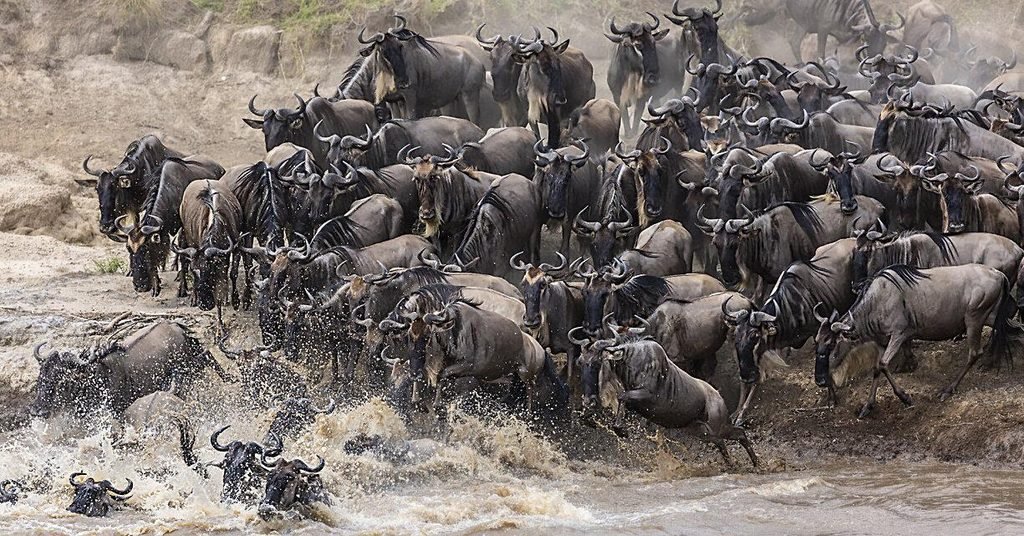
Today is dedicated to exploring Serengeti National Park and searching for the Great Migration. After an early breakfast, you will depart for a full-day game drive with your professional guide, who will plan the route according to recent wildlife sightings, seasonal conditions, and the location of the migrating herds.
The Great Migration involves more than a million wildebeest accompanied by large numbers of zebras and gazelles. These animals move through the Serengeti ecosystem throughout the year, following rainfall and the availability of fresh grazing. Their journey is one of the most remarkable wildlife movements in the world and plays an important role in maintaining the natural balance of the ecosystem.
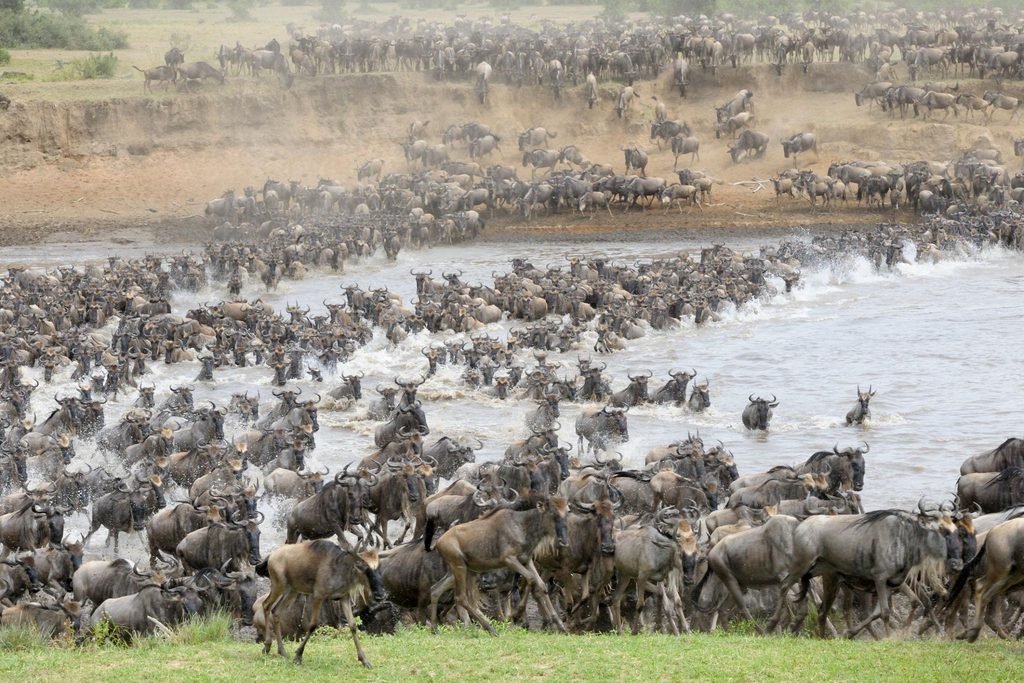
Depending on the time of year, your safari may focus on the central plains, the western migration routes, the southern calving grounds, or the northern Serengeti. During the river crossing season, travellers may have opportunities to observe herds gathering near the Mara River. However, river crossings are unpredictable natural events and cannot be guaranteed on any particular day.
Throughout the game drive, you will also search for predators that follow the migrating animals. Lions often hunt near concentrations of wildebeest, while cheetahs prefer open areas where they can use their speed. Leopards are more difficult to spot but may be found resting in trees or moving through riverine vegetation.
Your guide will select a suitable picnic location for lunch, allowing you to spend most of the day in the park. The afternoon provides further opportunities for wildlife photography and observation before returning to your accommodation for dinner and overnight rest.
Accommodation: Tented safari camp or lodge in Serengeti
Meals: Breakfast, Lunch, and Dinner
Day 5: Another Full Day in Serengeti – Wildlife Photography and Migration Exploration
Your fifth day provides another opportunity to explore the Serengeti without the pressure of travelling immediately to another destination. Spending additional time in the park is especially valuable because wildlife movements are unpredictable, and some of the most interesting encounters happen when travellers have enough time to wait, observe, and explore different habitats.
You will begin with an early morning game drive when temperatures are cooler and many predators are still active. Lions may be returning from their night-time hunting activities, hyenas may be moving across the plains, and large herbivores will often be feeding before the midday heat. Early morning light also creates excellent conditions for wildlife photography.
The day’s route will depend on the season and your accommodation location. If you are travelling during the northern migration season, the guide may concentrate on areas around Kogatende and the Mara River, provided your itinerary has been arranged with accommodation in northern Serengeti. During the southern migration season, the focus may shift towards the Ndutu area and surrounding plains, where wildebeest gather during the calving period.
In addition to searching for the migration, you will explore the Serengeti’s diverse wildlife habitats. Rocky outcrops known as kopjes provide resting places for lions and other animals, while river systems attract birds, hippos, crocodiles, and mammals searching for water.
After a full day of game viewing, you will return to your camp for dinner and another night in the Serengeti. This extended stay is one of the most valuable features of the seven-day safari because it increases the time available for wildlife viewing and reduces the need to rush through the park.
Accommodation: Tented safari camp or lodge in Serengeti
Meals: Breakfast, Lunch, and Dinner
Day 6: Serengeti to Ngorongoro Conservation Area – Scenic Wildlife Journey
After breakfast, you will enjoy a final morning game drive in Serengeti National Park before beginning your journey towards the Ngorongoro Conservation Area. The drive provides another chance to observe wildlife along the route, particularly in areas where animals gather near water sources or move between grazing grounds.
Leaving the central Serengeti, you will travel across open plains and gradually enter the higher landscapes of the Ngorongoro region. The scenery changes noticeably as the road climbs towards the conservation area’s highlands, offering views of rolling hills, valleys, and the surrounding countryside.
The Ngorongoro Conservation Area is a protected landscape where wildlife conservation and traditional pastoral communities coexist. Maasai families have lived in this region for generations, and their cattle may sometimes be seen grazing in designated areas alongside wildlife.
Depending on the available time and the final route, your guide may arrange scenic stops at designated viewpoints, including areas overlooking the Ngorongoro Crater. The crater is one of Tanzania’s most famous natural attractions and will be the main destination for the following morning’s game drive.
You will arrive at your lodge in the Karatu or Ngorongoro area in the late afternoon or evening. Dinner will be served at your accommodation, and your guide will explain the next day’s programme, including the early departure for the crater.
Accommodation: Lodge in Karatu or Ngorongoro area
Meals: Breakfast, Lunch, and Dinner
Day 7: Ngorongoro Crater Game Drive – Return to Arusha
Your final safari day begins with an early breakfast before travelling to the Ngorongoro Crater. After completing the required entry arrangements, you will descend into the crater for a memorable game drive across one of Africa’s most concentrated wildlife habitats.
The Ngorongoro Crater is the remains of a large ancient volcanic caldera and supports an impressive population of wildlife throughout the year. Its grasslands, freshwater sources, swamps, and woodland provide suitable habitats for lions, elephants, buffaloes, zebras, wildebeest, hippos, hyenas, and many species of birds.
One of the most sought-after animals in the crater is the endangered black rhinoceros. Although sightings are never guaranteed, the crater is among Tanzania’s well-known locations for observing this rare species in its natural habitat.
Your guide will explore different sections of the crater floor, searching for wildlife and explaining the ecological importance of this remarkable landscape. You may encounter large buffalo herds, lions resting in the grass, flamingos around seasonal water bodies, or elephants moving through wooded areas.
After enjoying a picnic lunch at a designated location, you will begin the drive out of the crater and return to Arusha. Depending on your onward travel arrangements, you will be transferred to your hotel or the airport, marking the end of your seven-day Tanzania safari with Eddy Tours & Safaris.
Accommodation: Not included after the safari unless requested
Meals: Breakfast and Lunch
9 Reasons to Book the 7 Days Serengeti Migration Safari with Confidence
1. More Time to Explore Serengeti National Park
One of the main advantages of choosing a seven-day safari is the additional time available for wildlife viewing. Shorter safari packages often require travellers to cover long distances within a limited period, leaving fewer opportunities to explore different wildlife habitats. This itinerary provides several days in the Serengeti, allowing your guide to plan game drives around wildlife activity rather than simply travelling between accommodation locations.
2. Better Opportunities to Experience the Great Migration
The Great Migration is a natural movement that changes throughout the year, and the exact location of the herds depends on rainfall, grazing conditions, and seasonal patterns. A seven-day safari provides more flexibility than a short visit, particularly when accommodation is selected close to the expected migration areas. While no safari operator can guarantee river crossings or specific wildlife encounters, spending additional time in the right region can improve your opportunities to observe migration activity.
3. Visit Three of Tanzania’s Famous Wildlife Destinations
This itinerary combines Tarangire National Park, Serengeti National Park, and the Ngorongoro Crater, providing a varied experience of northern Tanzania’s wildlife and landscapes. Tarangire is famous for elephants and baobab trees, Serengeti offers expansive grasslands and outstanding predator viewing, while Ngorongoro provides opportunities to observe numerous animal species within a relatively compact area. Visiting all three destinations allows travellers to experience different ecosystems during one journey.
4. Travel with an Experienced Local Safari Guide
A knowledgeable guide can make a significant difference to your safari experience. Eddy Tours & Safaris arranges guided wildlife journeys with drivers familiar with northern Tanzania’s safari routes, animal behaviour, and national park environments. Your guide helps identify wildlife, explains interesting observations, and selects suitable game-drive routes based on local conditions. This guidance is particularly valuable for first-time safari travellers who want to understand the animals and landscapes they encounter.
5. Comfortable Safari Transport and Accommodation
The safari is arranged using a 4×4 vehicle suitable for wildlife viewing, with a pop-up roof that provides clear views and convenient photography opportunities. Accommodation can be arranged in comfortable lodges and tented safari camps, depending on your budget and preferred travel style. Staying in or near the wildlife areas reduces unnecessary travel and allows you to enjoy early morning and late afternoon game drives when animal activity can be particularly rewarding.
6. A Flexible Itinerary Based on Your Travel Dates
Different months provide different Great Migration experiences. Travellers visiting during the calving season may prefer the southern Serengeti and Ndutu, while those travelling between July and October may focus on northern Serengeti and the Mara River region. Eddy Tours & Safaris can adjust the accommodation locations and daily routes according to the season, making the package suitable for travellers visiting Tanzania at different times of the year.
7. Suitable for Families, Couples, and Small Groups
The seven-day itinerary can be organised as a private safari for couples, families, groups of friends, or individual travellers. Private arrangements allow greater flexibility with departure times, photography stops, and daily activities. Families travelling with children can request suitable accommodation and a comfortable travel schedule, while photographers may prefer longer game drives and additional time in wildlife-rich areas.
8. Good Value Through a Well-Planned Safari Route
A well-organised safari is not simply about finding the lowest price. It is about receiving a suitable balance of wildlife viewing time, accommodation quality, transportation, guiding, and national park experiences. This seven-day package combines several important northern Tanzania destinations in one itinerary, reducing the need to arrange separate tours and transfers. Travellers can also choose different accommodation categories to match their budgets while keeping the main wildlife experience.
9. Local Planning Support from Eddy Tours & Safaris
Booking through a Tanzania-based safari company allows you to discuss your travel plans with a team familiar with local destinations and safari arrangements. Eddy Tours & Safaris can help you select suitable travel dates, plan accommodation, arrange airport transfers, and customise the itinerary according to your interests. Guests who want to extend their holiday can also request additional experiences such as a Zanzibar beach holiday, cultural visits, or a Mount Kilimanjaro trekking adventure.
What Is Included in the 7 Days Serengeti Migration Safari?
The following services are included in the standard proposed safari package. Final inclusions will be confirmed in your personalised quotation.
- Airport pickup and transfer to your hotel in Arusha on arrival.
- Six nights of accommodation in selected hotels, safari lodges, and tented camps.
- Meals as specified in the day-by-day itinerary.
- Private 4×4 safari Land Cruiser with a pop-up roof.
- Professional English-speaking safari driver-guide.
- Game drives in Tarangire National Park, Serengeti National Park, and Ngorongoro Crater.
- Applicable national park entrance fees.
- Ngorongoro Conservation Area and crater service fees applicable to the itinerary.
- Drinking water during scheduled safari activities.
- Picnic lunches during full-day game drives.
- All scheduled road transfers between safari destinations.
- Government taxes applicable to the quoted safari services.
- Safari planning and assistance from Eddy Tours & Safaris.
What Is Excluded from the 7 Days Serengeti Migration Safari?
- International flights to and from Tanzania.
- Tanzania tourist visa fees.
- Travel insurance and personal medical insurance.
- Optional hot-air balloon safari in Serengeti.
- Alcoholic beverages, soft drinks, and additional drinks not included by the accommodation.
- Personal expenses such as souvenirs, laundry, telephone calls, and shopping.
- Tips for the safari guide and accommodation staff.
- Optional cultural visits and activities not mentioned in the itinerary.
- Additional accommodation before or after the scheduled safari.
- Domestic flights unless specifically included in the confirmed quotation.
- Zanzibar beach extensions or other activities booked separately.
- Any services not specifically mentioned under the package inclusions.
Best Time to Book a 7 Days Serengeti Great Migration Safari
The Serengeti Great Migration takes place throughout the year, but the location of the animals changes according to seasonal rainfall and grazing conditions. Understanding these movements is important when choosing your travel dates because the best location for migration viewing in February is very different from the best location in August.
December to March: Southern Serengeti and Wildebeest Calving Season
During these months, large numbers of wildebeest generally gather in the southern Serengeti and Ndutu region, where seasonal rainfall supports fresh grass growth. February is particularly well known for the calving period, when many wildebeest give birth within a relatively short time. This attracts predators and creates opportunities to observe natural wildlife interactions across the open plains.
April to June: Central Serengeti and Western Migration Routes
As the southern grasslands begin to dry, migrating herds gradually move towards central and western Serengeti. During this period, travellers may encounter long lines of wildebeest moving across the plains and gathering near important water sources. The western migration route, including the Grumeti River area, becomes particularly interesting as the animals continue their seasonal journey.
July to October: Northern Serengeti and Mara River Crossings
The northern Serengeti becomes a popular migration destination during these months because large herds often move towards the Mara River and the Kenya border. River crossings may occur when animals attempt to reach grazing areas on the opposite side. These events can be dramatic, but their timing is unpredictable, and herds sometimes remain near the river for long periods before crossing.
November: Return Movement Towards the Southern Plains
When seasonal rains begin to refresh the central and southern Serengeti, many migrating animals start moving back towards areas with new grass. November can provide opportunities to observe the returning herds, although the exact routes and timing vary from year to year.
Travellers planning a migration-focused safari should choose accommodation based on their travel month rather than assuming the animals will remain in one location throughout the year. Eddy Tours & Safaris can help arrange a suitable route for the expected seasonal conditions.
Animals You May See During Your Serengeti Migration Safari
The Serengeti is home to an extraordinary variety of wildlife, making it one of Africa’s most rewarding safari destinations. Although the Great Migration attracts much of the attention, the park also supports large populations of resident animals that can be observed throughout the year.
Wildebeest are the main animals associated with the migration, travelling in enormous herds alongside zebras and gazelles. Their movement creates feeding opportunities for predators, including lions, cheetahs, leopards, hyenas, and occasionally African wild dogs, although sightings of some species are uncommon.
The Serengeti also supports elephants, giraffes, buffaloes, hippos, crocodiles, topis, hartebeests, elands, and several smaller antelope species. Birdwatchers can enjoy observing eagles, vultures, secretary birds, ostriches, and many other species found across the park’s grasslands and woodland habitats.
During your visit to Ngorongoro Crater, you may encounter additional wildlife, including the endangered black rhinoceros. Tarangire National Park provides further opportunities to observe large elephant herds, giraffes, and animals gathering around the river during the dry season.
How Much Does a 7 Days Serengeti Migration Safari Cost?
The price of a seven-day Serengeti Migration Safari depends on several factors, including the month of travel, accommodation category, number of travellers, and whether the safari is arranged privately or as part of a group.
Mid-range safari packages generally use comfortable lodges and tented camps with private facilities, while luxury packages may include premium accommodation in remote wildlife areas. Budget options can also be arranged using simpler accommodation, depending on the available facilities and your travel preferences.
The migration season can affect accommodation prices, particularly in northern Serengeti during the popular Mara River crossing months. Lodges and camps located close to important wildlife areas may have limited availability, making early planning especially important for travellers visiting during the busiest periods.
For an accurate quotation, contact Eddy Tours & Safaris with your intended travel dates, number of adults and children, preferred accommodation category, and any additional destinations you would like to include. Our team can prepare a personalised itinerary and explain the services included in the quoted price.
What to Pack for Your 7 Days Tanzania Safari
Packing suitable clothing and personal equipment will help you remain comfortable during early morning game drives, long journeys, and changing weather conditions. Tanzania’s northern safari destinations can experience warm afternoons and cool mornings, particularly around the Ngorongoro highlands and during the dry season.
Lightweight clothing in neutral colours is generally suitable for game drives, while a warm jacket or fleece is useful for early departures and evenings at higher elevations. Comfortable closed shoes, sunglasses, a wide-brimmed hat, sunscreen, and personal toiletries are also recommended.
Travellers interested in wildlife photography should consider carrying a camera with a suitable zoom lens, spare batteries, and additional memory cards. Binoculars are particularly useful for observing distant animals and birds. A small day bag can help keep your essential belongings organised inside the safari vehicle.
It is also advisable to carry any necessary prescription medication, travel documents, and personal items that may not be readily available in remote safari areas.
Can You Combine the Serengeti Migration Safari with Zanzibar?
Yes. Many travellers choose to combine their Serengeti wildlife safari with a beach holiday in Zanzibar, creating a balanced Tanzania holiday that includes both wildlife viewing and relaxation along the Indian Ocean.
After completing your seven-day safari, you can travel to Zanzibar by domestic flight, subject to available routes and schedules. The island offers beautiful beaches, comfortable resorts, historical attractions, and opportunities for activities such as snorkelling, boat excursions, and cultural sightseeing.
Popular beach areas include Nungwi, Kendwa, Paje, Jambiani, and Matemwe. Travellers who prefer lively beach surroundings may enjoy Nungwi or Kendwa, while those looking for quieter coastal accommodation can consider Matemwe or selected areas along the eastern coastline.
Eddy Tours & Safaris can assist with arranging a combined safari and Zanzibar holiday, including accommodation, domestic flights, airport transfers, and additional activities according to your travel preferences.
Serengeti Migration Safari and Mount Kilimanjaro Climbing
Travellers with additional time in Tanzania may also consider combining their Serengeti Migration Safari with a Mount Kilimanjaro climbing expedition. Kilimanjaro is Africa’s highest mountain and attracts trekkers from around the world who want to experience its different vegetation zones and reach Uhuru Peak.
Several trekking routes are available, including Machame, Marangu, Lemosho, Rongai, and Umbwe. Each route offers a different combination of scenery, duration, accommodation arrangements, and physical challenges. Choosing a suitable route and allowing enough time for acclimatisation are important parts of planning a successful climb.
For additional information about trekking routes, preparation, and mountain climbing arrangements, visit Kilimanjaro Climb Specialist. Travellers can use this information when considering a longer Tanzania holiday that combines wildlife viewing with a mountain trekking experience.
Frequently Asked Questions About the 7 Days Serengeti Migration Safari
Is Seven Days Enough for a Serengeti Migration Safari?
Seven days can provide an excellent introduction to the Great Migration and northern Tanzania’s wildlife destinations. This itinerary includes several days in Serengeti National Park, allowing travellers to explore different habitats and search for migrating herds. However, the best arrangement depends on the season. Travellers particularly interested in Mara River crossings may benefit from spending additional nights in northern Serengeti rather than including several other parks.
Can I See the Great Migration Throughout the Year?
Yes, the Great Migration is a year-round movement across the wider Serengeti ecosystem, although the animals occupy different regions during different seasons. Southern Serengeti is particularly important during the calving period, while central and western areas become important during the movement towards northern grazing grounds. Northern Serengeti is especially popular during the Mara River crossing season.
Are Mara River Crossings Guaranteed?
No. Mara River crossings are natural events that depend on animal behaviour, rainfall, grazing conditions, and other environmental factors. Even during the main crossing season, herds may gather near the river without crossing, or they may cross at locations that are difficult to reach. A good safari itinerary provides time to explore the area while also enjoying other wildlife encounters.
Is This Safari Suitable for Children?
Yes. The seven-day safari can be suitable for families travelling with children, particularly when arranged privately. Accommodation choices, travel distances, and daily game-drive schedules can be adjusted according to the children’s ages and family preferences. Parents should discuss their children’s ages with the safari company before booking so that suitable arrangements can be recommended.
What Type of Accommodation Is Provided?
Accommodation depends on the package category selected. Mid-range safaris generally use comfortable lodges and tented camps with private bathrooms and meal services. Luxury packages may include premium lodges and camps with additional facilities, while budget arrangements may use simpler accommodation. The final list of properties will be provided in the personalised quotation.
Do I Need a Visa to Visit Tanzania?
Visa requirements depend on your nationality and travel documents. Many international visitors require a tourist visa, while others may qualify for visa-free entry under applicable immigration rules. Travellers should confirm the current requirements through official Tanzanian immigration channels before departure and ensure that their passports meet the necessary validity conditions.
Can I Book This Safari as a Private Tour?
Yes. Eddy Tours & Safaris can arrange the seven-day Serengeti Migration Safari as a private tour, allowing you to travel with your own guide and safari vehicle. Private arrangements are suitable for couples, families, photographers, and groups of friends who prefer flexibility with their daily schedules and accommodation choices.
How Early Should I Book the Safari?
Booking several months in advance is recommended, particularly for travel during July, August, September, and the popular southern Serengeti calving season. Accommodation in migration-focused areas can fill quickly because many travellers want to stay close to the expected wildlife activity. Early booking provides more choices and allows sufficient time to organise transportation and other travel arrangements.
Book Your 7 Days Serengeti Migration Safari with Eddy Tours & Safaris
The 7 Days Serengeti Migration Safari offers a rewarding way to explore northern Tanzania’s most famous wildlife destinations while allowing time to experience the seasonal movement of wildebeest across the Serengeti ecosystem. With game drives in Tarangire, several days in Serengeti National Park, and a visit to the Ngorongoro Crater, this itinerary combines varied landscapes, excellent wildlife opportunities, and comfortable safari arrangements.
Whether you are travelling to Tanzania for the first time, planning a family holiday, or returning to Africa to experience the Great Migration, Eddy Tours & Safaris can help you prepare a journey suited to your interests, travel dates, and budget. Our team can also arrange accommodation upgrades, additional nights in migration areas, Zanzibar beach extensions, and other activities to make your holiday more convenient.
Contact Eddy Tours & Safaris to request your personalised seven-day Serengeti Migration Safari itinerary and quotation. Share your preferred travel dates, number of travellers, and accommodation requirements, and our team will help you plan your Tanzania safari.
Email: sales@eddytours-safaris.com
Website: Eddy Tours and Safaris
Location: Arusha, Tanzania