
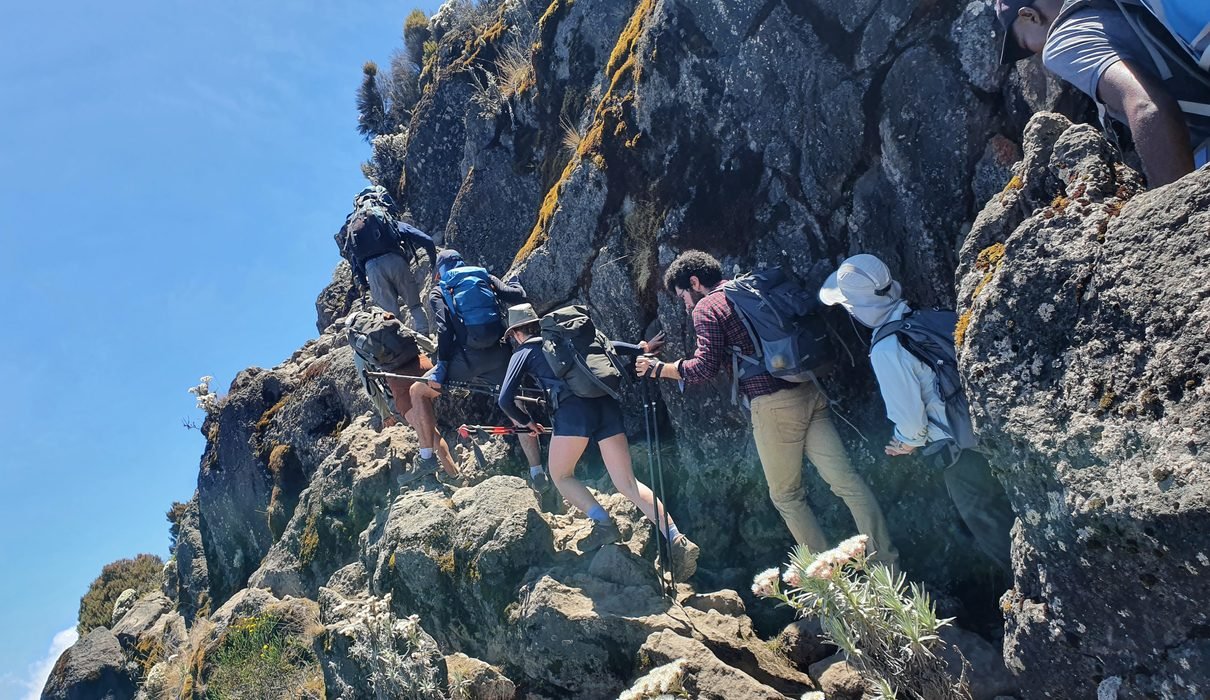
The 7 Days Rongai Route Kilimanjaro climb is an excellent choice for travellers who prefer quieter mountain trails, beautiful natural scenery and a gradual approach towards Africa’s highest mountain. Starting from the northern side of Mount Kilimanjaro near the Tanzania–Kenya border, the Rongai Route passes through mountain forests, open moorlands, volcanic valleys and alpine desert before reaching Uhuru Peak at 5,895 metres above sea level. Unlike Machame and Marangu, Rongai generally attracts fewer climbers during the early stages, providing a more peaceful mountain trekking experience.
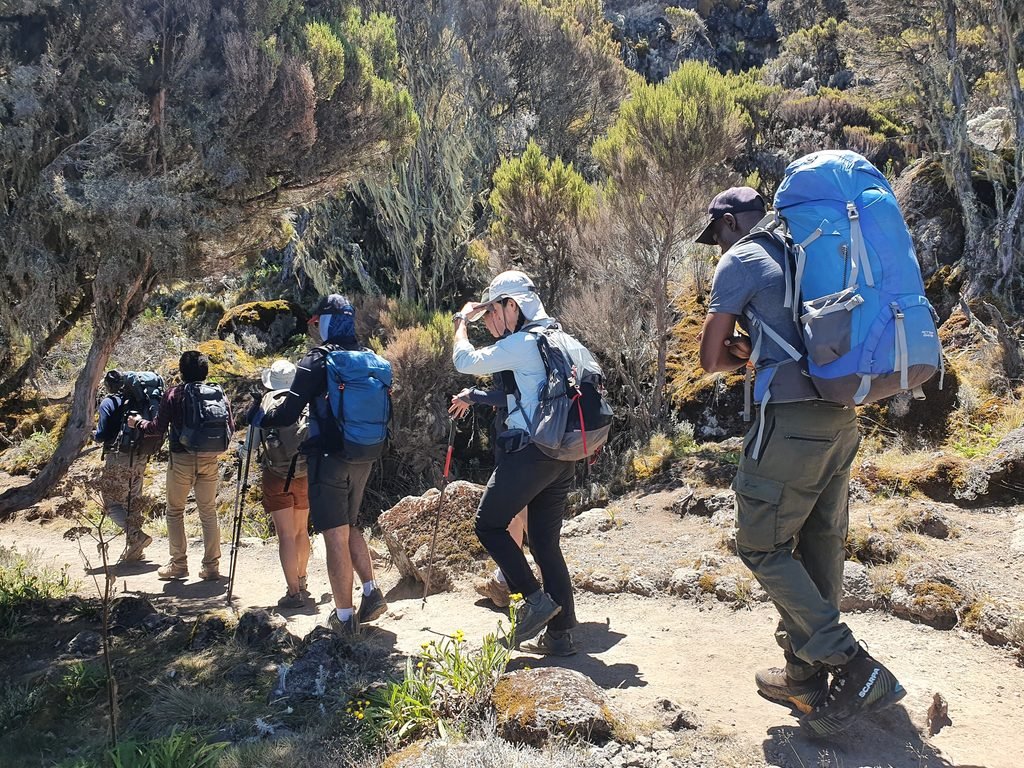
The seven-day itinerary allows additional time for acclimatisation at Mawenzi Tarn before continuing towards Kibo Hut for the summit attempt. At Eddy Tours & Safaris, we organise guided Kilimanjaro climbing expeditions for 2027 and 2028, with professional mountain guides, porters, cooks and suitable camping equipment. Whether you are travelling alone, with friends or as a private group, our local team can help you prepare a climbing programme that suits your travel schedule, physical ability and budget.
7 Days Rongai Route Kilimanjaro Climbing Package Overview
| Package Details | Information |
|---|---|
| Destination | Mount Kilimanjaro, Tanzania |
| Climbing route | Rongai Route |
| Duration | 7 days and 6 nights |
| Total trekking distance | Approximately 73 km, varying by itinerary |
| Highest elevation | 5,895 metres |
| Starting point | Rongai Gate – Nalemoru |
| Finishing point | Marangu Gate |
| Accommodation | Mountain tents and designated descent accommodation |
| Difficulty | Challenging |
| Acclimatisation | Additional day at Mawenzi Tarn |
| Summit attempt | Day 6 |
| Best climbing periods | January–March and June–October |
| Travel years | 2027 and 2028 |
| Package price | Available on request |
| Tour operator | Eddy Tours & Safaris |
Why Choose the 7 Days Rongai Route for Kilimanjaro Climbing?
The Rongai Route is the only established Kilimanjaro climbing route that approaches the mountain from the north. This side of Kilimanjaro generally receives less rainfall than the southern slopes, making it worth considering for travellers planning to climb outside the main dry season. The lower sections of the trail offer relatively gradual walking conditions, while the higher elevations provide beautiful views of Mawenzi Peak, Kibo and the surrounding plains of Tanzania and Kenya.
Another advantage of the seven-day Rongai Route is the opportunity to spend an additional day at Mawenzi Tarn, allowing your body more time to adjust to the increasing altitude before moving towards Kibo Hut. Climbers also descend through the Marangu Route, experiencing two different sides of Kilimanjaro during the same expedition. You can learn more about the available mountain arrangements through our fully guided 7-day Rongai Route climbing package.
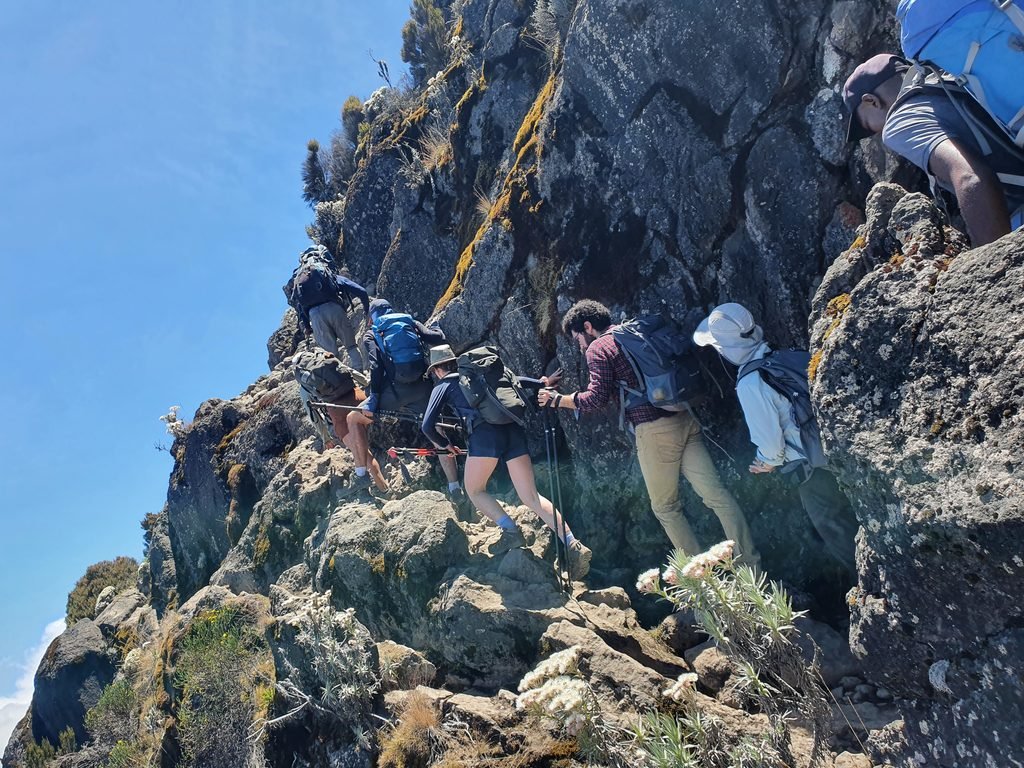
Complete 7 Days Rongai Route Itinerary for 2027/2028
Arrival in Tanzania – Mountain Briefing and Preparation
Upon arrival at Kilimanjaro International Airport, you can arrange a transfer to your hotel in Moshi or Arusha, where you will have time to rest and prepare for the mountain expedition. Before beginning the climb, you will meet your mountain guide for a detailed briefing covering the trekking schedule, camping arrangements, mountain weather, health precautions and personal equipment. Your guide will inspect your climbing gear to ensure that you have suitable clothing, hiking boots and other essential items for the changing mountain conditions. We recommend arriving at least one day before your scheduled climb to allow sufficient time for preparation and recovery from your international flight.
Day 1: Moshi to Rongai Gate and Simba Camp
After breakfast at your hotel, you will drive towards the northern side of Mount Kilimanjaro, passing through local villages, agricultural fields and the beautiful countryside near the Tanzania–Kenya border. After completing the necessary national park registration procedures, your climbing team will begin the trek from Nalemoru Gate towards Simba Camp. The trail passes through cultivated areas before entering mountain forest, where you may encounter monkeys and different bird species. The relatively gradual ascent provides a comfortable introduction to mountain trekking, allowing you to settle into a suitable walking rhythm before reaching your first overnight campsite.
- Starting elevation: 1,950 metres
- Final elevation: 2,650 metres
- Hiking distance: Approximately 8 km
- Hiking time: 3–5 hours
- Habitat: Montane forest
- Accommodation: Simba Camp
- Meals: Lunch and dinner
Day 2: Simba Camp to Kikelewa Camp via Second Cave
Following breakfast, you will continue climbing through the heath and moorland vegetation towards Second Cave. As the trail gains elevation, the forest gradually disappears, revealing wider views of Kilimanjaro and the surrounding countryside. After reaching Second Cave, the journey continues along a less frequently used trail towards Kikelewa Camp, passing through open mountain landscapes with excellent views of Mawenzi Peak when the weather is clear. Today’s walk is longer than the first day, making regular rest stops, sufficient drinking water and a steady walking pace particularly important. Your mountain crew will prepare your campsite and evening meal upon arrival.
- Starting elevation: 2,650 metres
- Final elevation: 3,600 metres
- Hiking distance: Approximately 12 km
- Hiking time: 6–8 hours
- Habitat: Heath and moorland
- Accommodation: Kikelewa Camp
- Meals: Breakfast, lunch and dinner
Day 3: Kikelewa Camp to Mawenzi Tarn Camp
Today’s trek involves a relatively short but steeper climb towards Mawenzi Tarn, situated beneath the rocky slopes of Mawenzi Peak. The vegetation becomes increasingly sparse as you approach the alpine desert, and the surrounding landscape changes into rugged volcanic terrain. Although the walking distance is shorter, the considerable elevation gain requires a slow and controlled pace. After reaching Mawenzi Tarn, you will have lunch and spend the afternoon resting, enjoying the mountain scenery or taking a short acclimatisation walk if your guide considers it appropriate. This campsite is one of the most scenic overnight locations on the Rongai Route.
- Starting elevation: 3,600 metres
- Final elevation: 4,330 metres
- Hiking distance: Approximately 6 km
- Hiking time: 3–5 hours
- Habitat: Moorland and alpine desert
- Accommodation: Mawenzi Tarn Camp
- Meals: Breakfast, lunch and dinner
Day 4: Acclimatisation Day at Mawenzi Tarn
The fourth day is dedicated to acclimatisation, giving your body additional time to adjust to the reduced oxygen levels at higher elevations. After breakfast, your mountain guide may lead a short hike towards the surrounding slopes of Mawenzi before returning to the campsite for lunch and afternoon rest. This approach allows climbers to spend time at a slightly higher altitude before sleeping at a lower elevation, supporting the body’s natural acclimatisation process. Your guide will determine the appropriate walking distance based on your health, energy levels and prevailing mountain conditions. Spending a second night at Mawenzi Tarn is an important difference between this seven-day programme and the shorter six-day Rongai itinerary.
- Overnight elevation: Approximately 4,330 metres
- Hiking distance: Variable
- Hiking time: 2–4 hours, depending on conditions
- Main activity: Acclimatisation and recovery
- Accommodation: Mawenzi Tarn Camp
- Meals: Breakfast, lunch and dinner
For further information about mountain acclimatisation and climbing preparations, visit Kilimanjaro Climb Specialist.
Day 5: Mawenzi Tarn to Kibo Hut
After breakfast, you will leave Mawenzi Tarn and cross the wide volcanic landscape known as the Saddle, which lies between Mawenzi and Kibo peaks. This section of the mountain is characterised by rocky ground, limited vegetation and exposed terrain, providing a remarkable view of Kilimanjaro’s volcanic formation. As you approach Kibo Hut, the temperature may become noticeably colder, and walking at a comfortable pace becomes increasingly important. Upon arrival, your mountain crew will prepare your meals while your guide explains the summit schedule, checks your equipment and discusses the expected weather conditions. You will have an early dinner and rest before beginning the final summit ascent during the night.
- Starting elevation: 4,330 metres
- Final elevation: 4,700 metres
- Hiking distance: Approximately 8 km
- Hiking time: 5–6 hours
- Habitat: Alpine desert
- Accommodation: Kibo Hut area
- Meals: Breakfast, lunch and dinner
Day 6: Kibo Hut to Uhuru Peak and Descend to Horombo Hut
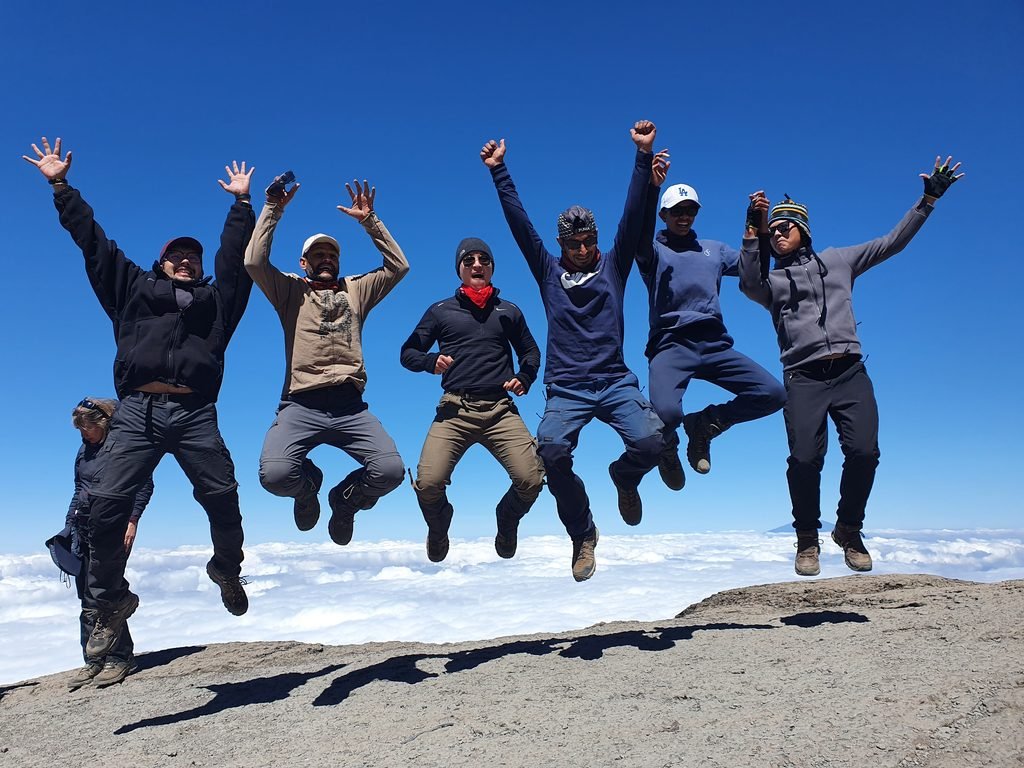
Summit day is the longest and most demanding stage of the seven-day Rongai Route. Your guide will wake you during the night for a light meal before beginning the steep ascent towards Gilman’s Point, situated at approximately 5,681 metres above sea level. Using headlamps, you will follow the rocky trail at a controlled pace as temperatures fall and oxygen levels decrease. Upon reaching Gilman’s Point, climbers who are in suitable condition will continue along the crater rim towards Stella Point and eventually Uhuru Peak at 5,895 metres, the highest point in Africa. Depending on the weather and your walking pace, you may enjoy sunrise views above the clouds and the surrounding volcanic landscape.
After reaching the summit and taking photographs, you will begin descending towards Kibo Hut, where you will have a short rest and refreshments before continuing downhill to Horombo Hut. The descent is physically demanding, but the improving oxygen levels and warmer temperatures generally provide more comfortable conditions as you lose elevation. Throughout the summit attempt, your mountain guide will monitor your condition and make decisions based on your safety, including recommending descent if altitude-related symptoms or severe weather make continuing unsafe.
- Starting elevation: 4,700 metres
- Summit elevation: 5,895 metres
- Final elevation: 3,720 metres
- Hiking distance: Approximately 19 km
- Hiking time: 12–16 hours
- Habitat: Alpine desert and summit zone
- Accommodation: Horombo Hut area
- Meals: Breakfast, lunch and dinner
Day 7: Horombo Hut to Marangu Gate – Return to Moshi
After breakfast, you will begin the final descent through the Marangu Route, passing from the open moorland into the greener rainforest environment of Kilimanjaro’s southern slopes. The trail gradually becomes warmer as you descend, offering opportunities to enjoy the forest scenery and observe different bird and monkey species. After reaching Marangu Gate, your mountain guide will complete the necessary park exit procedures, and eligible climbers will receive their official Kilimanjaro climbing certificates. Your driver will then transfer you to your agreed hotel in Moshi or Arusha, marking the end of your seven-day mountain expedition.
- Starting elevation: 3,720 metres
- Final elevation: Approximately 1,860 metres
- Hiking distance: Approximately 20 km
- Hiking time: 5–7 hours
- Habitat: Moorland and montane rainforest
- Meals: Breakfast and lunch, as arranged
- Accommodation: Hotel upon request
7 Days Rongai Route Distance and Elevation Chart
| Day | Trekking Section | Distance | Overnight Elevation |
|---|---|---|---|
| 1 | Rongai Gate – Simba Camp | 8 km | 2,650 m |
| 2 | Simba Camp – Kikelewa Camp | 12 km | 3,600 m |
| 3 | Kikelewa – Mawenzi Tarn | 6 km | 4,330 m |
| 4 | Mawenzi Tarn acclimatisation | Variable | 4,330 m |
| 5 | Mawenzi Tarn – Kibo Hut | 8 km | 4,700 m |
| 6 | Kibo – Uhuru Peak – Horombo | 19 km | 3,720 m |
| 7 | Horombo – Marangu Gate | 20 km | 1,860 m |
| Total | Complete Rongai Route | 73 km plus acclimatisation walk | 5,895 m maximum |
Walking distances, elevations and hiking times are approximate and may vary according to campsite locations, trail conditions and individual walking speed.
7 Days Rongai Route Kilimanjaro Climbing Prices 2027/2028
The cost of climbing Mount Kilimanjaro through the seven-day Rongai Route depends on the number of participants, travel dates, national park fees, mountain crew requirements and the level of service requested. Private expeditions generally cost more per person than group departures because transportation, camping equipment and mountain crew expenses are shared among fewer climbers. Additional arrangements such as airport transfers, hotel accommodation and personal equipment rental may also influence the final package price.
Estimated Rongai Route Climbing Budget
| Climbing Arrangement | Estimated Price per Person |
|---|---|
| Standard group departure | USD 1,850–2,300 |
| Small group expedition | USD 2,000–2,600 |
| Private climb for two people | USD 2,200–2,800 |
| Solo private expedition | USD 2,600–3,500 |
| Premium mountain expedition | USD 3,000–4,000+ |
These prices are general budget estimates rather than confirmed Eddy Tours & Safaris rates for 2027 or 2028. Travellers should request an official quotation based on their preferred climbing dates and group size. For additional information about climbing expenses, visit our Kilimanjaro Rongai Route itinerary and cost guide.
What Is Included in the 7 Days Rongai Route Climbing Package?
The proposed standard climbing package includes the essential mountain services required throughout the seven-day expedition. All inclusions will be confirmed in your official booking quotation.
- Kilimanjaro National Park entrance fees.
- National park conservation fees.
- Applicable camping and mountain accommodation fees.
- National park rescue fees.
- Professional English-speaking mountain guides.
- Assistant mountain guides according to group size.
- Experienced mountain porters.
- Professional mountain cook.
- Mountain crew salaries and applicable charges.
- Six nights of designated mountain accommodation.
- Mountain sleeping tents.
- Sleeping mattresses.
- Dining tents and communal camping equipment.
- Breakfast, lunch and dinner as specified in the itinerary.
- Treated drinking water throughout the climb.
- Basic mountain first-aid equipment.
- Regular health and altitude assessments.
- Transportation to Rongai Gate.
- Return transportation from Marangu Gate.
- Pre-climbing briefing and equipment inspection.
- Climbing certificates for eligible participants.
- Applicable government taxes on included services.
What Is Excluded from the Climbing Package?
- International and domestic flights.
- Tanzania entry visa fees.
- Travel and medical insurance.
- Personal mountain climbing equipment.
- Sleeping bags and personal equipment rental.
- Hiking boots and personal clothing.
- Hotel accommodation before and after the climb unless specified.
- Airport transfers unless included in the quotation.
- Tips for mountain guides, porters and cooks.
- Alcoholic drinks and personal refreshments.
- Personal medication and toiletries.
- Personal expenses and laundry services.
- Additional emergency evacuation expenses not covered by insurance or park arrangements.
- Optional Tanzania wildlife safaris.
- Zanzibar beach holidays.
- Any services not specified in the confirmed quotation.
How Difficult Is the 7 Days Rongai Route?
The Rongai Route is generally considered to have a more gradual introduction to Kilimanjaro compared with steeper routes such as Umbwe. However, reaching Uhuru Peak remains a serious physical challenge because of the high altitude, freezing temperatures, long walking days and demanding summit ascent. The climb from Kibo Hut towards Gilman’s Point is particularly strenuous due to the steep terrain and reduced oxygen levels. Climbers should prepare through regular hiking, cardiovascular exercises and endurance training before travelling to Tanzania, regardless of their previous mountain climbing experience.
The seven-day programme provides more acclimatisation time than shorter Rongai itineraries, but physical fitness alone cannot prevent altitude sickness. Listening to your mountain guide, maintaining a comfortable walking pace and reporting any unusual symptoms are essential throughout the expedition. Our complete guided Rongai Route climbing expedition provides further information about the mountain experience.
7 Days Rongai Route Summit Success Rate
The seven-day Rongai Route offers better acclimatisation opportunities than shorter versions because climbers spend additional time at intermediate elevations before attempting the summit. The overnight arrangements at Mawenzi Tarn allow the body more time to adjust before continuing towards Kibo Hut. However, summit success varies between individuals and depends on factors such as altitude tolerance, weather conditions, physical preparation, health and the pace maintained throughout the expedition. Travellers should be cautious of climbing companies that guarantee a particular summit success percentage, as no mountain operator can guarantee that every climber will reach Uhuru Peak.
Best Time to Climb Kilimanjaro via Rongai Route in 2027/2028
January to March
January, February and early March generally provide favourable conditions for climbing Kilimanjaro, with relatively low rainfall and opportunities for clear mountain views. These months are particularly attractive to travellers who prefer cooler mountain conditions and wish to avoid the busiest climbing periods. Snow may be present around the summit, although conditions vary considerably between different days and seasons.
June to October
June through October is one of the most popular periods for climbing Mount Kilimanjaro because of generally drier conditions and improved trail accessibility. July, August and September are particularly popular among international travellers, making advance reservations advisable. The northern Rongai approach often remains quieter than Machame and Marangu during the early stages, although climbers will eventually meet participants from other routes near Kibo and the southern descent trail.
April, May and November
Although April and May normally experience heavier rainfall and November often receives shorter seasonal rains, climbing Kilimanjaro remains possible during these periods. The northern approach generally receives less rainfall than the southern slopes, making Rongai an option worth considering during wetter months. Nevertheless, climbers should be prepared for unpredictable mountain weather, muddy trails, cold temperatures and reduced visibility.
For additional information about seasonal climbing conditions and alternative routes, explore Kilimanjaro Climb Specialist.
6 Days Rongai Route vs. 7 Days Rongai Route
The main difference between the six-day and seven-day Rongai Route is the amount of time available for acclimatisation. The six-day programme follows a more compressed climbing schedule, while the seven-day itinerary provides an additional day at Mawenzi Tarn before proceeding towards Kibo Hut. This extra time allows climbers to rest, complete a suitable acclimatisation walk and prepare for the demanding summit stage. Travellers who have limited high-altitude experience should generally consider longer climbing itineraries rather than choosing a shorter programme solely to reduce travel costs.
| Feature | 6 Days Rongai | 7 Days Rongai |
|---|---|---|
| Mountain nights | 5 nights | 6 nights |
| Acclimatisation day | Not dedicated | Included |
| Nights at Mawenzi Tarn | One | Two |
| Physical demand | Higher | More manageable |
| Climbing schedule | Compressed | More gradual |
| Package cost | Generally lower | Generally higher |
| Summit preparation | Shorter | Additional preparation time |
| Accommodation | Mountain camping | Mountain camping |
Rongai Route vs. Machame Route
Rongai and Machame offer different climbing experiences despite leading to the same summit. Rongai approaches Kilimanjaro from the north and generally offers quieter lower trails, while Machame begins on the southern slopes and is particularly well known for its varied mountain scenery, Lava Tower and Barranco Wall. The Rongai Route may appeal to climbers who prefer less crowded trails and more gradual early walking stages, whereas Machame offers more pronounced climb-high, sleep-low opportunities along its established itinerary. Both routes require careful preparation, suitable equipment and adequate acclimatisation.
| Feature | Rongai Route | Machame Route |
|---|---|---|
| Mountain approach | Northern side | Southern side |
| Trail traffic | Generally lower | Generally higher |
| Rainfall exposure | Relatively lower | Relatively higher |
| Lower trail gradient | More gradual | Steeper sections |
| Main attraction | Mawenzi Tarn | Barranco Wall and Lava Tower |
| Descent route | Marangu | Mweka |
| Accommodation | Mountain tents | Mountain tents |
| Recommended duration | 7 days or longer | 7 days or longer |
How to Prepare for the 7 Days Rongai Route
Preparing for Mount Kilimanjaro should ideally begin two to three months before your departure. Regular uphill walking, stair climbing, long-distance hiking, cycling and cardiovascular training can help improve endurance and strengthen your leg muscles. Practising with a loaded daypack is also useful because you will carry personal supplies, drinking water and additional clothing during each trekking day. Before travelling, consult a healthcare professional regarding your suitability for high-altitude trekking and arrange comprehensive travel insurance covering emergency medical treatment and evacuation at elevations above 5,895 metres.
Essential Packing List for the Rongai Route
- Waterproof hiking boots.
- Comfortable hiking socks.
- Thermal base layers.
- Hiking trousers and shirts.
- Warm fleece jacket.
- Insulated summit jacket.
- Waterproof jacket and trousers.
- Warm gloves and thermal hat.
- Sun hat and sunglasses.
- Four-season sleeping bag.
- Trekking poles.
- Headlamp with spare batteries.
- Reusable water bottles.
- Daypack with waterproof cover.
- Waterproof mountain duffel bag.
- Sunscreen and lip protection.
- Personal medication and toiletries.
- High-energy snacks.
- Passport and travel insurance documents.
Combine Your Rongai Route Climb with a Tanzania Safari
After completing your Kilimanjaro climb, you can extend your holiday by visiting Tanzania’s famous wildlife destinations, including Serengeti National Park, Ngorongoro Crater, Tarangire National Park and Lake Manyara National Park. A three- to six-day wildlife safari provides an excellent opportunity to experience elephants, lions, giraffes, zebras and other wildlife after spending seven days on the mountain. Travellers who prefer a relaxing holiday can also continue to Zanzibar, where they can enjoy beautiful beaches, traditional Swahili culture and Indian Ocean activities. Eddy Tours & Safaris can arrange a combined Kilimanjaro, Tanzania safari and Zanzibar holiday according to your available travel time and budget.
Frequently Asked Questions About the 7 Days Rongai Route
Is the Rongai Route suitable for beginners?
The Rongai Route can be suitable for physically prepared beginners because its lower sections generally provide a gradual introduction to mountain trekking. However, the summit remains demanding, and first-time high-altitude climbers should allow sufficient acclimatisation time, complete appropriate physical preparation and follow professional mountain guidance throughout the expedition.
How long is the 7 Days Rongai Route?
The complete seven-day Rongai Route covers approximately 73 kilometres, excluding variations in the acclimatisation walk. The exact distance depends on the trail measurements, campsite locations and mountain arrangements. The expedition begins at Rongai Gate and finishes at Marangu Gate after descending through Horombo.
How much does a 7-day Rongai Route climb cost in 2027/2028?
A general planning budget ranges from approximately USD 1,850 to USD 3,500 per person for standard to private climbing arrangements. Premium services may cost more. Exact prices for 2027 and 2028 depend on group size, national park fees and included services, so travellers should request a personalised quotation before booking.
Is the Rongai Route less crowded than Machame?
The northern Rongai approach generally attracts fewer climbers than the Machame Route, particularly during the first few days of trekking. However, Rongai climbers eventually join sections used by other climbing groups near Kibo Hut and during the descent through the Marangu Route.
Do I need technical mountain climbing experience?
Technical mountaineering experience is not normally required for the standard Rongai Route. Nevertheless, climbers must be comfortable walking on rocky trails, ascending steep slopes and spending several consecutive days at high altitude. Professional mountain guides provide support throughout the expedition.
Where do climbers sleep on the Rongai Route?
Climbers primarily sleep in mountain camping tents at designated locations such as Simba Camp, Kikelewa Camp and Mawenzi Tarn. Accommodation arrangements near Kibo and Horombo depend on the confirmed expedition plan and national park allocation.
Can I climb Kilimanjaro alone through the Rongai Route?
Solo travellers can book private guided expeditions or enquire about available group departures. Independent climbing without authorised mountain guiding arrangements is not permitted. Joining an organised group may help reduce individual expenses while providing an opportunity to share the mountain experience with other travellers.
Book Your 7 Days Rongai Route Kilimanjaro Climb for 2027/2028
The seven-day Rongai Route is a suitable option for travellers looking to explore Kilimanjaro’s quieter northern slopes while allowing additional time for acclimatisation before the summit attempt. From the mountain forests near Nalemoru Gate to the rocky slopes surrounding Mawenzi Tarn and the high-altitude landscapes of Kibo, the expedition introduces climbers to a remarkable variety of natural environments. At Eddy Tours & Safaris, our local team will assist you with selecting suitable departure dates, preparing your mountain equipment and arranging a guided climbing package based on your individual travel requirements.
Contact us today to receive your complete seven-day Rongai Route climbing itinerary, available departure dates and personalised quotation for 2027 or 2028.
Tour Operator: Eddy Tours & Safaris
Website: Eddy Tours and Safaris
Reservation Email: sales@eddytours-safaris.com
Alternative Email: eddytoursandsafaris@gmail.com
Additional climbing information: www.kilimanjaroclimbspecialist.com