

A Serengeti safari is one of the best ways to experience Tanzania’s wildlife, but planning the trip properly can make a big difference. Serengeti National Park is famous for its open grasslands, lions, elephants, leopards, cheetahs, giraffes, and the Great Wildebeest Migration. Visitors travel from around the world to explore this part of northern Tanzania, where wildlife moves freely across a landscape of grasslands, woodlands, rivers, and rocky hills.
If you are planning your first Serengeti safari, you probably have several questions. When is the best time to visit? How many days should you spend in the park? What should you pack? Where should you stay? And how can you improve your chances of seeing the animals you came to Tanzania to experience? These are all important questions because the Serengeti is a large national park, and wildlife viewing depends on the season, location, weather, and time available.
The good news is that you do not need to be an experienced safari traveler to enjoy the Serengeti. With a suitable itinerary, a knowledgeable guide, and realistic expectations, you can enjoy excellent wildlife viewing throughout much of the year. Some visitors come specifically for the Great Migration, while others want to photograph big cats, watch elephants moving across the plains, or simply spend time in the African bush.
At Eddy Tours & Safaris, we help travelers organize Tanzania wildlife safaris, including trips to Serengeti National Park, Ngorongoro Crater, Tarangire National Park, and Lake Manyara. Whether you are planning a short safari or a longer Tanzania holiday, these practical Serengeti safari tips will help you prepare for your trip and make better decisions before arriving.

Serengeti Safari Travel Guide at a Glance
| Travel information | What to know |
|---|---|
| Destination | Serengeti National Park, Tanzania |
| Best for | Wildlife viewing, photography, Great Migration and big cats |
| Popular safari duration | 3–5 days in the Serengeti |
| Best general wildlife season | June to October |
| Popular calving season | January to March |
| Popular river-crossing period | July to October |
| Main safari activity | Guided wildlife game drives |
| Accommodation | Public campsites, tented camps and safari lodges |
| Main access | Road transfer from Arusha or domestic flight |
| Recommended vehicle | Suitable 4×4 safari vehicle |
| Suitable for | Couples, families, groups and solo travelers |
1. Choose the Best Time to Visit the Serengeti
The best time to visit the Serengeti depends on the kind of safari experience you want. The park offers wildlife viewing throughout the year, but seasonal rainfall affects the landscape and the movement of grazing animals. During the dry season, which generally runs from June to October, grass becomes shorter in many areas and animals often gather near available water sources. These conditions can make wildlife easier to find, although sightings are never guaranteed.
January to March is another popular period, particularly for travelers interested in the wildebeest calving season on the southern Serengeti plains and in the wider Ndutu area. During this period, large numbers of wildebeest may gather on the short-grass plains, and newborn calves attract predators such as lions, cheetahs, and hyenas. The exact location and timing of the herds vary according to rainfall and grazing conditions, so it is important to plan around the general seasonal pattern rather than a fixed date.
Travelers visiting during April and May should expect a greater chance of rain, greener scenery, and sometimes muddy roads. Although these months may be less popular, they can still offer good wildlife viewing, fewer safari vehicles, and interesting photography opportunities. November and December often bring short rains that encourage new grass growth and attract migratory birds.
Best Time to Visit Serengeti by Season
| Months | Typical conditions | Safari highlights |
|---|---|---|
| January–March | Green plains and occasional rain | Wildebeest calving, predators and birdlife |
| April–May | Wetter conditions and lush landscapes | Green scenery and fewer visitors |
| June–July | Generally drier conditions | Wildlife viewing and migration movement toward the west and north |
| August–October | Dry season in many areas | Northern Serengeti and possible Mara River crossings |
| November–December | Short rains and greener landscapes | Birdwatching and migration movement toward southern areas |
2. Spend Enough Days in the Serengeti
One of the biggest mistakes travelers make is trying to explore the Serengeti in a single day. The national park is enormous, and getting from one wildlife area to another can take several hours. A short visit may give you a chance to see some animals, but it also means spending more time traveling and less time enjoying game drives.
For many first-time visitors, three to four days in the Serengeti provides a good balance between wildlife viewing and travel time. This allows you to enjoy morning and afternoon game drives, explore different habitats, and spend time watching animal behavior rather than moving quickly from one sighting to another. Travelers who are especially interested in wildlife photography or the Great Migration may benefit from spending five days or longer.
If your safari also includes Ngorongoro Crater and Tarangire National Park, a six- to eight-day Tanzania itinerary can provide a more relaxed experience. You can explore different wildlife areas without rushing through every destination. Eddy Tours & Safaris can help you organize a suitable route based on your available days and interests.
3. Understand the Great Wildebeest Migration Before Booking
The Great Wildebeest Migration is one of the main reasons travelers visit the Serengeti. Large herds of wildebeest, zebras, and other grazing animals move through the Serengeti–Mara ecosystem in search of fresh grass and water. Their movement creates opportunities to observe large herds, predator activity, and, during certain periods, river crossings.
However, the migration does not happen in one location throughout the year. It is a continuous movement influenced by rainfall, grazing conditions, and other environmental factors. During the early part of the year, herds are often found around the southern plains and Ndutu. As conditions change, they generally move through the central and western areas before reaching the northern Serengeti, where Mara River crossings may occur.
River crossings are especially popular with travelers, but they are difficult to predict. The herds may wait near the river for hours or days before crossing, and some groups may move elsewhere without crossing at the location where visitors are waiting. Even during the main river-crossing season, no tour operator can guarantee that a particular crossing will happen during your safari.
If seeing the migration is your main priority, choose a safari itinerary that spends enough time in the region where the herds are most likely to be during your travel dates. For travelers planning a Serengeti safari in 2027 or 2028, this is particularly important because the exact movement of the herds cannot be confirmed years in advance.
4. Choose the Right Area of the Serengeti
Different areas of the Serengeti offer different wildlife experiences, and choosing the right location can improve the overall quality of your safari. The central Serengeti, particularly the Seronera area, is popular because of its resident wildlife and year-round game-viewing opportunities. Lions, leopards, elephants, giraffes, buffaloes, and various antelope species can be found in the wider area, although sightings depend on conditions and animal movements.
The southern Serengeti and Ndutu area are especially interesting during the calving season. Travelers visiting between approximately January and March may encounter large herds of wildebeest and zebras, along with predators attracted by the concentration of animals. The western corridor becomes important during parts of the migration as herds move through the region, while the northern Serengeti is particularly popular during the period when wildebeest may approach the Mara River.
Choosing accommodation near the area you want to explore can also reduce unnecessary driving. For example, travelers hoping to spend several days around the northern migration areas should consider staying in the north rather than driving from central Serengeti every day. Your itinerary should reflect your main interests instead of simply choosing the most familiar lodge name.
5. Book a Safari Vehicle Suitable for Wildlife Viewing
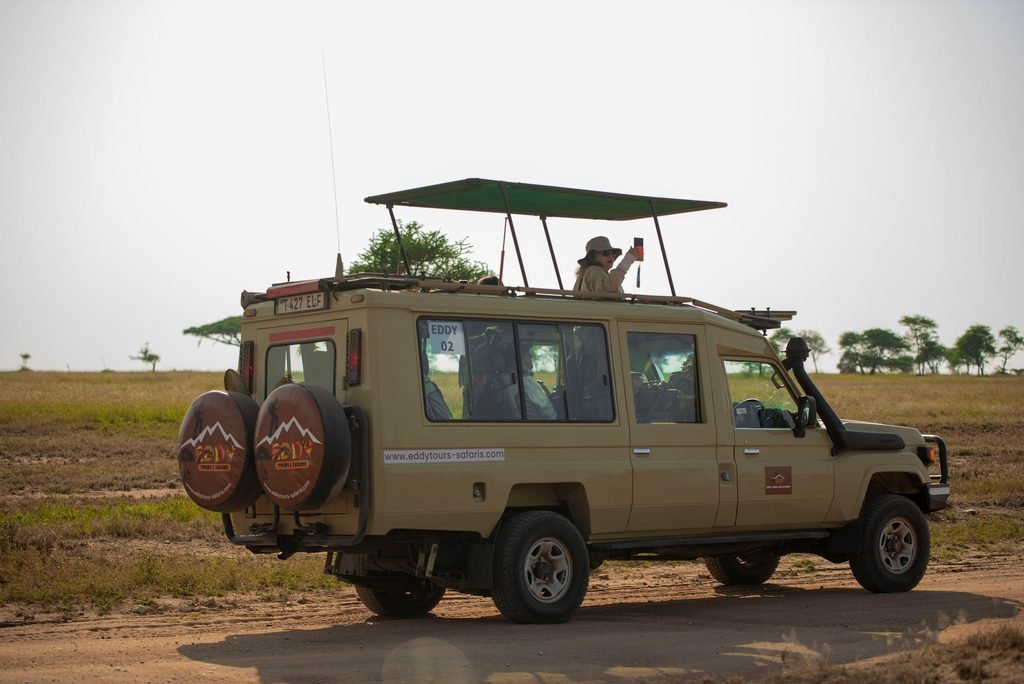
Your safari vehicle is an important part of the experience because you may spend several hours inside it each day. A suitable four-wheel-drive safari vehicle should provide comfortable seating, good visibility, and enough space for passengers and their personal belongings. Many Tanzania safari vehicles have pop-up roofs that allow visitors to stand safely inside the vehicle while observing and photographing wildlife when the guide permits.
Before booking, ask your tour operator about the vehicle arrangement, especially if you are traveling as a family or group. It is useful to know how many passengers will share the vehicle, whether everyone will have a window seat, and how luggage will be handled. A private safari generally provides more flexibility because your group can decide how much time to spend at wildlife sightings, subject to park regulations and the guide’s safety assessment.
A good safari driver-guide is just as important as the vehicle. Experienced guides understand wildlife behavior, know how to search for animals without disturbing them, and can explain the landscapes and species you encounter. Rather than asking your guide to drive quickly between sightings, allow time to observe animals naturally.

6. Plan Morning and Afternoon Game Drives
Wildlife activity changes throughout the day, and the timing of your game drives can affect what you see. Early morning is often a productive period because temperatures are cooler and many animals are active before the heat increases. Predators may still be moving after the night, while herbivores begin grazing across the plains.
Afternoon game drives can also be rewarding, particularly as temperatures begin to fall toward evening. Some animals rest during the hottest part of the day and become more active later. However, wildlife does not follow a fixed timetable, and interesting sightings can happen at almost any time.
The best approach is to remain flexible. Your guide may suggest leaving early, taking a packed lunch, or spending extra time in an area where wildlife activity is particularly interesting. Following park opening hours and other regulations is essential, and special activities should only be undertaken with the required authorization.
7. Pack the Right Clothes for a Serengeti Safari
You do not need expensive safari clothing to visit the Serengeti, but comfortable and practical clothes make the experience easier. Neutral colors such as beige, brown, olive, and khaki are useful because they are suitable for dusty conditions and blend naturally with the surrounding landscape. Lightweight clothing is comfortable during warmer afternoons, while a fleece or jacket is important for cool mornings and evenings.
A wide-brimmed hat, sunglasses, sunscreen, and comfortable closed shoes should also be included in your luggage. If you are traveling during the rainy season, bring a lightweight waterproof jacket. Avoid packing too many clothes, especially if your itinerary includes domestic flights with luggage restrictions.
Essential Serengeti Safari Packing List
| Item | Why it is useful |
|---|---|
| Lightweight shirts and trousers | Comfortable during warm game drives |
| Warm jacket or fleece | Useful for cool mornings and evenings |
| Comfortable closed shoes | Suitable for travel and lodge activities |
| Hat and sunglasses | Protection from strong sunlight |
| Sunscreen | Helps protect exposed skin |
| Binoculars | Useful for watching distant wildlife |
| Camera or smartphone | Wildlife and landscape photography |
| Spare batteries or power bank | Helpful during long days |
| Reusable water bottle | Convenient for staying hydrated |
| Insect repellent | Helps reduce insect bites |
| Personal medication | Important for individual health needs |
| Small daypack | Keeps essentials organized |
8. Bring Binoculars and Prepare Your Camera
Wildlife photography is one of the most enjoyable parts of a Serengeti safari, but you do not need professional equipment to take memorable photographs. A smartphone or ordinary camera can capture landscapes, nearby animals, and moments around your safari lodge. If you are especially interested in photographing birds or distant predators, a camera with a suitable zoom lens can be helpful.
Binoculars are worth carrying even if you do not plan to take many photographs. Animals are not always close to the road, and binoculars allow you to observe wildlife without asking the driver to approach too closely. They are particularly useful for birdwatching and identifying animals resting in trees or moving across distant plains.
Try to enjoy the wildlife rather than spending every moment looking through a camera screen. Watching a pride of lions interact, observing elephants with their calves, or following a herd of giraffes across the grasslands can be just as rewarding as capturing the perfect photograph.
9. Choose Accommodation Based on Location, Not Just Luxury
The Serengeti offers different accommodation options, ranging from public campsites and budget camping arrangements to comfortable tented camps and luxury safari lodges. Your choice should depend on your budget, preferred level of comfort, and the part of the park you want to explore.
Budget camping can be suitable for travelers who enjoy a more basic outdoor experience and want to reduce accommodation costs. Mid-range tented camps generally provide more comfort, often including proper beds and private bathroom facilities, while luxury camps and lodges may offer spacious rooms, additional services, and more elaborate dining arrangements.
However, the most expensive accommodation is not always the most practical choice. A lodge located far from your main wildlife-viewing area may result in long daily drives. When comparing safari packages, ask where each camp is located and how much travel time is required to reach the areas you want to visit.
10. Follow Wildlife Safety Rules
The Serengeti is a protected wildlife area, not a zoo. Lions, elephants, buffaloes, hippos, and other animals move freely through the park, and visitors must follow the instructions of their guides and park staff. Never leave your safari vehicle in an unauthorized area, approach wildlife on foot without the required arrangements, or attempt to feed animals.
It is also important to avoid disturbing wildlife for photographs. Asking a driver to move too close to an animal, block its path, or chase it can cause stress and interfere with natural behavior. Responsible wildlife viewing means allowing animals enough space and observing them without unnecessary disturbance.
At camps and lodges, follow staff instructions, particularly after dark. Some accommodation facilities are located in areas where wildlife may pass nearby, so visitors should not walk alone unless staff confirm that it is safe.

11. Understand the Cost of a Serengeti Safari
The cost of a Serengeti safari depends on several factors, including the number of travel days, accommodation standard, group size, season, transport arrangements, and the parks included in the itinerary. A private safari with luxury accommodation generally costs more than a shared or budget camping trip, while longer itineraries naturally involve additional park fees, accommodation nights, meals, and transport expenses.
Travelers should compare the complete package rather than looking only at the advertised price. Ask whether park entrance fees, accommodation, meals, drinking water, guide services, safari vehicle, airport transfers, and any domestic flights are included. Some quotations may exclude international flights, visas, travel insurance, tips, and optional activities.
For safaris in 2027 or 2028, prices should be confirmed through an updated quotation because park fees, accommodation rates, fuel costs, and government charges may change. At Eddy Tours & Safaris, travelers can request a customized itinerary based on their preferred budget and travel dates.
12. Consider Combining Serengeti with Other Tanzania Parks
Although the Serengeti is a major attraction, northern Tanzania has several other wildlife destinations worth visiting. Ngorongoro Crater is known for its concentrated wildlife populations within a large volcanic caldera, while Tarangire National Park is particularly famous for elephants, baobab trees, and seasonal wildlife movements. Lake Manyara National Park offers a different landscape with groundwater forest, woodland, and lake-associated habitats.
Combining these destinations can make a Tanzania safari more varied. A traveler with six or seven days may be able to visit Tarangire, Serengeti, and Ngorongoro Crater, while a longer itinerary can include additional time for Lake Manyara or cultural experiences. The best arrangement depends on how much time you want to spend on game drives and how comfortable you are with road travel.
You can also extend your safari with a Mount Kilimanjaro climbing expedition or a beach holiday in Zanzibar. These combinations are particularly popular with international visitors who want to experience several parts of Tanzania during one trip.
13. Travel with Realistic Wildlife Expectations
One of the most important Serengeti safari tips is to understand that wildlife sightings cannot be guaranteed. Animals move naturally through the ecosystem, and their location changes according to food availability, weather, breeding activity, and other factors. Even experienced guides cannot predict exactly where every animal will be on a particular day.
The Serengeti is home to lions, leopards, elephants, buffaloes, giraffes, cheetahs, zebras, wildebeest, hyenas, and many other species. However, seeing every animal on your list is not always possible, particularly when searching for elusive species such as leopards or rhinos.
Instead of measuring the success of your safari only by the number of animals photographed, take time to appreciate the experience. Watching birds hunt, seeing elephants interact, observing grazing herds, or enjoying the changing colors of the plains can make your safari memorable even when a particular animal remains out of sight.
14. Book Early During Popular Safari Months
Accommodation in popular Serengeti areas can become limited during peak travel periods, particularly around the northern migration season. Travelers who want specific camps, family rooms, or a private safari vehicle should consider organizing their trip well in advance.
Booking early is especially useful if you are planning to travel during school holidays or with a larger group. It gives your tour operator more time to arrange suitable accommodation and develop an itinerary that matches your interests. However, early planning does not mean that every service is automatically confirmed; always request written confirmation of the arrangements included in your booking.
If you are traveling during the quieter months, you may have more flexibility with accommodation choices. Nevertheless, availability should still be checked before arranging international flights or making nonrefundable travel commitments.
15. Choose a Safari Operator Who Understands Your Interests
A well-planned safari should reflect what you actually want to experience. Some travelers are interested in big cats and wildlife photography, while others want to see the Great Migration, enjoy family-friendly activities, or spend time in comfortable safari lodges. Your operator should ask about these preferences before recommending a route.
An experienced safari company should also explain travel distances, accommodation locations, park fees, and realistic wildlife-viewing opportunities. If you want to see Mara River crossings, for example, your itinerary should allow sufficient time in the northern Serengeti during the appropriate seasonal window rather than promising a crossing on a particular date.
At Eddy Tours & Safaris, travelers can discuss their interests and request a personalized Tanzania safari quotation. Whether you prefer a budget camping safari, a mid-range wildlife holiday, or a luxury Serengeti experience, the itinerary should be designed around your available time and travel priorities.
Frequently Asked Questions About Serengeti Safaris
1. What is the best month to visit Serengeti National Park?
June to October is generally popular for dry-season wildlife viewing, while January to March is attractive for the southern calving season.
2. How many days do I need for a Serengeti safari?
Three to five days is a useful range for many travelers, although longer stays provide more wildlife-viewing time.
3. Can I see the Big Five in the Serengeti?
The park supports all five species, but sightings of every one are not guaranteed, especially rhinos.
4. When is the Great Wildebeest Migration?
The migration takes place throughout the year, with herds moving between different parts of the ecosystem.
5. When can I see the Mara River crossings?
July to October is a popular period for possible crossings, but the exact timing varies.
6. Are river crossings guaranteed?
No. Wildebeest may cross at unpredictable times and locations.
7. Is Serengeti worth visiting outside migration season?
Yes. The park has resident wildlife, including predators, elephants, giraffes, and many bird species.
8. Is Serengeti suitable for families?
Yes. Family safaris can be arranged with suitable accommodation, travel distances, and activities.
9. Can I visit Serengeti on a budget?
Yes. Budget camping and shared arrangements may help reduce costs, depending on availability.
10. Is a private safari better than a group safari?
A private safari provides more flexibility, while a group safari may reduce shared transport costs.
11. What animals can I see in Serengeti?
Commonly sought animals include lions, elephants, giraffes, zebras, wildebeest, buffaloes, cheetahs, leopards, and hyenas.
12. Can I see lions in Serengeti?
Yes. Lions live in the Serengeti, although sightings depend on their movements and conditions.
13. Are leopards easy to find?
Leopards can be difficult to spot because they are often solitary and may rest in trees or thick vegetation.
14. Do I need binoculars?
Binoculars are highly recommended for observing distant wildlife and birds.
15. What should I wear on safari?
Comfortable neutral-colored clothing, closed shoes, a hat, and a warm layer are practical choices.
16. Does Serengeti get cold?
Early mornings and evenings can be cool, particularly during the dry season.
17. Can I take photographs from the safari vehicle?
Yes. Photography is a major part of the safari experience, provided park rules and guide instructions are followed.
18. Can I use a drone in Serengeti?
Drone use is restricted and requires special authorization. Do not bring or operate one without checking the applicable permissions.
19. Can I walk around the Serengeti alone?
No. Visitors should follow park and accommodation safety rules, and walking activities require appropriate authorization and guiding arrangements.
20. Is Serengeti safe for tourists?
A professionally organized safari can be a safe experience when visitors follow wildlife safety instructions and park regulations.
21. Can I combine Serengeti with Ngorongoro Crater?
Yes. This is one of the most popular northern Tanzania safari combinations.
22. Can I visit Serengeti and Tarangire on the same safari?
Yes. Both parks can be included in a multi-day northern Tanzania itinerary.
23. Is Serengeti better than Ngorongoro Crater?
They offer different experiences. Serengeti is known for its vast plains and migration, while Ngorongoro offers wildlife viewing within a volcanic caldera.
24. Can I book a Serengeti safari for 2027 or 2028?
You can request an itinerary and quotation for those years, subject to confirmed availability and pricing.
25. How do I book a Serengeti safari with Eddy Tours & Safaris?
Contact the team with your preferred travel dates, number of travelers, accommodation standard, and wildlife interests to receive a suitable quotation.

Plan Your Serengeti Safari with Eddy Tours & Safaris
A Serengeti safari is much more enjoyable when you have enough time to explore, understand the seasonal wildlife movements, and choose accommodation in the right area. Whether you want to see the Great Migration, photograph lions and cheetahs, or spend several days enjoying Tanzania’s open plains, careful planning helps you make the most of your visit.
The most useful Serengeti safari tips are simple: choose your travel season based on your interests, allow enough days for wildlife viewing, travel with a knowledgeable guide, pack practical clothing, and follow park regulations. Wildlife is unpredictable, but a flexible itinerary and realistic expectations can make every game drive worthwhile.
At Eddy Tours & Safaris, we help travelers organize Tanzania wildlife holidays, including Serengeti safaris for 2027 and 2028. Our team can discuss suitable travel dates, accommodation options, private or group arrangements, and safari extensions to Ngorongoro Crater, Tarangire, Lake Manyara, Kilimanjaro, and Zanzibar.
Request Your Serengeti Safari Quotation
Chat with Eddy Tours & Safaris on WhatsApp
Email: sales@eddytours-safaris.com
Contact Eddy Tours & Safaris to plan your Serengeti wildlife adventure with a suitable itinerary, clear travel arrangements, and enough time to enjoy Tanzania’s remarkable wildlife.