
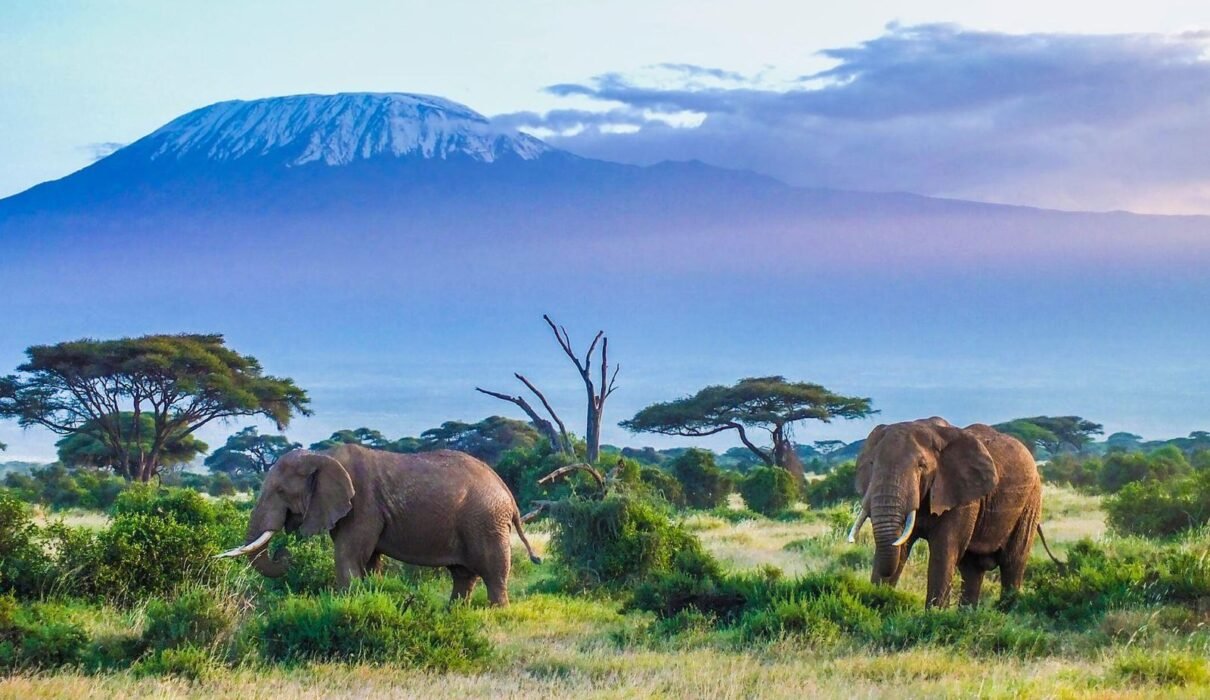
8-Day Guided Lemosho Route expedition is for climbers who want to trek Mount Kilimanjaro with enough time to acclimatise, a capable mountain crew and a route that shows the mountain at its most varied. Starting at Lemosho Gate on the western side, the trek crosses forest, heathland and the high Shira Plateau before following the southern circuit to Barafu Camp and the final ascent to Uhuru Peak.
The Lemosho Route is one of the strongest Kilimanjaro options for people who value preparation over speed. Its eight-day schedule is not simply a longer holiday. It allows the body more time to respond to altitude, gives climbers a chance to recover between harder stages and turns the journey into a proper mountain expedition rather than a hurried push for the summit.
Mount Kilimanjaro stands at 5,895 metres. Standard routes do not need technical mountaineering skills or ropes, but the mountain should still be treated with respect. Cold, wind, tired legs, poor sleep and reduced oxygen all affect the climb. The guide team monitors each guest, but every climber must prepare physically, use suitable gear, hydrate, eat when possible and report symptoms honestly.
Why trek Kilimanjaro on the 8-day Lemosho Route?
Lemosho is known for its excellent route profile. The trail begins gradually in rainforest and does not force the group high too fast on the first days. By the time you reach the Shira Plateau, you have already started to adapt to a new elevation. The itinerary then includes a day to Lava Tower before sleeping lower at Barranco Camp, a helpful acclimatisation pattern commonly described as walking high and sleeping lower.
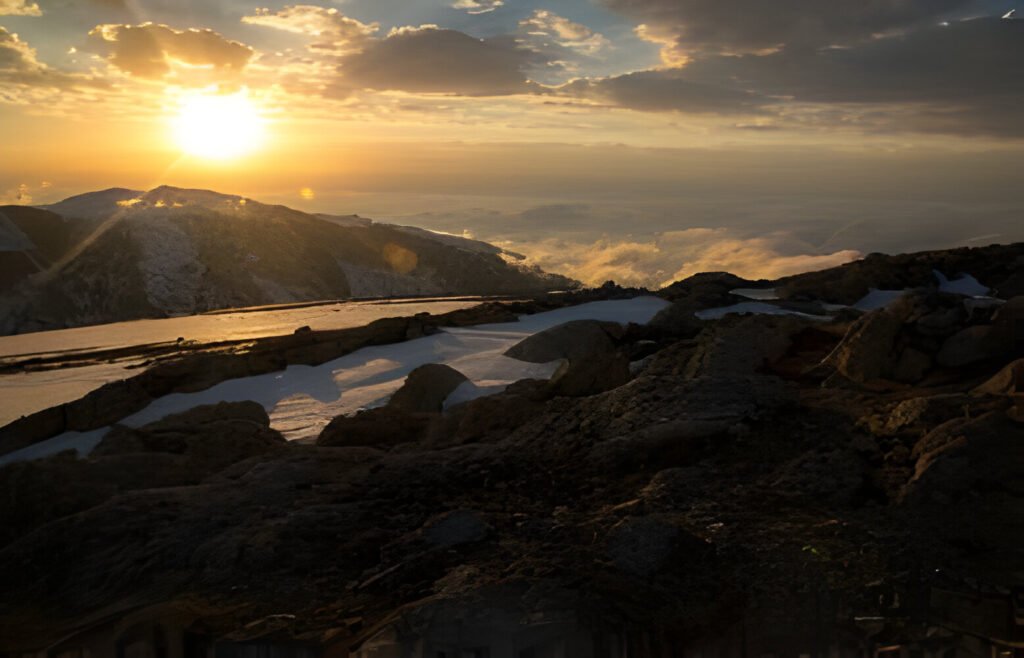
It is also one of the most scenic Kilimanjaro routes. The forest entrance feels rich and green, while the plateau feels wide and open. Later, the mountain becomes rocky, dry and almost lunar. From Barranco and Karanga, you can see valleys, ridges and the southern face of Kibo. By summit night, the landscape has changed again into a high volcanic world of scree, ice and rock.
For many climbers, the extra time is the deciding factor. A shorter itinerary can cost less, but altitude is not an area where cutting days is always sensible. The eight-day Lemosho Route usually gives a stronger foundation for a safe and enjoyable climb, particularly for first-time high-altitude trekkers who have trained well but have not previously slept above 4,000 metres.
Your 8-day guided Lemosho expedition itinerary
Day 1: Lemosho Gate to Mti Mkubwa Camp
After breakfast and a final equipment review, leave Moshi or Arusha for Lemosho Gate. Park registration takes place here, and you meet the guide, assistant guide, cook and porter team supporting the expedition. Begin walking through rainforest on a trail surrounded by tall trees, ferns and moss. The forest can be damp, especially after rain, so keep rain protection accessible rather than buried in your duffel.
Reach Mti Mkubwa Camp, also called Big Tree Camp, at about 2,650 metres. The crew prepares your tents and hot meal while you settle in. This is the time to learn the daily rhythm: health checks, meals, water refill, gear organisation and early rest. Do not try to prove fitness on the first day. A controlled pace starts the acclimatisation process well.
Day 2: Mti Mkubwa Camp to Shira 1 Camp
Leave the forest and climb into heath and moorland. The trail becomes more open and the views begin to expand. You may feel the elevation more clearly as you rise toward the Shira Plateau, so take short breaks, drink regularly and use sun protection. The afternoon can be bright and warm, but the temperature drops quickly once the sun sets.
Shira 1 Camp is around 3,505 metres. Here the mountain feels bigger and the camping experience becomes more exposed. Change into dry, warm layers after arrival and keep drinking water even if the cool weather reduces thirst. The cook will prepare dinner, and the guide will check how everyone is responding to the first increase in altitude.
Day 3: Shira 1 Camp to Shira 2 Camp
Today is a steady walk across the Shira Plateau. It is usually shorter than the harder climbing days ahead, which gives your body useful time to acclimatise. The ground is volcanic and open, with sparse vegetation, rolling ridges and far-reaching views when clouds allow. The summit cone may appear ahead, reminding you how much elevation still remains.
Arrive at Shira 2 Camp near 3,900 metres. After lunch, the guide may lead a gentle acclimatisation walk to a higher point before returning to camp. This is done at a slow pace and only when the group is well. Rest afterward, eat dinner and prepare for the key acclimatisation day to Lava Tower.
Day 4: Shira 2 Camp to Lava Tower, then Barranco Camp
Walk toward Lava Tower, a volcanic formation sitting at roughly 4,630 metres. The increase in altitude is clear, and most climbers naturally slow down. The guide will set a steady pace; this is not a day to chase a distance or race another group. Lunch is often taken near Lava Tower before the descent begins.
From Lava Tower, descend to Barranco Camp at about 3,960 metres. Although it may feel strange to lose altitude after climbing high, this is one of the main strengths of the route. Spending time higher and then sleeping lower supports the acclimatisation programme. Barranco Camp lies below the impressive Barranco Wall and has one of the most beautiful camp settings on Kilimanjaro.
Day 5: Barranco Camp to Karanga Camp
The day begins with Barranco Wall. It looks steep from below but is generally a guided scramble, not technical climbing. Take your time, follow the guide’s route and use your hands only where needed. Once above the wall, you will cross rolling ridges and valleys with strong views of the southern mountain.
Continue to Karanga Camp at about 4,035 metres. The route has enough short ups and downs to make it a meaningful acclimatisation day, even though the walking distance is moderate. Arrive for lunch, rest, complete any recommended short walk and prepare for the move to Barafu high camp the following day.
Day 6: Karanga Camp to Barafu Camp
Move into Kilimanjaro’s alpine desert zone, where plants are scarce and the landscape is exposed to wind and sun. The route climbs gradually to Barafu Camp, approximately 4,673 metres. At this altitude, simple actions take more effort, so conserve energy and avoid unnecessary movement around camp after arrival.
Have an early meal and organise all summit equipment before resting. Place your headlamp, spare batteries, warm gloves, jacket, water, snacks, sunglasses and personal medication where you can find them quickly in the dark. Your guide gives a detailed briefing about the summit schedule, pace, weather and the importance of speaking up if you feel unwell.
Day 7: Barafu Camp to Uhuru Peak, then Mweka Camp
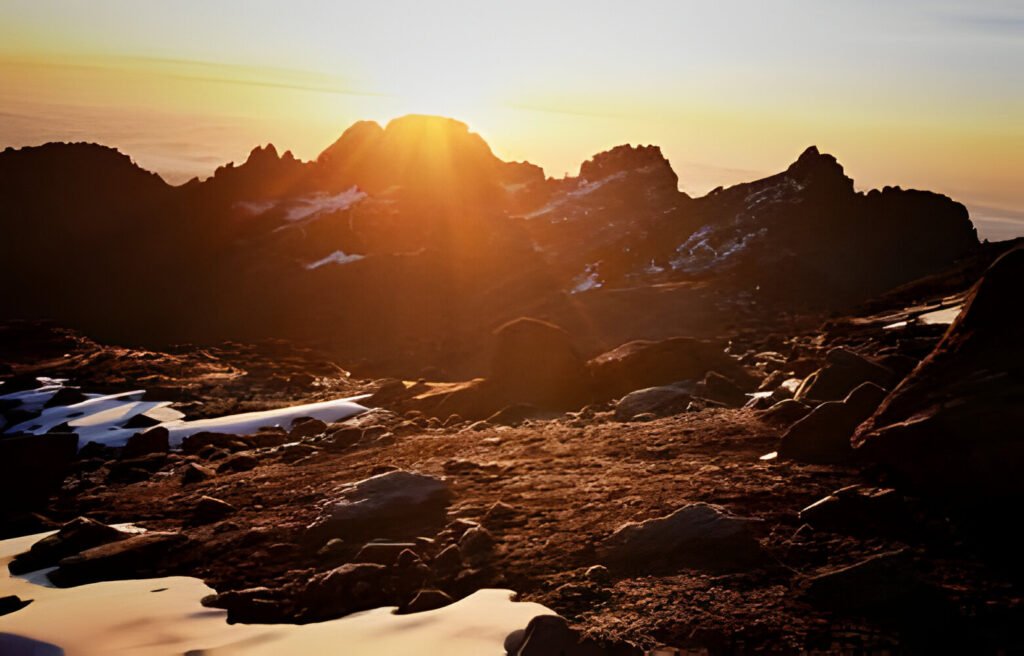
The summit attempt begins around midnight. You climb through darkness on a slow, steep path of volcanic scree toward Stella Point. This section asks for patience more than speed. The air is thin, the temperature can be far below freezing and every step feels deliberate. Keep your breathing even, follow the guide’s pace and focus on short distances rather than the summit far above.
From Stella Point, continue along the crater rim to Uhuru Peak, Africa’s highest point at 5,895 metres. Celebrate briefly, take your photographs and begin the descent without delay. Return to Barafu for a short rest, then descend to Mweka Camp. The lower elevation offers more oxygen and usually a warmer night, but the day is long, so eat, drink and rest whenever possible.
Day 8: Mweka Camp to Mweka Gate
After breakfast, descend through the forest to Mweka Gate. The trail can be slippery and knees may be tired from the previous day, so trekking poles are useful. At the gate, complete your sign-out and receive a certificate if you reached the relevant summit level. Meet the vehicle for transfer back to Moshi or Arusha, where a shower and a comfortable bed will feel very welcome.
What your guided expedition includes
- Transfers between your hotel, Lemosho Gate and Mweka Gate as stated in the confirmed itinerary.
- Park entry, camping, conservation and rescue fees included in the final quotation.
- Professional English-speaking lead guide, assistant guide(s), cook and porter team.
- Quality mountain tents, sleeping mats and group dining tent with tables and chairs.
- Mountain meals for the full eight-day itinerary, as confirmed at booking.
- Purified drinking water while on Kilimanjaro.
- Daily health monitoring and mountain safety equipment carried by the crew.
- Summit certificate for climbers who reach the qualifying point.
What is not included
- International flights, visas and personal travel documentation.
- Travel and medical insurance, including appropriate high-altitude evacuation cover.
- Hotel accommodation before or after the climb unless expressly included.
- Personal equipment such as boots, sleeping bag, trekking poles, headlamp and clothing; rental gear can be arranged when available.
- Meals and drinks in Moshi or Arusha that are not listed in the booking confirmation.
- Alcoholic drinks, personal snacks, laundry, souvenirs and other personal expenses.
- Tips for the mountain crew.
- Optional safari or Zanzibar extension not stated in the package.
Preparing for the summit
Good preparation starts well before arriving in Tanzania. Build walking endurance with regular hikes, stairs, hills or incline treadmill sessions. Add strength work for your legs and core, then gradually include longer walks while wearing the boots and daypack you plan to use. It is much better to discover a boot problem at home than on a wet trail after two days of walking.
Pack for changing weather. Use moisture-wicking base layers, warm fleece or insulated mid-layers, waterproof outer layers, gloves, a warm hat, sun hat, sunglasses and a sleeping bag suited to cold mountain nights. Summit night needs your warmest equipment, including a reliable headlamp with spare batteries and insulated gloves. Your main bag is carried by porters within the agreed limit, while you carry daily essentials in a daypack.
Before departure, seek personal medical advice if you have a health condition or any concern about high altitude. On the mountain, report headache, nausea, unusual weakness, poor coordination or breathing concerns early. The guides are there to make sensible decisions, but they need honest information from you. Reaching the summit is never worth risking your health.
When to climb Lemosho in 2027
January to early March and June to October are commonly popular for Kilimanjaro because they are generally drier. January and February can be relatively warm at lower elevations, while June to October often brings colder conditions high on the mountain and more visitors on the trails. Weather changes quickly on Kilimanjaro in any month, so rain gear and warm layers are essential throughout the year.
April, May and November can be wetter. These months may bring muddier forest trails, more cloud and fewer clear views, but they can also be quieter. Climbers who choose this period should arrive with strong waterproof equipment and flexible expectations. The mountain is still climbed, but conditions demand more patience.
Life on a guided Kilimanjaro expedition
A guided expedition has a simple but important daily routine. The crew wakes early with hot water for washing and tea or coffee, followed by breakfast. You pack your daypack, hand over the main duffel to the porters and start walking at the guide’s pace. Lunch may be at camp or carried to a suitable resting point. On arrival at the next camp, your tent is ready, water is available and the crew prepares a hot meal.
Evenings are calm. You eat, discuss the next day’s route, complete a health check and try to sleep early. The guide team checks how people are feeling, not only how fast they walked. This support is one of the main reasons Kilimanjaro should be climbed with an experienced, properly organised crew. A good team lets you focus on walking and adapting to the mountain while they manage camp logistics and safety procedures.
Respect the crew’s work. Keep your luggage organised, follow the weight allowance, thank people for their effort and ask questions if you are unsure about the day’s plan. Porters and guides know the mountain well, but clear communication works both ways. If something is wrong with your boots, food, sleeping gear or health, mention it early rather than waiting until the problem becomes larger.
Responsible climbing on Kilimanjaro
Kilimanjaro is a national park, a source of water and an important landscape for Tanzania. Climbers should leave as little impact as possible. Use reusable bottles where practical, keep all rubbish secured, stay on marked routes and use toilets provided at camps. Do not leave wet wipes, snack wrappers or other waste on the trail.
Responsible climbing also means choosing an operator that treats guides, porters and cooks fairly. The mountain is a team effort, and ethical working conditions, suitable equipment, good meals and safe procedures matter. Price should never be the only factor in your choice. A very cheap offer can hide poor crew welfare, missing park fees or inadequate safety support.
Can you improve your chances of reaching Uhuru Peak?
No one can promise a summit, but several choices make a difference: choose enough days, train for repeated walking, take the early days slowly, drink consistently, eat even when appetite changes and listen to the guide. Do not compare yourself with another climber. The person who walks slowly and steadily may be in a better position than someone who moves quickly at the beginning and becomes exhausted later.
Sleep can be difficult at altitude, and summit night is uncomfortable for almost everyone. Expect this rather than treating it as a sign you have failed. Focus on the next meal, the next water break and the next section of trail. Small, sensible decisions repeated over eight days are what create the best chance of a successful and safe climb.
Frequently asked questions
Is the Lemosho Route suitable for a first-time Kilimanjaro climber?
Yes, it can be a good choice for a fit first-time climber who trains properly and chooses the 8-day version. You do not need technical climbing experience, but you do need determination, suitable gear and a willingness to follow the guide’s altitude advice.
How difficult is summit night?
Summit night is the hardest part of the expedition. It is cold, dark, slow and physically demanding because of altitude. The guide team supports you closely, but climbers should prepare mentally for a long night and avoid expecting it to feel easy.
Can I add a safari after the climb?
Yes. Many climbers rest for a night in Moshi or Arusha and then continue to Tarangire, Ngorongoro or Serengeti. It is a good combination, but recovery time should be included rather than rushing straight from summit day into another long transfer.
Book your guided Lemosho Route expedition
For detailed Lemosho Route preparation and mountain advice, visit Kilimanjaro Climb Specialist. If you would like to add a wildlife safari before or after your climb, explore Eddy Tours & Safaris.
To request a 2027 quote, use the Eddy Tours & Safaris contact page, email eddytoursandsafaris@gmail.com or sales@eddytours-safaris.com, or call and WhatsApp +255 711 906 664. Please include your group size, preferred dates, trekking experience, gear-rental needs and any safari extension you would like.