
#1 Affordable Kilimanjaro Machame Route 6 & 7 Days : does not have to mean spending a fortune on a luxury mountain expedition. With careful planning, the right climbing route, and a reliable local tour operator, travelers can experience Africa’s highest mountain through a reasonably priced climbing package without sacrificing essential safety and mountain support.
The Affordable Kilimanjaro Machame Route 6 and 7 Days Climbing Packages are designed for travelers who want to enjoy one of Tanzania’s most beautiful mountain routes while keeping their travel expenses manageable.
Known as the Whiskey Route, Machame is among the most popular routes on Mount Kilimanjaro. It approaches the mountain from the southwest and passes through rainforest, open moorland, the Shira Plateau, Lava Tower, Barranco Valley, and the famous Barranco Wall before reaching the high-altitude summit area.
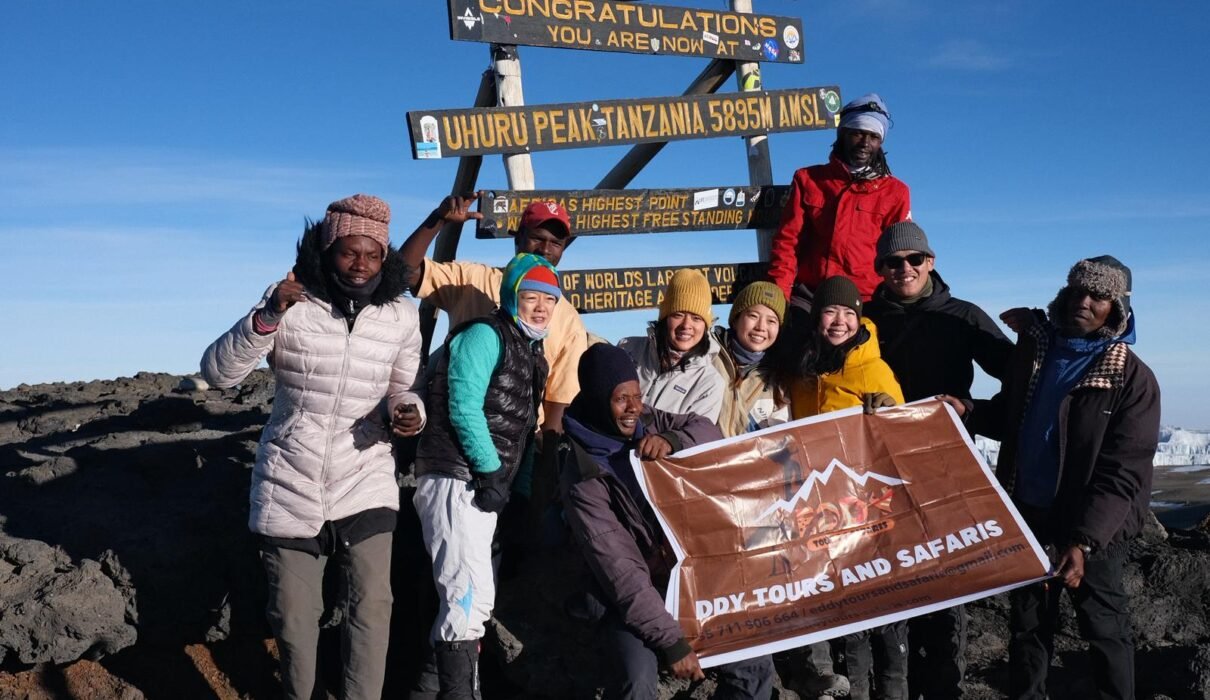
The final destination is Uhuru Peak, standing at 5,895 meters above sea level. Reaching this point is a remarkable achievement, but the climb requires physical preparation, patience, and proper acclimatization.
Both the six-day and seven-day Machame itineraries follow the same general trail. The main difference is that the seven-day version includes an additional overnight stop at Karanga Camp, allowing more time to adjust to altitude before the summit attempt.
For most travelers, the seven-day Machame Route is the better choice because the additional day provides a more gradual climbing schedule. However, the six-day itinerary may appeal to experienced hikers with limited time.
At Eddy Tours and Safaris, we help travelers plan Kilimanjaro climbing expeditions according to their budget, preferred travel dates, and previous hiking experience. Whether you are interested in a private climb or a joining-group departure in 2027, 2028, or 2029, our team can help you explore suitable options.
This guide explains the complete six-day and seven-day Machame Route itineraries, estimated climbing prices, budget accommodation, group joining options, equipment requirements, and important information to consider before booking.
Affordable Kilimanjaro Machame Route Climbing Overview
| Tour information | Details |
|---|---|
| Tour name | Affordable Kilimanjaro Machame Route 6 & 7 Days |
| Destination | Mount Kilimanjaro, Tanzania |
| Route | Machame Route |
| Duration | 6 or 7 days |
| Maximum elevation | Uhuru Peak, 5,895 meters |
| Starting point | Machame Gate |
| Finishing point | Mweka Gate |
| Accommodation | Mountain camping tents |
| Difficulty | Challenging high-altitude trekking |
| Six-day itinerary | 6 days / 5 mountain nights |
| Seven-day itinerary | 7 days / 6 mountain nights |
| Main attractions | Shira Plateau, Lava Tower, Barranco Wall and Uhuru Peak |
| Climbing style | Private or joining group |
| Recommended climbing seasons | January–March and June–October |
| Travel years | 2027, 2028 and 2029 |
| Best overall option | Seven-day Machame Route |
Why Choose an Affordable Machame Route Climb?
The Machame Route offers an excellent combination of beautiful scenery, established trekking trails, and a challenging summit experience.
Unlike the Marangu Route, which uses permanent mountain huts, Machame is a camping route. Climbers sleep in tents at designated campsites, supported by mountain guides, porters, and cooks.
This camping arrangement can make Machame suitable for budget-conscious travelers, although the overall price still depends heavily on national park fees, expedition duration, group size, and mountain crew arrangements.
Another advantage is the route’s varied landscape.
The first day begins in the rainforest, where tall trees and thick vegetation surround the trail. As you climb higher, the forest changes into moorland and eventually into the rocky alpine desert.
The route also passes near Lava Tower, where climbers reach a higher altitude before descending to Barranco Camp. This provides an opportunity to experience the climb-high, sleep-low approach that can support acclimatization.
However, choosing an affordable package should never mean compromising on safety.
A properly organized budget climb still needs professional mountain guides, suitable camping equipment, adequate meals, appropriate porter support, and clear emergency procedures.
What Is the Difference Between the 6-Day and 7-Day Machame Routes?
The six-day and seven-day Machame itineraries follow almost the same trail, but they have different daily schedules.
The six-day itinerary combines the walk from Barranco Camp through Karanga Valley to Barafu Camp into one long day.
The seven-day itinerary includes an overnight stay at Karanga Camp, giving climbers additional time to rest and adjust to altitude before the summit attempt.
| Feature | 6-Day Machame Route | 7-Day Machame Route |
|---|---|---|
| Total duration | 6 days | 7 days |
| Mountain nights | 5 | 6 |
| Overnight at Karanga Camp | No | Yes |
| Lava Tower | Included | Included |
| Barranco Wall | Included | Included |
| Summit attempt | From Barafu Camp | From Barafu Camp |
| Acclimatization time | Less | More |
| Day before summit | Longer | Shorter |
| Overall cost | Usually lower | Usually higher |
| Recommended for most travelers | Less preferred | Preferred |
The seven-day itinerary is generally the better choice for travelers who want a more gradual climbing schedule.
Complete 6 Days Machame Route Budget Climbing Itinerary
The six-day Machame Route is suitable for travelers who have limited time and understand the challenges of a relatively fast ascent.
Day 1: Moshi to Machame Gate – Hike to Machame Camp
Starting elevation: Approximately 1,800 meters
Ending elevation: Approximately 3,000 meters
Hiking distance: Approximately 11 kilometers
Walking time: 5–7 hours
Habitat: Rainforest
Your Kilimanjaro adventure begins in Moshi, where you meet your mountain guide and climbing crew.
After breakfast, you travel to Machame Gate, located on the southwestern side of Mount Kilimanjaro.
At the gate, your guide completes the national park registration procedures while the porters organize the camping equipment and supplies.
The hike begins through Kilimanjaro’s rainforest.
The trail passes beneath tall trees surrounded by ferns, moss, and thick vegetation.
Rainfall is possible throughout the year, and some sections of the trail may become muddy.
Your guide will encourage you to walk slowly and take regular breaks.
After approximately five to seven hours, you reach Machame Camp.
The mountain crew prepares the tents and dinner while you rest after your first day of climbing.
Accommodation: Machame Camp
Meals: Lunch and dinner
Day 2: Machame Camp to Shira Camp
Starting elevation: Approximately 3,000 meters
Ending elevation: Approximately 3,840 meters
Hiking distance: Approximately 5 kilometers
Walking time: 4–6 hours
Habitat: Moorland
After breakfast, you continue ascending toward the Shira Plateau.
The rainforest gradually disappears, and the landscape changes into open moorland with giant heather, shrubs, and rocky ridges.
The trail climbs steadily, offering beautiful views of the surrounding mountain slopes when the weather is clear.
Although the hiking distance is shorter than the first day, the increasing altitude can make walking more demanding.
After reaching Shira Camp, you settle into your tent and enjoy lunch or a warm drink.
The afternoon provides time to rest and prepare for the following day’s acclimatization walk.
Accommodation: Shira Camp
Meals: Breakfast, lunch and dinner
Day 3: Shira Camp to Lava Tower – Descend to Barranco Camp
Starting elevation: Approximately 3,840 meters
Highest walking elevation: Approximately 4,600 meters
Ending elevation: Approximately 3,960 meters
Hiking distance: Approximately 9–11 kilometers
Walking time: 6–8 hours
Habitat: Alpine desert and moorland
Day three is an important part of the Machame Route because climbers ascend toward Lava Tower before descending to a lower sleeping altitude.
After breakfast, you leave Shira Camp and begin walking eastward through increasingly rocky terrain.
Vegetation becomes sparse as the trail enters the alpine desert zone.
Near Lava Tower, you reach approximately 4,600 meters above sea level.
At this elevation, the reduced oxygen can make walking more difficult.
Your guide will maintain a slow pace and monitor how you are feeling.
After spending time near Lava Tower, you descend toward Barranco Valley.
The landscape becomes greener as you approach Barranco Camp, where giant groundsels and other unusual high-altitude plants grow.
Barranco Camp is located beneath the famous Barranco Wall.
After arriving, you enjoy dinner and rest before the following day’s hike.
Accommodation: Barranco Camp
Meals: Breakfast, lunch and dinner
Day 4: Barranco Camp to Barafu Camp via Karanga Valley
Starting elevation: Approximately 3,960 meters
Ending elevation: Approximately 4,670 meters
Hiking distance: Approximately 8–9 kilometers
Walking time: 7–9 hours
Habitat: Alpine desert
Day four is one of the most demanding days on the six-day Machame Route.
After breakfast, you begin climbing the famous Barranco Wall.
Although the wall looks steep from below, the standard trail follows an established scrambling route.
Some sections require using your hands for balance while stepping over rocks.
After reaching the top of the wall, you continue across rocky ridges and valleys.
The trail eventually descends into Karanga Valley before climbing toward Karanga Camp.
On the six-day itinerary, you normally stop briefly in the Karanga area before continuing toward Barafu Camp.
The trail becomes increasingly rocky and exposed as you gain elevation.
After reaching Barafu Camp, you settle into your tent and prepare your equipment for the summit attempt.
Dinner is normally served early, followed by several hours of rest.
Accommodation: Barafu Camp
Meals: Breakfast, lunch and dinner
Day 5: Barafu Camp to Uhuru Peak – Descend to Mweka Camp
Starting elevation: Approximately 4,670 meters
Summit elevation: 5,895 meters
Ending elevation: Approximately 3,100 meters
Hiking distance: Approximately 15–17 kilometers
Walking time: 11–16 hours
Habitat: Summit zone and alpine descent
Today is the most challenging day of your Kilimanjaro expedition.
You normally wake late at night or around midnight and prepare for the final ascent toward Uhuru Peak.
After a light meal or warm drink, you begin climbing toward Stella Point with your mountain guide.
The trail ascends steeply over loose volcanic scree and rocky terrain.
Temperatures can be well below freezing, and strong winds may make conditions even colder.
Your guide will maintain a slow pace and monitor your condition throughout the ascent.
After several hours, you reach Stella Point on the crater rim.
If your health and weather conditions allow, you continue toward Uhuru Peak at 5,895 meters.
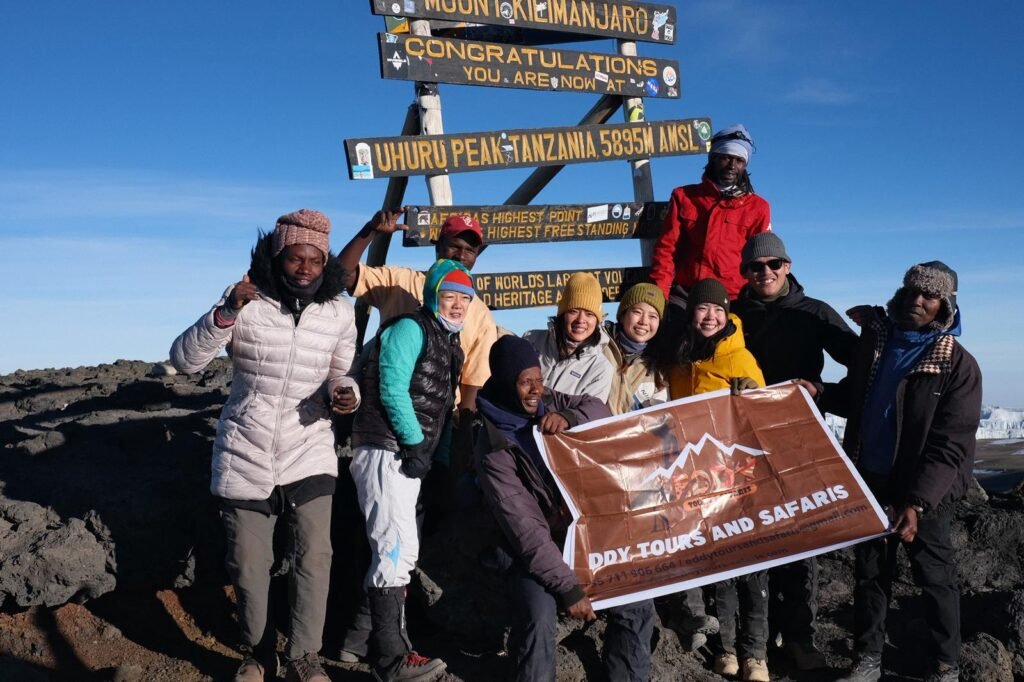
Reaching the highest point in Africa is a remarkable achievement.
After taking photographs, you begin descending toward Barafu Camp.
Following a short rest and meal, you continue downhill to Mweka Camp.
The descent is long and can be tiring after the demanding summit attempt.
You arrive at Mweka Camp for dinner and overnight rest.
Accommodation: Mweka Camp
Meals: Breakfast, lunch and dinner
Day 6: Mweka Camp to Mweka Gate – Return to Moshi
Starting elevation: Approximately 3,100 meters
Ending elevation: Approximately 1,640 meters
Hiking distance: Approximately 10 kilometers
Walking time: 3–5 hours
Habitat: Rainforest
After breakfast, you begin the final descent through Kilimanjaro’s rainforest.
The trail passes beneath tall trees, with increasingly dense vegetation as you lose altitude.
The air becomes warmer and more humid, and the path may be muddy after rainfall.
After approximately three to five hours, you reach Mweka Gate.
Your guide completes the national park exit procedures, and eligible climbers receive the appropriate summit certificates.
You then meet your arranged transport and return to Moshi.
This marks the end of your six-day Machame Route climb.
Meals: Breakfast and lunch
Complete 7 Days Machame Route Budget Climbing Itinerary
The seven-day Machame Route follows the same general trail as the six-day version but includes an additional night at Karanga Camp.
This provides more time for acclimatization and makes the schedule more gradual before summit night.
Day 1: Moshi to Machame Gate – Hike to Machame Camp
Starting elevation: Approximately 1,800 meters
Ending elevation: Approximately 3,000 meters
Hiking distance: Approximately 11 kilometers
Walking time: 5–7 hours
Habitat: Rainforest
After breakfast in Moshi, you travel to Machame Gate for registration and the beginning of your climb.
The trail passes through Kilimanjaro’s rainforest, where tall trees, ferns, and thick vegetation surround the path.
Your guide encourages a slow pace as you gradually gain altitude.
After several hours, you reach Machame Camp for dinner and overnight rest.
Accommodation: Machame Camp
Meals: Lunch and dinner
Day 2: Machame Camp to Shira Camp
Starting elevation: Approximately 3,000 meters
Ending elevation: Approximately 3,840 meters
Hiking distance: Approximately 5 kilometers
Walking time: 4–6 hours
Habitat: Moorland
After breakfast, you leave the rainforest behind and continue toward the Shira Plateau.
The trail climbs over rocky ridges and open moorland.
When the weather is clear, you may enjoy beautiful views of Kibo and the surrounding mountain slopes.
You arrive at Shira Camp for dinner and overnight accommodation.
Accommodation: Shira Camp
Meals: Breakfast, lunch and dinner
Day 3: Shira Camp to Lava Tower – Descend to Barranco Camp
Starting elevation: Approximately 3,840 meters
Highest walking elevation: Approximately 4,600 meters
Ending elevation: Approximately 3,960 meters
Hiking distance: Approximately 9–11 kilometers
Walking time: 6–8 hours
Habitat: Alpine desert and moorland
Today, you continue toward Lava Tower, reaching approximately 4,600 meters before descending to Barranco Camp.
This walk allows you to experience a higher altitude during the day before sleeping at a lower elevation.
The descent takes you through rocky terrain and areas with unusual high-altitude vegetation.
You arrive at Barranco Camp beneath the famous Barranco Wall.
Accommodation: Barranco Camp
Meals: Breakfast, lunch and dinner
Day 4: Barranco Camp to Karanga Camp
Starting elevation: Approximately 3,960 meters
Ending elevation: Approximately 4,000 meters
Hiking distance: Approximately 5 kilometers
Walking time: 4–5 hours
Habitat: Alpine desert
After breakfast, you begin climbing the famous Barranco Wall.
The trail includes rocky sections where you may need to use your hands for balance.
After reaching the top, you continue across ridges and descend into Karanga Valley.
The final section climbs toward Karanga Camp.
The shorter hiking day provides additional time for rest and acclimatization.
Accommodation: Karanga Camp
Meals: Breakfast, lunch and dinner
Day 5: Karanga Camp to Barafu Camp
Starting elevation: Approximately 4,000 meters
Ending elevation: Approximately 4,670 meters
Hiking distance: Approximately 4 kilometers
Walking time: 3–4 hours
Habitat: Alpine desert
After breakfast, you continue ascending toward Barafu Camp.
The trail passes through rocky and exposed terrain with very little vegetation.
Although the distance is relatively short, the altitude makes the walk demanding.
After reaching Barafu Camp, you rest and prepare for the summit attempt.
Your guide explains the expected departure time and safety procedures.
Dinner is served early, followed by several hours of rest.
Accommodation: Barafu Camp
Meals: Breakfast, lunch and dinner
Day 6: Barafu Camp to Uhuru Peak – Descend to Mweka Camp
Starting elevation: Approximately 4,670 meters
Summit elevation: 5,895 meters
Ending elevation: Approximately 3,100 meters
Hiking distance: Approximately 15–17 kilometers
Walking time: 11–16 hours
Habitat: Summit zone and alpine descent
You begin the summit attempt late at night or around midnight.
The trail climbs steeply toward Stella Point, where you reach the crater rim.
If conditions allow, you continue to Uhuru Peak at 5,895 meters.
After reaching the summit, you descend to Barafu Camp for a short rest before continuing to Mweka Camp.
This is the longest and most demanding day of the expedition.
Accommodation: Mweka Camp
Meals: Breakfast, lunch and dinner
Day 7: Mweka Camp to Mweka Gate – Return to Moshi
Starting elevation: Approximately 3,100 meters
Ending elevation: Approximately 1,640 meters
Hiking distance: Approximately 10 kilometers
Walking time: 3–5 hours
Habitat: Rainforest
After breakfast, you begin the final descent through Kilimanjaro’s rainforest.
The trail gradually becomes greener as you lose altitude.
After reaching Mweka Gate, your guide completes the exit procedures.
You then return to Moshi for rest and relaxation.
Meals: Breakfast and lunch
Affordable Machame Route Climbing Prices 2027–2029
The cost of climbing Kilimanjaro through the Machame Route depends on the number of climbers, expedition duration, group arrangements, park fees, and included services.
The following prices are broad planning estimates, not confirmed Eddy Tours and Safaris rates.
| Package | Illustrative price per person |
|---|---|
| 6 Days Machame Joining Group | US$1,550–$2,250 |
| 7 Days Machame Joining Group | US$1,750–$2,500 |
| 6 Days Machame Private Climb | US$1,650–$2,650 |
| 7 Days Machame Private Climb | US$1,850–$2,850 |
The final price for 2027, 2028, or 2029 should be confirmed through an official quotation.
How to Save Money on a Kilimanjaro Climb
Travelers can reduce some climbing costs by joining a group departure, booking early, and choosing a package with clear inclusions.
A joining group allows participants to share certain operating expenses.
Booking early may also help with planning accommodation and equipment arrangements.
However, travelers should avoid choosing a package based only on the lowest price.
A safe Kilimanjaro climb requires professional guides, suitable camping equipment, adequate food, appropriate porter support, and reliable emergency procedures.
What Is Included in an Affordable Machame Route Package?
A typical professionally organized package may include:
- Kilimanjaro National Park entry and camping fees.
- Licensed professional mountain guides.
- Mountain porters and cooking crew.
- Meals during the climb.
- Drinking water prepared according to the operator’s procedures.
- Camping tents and shared mountain equipment.
- Transport from Moshi to Machame Gate and from Mweka Gate back to Moshi.
- Pre-climb briefing and equipment checks.
- Mountain safety monitoring.
The exact inclusions will be confirmed in your official Eddy Tours and Safaris quotation.
What Is Not Included?
Common exclusions include:
- International flights.
- Tanzania visa fees.
- Personal travel insurance.
- Personal trekking equipment.
- Sleeping bag rental or purchase.
- Tips for mountain guides, porters, and cooks.
- Extra hotel nights.
- Personal expenses.
- Optional safari or Zanzibar extensions.
Travelers should ensure their insurance covers high-altitude trekking and emergency evacuation.
Budget Accommodation on the Machame Route
The Machame Route uses camping tents at designated mountain campsites.
Climbers sleep in tents supported by the mountain crew.
The main campsites include Machame Camp, Shira Camp, Barranco Camp, Karanga Camp on the seven-day itinerary, Barafu Camp, and Mweka Camp.
Although the accommodation is basic compared with hotels, the mountain camping experience is an important part of the adventure.
A good budget package should still provide suitable sleeping tents and properly maintained shared equipment.
Is the Machame Route Suitable for Beginners?
Some physically prepared beginners may be capable of completing the Machame Route, but the climb is demanding.
The main challenge is altitude rather than technical climbing.
The seven-day itinerary is generally preferable for first-time Kilimanjaro climbers because it provides more time for acclimatization.
Travelers should prepare through regular walking, hiking, and endurance training before departure.
Best Time for an Affordable Machame Route Climb in 2027, 2028 and 2029
Mount Kilimanjaro can be climbed throughout the year, but January through early March and June through October are generally popular periods.
January and February often provide relatively favorable conditions.
June through October is the main dry-season period.
April and May are commonly associated with the long rainy season, while November may bring additional rainfall.
Even during the dry season, climbers should prepare for freezing temperatures, strong winds, rain, and possible snow near the summit.
What Should You Pack for a Budget Kilimanjaro Climb?
Important equipment includes:
- Waterproof hiking boots.
- Thermal base layers.
- Warm fleece or insulated jacket.
- Waterproof jacket and trousers.
- Insulated summit jacket.
- Warm gloves and hat.
- Trekking poles.
- Headlamp with spare batteries.
- Sunglasses and sunscreen.
- Sleeping bag suitable for freezing conditions.
- Comfortable daypack.
- Reusable water bottles.
- Personal medication and hygiene supplies.
Your climbing operator should provide a complete packing list before departure.
Altitude Sickness and Safety on the Machame Route
Altitude sickness is one of the most important risks when climbing Mount Kilimanjaro.
As you ascend, the air pressure decreases, reducing the amount of oxygen available to your body.
Common symptoms include headaches, nausea, dizziness, unusual tiredness, and difficulty sleeping.
If you experience these symptoms, inform your mountain guide immediately.
Severe symptoms such as confusion, difficulty walking normally, or breathlessness at rest require urgent medical attention and appropriate descent.
The seven-day Machame itinerary provides more acclimatization time than the six-day version, but neither route eliminates altitude-related risks.
Climbers should never continue ascending with worsening symptoms simply because they want to reach the summit.
Can You Combine an Affordable Machame Climb with a Tanzania Safari?
Yes. Many travelers combine their Kilimanjaro climb with a wildlife safari in northern Tanzania.
After completing the mountain expedition, you can visit Serengeti National Park, Ngorongoro Crater, Tarangire National Park, or Lake Manyara National Park.
A three- to five-day safari can provide opportunities to observe elephants, lions, giraffes, zebras, buffaloes, and other wildlife.
Allowing some recovery time after the climb is advisable.
Can You Visit Zanzibar After Climbing Kilimanjaro?
Yes. Zanzibar is a popular destination for travelers who want to relax after climbing Kilimanjaro.
The island offers beautiful beaches, comfortable resorts, historical attractions, and opportunities for snorkeling and other coastal activities.
A Zanzibar holiday can provide a relaxing conclusion to your Tanzania adventure.
Frequently Asked Questions About Affordable Machame Route Climbing
How much does it cost to climb Kilimanjaro through Machame?
Illustrative prices may range from approximately US$1,550 to US$2,850 per person, depending on itinerary length, group size, and included services. Actual prices require a confirmed quotation.
Is the six-day Machame Route cheaper than the seven-day route?
Usually, yes. The six-day itinerary has one fewer mountain day, which can reduce some operating expenses.
Which Machame Route itinerary is better?
The seven-day itinerary is generally preferable because it provides more time for acclimatization.
Can beginners climb the Machame Route?
Physically prepared beginners may consider the seven-day itinerary, although altitude sickness remains a significant risk.
Do climbers sleep in tents on Machame?
Yes. The Machame Route uses camping tents at designated mountain campsites.
Does the Machame Route include Lava Tower?
Yes. Both the six-day and seven-day itineraries include a walk toward Lava Tower.
Does Machame include the Barranco Wall?
Yes. Both itineraries include the famous Barranco Wall.
What is the highest point on the Machame Route?
Uhuru Peak, at 5,895 meters above sea level.
What is the best month to climb Machame?
January, February, and the main dry-season months from June through October are generally popular choices.
Can solo travelers join a Machame climbing group?
Yes. Solo travelers may join suitable group departures, subject to available dates and places.
Is Kilimanjaro climbing safe?
Kilimanjaro climbing involves significant altitude and environmental risks. Professional guides, suitable equipment, appropriate preparation, and clear emergency procedures are essential.
Can I combine Machame with a Serengeti safari?
Yes. Many travelers combine Kilimanjaro climbing with a Serengeti and Ngorongoro safari.
Final Thoughts: Which Affordable Machame Route Package Should You Choose?
The six-day and seven-day Machame Route packages offer two ways to experience Mount Kilimanjaro through one of its most beautiful trekking trails.
The six-day itinerary may appeal to travelers with limited time and suitable previous experience.
However, the seven-day itinerary is generally the better choice because it includes an additional night at Karanga Camp and provides a more gradual schedule before summit night.
For travelers planning an affordable Kilimanjaro climb in 2027, 2028, or 2029, the most important consideration should be choosing a professionally organized expedition that balances cost, acclimatization, and mountain safety.
A well-planned budget climb can still provide an excellent experience without unnecessary luxury expenses.
Book Your Affordable Machame Route Climb with Eddy Tours and Safaris
Are you planning to climb Mount Kilimanjaro through the Machame Route in 2027, 2028, or 2029?
Eddy Tours and Safaris can help you inquire about affordable six-day and seven-day climbing packages, private expeditions, joining-group departures, equipment requirements, and available travel dates.
Contact our team with your preferred travel month, number of climbers, and previous hiking experience.
Website: www.eddytours-safaris.com
Contact page: Plan Your Kilimanjaro Climb
Email: sales@eddytours-safaris.com
WhatsApp: +255 711 906 664
Request your personalized affordable Machame Route climbing quotation and start planning your Kilimanjaro adventure with Eddy Tours and Safaris.