
Climbing Mount Kilimanjaro under a full moon is a special experience for travelers who want to see Africa’s highest mountain in a different light. Instead of walking through complete darkness during the final summit ascent, climbers may enjoy natural moonlight illuminating the rocky trails, surrounding mountain slopes, and the high-altitude landscape. When the sky is clear, the moon can make the long journey toward Stella Point, Gilman’s Point, or Uhuru Peak particularly memorable.
For travelers planning a Kilimanjaro expedition in 2027, 2028, or 2029, selecting the right full moon dates requires careful planning. The moon reaches its fullest phase on specific dates each month, but your actual summit attempt usually begins during the night before the planned summit morning. You must therefore choose a departure date that places your summit ascent close to the full moon rather than simply beginning your climb on the full moon date.
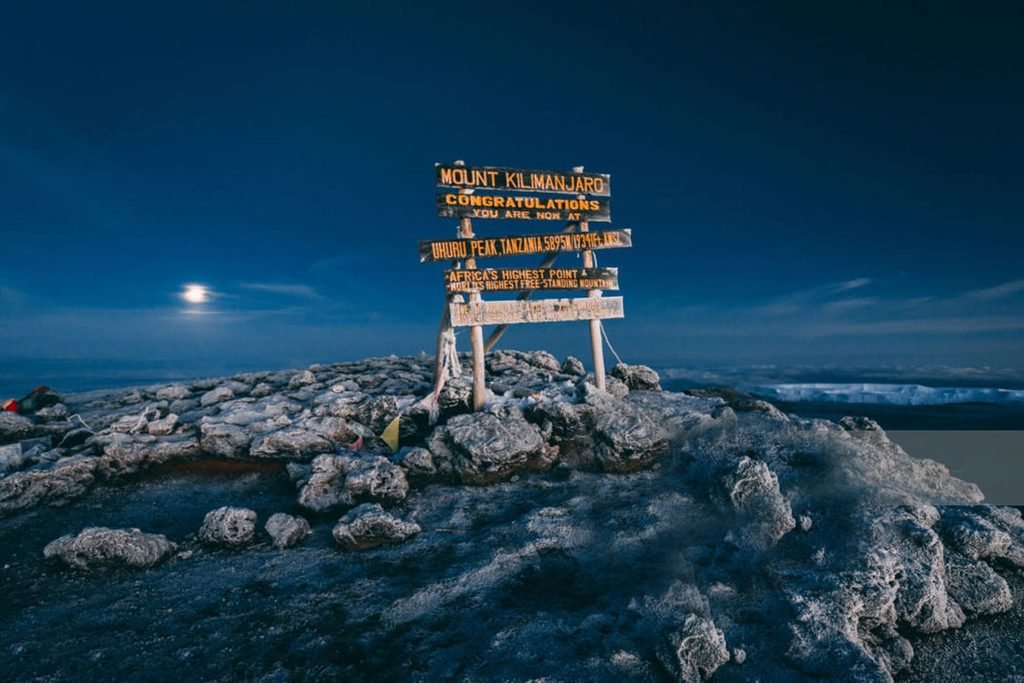
Mount Kilimanjaro rises to 5,895 metres (19,341 feet) above sea level in northern Tanzania. The mountain offers several established climbing routes, including Machame, Lemosho, Marangu, Rongai, Northern Circuit, and Umbwe. Each route follows a different itinerary, meaning the ideal departure date for a full moon expedition depends on how many trekking days you plan to spend on the mountain.
At Eddy Tours & Safaris, we help travelers organize guided Kilimanjaro expeditions for 2027, 2028, and 2029. This guide explains the full moon calendar, the best climbing periods, recommended routes, how to calculate your departure date, and what to expect during a moonlit summit attempt.
What Is a Kilimanjaro Full Moon Climb?
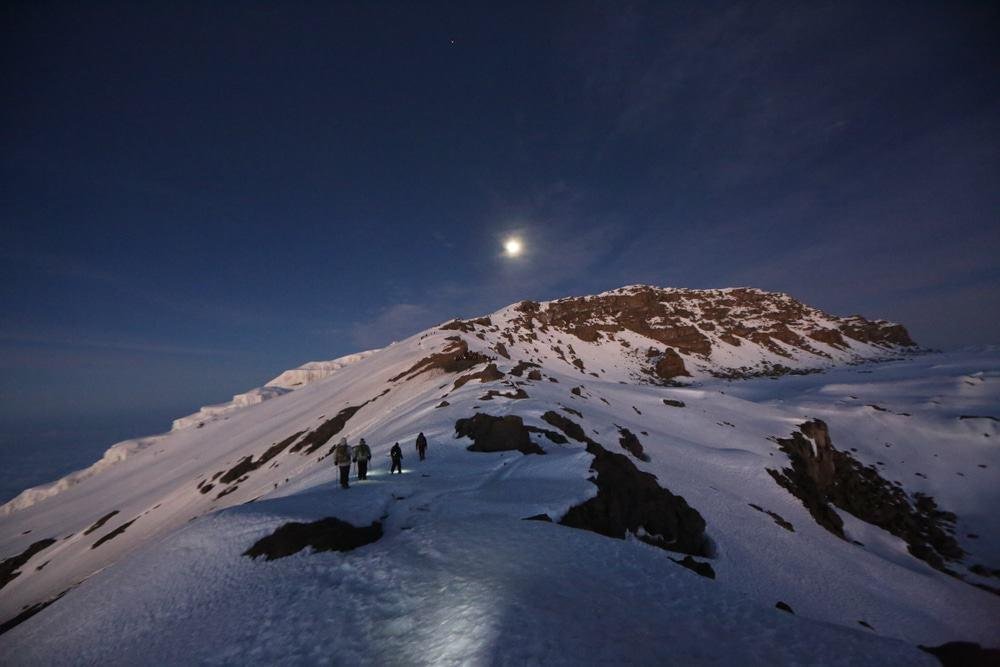
A Kilimanjaro full moon climb is a guided mountain expedition arranged so that the final summit ascent takes place close to the full moon. On most standard Kilimanjaro itineraries, the summit attempt begins late at night or around midnight, allowing climbers to reach the crater rim or Uhuru Peak during the early morning hours.
During a full moon, the mountain may receive significantly more natural light than it would during a new moon. Under clear skies, climbers can sometimes see the trail, nearby volcanic slopes, and parts of the surrounding landscape more clearly. The experience can be particularly attractive to photographers and travelers who enjoy unusual mountain scenery.
However, moonlight does not replace essential safety equipment. Every climber should still carry a reliable headlamp with spare power because cloud cover, changing weather, and uneven terrain can quickly reduce visibility. Full moon climbs also do not guarantee favorable weather or successful acclimatization.
Kilimanjaro Full Moon Dates for 2027
The following dates represent the full moon in Tanzania local time.
| Month | Full moon date |
|---|---|
| January | 22 January 2027 |
| February | 21 February 2027 |
| March | 22 March 2027 |
| April | 21 April 2027 |
| May | 20 May 2027 |
| June | 19 June 2027 |
| July | 18 July 2027 |
| August | 17 August 2027 |
| September | 16 September 2027 |
| October | 15 October 2027 |
| November | 14 November 2027 |
| December | 13 December 2027 |
For travelers planning a 2027 Kilimanjaro expedition, January, February, July, August, September, and October are particularly attractive months to consider because they generally fall within commonly preferred climbing periods. However, weather conditions vary from year to year, and even the popular climbing months can experience strong winds, rain, or freezing summit temperatures.
Kilimanjaro Full Moon Dates for 2028
| Month | Full moon date |
|---|---|
| January | 12 January 2028 |
| February | 10 February 2028 |
| March | 11 March 2028 |
| April | 9 April 2028 |
| May | 8 May 2028 |
| June | 7 June 2028 |
| July | 6 July 2028 |
| August | 5 August 2028 |
| September | 4 September 2028 |
| October | 3 October 2028 |
| November | 2 November 2028 |
| December | 2 and 31 December 2028 |
An interesting feature of the 2028 calendar is that December contains two full moons. The second occurs on 31 December in Tanzania local time, creating an unusual opportunity for travelers interested in a full moon expedition around the New Year period.
Travelers should remember that the moon’s phase does not determine mountain weather. December can experience seasonal rainfall, so a New Year full moon climb should still be planned with suitable waterproof equipment and realistic expectations.
Kilimanjaro Full Moon Dates for 2029
| Month | Full moon date |
|---|---|
| January | 30 January 2029 |
| February | 28 February 2029 |
| March | 30 March 2029 |
| April | 28 April 2029 |
| May | 27 May 2029 |
| June | 26 June 2029 |
| July | 25 July 2029 |
| August | 24 August 2029 |
| September | 22 September 2029 |
| October | 22 October 2029 |
| November | 21 November 2029 |
| December | 21 December 2029 |
Travelers considering 2029 can begin comparing routes and preferred months well in advance. However, actual expedition prices, park fees, accommodation arrangements, and available departure dates should be confirmed before making payments or purchasing international flights.
Best Months for a Kilimanjaro Full Moon Climb
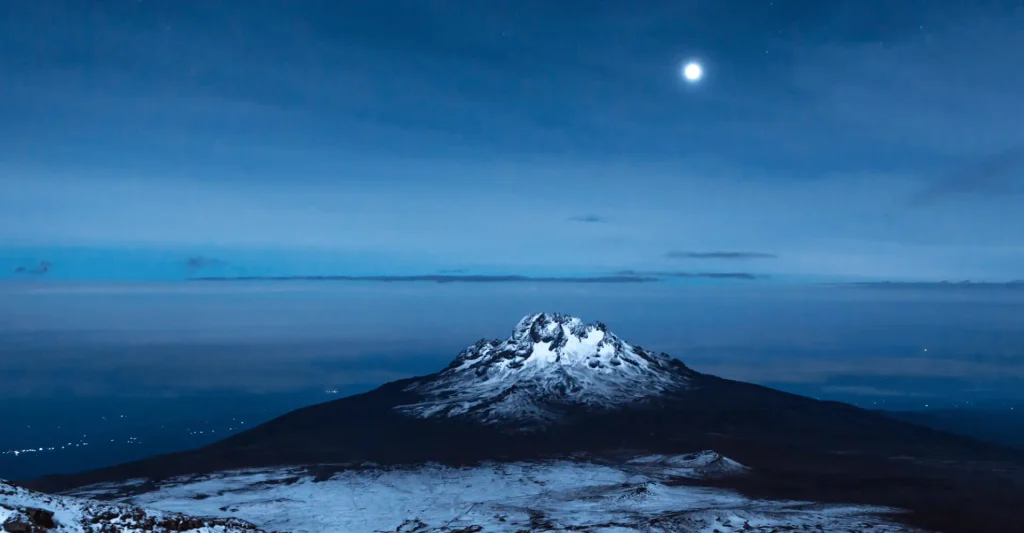
Mount Kilimanjaro can be climbed throughout the year, but some months generally provide more favorable trekking conditions. January to March and June to October are commonly preferred because they often experience relatively drier weather. These periods may offer clearer mountain views and more comfortable trail conditions, although rain, clouds, and strong winds remain possible.
January and February are attractive for travelers who want a full moon climb early in the year. These months can offer relatively dry conditions, although temperatures near the summit remain extremely cold. June, July, August, September, and October are also popular because they generally coincide with another drier period on Kilimanjaro.
April and May are usually associated with heavier rainfall, while November and December may experience seasonal showers. A full moon during these months can still be beautiful, but clouds may prevent climbers from seeing the moon, and wet trails can make the lower sections more difficult.
How to Choose Your Kilimanjaro Departure Date
The most important part of planning a full moon expedition is calculating when you will attempt the summit. On many Kilimanjaro itineraries, the summit attempt begins late on the evening before the official summit day or shortly after midnight. This means that the ideal departure date depends on the number of trekking days and the route’s overnight camps.
For example, on a standard seven-day Machame itinerary, climbers normally begin their summit attempt late on Day 5 or early on Day 6. If you want your summit morning to coincide with the full moon, your climb would generally begin five calendar days before that summit date.
An eight-day Lemosho itinerary also commonly places the summit attempt on Day 7, meaning departure is generally six calendar days before the intended summit date. A nine-day Northern Circuit itinerary often attempts the summit on Day 8, although exact camp sequences can vary between operators.
These calculations should always be checked against the actual itinerary because some climbing packages include additional acclimatization days or use different camp arrangements.
Best Kilimanjaro Routes for Full Moon Climbing
1. Seven-Day Machame Route
The seven-day Machame Route is a popular option for travelers who want a scenic mountain expedition with an additional acclimatization day compared with the six-day version. The route begins at Machame Gate and passes through rainforest, the Shira Plateau, Lava Tower, Barranco Wall, Karanga Camp, and Barafu Camp before the final summit attempt.
A full moon summit ascent from Barafu can be particularly memorable because climbers follow exposed volcanic slopes toward Stella Point before continuing along the crater rim to Uhuru Peak. However, the steep terrain and high elevation remain challenging regardless of moonlight.
2. Eight-Day Lemosho Route
The eight-day Lemosho Route is one of the strongest choices for travelers who want to combine full moon scenery with additional acclimatization time. The route begins on Kilimanjaro’s western slopes and passes through rainforest and the Shira Plateau before joining the southern circuit.
Its longer itinerary allows climbers to experience a variety of landscapes while progressing toward the summit more gradually than on some shorter routes. For many physically prepared first-time climbers, eight-day Lemosho is a suitable option to discuss with a mountain operator.
3. Nine-Day Northern Circuit Route
The nine-day Northern Circuit offers a longer journey around Kilimanjaro’s northern slopes. It is particularly attractive to travelers who want more time on the mountain, quieter trekking sections, and an itinerary that prioritizes acclimatization opportunities.
A full moon expedition on the Northern Circuit can offer distinctive views of the mountain’s northern landscapes before the final ascent. Although the route requires more trekking days and may cost more than shorter alternatives, the extended schedule is worth considering for travelers who have enough time.
4. Seven- or Eight-Day Rongai Route
Rongai approaches Kilimanjaro from the north, near the Tanzania–Kenya border. The route passes through forest and open mountain landscapes before reaching the area surrounding Mawenzi Peak and crossing toward Kibo.
Full moon climbers on Rongai commonly make their summit attempt from Kibo Hut toward Gilman’s Point before continuing toward Uhuru Peak. The longer seven- or eight-day versions are generally preferable to compressed itineraries because they allow more time for acclimatization.
5. Six-Day Marangu Route
Marangu is known for its permanent mountain huts, making it attractive to travelers who prefer hut accommodation rather than camping. The route passes through Mandara Hut, Horombo Hut, and Kibo Hut before the final summit ascent.
The six-day version includes additional acclimatization time compared with the five-day option. Nevertheless, travelers should understand that Marangu still involves rapid elevation gain and that a longer itinerary on another route may be more appropriate for some climbers.
Is a Full Moon Kilimanjaro Climb Easier?
A full moon can improve natural visibility when skies are clear, but it does not make Kilimanjaro physically easier. Climbers still face the same high-altitude conditions, steep trails, freezing temperatures, and long walking hours. The availability of moonlight does not reduce the risk of altitude sickness or replace the need for proper preparation.
The main advantage is the atmosphere and the possibility of enjoying a naturally illuminated mountain landscape. Some travelers also find the moonlit scenery encouraging during the demanding nighttime ascent, although individual experiences vary.
Every climber should still carry a headlamp, follow the guide’s pace, and report any concerning symptoms immediately. Safety decisions must never be influenced by the desire to reach the summit under a full moon.
What to Pack for a Kilimanjaro Full Moon Expedition
Packing for a full moon climb is largely the same as preparing for any other Kilimanjaro expedition. Climbers need waterproof hiking boots, warm base layers, insulating clothing, a substantial summit jacket, waterproof outerwear, gloves, warm headwear, trekking poles, and a suitable sleeping bag.
A reliable headlamp remains essential even during a bright full moon because clouds may obscure the moon and some sections of the trail can remain dark. Sunglasses and sunscreen are also important for daytime trekking, while a comfortable daypack helps carry water, snacks, additional clothing, and personal essentials.
Test your boots and equipment before departure. Kilimanjaro involves several consecutive days of walking, and equipment problems can become particularly uncomfortable at higher elevations.
How to Prepare for a Full Moon Kilimanjaro Climb
Physical preparation should begin several months before departure, particularly for travelers who do not regularly hike. Regular hill walking, cardiovascular exercise, strength training, and longer hikes with a daypack can help prepare your body for the expedition.
Altitude acclimatization is equally important. Longer routes generally provide more opportunities for gradual adjustment, but even experienced climbers can develop altitude illness. Before traveling, discuss high-altitude trekking with a qualified healthcare professional and ensure your travel insurance covers trekking at Kilimanjaro’s elevation.
Finally, choose a responsible tour operator that provides a clear itinerary, appropriate guiding arrangements, and transparent safety procedures. A good mountain team should explain how climbers are monitored, what happens when someone develops altitude-related symptoms, and how emergency descents are organized.
Frequently Asked Questions About Kilimanjaro Full Moon Climbs
1. What is a Kilimanjaro full moon climb?
It is a mountain expedition arranged so that the summit attempt takes place close to the full moon.
2. Is Kilimanjaro more beautiful during a full moon?
Many climbers enjoy the moonlit mountain scenery, but visibility depends on weather and cloud cover.
3. Does a full moon make climbing easier?
No. The physical demands and altitude-related risks remain the same.
4. Can I climb Kilimanjaro without a headlamp during a full moon?
No. A headlamp remains essential for safety.
5. Which month is best for a full moon climb?
January, February, July, August, September, and October are commonly attractive months to consider.
6. Is the full moon visible every night?
The moon’s appearance changes throughout the lunar cycle, and cloud cover may obscure it.
7. Should I begin my climb on the full moon date?
Usually not. Your departure should be calculated so the summit attempt occurs close to the full moon.
8. Which route is best for a full moon expedition?
Eight-day Lemosho and nine-day Northern Circuit are strong options for travelers prioritizing acclimatization.
9. Is seven-day Machame suitable for a full moon climb?
Yes. Its established itinerary can be scheduled around a preferred summit night.
10. Can I climb Rongai during a full moon?
Yes. Rongai can be arranged around a full moon summit attempt.
11. Are full moon climbs more expensive?
The price depends on the route, itinerary, group size, and operator. A full moon date does not automatically determine the price.
12. Are full moon departures crowded?
Some full moon periods may attract additional interest, but actual trail conditions vary by date and route.
13. Does a full moon guarantee clear weather?
No. Clouds, rain, and wind can occur during any lunar phase.
14. Can beginners join a full moon climb?
Yes, provided they select an appropriate route, prepare carefully, and understand the risks.
15. What is the highest point of Kilimanjaro?
Uhuru Peak, at 5,895 metres above sea level.
16. How cold is summit night?
Temperatures can fall well below freezing, particularly when strong winds are present.
17. How long does summit night take?
The complete summit ascent and descent can involve 12–16 hours of trekking or longer, depending on the route and conditions.
18. Does moonlight reduce altitude sickness?
No. Moonlight has no protective effect against altitude illness.
19. Are 2027 full moon dates confirmed?
The astronomical dates can be calculated in advance, but weather and climbing arrangements remain subject to change.
20. Are 2028 full moon dates available?
Yes. The lunar calendar can be calculated well in advance.
21. Are 2029 full moon dates available?
Yes. The dates are included in this guide.
22. Can I combine a full moon climb with a Tanzania safari?
Yes. A safari can be arranged after the mountain expedition, allowing appropriate recovery time.
23. Can I book a private full moon expedition?
Private arrangements can be discussed with your operator, subject to availability and confirmation.
24. How early should I book?
Booking several months ahead is useful for coordinating routes, flights, accommodation, and preferred travel dates.
25. How do I arrange a Kilimanjaro full moon climb with Eddy Tours & Safaris?
Contact the team with your preferred year, full moon month, climbing route, and number of travelers to request a quotation.
Book Your Kilimanjaro Full Moon Climb for 2027, 2028 or 2029
A Kilimanjaro full moon expedition offers an opportunity to experience Africa’s highest mountain under natural moonlight. Whether you choose Machame, Lemosho, Rongai, Marangu, or the Northern Circuit, the most important part of planning is selecting a suitable itinerary that places your summit attempt close to the full moon while allowing enough time for acclimatization.
For many first-time climbers, longer itineraries such as eight-day Lemosho or nine-day Northern Circuit are worth considering because they provide additional time on the mountain. Seven-day Machame and longer Rongai itineraries are also attractive options, depending on your preferences and available time.
At Eddy Tours & Safaris, we help travelers organize guided Kilimanjaro full moon expeditions for 2027, 2028, and 2029. Our team can help you compare routes, calculate suitable departure dates, discuss mountain preparation, and request a detailed climbing quotation.
Request Your Kilimanjaro Full Moon Climbing Quotation
Chat with Eddy Tours & Safaris on WhatsApp
Email: sales@eddytours-safaris.com
Contact our team to plan your Kilimanjaro expedition around your preferred full moon, with appropriate preparation, professional guiding arrangements, and mountain safety as the priority.