
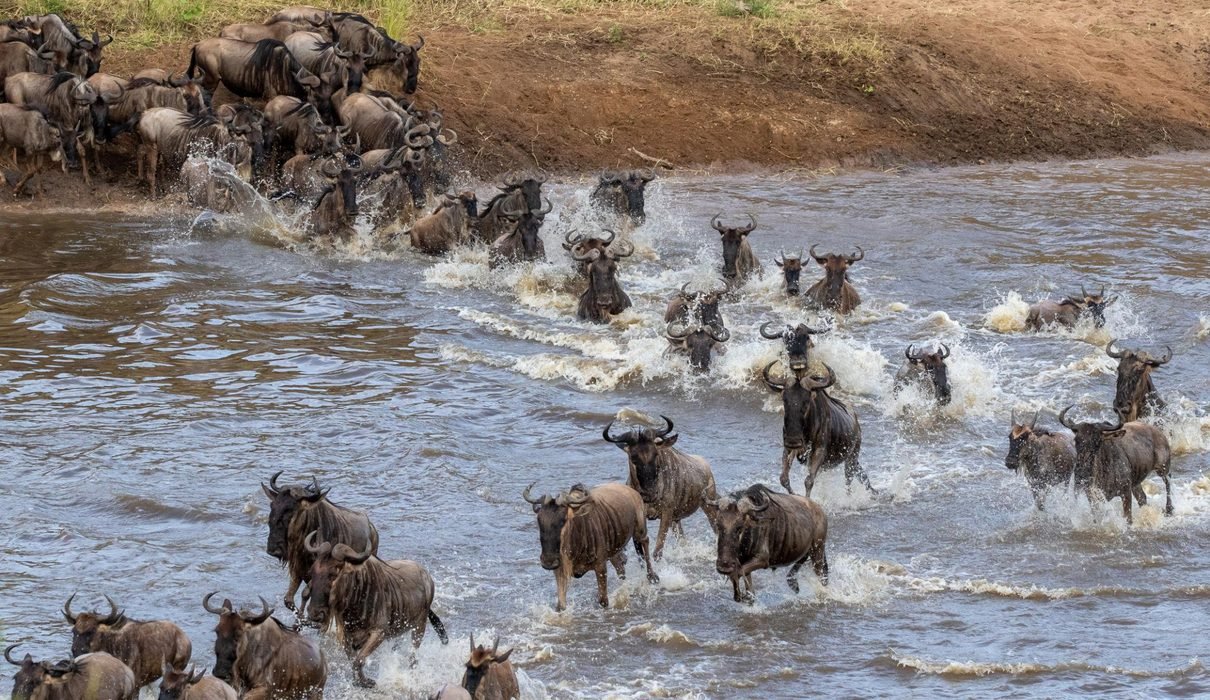
The Great Wildebeest Migration is one of the main reasons travellers visit Tanzania. Every year, enormous herds of wildebeest, accompanied by zebras and gazelles, move across the Serengeti ecosystem in search of fresh grass and water. Along the way, they encounter rivers, changing weather conditions, and predators such as lions, cheetahs, leopards, and spotted hyenas. Watching these animals move through the African wilderness is an experience that attracts wildlife lovers, photographers, families, and first-time safari visitors from around the world.
If you are planning a Great Migration safari in Tanzania for 2027, choosing the right travel dates and destinations will make a significant difference to your experience. The migration does not happen in one place or during one particular month. It is a continuous seasonal movement influenced mainly by rainfall and the availability of grazing land. Some travellers visit the southern Serengeti to see wildebeest giving birth, while others travel to the northern Serengeti hoping to witness the famous Mara River crossings. Both experiences are remarkable, but they take place in different parts of the ecosystem.
Tanzania offers several ways to experience the migration, from shorter safaris focusing on the central Serengeti to longer journeys exploring the southern plains, Western Corridor, and northern river-crossing areas. With suitable accommodation, an experienced guide, and enough time for wildlife viewing, travellers can enjoy much more than the movement of wildebeest. A migration safari also provides opportunities to observe Africa’s large predators, discover different landscapes, and learn how wildlife responds to seasonal changes.
What Is the Great Wildebeest Migration in Tanzania?
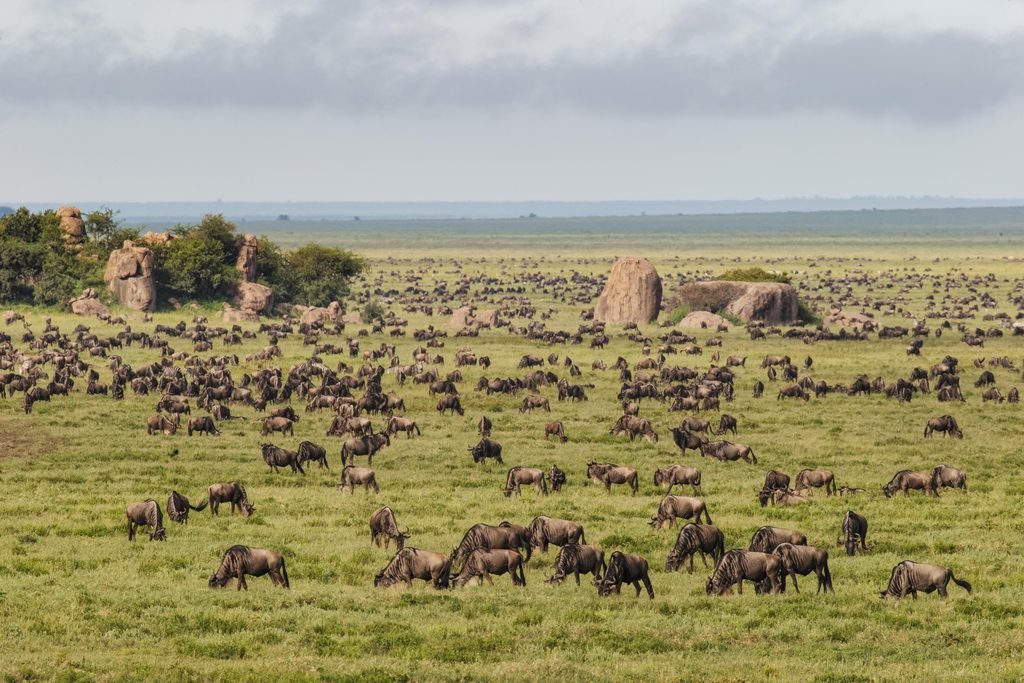
The Great Wildebeest Migration is the seasonal movement of roughly 1.5 million wildebeest, together with large numbers of zebras and other grazing animals, through the Serengeti–Mara ecosystem of Tanzania and Kenya. The animals follow changing rainfall patterns and the growth of fresh grass, moving between different grazing areas throughout the year. Although the migration is often described as a circular journey, the actual movement is much more complicated. Herds can spread across large distances, move in different directions, or remain in one location for several weeks when grazing conditions are favourable.
The Serengeti plays a central role in this natural cycle because its grasslands provide important feeding and breeding areas. During the early months of the year, many wildebeest gather on the southern plains, where the short, nutrient-rich grasses support the calving season. As conditions become drier, large numbers begin moving towards the central and western Serengeti before continuing north. Some eventually cross the Mara River into Kenya’s Maasai Mara, while others remain within Tanzania or move between different parts of the wider ecosystem. Later in the year, many herds begin travelling south again as seasonal rains encourage fresh grass growth.
For visitors, the most important thing to understand is that the migration cannot be predicted with complete accuracy. There is no fixed date when wildebeest will cross a river or arrive in a particular part of the Serengeti. Rainfall can cause movements to happen earlier or later than expected, and different groups of animals may be found in several locations at the same time. This is why a well-planned safari should consider seasonal patterns while remaining flexible enough to respond to current wildlife conditions.
Great Migration Safari 2027: Where to Go Each Month
Understanding the typical migration calendar is one of the best ways to plan a Serengeti safari. Different months offer different wildlife experiences, and the best location depends on whether you want to see calving, large moving herds, or river crossings.
| Travel Period | Recommended Area | Main Wildlife Experience |
|---|---|---|
| January–March | Southern Serengeti and Ndutu | Calving season and predator activity |
| April–May | Southern and Central Serengeti | Herds moving towards central areas |
| June–July | Western Serengeti and Grumeti region | Moving herds and possible river crossings |
| July–October | Northern Serengeti and Mara River | Possible Mara River crossings |
| November–December | Central and Southern Serengeti | Herds moving towards southern grazing areas |
These periods are based on typical seasonal movements rather than confirmed predictions for 2027. The actual location of the herds will depend on rainfall and grazing conditions.
January to March: Wildebeest Calving Season in Ndutu
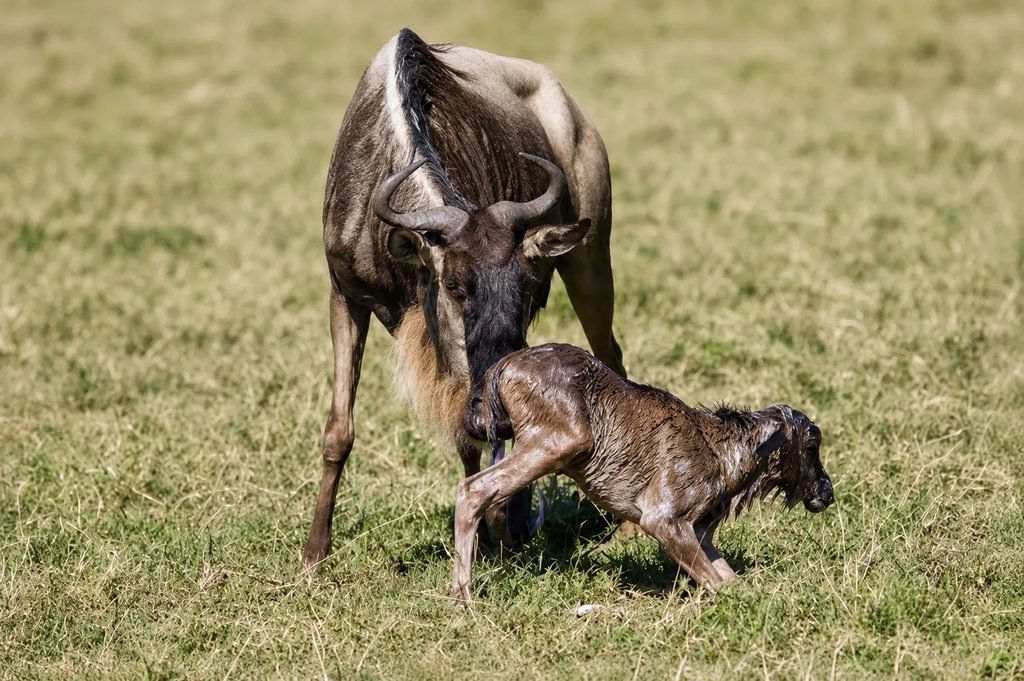
January, February, and March are particularly interesting months for travellers who want to observe the beginning of life on the Serengeti plains. During this period, large numbers of wildebeest gather in the southern Serengeti and Ndutu region, where the grasslands provide suitable conditions for giving birth. February is often the main calving month, although the timing varies with seasonal rainfall. Thousands of calves may be born within a relatively short period, creating one of the most active and interesting wildlife seasons in the ecosystem.
The arrival of young wildebeest also attracts predators. Lions, cheetahs, spotted hyenas, and other carnivores take advantage of hunting opportunities around the herds, making the calving season especially attractive to wildlife photographers. Visitors may observe newborn calves learning to walk, mothers protecting their young, and predators searching for suitable prey. The landscape is often greener during this period, providing beautiful photographic conditions. For travellers visiting Tanzania between January and March 2027, a safari focusing on Ndutu and the southern Serengeti can be an excellent alternative to the more famous river-crossing season.
April to June: The Migration Moves Towards Central and Western Serengeti
As the southern plains begin to dry, many wildebeest gradually move towards the central and western parts of the Serengeti. This period can provide impressive views of large herds travelling across open grasslands, sometimes forming long lines that stretch towards the horizon. The movement is not always continuous, and animals may stop for several days when suitable grazing is available. Rainfall during April and May can also influence road conditions, making it important to choose accommodation and travel routes carefully.
The Western Corridor becomes particularly interesting as the herds move towards the Grumeti River area. Some wildebeest may cross rivers and smaller waterways along their route, although these events are unpredictable and do not happen according to a fixed schedule. Wildlife viewing during this period is not limited to the migration. The Serengeti continues to support resident lions, leopards, elephants, giraffes, buffaloes, and many other species. Travellers who prefer fewer vehicles and greener landscapes may find this season rewarding, provided they are prepared for occasional rain and changing road conditions.
July to October: Mara River Crossings in Northern Serengeti
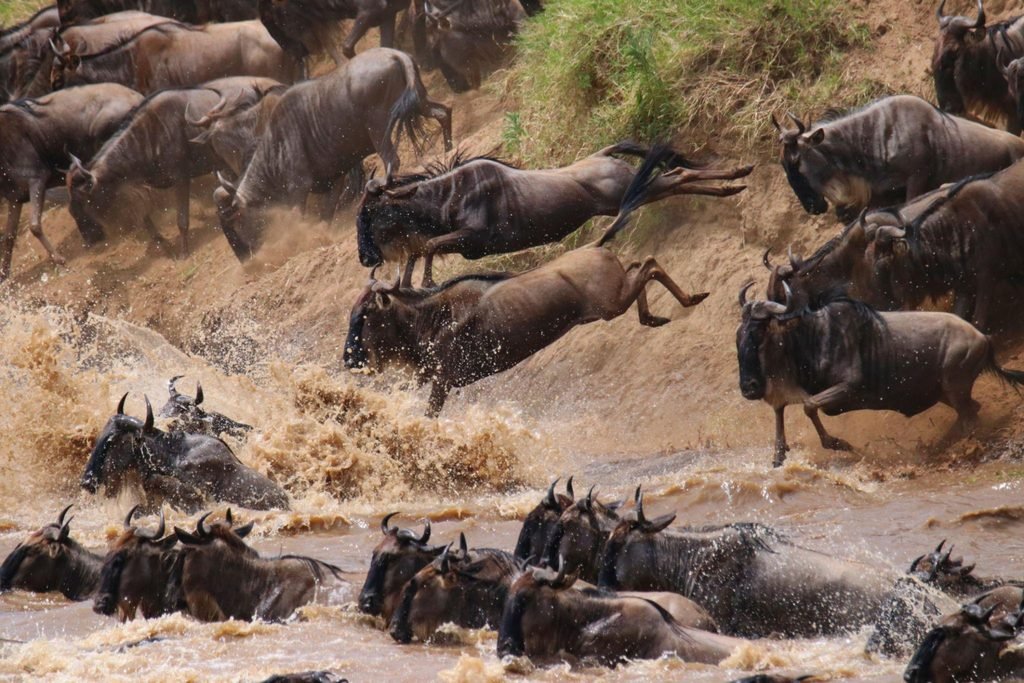
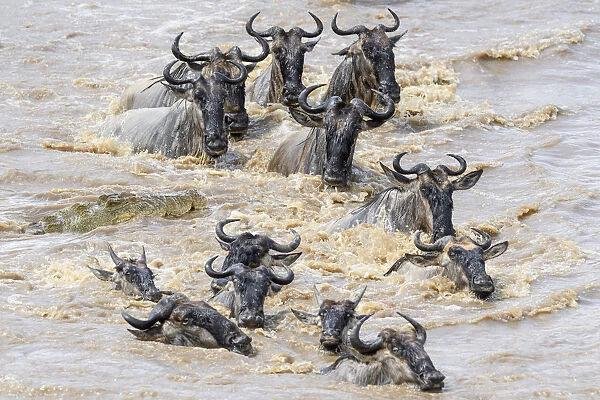
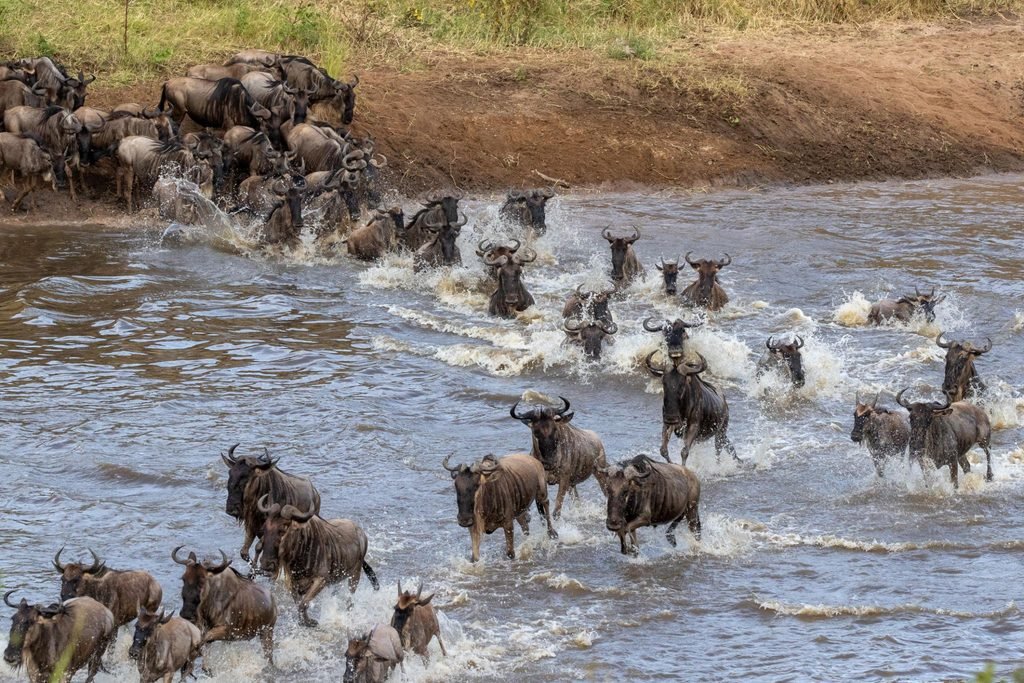
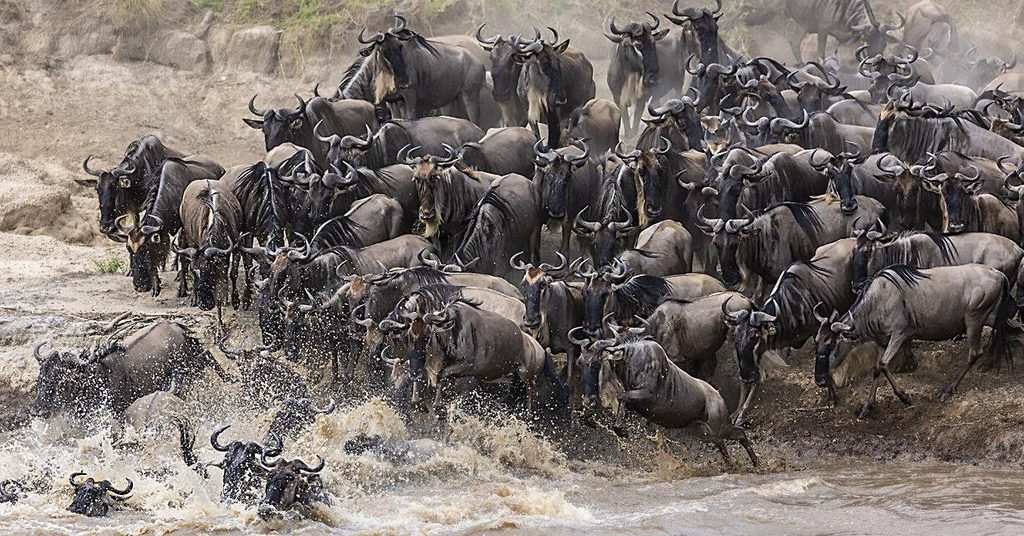
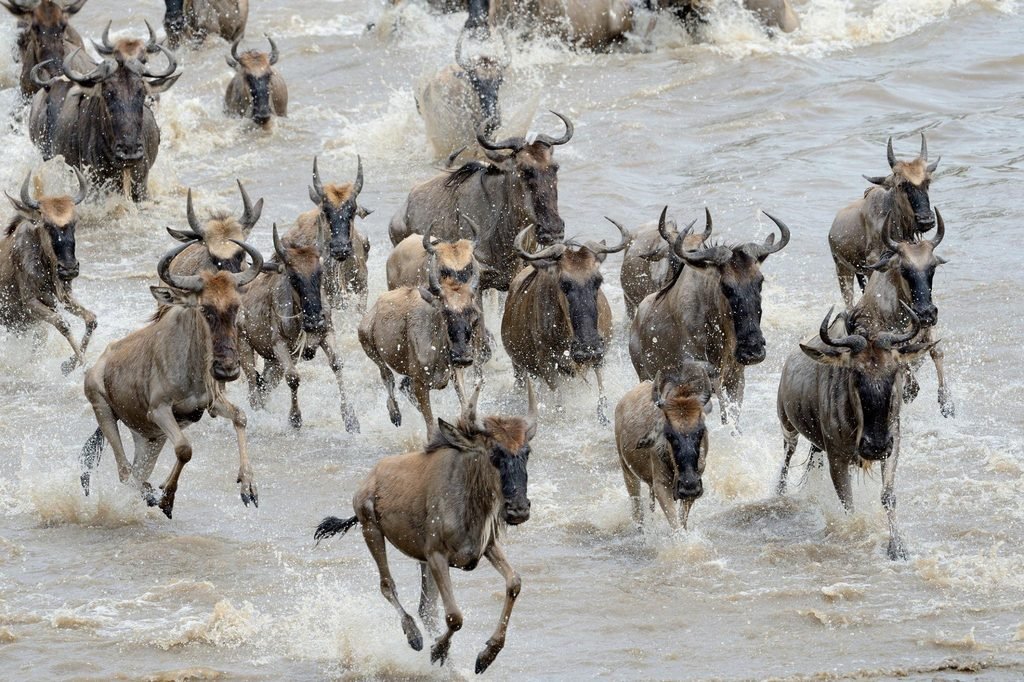
The northern Serengeti is one of the most popular destinations during the Great Migration because of the Mara River crossings. Between approximately July and October, large numbers of wildebeest may gather near the river as they move through the northern Serengeti and the wider Maasai Mara ecosystem. Some herds cross the water while others remain on the riverbanks, sometimes waiting for hours or days before attempting to move. The crossings can be dramatic because animals must deal with steep banks, strong currents, and crocodiles.
For travellers hoping to witness a river crossing in 2027, spending several nights in the northern Serengeti is usually more practical than attempting a short visit. A crossing might happen shortly after a vehicle arrives, or the herds may remain on the riverbank without entering the water. There is also no guarantee that the animals will be in the expected location during a particular week. A good safari itinerary should therefore include enough time to explore different areas, observe other wildlife, and enjoy the northern Serengeti even if a crossing does not occur.
November to December: The Herds Begin Returning South
As seasonal rains encourage new grass growth, many wildebeest begin moving from the northern areas towards the central and southern Serengeti. This return journey is an important part of the migration cycle, although the herds do not all move together. Some groups may already be travelling south while others remain in northern grazing areas. The exact timing depends on rainfall, which can vary considerably from year to year.
November and December can be attractive months for travellers who enjoy green landscapes and wildlife photography. The Serengeti remains an excellent safari destination even when the main herds are spread across different regions. Resident predators, elephants, giraffes, antelopes, and numerous bird species can still be observed throughout the park. For visitors planning a Tanzania safari during the final months of 2027, the central and southern Serengeti are often worth considering, but the itinerary should be adjusted according to current migration movements.
Best Great Migration Safari Packages in Tanzania for 2027
Choosing the right safari package depends on your travel dates, available time, accommodation preferences, and the migration experience you want to see. A short safari can provide excellent wildlife viewing, but longer itineraries allow visitors to explore more areas and spend additional time near the herds. The following are suggested safari options that can be customised according to seasonal movements and individual travel requirements.
4 Days Serengeti Migration Safari 2027
A four-day Serengeti migration safari is suitable for travellers with limited time who still want to experience Tanzania’s most famous national park. The itinerary generally begins in Arusha before travelling to the Serengeti for game drives through suitable wildlife areas. Depending on the season, the safari may focus on the central Serengeti or parts of the southern plains. Visitors can expect opportunities to see wildebeest, zebras, lions, elephants, giraffes, and other animals, although the exact sightings depend on wildlife movements.
Because the Serengeti is a large national park, travelling distances must be considered carefully when planning a short itinerary. A four-day road safari is not usually the best option for travellers whose main goal is to witness Mara River crossings in the far north. For those visitors, a longer safari or a fly-in arrangement may be more suitable. However, travellers interested in general Serengeti wildlife and seasonal migration activity can still enjoy an excellent experience with a well-planned four-day package.
5 Days Serengeti and Ngorongoro Migration Safari 2027
A five-day safari combining Serengeti National Park with the Ngorongoro Crater is a popular choice for first-time visitors to Tanzania. The itinerary provides time for game drives in the Serengeti before continuing to Ngorongoro, where visitors can explore a different landscape with a high concentration of wildlife. Depending on the season, the Serengeti portion can be arranged around the expected migration location, although distant northern areas may require additional travel time.
The Ngorongoro Crater adds variety to the experience because it supports lions, buffaloes, elephants, hippos, zebras, and several antelope species. Visitors may also have an opportunity to see black rhinos, although sightings are not guaranteed. Combining these destinations allows travellers to experience two of Tanzania’s best-known wildlife areas within a relatively short holiday. This package is particularly suitable for couples, small groups, and families looking for a balanced safari.
6 Days Great Wildebeest Migration Safari 2027
A six-day migration safari provides additional time for exploring the Serengeti and following seasonal wildlife movements. Travellers can spend several days in the park rather than moving between destinations every morning. This creates more opportunities to observe animal behaviour, photograph wildlife, and visit different habitats. Depending on the travel month, the itinerary may focus on Ndutu, the central Serengeti, or another suitable migration area.
For visitors interested in wildlife photography, having more than one full day in the Serengeti can make a noticeable difference. Animals may spend long periods resting, and interesting behaviour can happen unexpectedly. Additional game-drive time allows visitors to remain at sightings without rushing to the next destination. A six-day safari can also include Ngorongoro, although the final route should be planned according to the distance between destinations and the location of the migration.
7 Days Northern Serengeti Migration Safari 2027
A seven-day northern Serengeti safari is particularly suitable for travellers hoping to see Mara River crossings between approximately July and October. The itinerary normally includes travel through the central Serengeti before continuing north, where several days can be dedicated to exploring the Mara River region. Staying near the northern migration areas reduces the need for long daily transfers and gives visitors more flexibility when searching for the herds.
The northern Serengeti offers excellent wildlife viewing beyond river crossings. Visitors may encounter lions, elephants, giraffes, zebras, buffaloes, and other animals across its open grasslands and wooded landscapes. Even when wildebeest are not crossing the river, watching large herds gathering, grazing, and moving through the area can be rewarding. For travellers whose main interest is the famous river-crossing experience, this is one of the more practical itinerary lengths to consider.
8 Days Tanzania Migration and Wildlife Safari 2027
An eight-day Tanzania safari is ideal for travellers who want to combine the Great Migration with several other wildlife destinations. A typical northern Tanzania itinerary may include Tarangire National Park, Serengeti National Park, and the Ngorongoro Crater. Tarangire is known for its elephants and baobab trees, while the Serengeti provides extensive grasslands and seasonal migration activity. Ngorongoro offers a different wildlife experience within its famous volcanic caldera.
The main advantage of an eight-day safari is that travellers can explore several environments without spending the entire holiday moving between parks. Depending on the migration season, additional nights can be allocated to the most suitable Serengeti region. Families and first-time visitors often appreciate this type of itinerary because it combines wildlife variety with a comfortable travel pace. Accommodation can also be selected according to budget, from simpler tented camps to comfortable lodges and luxury safari properties.
9 Days Luxury Serengeti Migration Safari 2027
A nine-day luxury migration safari is designed for travellers who prefer more time, comfortable accommodation, and a relaxed approach to wildlife viewing. The itinerary can include several nights in the Serengeti, allowing visitors to explore different wildlife areas while staying in carefully selected lodges or tented camps. Depending on the package and budget, domestic flights may be included to reduce long road journeys between Arusha and remote sections of the Serengeti.
Luxury safaris are particularly popular among honeymooners, couples, and wildlife photographers who want flexibility during their holiday. However, the quality of a migration safari depends on more than accommodation. Choosing the correct location for the season, allowing sufficient time for game drives, and travelling with an experienced guide are equally important. A comfortable camp near the expected migration route may be more useful than a more expensive property located far from the wildlife activity.
How Much Does a Great Migration Safari Cost in Tanzania in 2027?
The cost of a Great Migration safari in 2027 will depend on the length of the trip, the number of travellers, accommodation standards, travel season, and transport arrangements. Private safaris generally cost more per person when only one or two people are travelling because the vehicle and guide expenses are shared among fewer guests. Larger groups can sometimes reduce the cost per person, although vehicle capacity and comfort must still be considered. Accommodation is another major factor, particularly during the popular northern Serengeti migration season when camps near the Mara River can experience high demand.
Travellers should also understand what is included in a safari quotation before making a booking. A complete package may cover national park fees, accommodation, meals, professional guiding services, a safari vehicle, and transfers, while some itineraries include domestic flights or additional activities. Other quotations may exclude certain services, making the advertised price appear lower than the final cost. Instead of choosing a package based only on the cheapest price, compare the number of nights inside the parks, accommodation locations, game-drive arrangements, and services included. For accurate 2027 pricing, it is best to request a personalised quotation based on your actual travel dates and group size.
Is the Serengeti Migration Better Than a Regular Tanzania Safari?
The Great Migration is one of Tanzania’s most famous wildlife experiences, but it is not the only reason to visit the Serengeti. The national park supports a large variety of resident wildlife throughout the year, including lions, leopards, cheetahs, elephants, giraffes, buffaloes, and many antelope species. Even when the main wildebeest herds are far from a particular area, visitors can still enjoy rewarding game drives. A regular Tanzania safari may therefore provide excellent wildlife viewing without focusing entirely on the seasonal movement of the migration.
A migration-focused safari is most suitable for travellers who want to experience a particular event, such as calving in Ndutu or possible Mara River crossings in the north. These itineraries require more careful planning because accommodation and travel routes should match the expected movement of the herds. A general safari offers greater flexibility to explore different national parks and wildlife habitats. For first-time visitors, combining the migration with destinations such as Ngorongoro and Tarangire can provide a more varied experience while still allowing time to search for the wildebeest.
Important Tips for Planning Your 2027 Serengeti Migration Safari
Planning a successful migration safari begins with choosing the right travel period. Visitors interested in newborn wildebeest and predator activity should consider the southern Serengeti and Ndutu during the early months of the year, while those hoping to witness Mara River crossings should generally focus on the northern Serengeti between July and October. However, seasonal movements are not guaranteed, and the final itinerary should consider current wildlife conditions. Booking accommodation well in advance is particularly important during popular travel months because camps near the migration areas may fill up early.
Another important consideration is the amount of time available for wildlife viewing. The Serengeti is enormous, and travelling between its different regions can take several hours. Spending more nights near the expected migration location often provides a better experience than trying to visit too many destinations within a short period. Travellers should also prepare for early morning game drives, changing weather conditions, and long hours in a safari vehicle. Comfortable clothing, sun protection, binoculars, and a suitable camera can make the journey more enjoyable. Most importantly, visitors should approach the migration with realistic expectations and appreciate the wildlife encounters that happen naturally.
Frequently Asked Questions About Great Migration Safaris in 2027
What Is the Best Month to See the Great Migration in Tanzania?
The best month depends on the experience you want. February is often excellent for the wildebeest calving season in Ndutu and the southern Serengeti, while August and September are popular months for possible Mara River crossings in the northern Serengeti. However, the migration continues throughout the year, and wildlife movements depend on rainfall and grazing conditions. Travellers should choose their dates according to the type of migration experience they prefer rather than assuming that one month is best for every visitor.
Can I See the Great Migration in Tanzania Without Visiting Kenya?
Yes. A large part of the Great Migration takes place within Tanzania’s Serengeti ecosystem, and visitors do not need to travel to Kenya to experience it. The southern calving grounds, central Serengeti, Western Corridor, and northern Mara River region are all located in Tanzania. Many travellers spend their entire migration safari within Serengeti National Park and the surrounding conservation areas. The best location depends on the season and the movement of the herds.
How Many Days Are Recommended for a Serengeti Migration Safari?
Five to seven days is a practical starting point for many travellers, although the ideal duration depends on the season and itinerary. Shorter safaris can provide excellent wildlife viewing in the central or southern Serengeti, while trips focusing on the northern Mara River area generally benefit from additional time. Travellers interested in photography or spending several days near the herds may prefer seven to nine days. A longer safari provides more opportunities to explore different areas, but it does not guarantee a particular wildlife event.
Are Mara River Crossings Guaranteed During a Safari?
No. Mara River crossings are natural events that cannot be scheduled or guaranteed. Wildebeest may gather near the river for several hours or days before crossing, and some herds may move away without entering the water. Rainfall, river conditions, and animal behaviour all influence these movements. Spending several days in the northern Serengeti during the usual crossing season improves the opportunity to observe migration activity, but visitors should understand that an actual crossing may not happen during their stay.
Can I Combine a Serengeti Migration Safari with Zanzibar?
Yes. Many travellers combine a Serengeti migration safari with a few days of relaxation on Zanzibar’s beaches. This arrangement allows visitors to experience Tanzania’s wildlife before enjoying the Indian Ocean coastline. Depending on the itinerary, travellers can return to Arusha for a flight to Zanzibar or use suitable domestic flight connections from the safari circuit. The combination is particularly popular among couples, honeymooners, and families who want to enjoy both wildlife and beach activities during the same holiday.
Explore Tanzania’s Great Migration in 2027 with Eddy Tours & Safaris
The Great Wildebeest Migration offers one of the most remarkable opportunities to observe wildlife in its natural environment. From the arrival of newborn calves on the southern plains to the movement of enormous herds through the central Serengeti and the dramatic river crossings in the north, every stage of the migration provides a different experience. The best safari is not necessarily the longest or most expensive, but the one that takes you to the right location at the right time while allowing enough flexibility to enjoy the wildlife.
Eddy Tours & Safaris is a local tour company in Arusha, Tanzania, highly recommended by travellers. We arrange private Tanzania wildlife safaris, including Great Migration experiences in the Serengeti, Ngorongoro Crater tours, Tarangire safaris, Kilimanjaro climbing trips, and personalised holidays. Our local team can help you choose a suitable 2027 migration itinerary based on your preferred dates, accommodation requirements, group size, and budget.
For more information about planning your safari, visit Eddy Tours & Safaris or send your travel details through our contact page. You can also contact us by email at sales@eddytours-safaris.com or through WhatsApp at +255 711 906 664.
Start planning your 2027 Great Migration safari in Tanzania and discover the Serengeti with an experienced local safari team.