
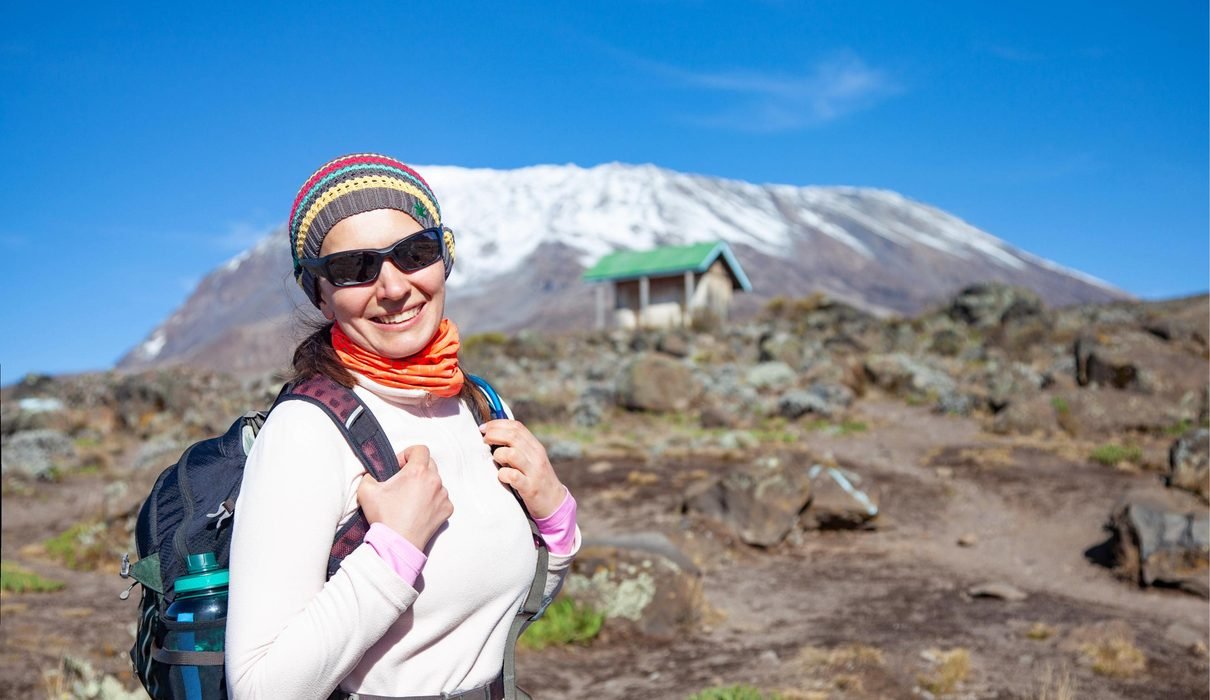
Climbing Mount Kilimanjaro is a remarkable experience, but preparing for the trek involves more than choosing the right route and buying hiking boots. One of the most common questions travelers ask before arriving in Tanzania is how much weight they will need to carry during the climb.
The good news is that on a standard guided Kilimanjaro expedition, you do not normally carry all your camping equipment, spare clothing, and overnight supplies yourself. Mountain porters transport your main luggage between camps, allowing you to concentrate on walking, managing your energy, and adjusting to the increasing altitude.
Most Kilimanjaro climbers carry a daypack weighing around 4–7 kilograms (9–15 pounds), although the weight can increase depending on the amount of water, clothing, camera equipment, and personal items they bring.
Your main duffel bag, which is carried by the porter team, usually has a maximum allowance of approximately 15 kilograms (33 pounds) per climber. This is a common operator limit rather than an allowance that should be assumed without checking your booking documents.
Understanding how to divide your equipment between these two bags is essential. Items packed in your duffel may not be accessible until you arrive at the next campsite, so anything you might need during the day’s trek should remain in your daypack.
This guide explains Kilimanjaro luggage allowances, what porters carry, how to organize your backpack, the weight of essential equipment, and practical ways to avoid carrying unnecessary items.
How Much Weight Do You Actually Carry on Kilimanjaro?
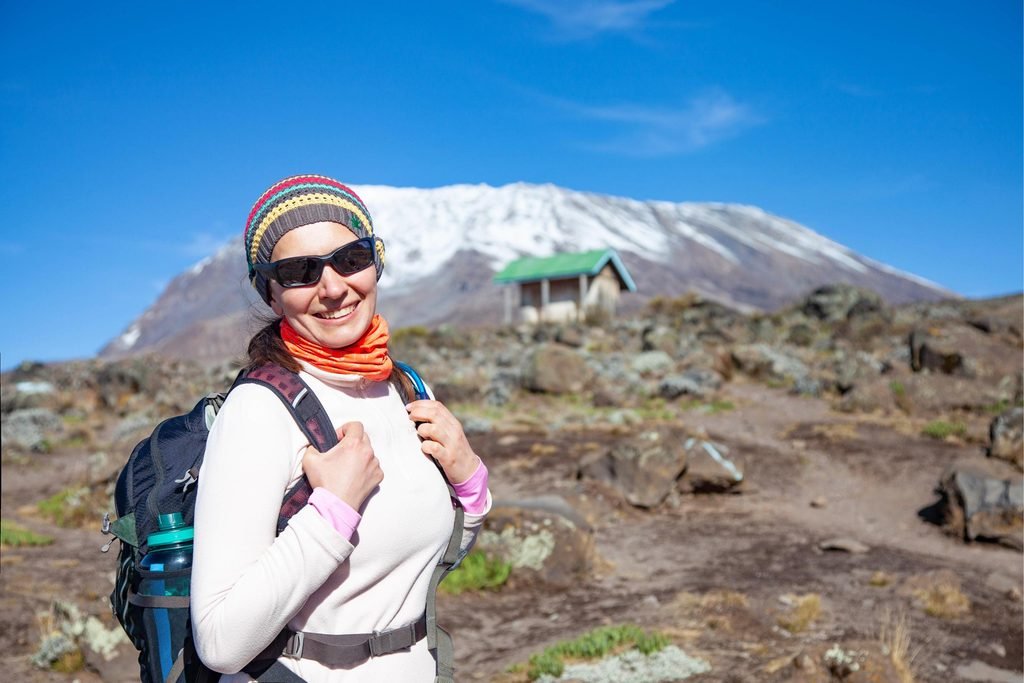
Most climbers carry only a small backpack containing the items they need between camps.
A comfortable target is approximately 4–7 kilograms, including water and essential clothing.
The exact weight depends on the season, route, and personal requirements.
For example, a climber carrying three liters of drinking water already has approximately three kilograms of water before adding the backpack, rain jacket, snacks, and other equipment.
This is why choosing a lightweight daypack and packing carefully makes a noticeable difference.
Kilimanjaro Weight Allowance Summary
| Equipment | Recommended or typical weight | Who carries it? |
|---|---|---|
| Daypack | Approximately 4–7 kg | Climber |
| Main duffel bag | Usually up to 15 kg | Porter team |
| Drinking water | Often 2–3 kg when full | Climber |
| Sleeping bag | Approximately 1–2.5 kg | Usually in porter duffel |
| Personal clothing and camp gear | Within the duffel allowance | Porter team |
| Group tents and cooking equipment | Varies | Assigned mountain crew |
| Additional camera equipment | Depends on equipment | Usually climber |
These figures are practical guidelines. Your operator should confirm the precise duffel allowance, and your guide should advise on water requirements for each day.
Why Do Climbers Carry a Daypack Instead of Their Main Luggage?
Kilimanjaro is normally climbed with an organized mountain support team.
On camping routes such as Machame, Lemosho, Rongai, and the Northern Circuit, porters transport tents, food, cooking supplies, and other equipment between camps.
On the Marangu Route, climbers sleep in mountain huts, but porters still transport luggage and expedition supplies.
This system means you do not have to carry a large expedition backpack throughout the climb.
Your daypack contains the items you may need while walking, while the duffel bag holds equipment required later at camp.
The two bags serve different purposes.
Your Daypack
Your daypack stays with you throughout the trek.
It should contain drinking water, snacks, waterproof clothing, additional warm layers, sunscreen, personal medication, and other essential items.
Your Duffel Bag
Your duffel bag travels with the mountain porter team.
It normally contains your sleeping bag, spare clothing, toiletries, camp shoes, and equipment that you will not need until reaching the next camp.
Because porters may take a different pace or arrive at camp separately, you should never assume you can access your duffel during the day’s walk.
What Size Daypack Do You Need for Kilimanjaro?
A backpack with a capacity of approximately 25–35 liters is suitable for many Kilimanjaro climbers.
A 30-liter daypack is often a practical choice because it provides enough room for essential equipment without encouraging excessive packing.
Choose a backpack with comfortable shoulder straps, an adjustable hip belt, and a stable fit.
A good hip belt helps transfer some weight away from your shoulders.
The backpack should also have space for drinking water, snacks, and an easily accessible waterproof jacket.
Useful features include side pockets for water bottles, compression straps, and a rain cover.
However, a rain cover alone may not keep everything dry during heavy rain. Waterproof liners or dry bags are useful for protecting clothing, electronics, and other important items.
Before traveling to Tanzania, test your backpack on several long walks while carrying approximately the same weight you expect to use on Kilimanjaro.
What Should You Carry in Your Kilimanjaro Daypack?
Your daypack should contain everything you might reasonably need before reaching the next campsite.
The following packing example shows how quickly the weight can increase.
| Daypack item | Approximate weight |
|---|---|
| Empty lightweight backpack | 0.8 kg |
| Drinking water, 2 liters | 2.0 kg |
| Waterproof jacket | 0.4 kg |
| Warm fleece or lightweight insulating layer | 0.4 kg |
| Snacks | 0.3 kg |
| Sunscreen, lip balm, sunglasses | 0.2 kg |
| Personal medication and small essentials | 0.2 kg |
| Phone, headlamp, or small electronics | 0.3 kg |
| Estimated total | 4.6 kg |
This is only an example. If you carry three liters of water instead of two, the same pack would weigh approximately 5.6 kilograms.
Additional insulated clothing, camera equipment, or personal items can increase the total further.
Drinking Water
Water is usually the heaviest item in your daypack.
Your guide will advise how much to carry based on the day’s route, weather, and available water arrangements.
Carry enough drinking water for the planned trek and follow the mountain team’s instructions.
On summit night, water bottles need protection from freezing.
Waterproof Jacket
Rain can occur on Kilimanjaro even during generally dry months.
Keep your waterproof jacket in an accessible part of your backpack so you can put it on quickly.
Warm Clothing
Temperatures can change considerably as you gain altitude.
A fleece or lightweight insulated jacket can be useful during rest stops and in colder sections.
Snacks
Energy bars, nuts, dried fruit, or other convenient snacks can help you maintain energy during long walking days.
Choose food you enjoy and can comfortably eat at altitude.
Personal Medication
Keep essential medication in your daypack rather than the duffel bag.
Discuss any altitude-related medication with a qualified healthcare professional before your trip.
Camera and Phone
A smartphone is sufficient for many travelers.
If you bring a larger camera, consider the additional weight of lenses, batteries, and protective equipment.
How Much Weight Can Your Kilimanjaro Porter Carry?
Porters are an essential part of organized Kilimanjaro expeditions.
They transport equipment, food, tents, and climbers’ main luggage between mountain camps.
However, porter loads must be controlled to protect workers from injury and excessive physical strain.
The Kilimanjaro Porters Assistance Project, commonly known as KPAP, advocates a maximum company load of 20 kilograms per porter, excluding the porter’s personal kit.
This is not the same as saying every climber can give a porter a 20-kilogram personal duffel.
Most climbing operators set a lower allowance for each client’s luggage, commonly around 15 kilograms.
The remaining load arrangements depend on the expedition’s staffing and equipment requirements.
A responsible operator should weigh and organize loads, provide adequate staffing, and avoid overloading individual porters.
Why Porter Weight Limits Matter
Porters work in difficult mountain conditions.
They may carry supplies through rainforest, rocky trails, strong winds, and cold high-altitude environments.
Excessive loads can increase the risk of fatigue, falls, and musculoskeletal injuries.
Responsible mountain tourism requires more than providing a porter to carry luggage.
It also involves appropriate wages, meals, shelter, equipment, and medical care.
Travelers should choose operators that take these responsibilities seriously.
What Goes Inside Your Kilimanjaro Duffel Bag?
Your main duffel should contain equipment that is needed at camp rather than during the day’s walk.
Typical items include:
- Sleeping bag.
- Spare thermal base layers.
- Additional trekking shirts and trousers.
- Insulated summit jacket when not needed during the day.
- Spare socks and underwear.
- Camp shoes.
- Toiletries.
- Sleeping bag liner.
- Additional gloves and warm clothing.
- Personal items required overnight.
The aim is to pack enough for changing mountain conditions without bringing unnecessary duplicates.
A soft-sided waterproof or water-resistant duffel with a capacity of approximately 70–90 liters is suitable for many climbers.
Pack clothing and your sleeping bag in waterproof inner bags because rain and moisture can reach luggage during mountain transport.
How to Pack a 15 kg Kilimanjaro Duffel Bag
A 15-kilogram allowance is usually sufficient for a properly planned Kilimanjaro expedition, provided you choose equipment carefully.
Here is an illustrative packing budget.
| Duffel bag contents | Example weight |
|---|---|
| Empty duffel bag | 1.2 kg |
| Sleeping bag | 2.0 kg |
| Insulated jacket | 0.8 kg |
| Thermal clothing | 1.2 kg |
| Trekking shirts and trousers | 2.0 kg |
| Spare socks and underwear | 0.8 kg |
| Camp shoes | 0.5 kg |
| Gloves, hats, and accessories | 0.7 kg |
| Toiletries and personal items | 0.8 kg |
| Sleeping bag liner and dry bags | 0.5 kg |
| Other approved equipment | 1.5 kg |
| Estimated total | 12.0 kg |
This example leaves approximately three kilograms of room below a 15-kilogram allowance.
Actual equipment weights vary considerably, especially for sleeping bags and insulated clothing.
The goal should not be to use every available kilogram.
A lighter duffel makes equipment organization easier and helps reduce the burden on the mountain crew.
Does the Weight You Carry Change on Different Kilimanjaro Routes?
The basic luggage system is similar across most guided Kilimanjaro routes.
However, the route and itinerary can influence what you need during the day.
Machame Route
Machame is a camping route that passes through rainforest, moorland, alpine desert, and the summit environment.
Your daypack should contain water, snacks, rain protection, and warm layers.
Porters transport the main camping equipment and your duffel bag.
Lemosho Route
Lemosho usually involves a longer itinerary, often seven or eight days.
The additional days do not necessarily mean you need a much heavier daypack.
You may need extra spare clothing in your duffel, but careful packing remains important.
Marangu Route
Marangu uses permanent mountain huts rather than tents for sleeping accommodation.
You still carry a daypack, while the porter team transports your main luggage.
The absence of personal sleeping tents does not mean you should carry all your equipment yourself.
Rongai Route
Rongai approaches Kilimanjaro from the northern side and uses camping accommodation.
Daypack requirements are broadly similar to those on Machame and Lemosho.
Northern Circuit Route
The Northern Circuit is one of Kilimanjaro’s longer standard itineraries.
Although the expedition takes more days, your daily backpack should remain manageable.
Additional clothing and overnight supplies belong in your porter-carried luggage.
How Much Weight Do You Carry on Kilimanjaro Summit Night?
Summit night is different from an ordinary trekking day.
You usually begin walking around midnight or in the early hours of the morning, depending on the route and guide’s instructions.
The temperature can be extremely cold, and the final ascent takes place at high altitude.
Your backpack may contain insulated clothing, water, snacks, spare gloves, and essential equipment.
However, much of your warmest clothing will already be worn rather than packed.
The amount of weight you carry depends on the weather, equipment, and summit arrangements.
For many climbers, a daypack weighing approximately 3–6 kilograms may be manageable, but this is not a fixed requirement.
Your guide may recommend a different arrangement according to your condition and the summit plan.
Do not remove essential safety equipment simply to make the backpack lighter.
What Should Be in Your Summit Backpack?
Carry essential items such as drinking water, snacks, personal medication, spare gloves, and any extra clothing recommended by your guide.
A headlamp is essential for the night ascent.
Keep electronics and batteries protected from extreme cold.
Your guide should review your equipment before departure.
Is It Hard to Carry a Backpack at High Altitude?
A backpack that feels comfortable at sea level can feel much heavier at high altitude.
As you ascend Kilimanjaro, the lower oxygen availability makes physical activity more demanding.
Even moderate walking can require greater effort.
A six-kilogram backpack may feel manageable during training but become tiring after several hours of trekking above 4,000 meters.
This is one reason climbers are encouraged to walk slowly, maintain a steady pace, and avoid carrying unnecessary items.
Good fitness helps with endurance, but it does not prevent altitude illness.
If you experience symptoms such as headache, nausea, dizziness, or unusual fatigue, report them to your guide.
Serious symptoms require urgent assessment and may require immediate descent.
How to Train for Carrying a Daypack on Kilimanjaro
Preparing to carry your daypack is a useful part of Kilimanjaro training.
You do not need to train with a very heavy expedition backpack if your guided climb only requires a small daypack.
Instead, practice carrying a realistic load.
Start with Short Walks
Begin with comfortable walks while carrying a lightly loaded backpack.
Focus on posture and a proper backpack fit.
Increase the Walking Duration
Gradually build toward longer hikes.
The ability to walk for several hours on consecutive days is important for Kilimanjaro.
Add Hills and Stairs
Uphill walking strengthens your legs and helps prepare you for sustained ascents.
Downhill training is also useful because Kilimanjaro descents can be demanding on the knees and leg muscles.
Practice with Your Actual Equipment
Use the boots, backpack, and trekking poles you plan to take to Tanzania.
This helps identify uncomfortable straps, poorly fitting footwear, and other problems before the expedition.
Keep the Training Weight Realistic
A daypack weighing approximately five or six kilograms is a useful training target for many climbers.
You do not need to carry 15 or 20 kilograms simply because porters transport loads of that size.
How to Reduce Your Kilimanjaro Backpack Weight
Carrying less weight can make the trek more comfortable, provided you retain all essential equipment.
Choose Lightweight Equipment
A lighter backpack, waterproof jacket, and insulating layers can reduce your total load.
However, warmth and weather protection are more important than saving a few grams.
Avoid Unnecessary Electronics
Large cameras, multiple lenses, and excessive accessories can add considerable weight.
Bring only the equipment you genuinely expect to use.
Organize Your Clothing
Pack spare clothing in your duffel and carry only the layers you may need during the day’s walk.
Carry the Correct Amount of Water
Follow your guide’s advice and avoid carrying either too little or unnecessary excess.
Leave Non-Climbing Items at Your Hotel
Many travelers leave safari clothing, town shoes, suitcases, and other non-essential belongings at their hotel or another agreed secure storage location in Moshi or Arusha.
Confirm storage arrangements in advance.
Weigh Your Bags Before Departure
Use a luggage scale to check both your daypack and duffel.
Remember that a full water bottle adds considerable weight.
Common Packing Mistakes on Kilimanjaro
Carrying Too Many Clothes
Climbers sometimes pack more clothing than they can reasonably use during the expedition.
Choose practical layers and avoid unnecessary duplicates.
Putting Rainwear in the Duffel
Your waterproof jacket should be accessible during the trek.
If rain begins halfway between camps, your porter-carried duffel may not be available.
Packing Too Many Heavy Electronics
Large cameras, laptops, and unnecessary accessories can increase your load.
Forgetting the Weight of Water
Three liters of water weighs approximately three kilograms before counting the bottles.
Using an Uncomfortable Backpack
A poorly fitted backpack can cause shoulder pain and discomfort even when the total weight is relatively low.
Exceeding the Duffel Allowance
Overpacking creates problems for the porter team and may require removing items or arranging additional carrying capacity.
Removing Essential Cold-Weather Gear
Reducing weight should never mean leaving behind necessary warm clothing, waterproof protection, or safety equipment.
Why Choosing a Responsible Kilimanjaro Operator Matters
The support of porters makes guided Kilimanjaro climbing possible for many travelers.
However, their work involves carrying equipment across difficult terrain and at significant altitude.
Responsible operators should organize suitable loads, provide adequate staffing, and ensure mountain crew members have appropriate clothing, food, shelter, and working conditions.
The Kilimanjaro Porters Assistance Project provides information about porter welfare and responsible climbing practices.
Travelers should ask their tour operator about porter load limits, staff welfare, and the procedures used to prevent overloading.
A well-organized expedition should protect both climbers and the mountain crew.
Frequently Asked Questions About Kilimanjaro Backpack Weight
How much weight do you carry on Kilimanjaro?
Most climbers carry approximately 4–7 kilograms in a daypack containing water, snacks, clothing, and essential personal items.
Do you carry your own luggage on Kilimanjaro?
You normally carry your daypack. Porters transport your main duffel bag and other expedition equipment.
How much can my Kilimanjaro duffel bag weigh?
Many operators allow up to 15 kilograms per climber, but you should confirm the exact allowance before departure.
How much weight can a Kilimanjaro porter carry?
KPAP advocates a maximum company load of 20 kilograms per porter, excluding the porter’s personal kit. This is separate from the client’s personal duffel allowance.
What size backpack is best for Kilimanjaro?
A daypack of approximately 25–35 liters is suitable for many climbers.
Do you need to carry a tent?
Not on a standard fully supported camping expedition. The mountain crew normally transports and sets up group camping equipment.
Do you carry your sleeping bag?
Your sleeping bag normally travels in your porter-carried duffel bag.
How much water should you carry?
The amount depends on the day’s route and guide’s instructions. Many climbers carry approximately two to three liters at the start of a trekking day.
Is a 40-liter backpack too large?
Not necessarily, but a larger bag can encourage overpacking. Many climbers find a 30-liter pack sufficient.
Can a porter carry my daypack too?
Porters normally carry your main luggage. Additional personal assistance depends on the operator’s arrangements and should not be assumed. Any additional load must remain within appropriate welfare limits.
Do you need a different backpack for summit night?
Usually not. Your normal daypack can be used for the summit attempt if it is suitable for the conditions.
Can you climb Kilimanjaro with a heavy backpack?
A heavier backpack increases physical effort, particularly at altitude. On a supported climb, there is usually no advantage to carrying unnecessary equipment.
Should you train with a weighted backpack?
Yes. Practice hiking with a load similar to what you expect to carry on the mountain.
Does the Marangu Route require less luggage?
Marangu uses huts rather than camping tents for climbers, but your personal clothing, sleeping bag, and daypack requirements remain broadly similar.
Can you leave extra luggage in Moshi?
Many hotels and tour operators can arrange luggage storage, but you should confirm security and availability before departure.
Final Advice: How Much Should You Carry on Kilimanjaro?
For most guided Kilimanjaro climbs, a daypack weighing approximately 4–7 kilograms is a practical target.
Your main duffel bag should normally remain within the operator’s stated allowance, commonly around 15 kilograms.
Keep water, snacks, waterproof clothing, personal medication, and other daytime essentials in your backpack.
Pack your sleeping bag, spare clothing, and overnight equipment in the duffel carried by the porter team.
Most importantly, avoid unnecessary weight without compromising your comfort or safety.
The goal is not to carry the lightest possible backpack. It is to carry the right equipment for the mountain conditions while allowing the porter team to work within safe and responsible load limits.
Plan Your Kilimanjaro Climb with Eddy Tours and Safaris
Preparing for Kilimanjaro involves choosing the right route, understanding the equipment requirements, and planning for changing mountain conditions.
Eddy Tours and Safaris can help you discuss the differences between Machame, Marangu, Lemosho, Rongai, and other Kilimanjaro routes, along with the equipment needed for your chosen itinerary.
Whether you are planning a private climb or joining a group, you can request guidance on packing, trekking preparation, and mountain logistics.
Explore our travel services at Eddy Tours and Safaris.
For a Kilimanjaro climbing quotation, visit our contact page.
Email: sales@eddytours-safaris.com
WhatsApp: +255 711 906 664
Contact Eddy Tours and Safaris with your preferred climbing route, departure date, and number of travelers to discuss your Kilimanjaro expedition.