
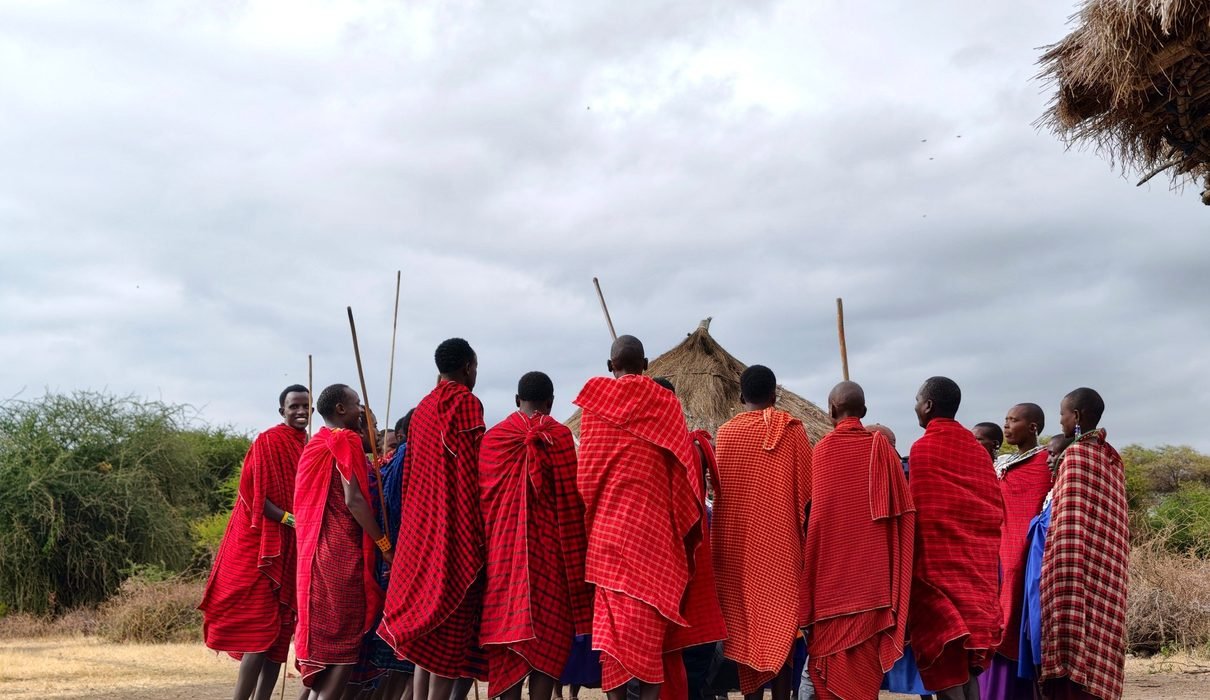
Facts about the Maasai tribe offer an introduction to the history, livelihoods and traditions of Maasai communities in Tanzania and Kenya. If you are planning a safari or cultural visit in 2027 or 2028, learning a little before you arrive can help you ask better questions and appreciate the people you meet.
The Maasai are often recognised through photographs of colourful clothing, beadwork and cattle. However, cultural identity includes much more than appearance. Language, relationships, knowledge, education and individual choices also shape people’s lives.
Maasai communities are diverse, and traditions vary between places, generations and households. This guide provides a starting point for learning rather than a description of every Maasai person.
Explore the one-day Maasai cultural tour with Eddy Tours & Safaris and approach your visit with curiosity and respect.
niceRunStatus: 2; hdrForward: 5; shaking: 0.000000; highlight: 1; motionR: 0; algolist: 0;
multi-frame: 1;
brp_mask: 0;
brp_del_th: 0.0000,0.0000;
brp_del_sen: 0.0000,0.0000;
delta:1;
bokeh:1;
ispap:1;
papproctime: 2026:07:10 17:57:48;
module: photo;hw-remosaic: false;touch: (0.38333333, 0.765625);sceneMode: 13107200;cct_value: 0;AI_Scene: (-1, -1);aec_lux: 119.39327;aec_lux_index: 0;albedo: ;confidence: ;motionLevel: 0;weatherinfo: weather:null, icon:null, weatherInfo:100;temperature: 42;zeissColor: bright;
1. Facts About the Maasai Tribe: Communities Live Across Two Countries
Maasai communities live in southern Kenya and northern Tanzania. Their cultural connections extend across the international border, with regional differences within the wider population.
This matters when planning a visit. An experience near Arusha cannot represent every community in Tanzania, just as one visit in Kenya cannot explain all Maasai life.
Ask your host about the particular place you are visiting: its history, local livelihoods and connections with other communities. These questions create a more useful conversation than expecting one person to speak for everyone.
If your holiday includes both countries, read the Serengeti and Maasai Mara comparison to understand the safari destinations alongside your cultural plans.
2. Language Is an Important Part of Cultural Identity
Maasai language and cultural knowledge are closely connected. The Maasai Association’s education programme includes Maasai, Swahili and English language skills, illustrating how local language and multilingual education can coexist.
During a visit, ask your host or interpreter how they prefer to communicate. You might learn a greeting, hear the name of a household object or ask how a place received its name.
Pronunciation and meaning deserve patience. Listen carefully and avoid assuming that a word has exactly the same use in every setting.
A local guide can help with translation, but leave time for hosts to express themselves. The conversation is often more rewarding when visitors ask a few thoughtful questions rather than follow a long checklist.
Learn more about community perspectives through the Maasai Association.
3. Livestock Have Economic and Social Importance
Cattle, goats and sheep have longstanding importance in Maasai livelihoods. Livestock can provide income and products, while exchanges of animals can strengthen relationships between families.
A herd therefore means more than a collection of animals beside a road.
If your hosts welcome questions, ask about how livestock are cared for, how decisions are made and what challenges arise during dry periods. Keep questions considerate; asking someone to disclose personal wealth may feel intrusive.
Do not enter livestock enclosures or approach animals without permission. Your guide can explain where to stand and whether an activity is suitable for visitors.
A cultural stop can complement a Tanzania safari, but it should have enough time allocated for conversation.
4. Pastoral Knowledge Includes Seasonal Grazing Decisions
Traditional pastoral systems involve knowledge of grazing, water and seasonal conditions. The Maasai Association describes livestock movement and the management of reserve pasture as parts of this knowledge.
Watching someone herd livestock may look straightforward from a passing vehicle. Understanding the decisions behind it reveals a more complex picture.
Useful questions include how grazing conditions change, how water is located and how knowledge is shared with younger people. Your host may explain local circumstances that differ from descriptions in a travel guide.
Listen to those explanations without assuming that all pastoral households move in the same way.
If landscape and local livelihoods interest you, discuss the Lake Natron and Ol Doinyo Lengai itinerary and confirm what community interaction is available.
5. Traditional Homesteads Reflect Practical Skills
Traditional homesteads can include houses grouped within an enclosure. The Maasai Association describes women’s roles in constructing traditional houses using locally available materials.
Household arrangements and building styles vary, so ask your host about the home in front of you.
A visit can introduce practical topics such as construction, maintenance and how spaces are used. These details are often more interesting than simply photographing the exterior.
Remember that a home remains private even when visitors are welcomed. Ask before entering, touching belongings or taking pictures indoors.
Avoid describing a building or its residents as “primitive.” Discuss the materials, skills and choices involved instead.
The Maasai cultural day tour is an option to enquire about, with access and activities agreed by the hosts.
6. Age Sets Connect People Through Life Stages
Age-set relationships are an important part of traditional Maasai social organisation. They connect groups through stages associated with youth, adulthood and eldership.
UNESCO explains that related rites transmit responsibilities and knowledge between generations.
This helps explain why culture cannot be understood only through clothing or a dance demonstration. Relationships and responsibilities may be less visible to visitors but deeply significant to participants.
Ask how these arrangements are understood in the community you visit today. Allow your host to decide how much detail to share.
Ceremonies are not automatically public activities, and their timing should not be invented to fit a tourist itinerary.
For background, read the Maasai Association’s ceremonies overview.
7. UNESCO Recognises Three Maasai Rites of Passage
In 2018, UNESCO inscribed Enkipaata, Eunoto and Olng’esherr on the List of Intangible Cultural Heritage in Need of Urgent Safeguarding, following a nomination from Kenya.
The ceremonies relate to stages leading into moranhood, adulthood and eldership. UNESCO identifies values including responsibility, respect and the transmission of knowledge.
This recognition concerns particular cultural practices. It does not mean every Maasai household follows an identical schedule or that visitors can attend the ceremonies.
You can learn more through the UNESCO Maasai heritage page.
If a tour advertises access to a ceremony, ask how permission is obtained and what participation is appropriate.
8. Songs and Stories Help Pass Knowledge Between Generations
Songs, folktales, proverbs and riddles form part of the cultural transmission documented in UNESCO’s Maasai safeguarding work. These activities can communicate knowledge and a sense of continuity.
For visitors, hearing the meaning behind a song or story can provide more understanding than recording it without explanation.
Ask whether translation is available and whether recording is permitted. Some material may be appropriate to share with visitors, while other knowledge may remain private.
If hosts offer a song or dance during your visit, participate only when invited. A presentation arranged for guests is one part of the experience, not a complete account of everyday community life.
The UNESCO safeguarding project provides further background on intergenerational learning.
9. Maasai Livelihoods Include Trade and Other Activities
Livestock remain important in many households, but Maasai livelihoods also include trading and other income-generating activities. The Maasai Association describes participation in markets and businesses.
This is a useful reminder that cultural identity does not require people to follow one occupation.
During your visit, ask about the work people choose and how livelihoods have changed locally. Avoid assuming that everyone you meet is a herder or that modern technology makes someone less Maasai.
If purchasing crafts, ask who made the item and how the sale is arranged. Pay an agreed price and avoid pressuring a maker into explaining private meanings attached to an object.
Explore the traditional clothing in Tanzania guide as an introduction, then let the makers and wearers explain their own choices.
10. Cultural Continuity and Education Can Develop Together
The Maasai Association supports education, healthcare and community development while expressing a commitment to retaining cultural identity and language.
This challenges the idea that communities must choose between cultural heritage and contemporary opportunities.
Maasai people make their own decisions about education, employment, family life and traditions. Those decisions should not be judged against a tourist’s expectation of how someone ought to look or live.
During a visit, leave space for conversations about present-day interests as well as history. Ask hosts which topics they would like visitors to understand.
Read the Maasai Association’s vision for an example of community development priorities.
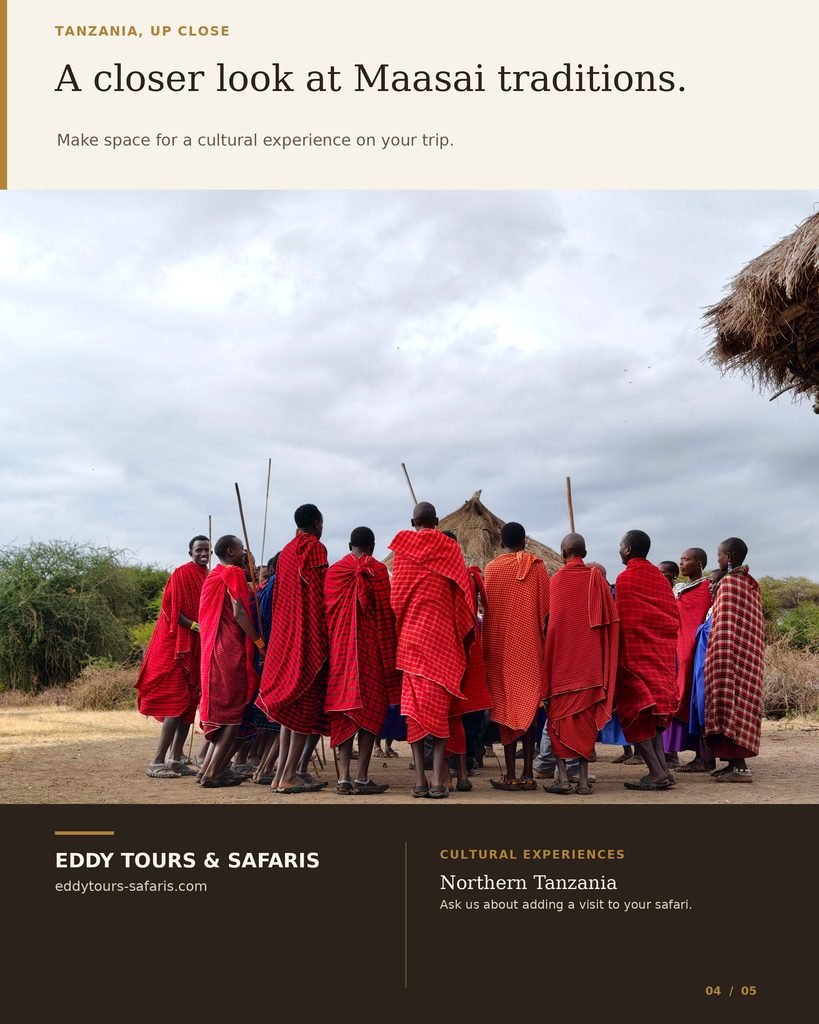
Facts About the Maasai Tribe: What to Remember Before Visiting
| Topic | A thoughtful approach |
|---|---|
| Community identity | Recognise differences between places and households |
| Livestock | Ask about their local significance |
| Homes | Enter only with permission |
| Ceremonies | Respect access restrictions and privacy |
| Language | Listen and request help with pronunciation |
| Photographs | Ask before taking or sharing portraits |
| Crafts | Learn who made an item and agree on the price |
| Contemporary life | Respect people’s choices and aspirations |
A cultural visit is an introduction. You can leave with new understanding while recognising that there is much more to learn.
Planning a Maasai Cultural Visit in 2027/2028
Choose an experience organised with local hosts and request clear details before booking.
The published one-day Maasai cultural tour describes visits arranged according to location and availability. Ask for your actual host arrangements, activities and included fees.
Confirm:
- Where the visit takes place.
- Who hosts and guides the experience.
- How host payments are included.
- Which activities are offered.
- Whether interpretation is available.
- What photography rules apply.
- How much time is allocated.
If you want a wider holiday, compare the four-day cultural and wildlife tour or browse the Tanzania day trips.
How to Be a Respectful Guest
Follow your host’s guidance on greetings, dress and access to private areas.
Ask before photographing people, especially children. Permission to take a photograph should not be assumed to include permission to publish it online.
Accept a refusal politely. Avoid handing out sweets, money or gifts without first discussing suitable arrangements with the organisers.
Keep questions open and considerate. “What would you like visitors to understand?” can lead to a better conversation than a question based on a stereotype.
Frequently Asked Questions
Do Maasai communities live only in Kenya?
No. Communities also live in northern Tanzania.
Does every Maasai person follow the same traditions?
No. Practices vary between communities, households and generations.
Can tourists attend ceremonies?
Only where appropriate permission has been obtained. A cultural visit does not automatically include access to ceremonies.
Will a cultural tour include dancing or beadwork?
It may, if offered by the hosts and confirmed in the itinerary. Activities should not be assumed.
Can children join a cultural visit?
Ask about the specific experience. A family visit can encourage respectful learning when expectations and activities suit the children’s ages.
Can I combine a cultural visit with a safari?
Yes, you can request this arrangement. Allow enough time for the visit and confirm logistics before booking.
Plan Your Cultural Experience With Eddy Tours & Safaris
Learning these facts about the Maasai tribe can help you approach your 2027 or 2028 visit with greater understanding. The most valuable part of the experience is listening to the people who welcome you and respecting what they choose to share.
Contact Eddy Tours & Safaris with your dates, number of travellers and interests. Request a clearly arranged cultural visit or combine it with a Tanzania safari.
Website: Eddy Tours & Safaris
Email: sales@eddytours-safaris.com
Alternative email: eddytoursandsafaris@gmail.com
WhatsApp: +255 711 906 664