
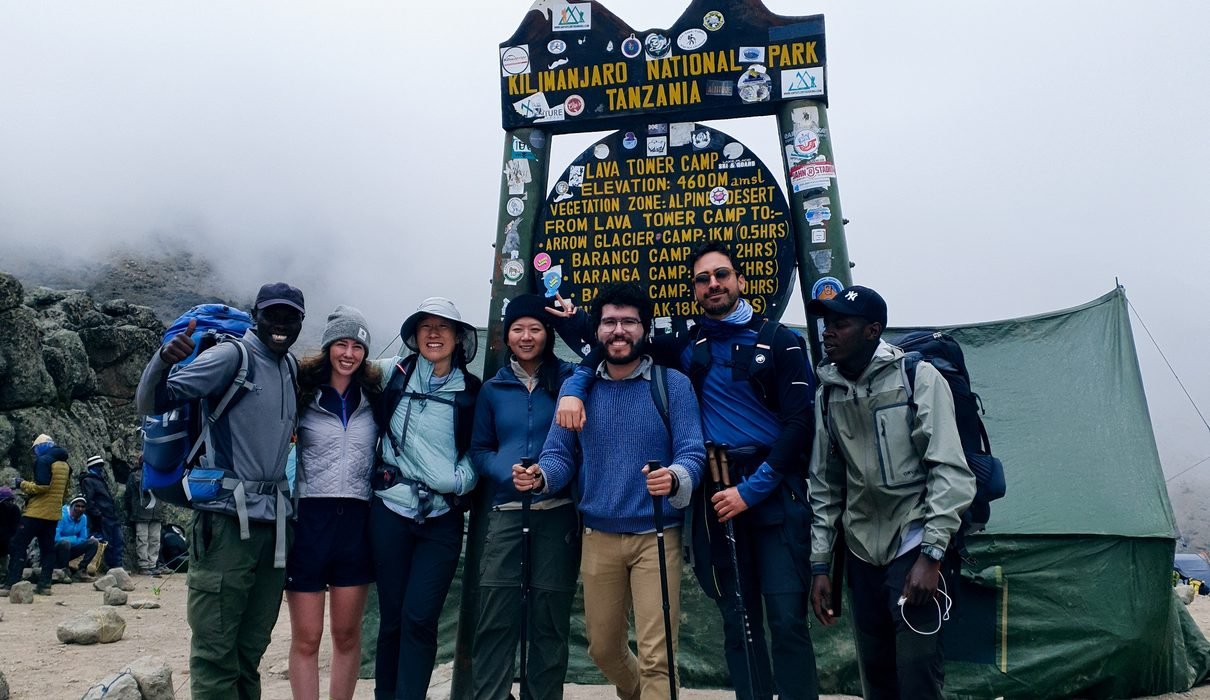
How long does it take to climb Mount Kilimanjaro? Most standard guided summit itineraries take 5–9 days on the mountain, including the descent. Seven to nine days gives you more time than the shortest schedules, but the right duration depends on the route, altitude progression and your individual needs. Add arrival, preparation and recovery days when planning your complete Tanzania holiday.
A seven-day climb does not usually mean a seven-day trip from home. You need time to reach Tanzania, attend the briefing, check equipment and rest after returning from the mountain.
This guide explains route durations, daily walking expectations and how to build a realistic schedule for 2027 or 2028. Explore the Kilimanjaro climbing routes guide or contact Eddy Tours & Safaris to compare suitable itineraries.
How Long Does It Take to Climb Mount Kilimanjaro by Route?
Routes differ in their starting points, overnight stops and number of days before the summit attempt. The durations below refer to mountain days, including descent, rather than arrival and hotel days.
| Route | Common mountain duration | Accommodation | Main scheduling consideration |
|---|---|---|---|
| Marangu | 5–6 days | Shared huts | Six days adds a Horombo acclimatization stage |
| Machame | 6–7 days | Camping | Seven days separates stages compressed in the shorter version |
| Lemosho | 7–9 days | Camping | Compare the actual overnight sequence |
| Rongai | 6–7 days | Primarily camping | Confirm the higher overnight and descent arrangements |
| Northern Circuit | Commonly 9 days; variants differ | Camping | Requires a longer holiday |
| Umbwe | 6–7 days | Camping | A steep approach requiring careful suitability assessment |
These ranges describe commonly offered programmes. Check your exact itinerary because operators may use different schedules or count package days differently.
Eddy Tours & Safaris publishes six- and seven-day Machame options, an eight-day Lemosho package and a nine-day Northern Circuit expedition to compare.
Mountain Days Versus Total Holiday Time
Your complete schedule needs more space than the trekking programme alone.
A practical plan includes arrival before the climb, time for preparation and a hotel night after descending. Longer flight connections, delayed luggage or additional activities may require more days.
| Mountain programme | Example schedule in Tanzania* |
|---|---|
| 5-day trek | About 7–8 calendar days |
| 6-day trek | About 8–9 calendar days |
| 7-day trek | About 9–10 calendar days |
| 8-day trek | About 10–11 calendar days |
| 9-day trek | About 11–12 calendar days |
*Planning examples allowing arrival before trekking, a post-climb hotel night and departure. International travel time is additional, and flight timing can change the total.
Ask for a dated itinerary showing every hotel night and transfer. This is more reliable than calculating your flights from a package title.
Why Climbing Kilimanjaro Takes Several Days
Kilimanjaro’s summit is Uhuru Peak at 5,895 metres. Reaching that altitude involves more than covering a walking distance.
Your body needs time to respond to lower oxygen availability as you ascend. The daily programme also includes meals, rest, setting up camp or settling into huts, and preparing for the next stage.
The CDC emphasises gradual acclimatization and explains that physical fitness does not protect against altitude illness. Strong walkers can still become unwell if they gain altitude too quickly.
That is why the shortest advertised itinerary should not automatically be your first choice. Examine sleeping-altitude changes and acclimatization opportunities alongside the number of days.
How Long Does It Take to Climb Mount Kilimanjaro on Marangu?
Marangu is commonly offered over five or six mountain days.
The route uses Mandara, Horombo and Kibo huts. TANAPA distinguishes these huts from the designated camping arrangements used on other routes.
Five-day Marangu
A typical sequence is:
| Day | Main stage |
|---|---|
| 1 | Marangu Gate to Mandara |
| 2 | Mandara to Horombo |
| 3 | Horombo to Kibo |
| 4 | Summit attempt and descent to Horombo |
| 5 | Descent to Marangu Gate |
The schedule offers limited time before continuing to the higher overnight stop. Hut accommodation provides shelter, but it does not make the altitude demands easier.
Review the five-day Marangu package and discuss its suitability before booking.
Six-day Marangu
The six-day version adds another day and night at Horombo, normally with a guided acclimatization walk.
This creates more time before continuing to Kibo. It does not remove altitude illness risk or guarantee the summit.
Explore the six-day Marangu itinerary if hut accommodation is your preference.
How Long Does the Machame Route Take?
Machame is commonly offered as a six- or seven-day camping itinerary.
Both versions include ascent, a summit attempt and descent. The seven-day programme normally includes a separate overnight stage at Karanga before moving to Barafu.
That additional stage changes the distribution of walking and rest before summit night. Compare the daily programme rather than assuming the difference is simply an extra leisure day.
Read the six-day Machame package and the seven-day Machame itinerary.
If you have enough holiday time, discuss the longer option and ask the team to explain its altitude progression.
How Long Does the Lemosho Route Take?
Lemosho itineraries commonly range from seven to nine mountain days, depending on the chosen programme.
The important detail is how those days are used. Different versions may distribute early stages differently or add time at particular overnight stops.
Compare the seven-day Lemosho itinerary, the eight-day Lemosho package and the nine-day Lemosho trek.
Ask whether the advertised duration includes only mountain days. A nine-day holiday with seven days of trekking is different from a nine-day mountain programme.
For another comparison, read Machame versus Lemosho.
How Long Does Rongai Take?
Rongai is commonly offered over six or seven mountain days. It approaches from the northern side and descends using the Marangu trail.
Confirm the exact overnight sequence, particularly the additional day in a seven-day programme and the arrangements around the higher camp or hut stage.
The seven-day Rongai itinerary provides a programme to discuss with the team.
Choose based on preparation, available time and the detailed ascent schedule rather than descriptions suggesting that one route is easy.
How Long Do Northern Circuit and Umbwe Climbs Take?
Northern Circuit
A nine-day Northern Circuit mountain itinerary is a common option, although longer variants exist.
It suits travellers who can allocate more time to the mountain. Review the nine-day Northern Circuit expedition and allow additional days for arrival and recovery.
Umbwe
Umbwe is commonly offered over six or seven days. Its steep, direct early approach makes suitability especially important.
Eddy Tours & Safaris describes the route as unsuitable for people with little altitude experience. A shorter approach should not be interpreted as an easier climb.
Compare the six-day Umbwe itinerary with the seven-day programme and discuss your experience.
How Many Hours Do You Walk Each Day?
Walking time varies by route, stage, conditions and group pace. Many ordinary trekking days involve roughly four to seven hours of walking, but some stages are shorter or longer.
Treat these figures as broad expectations rather than deadlines. Registration, transfers, meal breaks and conditions also affect the day.
Walk at the guide’s controlled pace. Reaching camp early is less important than managing effort and reporting how you feel.
Request the stage-by-stage estimates for your chosen itinerary, including distance, elevation change and overnight altitude.
How Long Does Summit Day Take?
Summit day is usually the longest and most demanding stage.
Many standard itineraries begin the attempt during the night, continue towards the crater rim and then proceed towards Uhuru Peak if conditions and your health allow. A substantial descent follows.
On common programmes, the combined summit ascent and descent can involve roughly 10–16 hours of movement and breaks. Actual timing varies widely and must not become a target that overrides guide decisions.
Ask how your itinerary handles rest after the summit attempt and where you sleep that night.
How Long Does the Descent Take?
The descent is already included in standard route durations.
Many programmes begin descending immediately after the summit attempt, spend another night on the mountain and finish at the exit gate the following day. The exact sequence depends on the route.
Descending can be tiring, particularly after limited sleep. Continue using a controlled pace and keep rain protection and useful equipment accessible.
Do not subtract the final descent day when comparing packages. A seven-day itinerary normally means the complete gate-to-gate programme.
Can You Climb Kilimanjaro Faster?
Short itineraries exist, but walking faster does not solve the challenge of acclimatization.
Do not build a recreational holiday around speed records or exceptional performances. Those attempts involve circumstances that differ from a standard guided trek.
If your available time is too short for a suitable summit itinerary, discuss a lower-altitude day hike instead. That offers a mountain experience without presenting it as an Uhuru Peak climb.
TANAPA requires climbs to be organised through licensed operators; independent solo trekking is not permitted.
Choosing Your Duration for 2027/2028
Start by identifying your accommodation preference, trekking experience and total available holiday days.
Then compare:
- The number of mountain days.
- Sleeping-altitude changes.
- Acclimatization stages.
- Walking demands before summit night.
- Arrival and equipment-check arrangements.
- Recovery time after descending.
Seven- to nine-day itineraries are useful starting points for comparison if you can allocate the time. More days alone do not guarantee a suitable ascent schedule or successful summit.
Discuss personal health and previous altitude problems with a qualified clinician before travelling. During the trek, report symptoms promptly, avoid further ascent with altitude illness symptoms and descend if symptoms worsen at the same altitude.
For independent planning information, consult the CDC high-altitude guidance and the official Kilimanjaro visitor guide.
How Duration Affects Your Budget
Additional mountain days generally require more crew time, food and accommodation charges. Compare the total services rather than judging value solely by the daily price.
Ask for a quotation identifying mountain days, hotel nights, transfers, equipment and applicable fees.
Review the Kilimanjaro package price guide and confirm current 2027/2028 costs for your chosen programme.
If joining a group, check the published departure calendar and confirm the route available on your date.
Adding a Safari After Kilimanjaro
Allow recovery time before continuing with a Tanzania safari.
For example, a seven-day climb combined with a three-day safari needs the ten activity days plus arrival, preparation, recovery and travel arrangements. Your final dated schedule determines the complete holiday length.
Explore the three-day Tanzania group safari if you want a short wildlife extension.
Frequently Asked Questions
Is five days enough?
A five-day Marangu summit itinerary is offered, but it provides limited acclimatization time. Discuss longer options before choosing it.
Does being fit let me choose fewer days?
Fitness helps with physical effort, but it does not protect against altitude illness.
Does an acclimatization day involve walking?
Often, yes. It may include a guided walk followed by a return to the same overnight location. Confirm the actual programme.
Are hotel nights included in the route duration?
Usually mountain-day descriptions exclude them, but package titles vary. Check the complete itinerary.
Can the climb end earlier than planned?
Yes. Health, weather or other circumstances may require descent. Ask about the practical and financial arrangements before booking.
Is the summit guaranteed on a longer itinerary?
No. Additional time can support acclimatization, but individual response and conditions still matter.
Plan Your Kilimanjaro Climb
How long does it take to climb Mount Kilimanjaro? Allow 5–9 mountain days for most standard summit itineraries, then add the time needed for arrival, preparation and recovery.
Contact Eddy Tours & Safaris with your preferred 2027 or 2028 dates, experience and available holiday time. Request a suitable route comparison and a complete dated itinerary.
Email: sales@eddytours-safaris.com
Alternative email: eddytoursandsafaris@gmail.com
WhatsApp: +255 711 906 664