
Climbing Kilimanjaro on a budget starts with understanding where your money goes. The route, number of trekking days, group arrangements, equipment and services included in your quotation all affect the final cost.
The most useful savings often come from sharing expedition costs, choosing straightforward accommodation before and after the trek, borrowing suitable equipment and removing optional extras.
Shortening the climb deserves more careful consideration. Saving on one mountain day can also reduce the time available for acclimatisation.
For 2027/2028 planning, start by comparing a seven-day Machame group climb, six-day Marangu itinerary and seven-day Rongai option. Request equivalent quotations before deciding which gives you the best value.
This guide explains route choices, the expenses to include in your budget and ten practical ways to manage costs with Eddy Tours & Safaris.
Can You Climb Kilimanjaro on a Small Budget?
You can control some expenses, but Kilimanjaro has required operating costs.
TANAPA’s Kilimanjaro visitor guide explains that conservation, camping or hut, and rescue charges may apply. Climbs must operate through licensed guiding arrangements; independent solo trekking is not permitted.
A budget climb therefore still needs a properly organised expedition.
Your task is to identify a suitable itinerary and compare the complete cost. An attractive headline price is useful only when you understand what it covers.
Ask for a written quotation showing mountain days, accommodation, staffing, meals, transfers, equipment and excluded expenses.
Best Kilimanjaro Routes to Compare on a Budget
No route is automatically the cheapest for every traveller. A confirmed shared departure may cost less than a private climb on a shorter itinerary, depending on the arrangements.
Use the following options as a starting point.
| Route option | Why compare it? | Main point to examine |
|---|---|---|
| Seven-day Machame | A practical camping option for a shared departure | Actual mountain days and Karanga overnight |
| Six-day Marangu | Shared huts may suit your accommodation preference | Horombo acclimatisation day and sleeping equipment |
| Seven-day Rongai | An alternative northern approach | Transfer costs and group availability |
| Eight-day Lemosho | Worth comparing when a suitable group exists | Additional mountain costs and current access |
| Nine-day Northern Circuit | Longer expedition for travellers with sufficient time | Complete price and daily ascent profile |
These are itinerary recommendations for comparison, not confirmed Eddy Tours & Safaris departures or a price ranking.
Seven-Day Machame: A Useful Starting Point
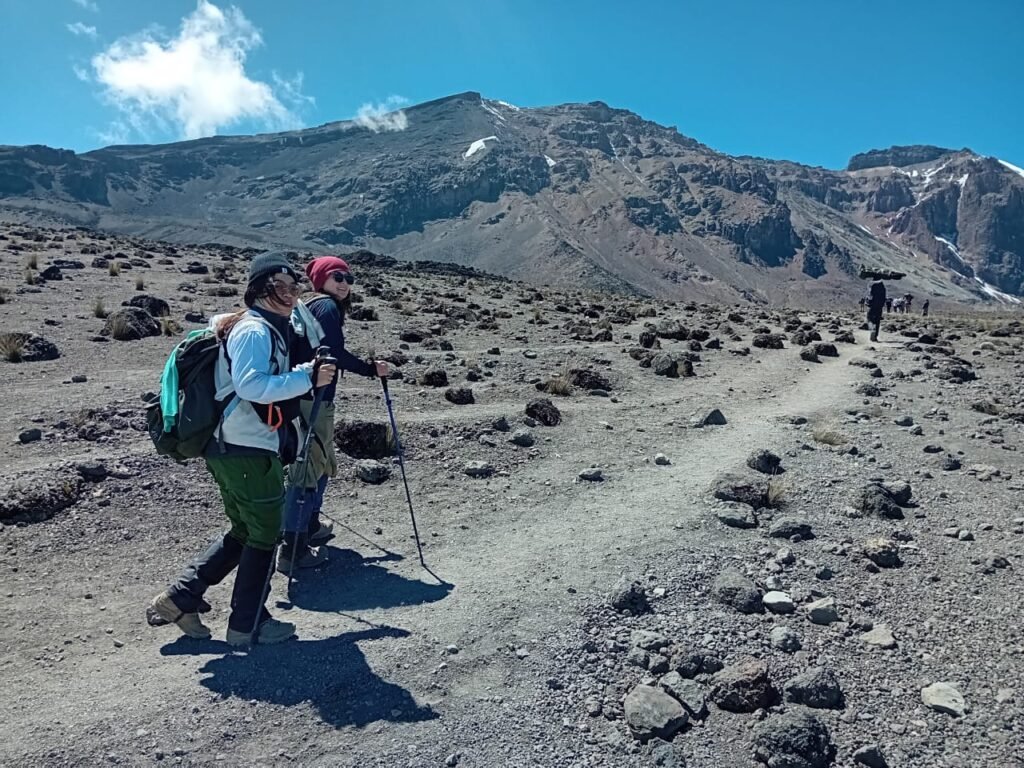
Machame is commonly offered over six or seven trekking days. A standard seven-day version includes an overnight at Karanga, while a six-day itinerary usually continues from Barranco through Karanga to Barafu in one day.
For budget planning, request the seven-day quotation first. Then compare the financial difference with the shorter version and ask what changes in the daily demands.
Do not count a hotel night as an additional mountain day. Your itinerary should clearly identify all seven trekking stages.
Six-Day Marangu: Consider It for Shared Huts
Marangu uses the Mandara, Horombo and Kibo mountain huts. TANAPA identifies these hut arrangements in its visitor guidance.
A six-day version commonly includes an additional day at Horombo.
Huts do not automatically make Marangu the cheapest route. You still need guiding, meals, park access and suitable sleeping equipment.
Compare the complete proposal rather than assuming that avoiding tents creates a fixed saving.
Seven-Day Rongai: Compare the Full Logistics
Rongai approaches from the north and usually descends along Marangu. Its longer versions commonly include the Mawenzi Tarn area.
Ask whether a compatible group departure exists for your dates and how the starting-point transfer is priced.
A route can be good value for one group and less economical for another. The actual departure arrangements matter.
Lemosho and Northern Circuit: More Days, Different Value
Longer itineraries normally involve additional operating expenses, but their value should be assessed alongside the time they provide on the mountain.
Compare an eight-day Lemosho or nine-day Northern Circuit proposal if your budget allows. A suitable shared departure may make these options more accessible than you expect.
Access note: TANAPA published a suspension notice concerning Lemosho and Londorossi on 29 September 2026. Confirm the latest access position before booking a western-approach itinerary for 2027/2028. This article does not confirm a reopening date.
Why the Cheapest Short Itinerary Needs Careful Review
Extra mountain time can support acclimatisation. CDC guidance recommends adding one or two days to a planned Kilimanjaro ascent, particularly when considering compressed itineraries. Additional time reduces risk but cannot guarantee a summit.
Ask how each itinerary uses its days. Compare overnight elevations and walking demands rather than assuming every extra day serves the same purpose.
Physical fitness does not protect against altitude illness. Review the ascent profile separately from your training programme.
10 Practical Ways to Save Money
1. Join a Suitable Group Departure
Sharing an expedition can spread certain costs across several climbers.
Request available dates and compare the group price with a private quotation. Confirm the maximum group size, guiding arrangements and how different walking speeds are managed.
Also ask whether the departure is confirmed and what happens if a minimum number of participants is not reached.
A group climb works best when its schedule already fits your needs.
2. Keep Your Dates Flexible
If your plans allow, provide a range of dates rather than one fixed starting day.
This gives the operator more opportunity to match you with an existing departure. It also lets you compare flight and hotel costs across several options.
Flexibility creates choices; it does not guarantee a discount. Check the complete trip cost before moving your dates.
3. Compare Equivalent Written Quotations
Send each operator the same request.
Specify your route, trekking duration, group size, accommodation preference and transfer needs. Ask each company to identify exclusions clearly.
A lower quotation may leave out hotel nights, rentals or transfers included elsewhere. Use the total expected spending to judge value.
4. Borrow Suitable Equipment
Borrowing can be useful for items you are unlikely to use again, provided they meet the expedition requirements.
Ask your operator for specifications before accepting a borrowed sleeping bag, jacket or backpack.
Inspect the condition, check the fit and practise using everything. Borrowed equipment that does not work for you may create a last-minute purchase instead of a saving.
5. Compare Rental and Purchase Costs
Rental may make sense for bulky or specialised items. Purchasing may be better for equipment you expect to use regularly.
Request the full rental price, collection arrangements and any deposit. Ask whether the exact item can be reserved.
Footwear deserves particular care. Use boots that fit properly and that you have already worn on training walks.
6. Choose Straightforward Hotels
Comfortable, practical accommodation before and after the trek can help control spending.
Compare room prices alongside transfer costs, breakfast provision and luggage-storage arrangements. A cheaper hotel far from the briefing location may create additional expense.
Keep enough time for arrival preparation and the final descent arrangements.
7. Review Optional Extras
Ask the operator to distinguish essential expedition services from optional comforts.
Examples may include upgraded hotel rooms, additional private facilities or special celebrations.
Choose the extras that matter to you. A clear base package makes those decisions easier.
8. Compare Flights by Total Cost
Check baggage allowance, arrival airport, connections and transfer expenses before selecting the cheapest fare.
A flight with an awkward arrival time may require an extra hotel night. A restrictive baggage allowance may create additional charges for trekking equipment.
Compare the full journey rather than the ticket price alone.
9. Keep Your Wider Holiday Manageable
A safari, Zanzibar stay or additional trek can be proposed separately.
If the climb is your main objective, establish its complete budget first. Then decide what you can comfortably add.
Avoid using money allocated to essential climbing services to fund an extension. A shorter overall holiday may be a better fit than reducing important mountain arrangements.
10. Prepare Early
Early preparation gives you time to borrow equipment, compare rentals and resolve gaps in your kit.
Start a packing checklist and test items on training walks. Keep records of confirmed costs so that small purchases do not become an unexpected total.
Last-minute shopping offers fewer choices and makes it harder to judge whether an item is suitable.
Build a Complete Kilimanjaro Budget
Use a worksheet that includes every major expense.
| Expense | What to confirm |
|---|---|
| Mountain package | Route, trekking days and service scope |
| Flights | Full fare, baggage and connections |
| Transfers | Airport and mountain transport |
| Hotels | Nights, meals and room occupancy |
| Equipment | Purchases, rentals and deposits |
| Travel insurance | Trekking altitude, medical and evacuation cover |
| Entry requirements | Current requirements for your nationality |
| Tips | Crew structure and operator guidance |
| Personal spending | Meals outside the package and other purchases |
| Contingency | Costs associated with changes or disruption |
Ask your insurer to confirm coverage for the planned trek up to Kilimanjaro’s summit elevation, along with relevant medical and evacuation arrangements.
Keep your contingency separate from optional spending. Your booking terms should explain the financial consequences of changes or an early descent.
Porter Welfare Belongs in Your Budget Decision
A low price should still come with clear answers about crew treatment.
Ask about wages, workloads, meals, shelter, equipment and support when a crew member becomes ill.
The Kilimanjaro Responsible Trekking Organization’s programme addresses porter-welfare practices through voluntary participation and monitoring arrangements. Check current participation independently if a company claims it.
Tips should not be treated as a substitute for proper wages.
Request tipping guidance before departure, including the expected crew structure and distribution process. This helps you plan and avoids confusion at the end of the trek.
Questions to Ask Before Paying
A suitable budget package should come with understandable booking documents.
Ask:
- How many days are spent trekking?
- Which camps or huts are used?
- Is the departure confirmed?
- Who operates the expedition?
- What guiding and early-descent arrangements apply?
- Which equipment is supplied?
- Are park charges included?
- Which hotels and transfers are covered?
- What rentals and supplements remain?
- How are crew welfare and tips handled?
- What are the cancellation and itinerary-change terms?
If a response is unclear, resolve it before paying. A detailed answer can reveal more about the service than a discount alone.
Frequently Asked Questions
What is the cheapest Kilimanjaro route?
There is no universal answer. Compare current quotations for equivalent services, including shared departures and the total trekking duration.
Can I climb without a guide to save money?
No. TANAPA requires licensed guiding arrangements and does not permit independent solo trekking.
Is Marangu cheaper because it uses huts?
Not necessarily. Request a complete quotation and compare it with equivalent camping packages.
Does booking directly always save money?
No. Compare the price, contract, communication and actual operating responsibilities. The booking channel alone does not establish value.
Should I choose five days if six days cost more?
Review the ascent profile before making that decision. Budget savings elsewhere may allow you to preserve additional mountain time.
Are 2027/2028 prices fixed?
Only rely on the price and conditions confirmed in your written quotation. Check validity dates and any stated adjustment terms.
Plan a Budget-Conscious Climb with Eddy Tours & Safaris
Share your available dates, preferred route, group size and total budget with Eddy Tours & Safaris.
Request a proposal that explains the itinerary, expedition services and remaining expenses. Ask about suitable group departures and compare the complete cost before booking.
Website: eddytours-safaris.com
Sales email: sales@eddytours-safaris.com
Alternative email: eddytoursandsafaris@gmail.com
Phone and WhatsApp: +255 711 906 664
Choose an itinerary you understand, prepare your equipment early and spend where it supports the climb you intend to undertake.