
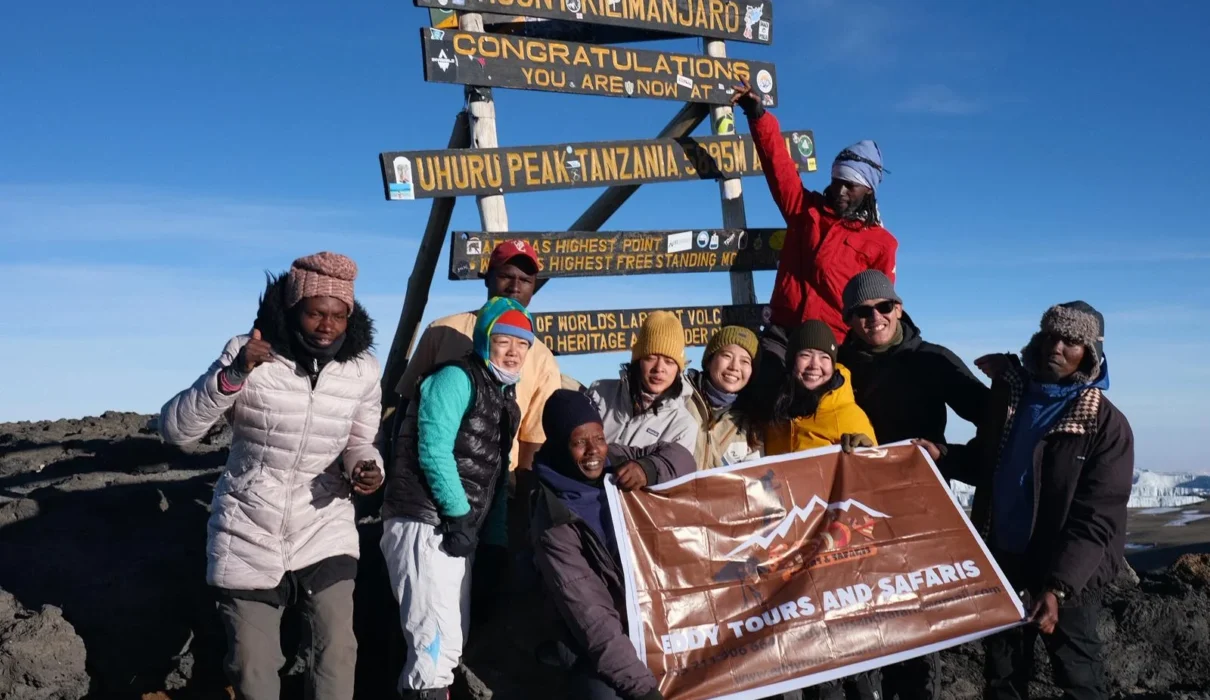
Mount Kilimanjaro Without Technical Climbing: Why Beginners Can Still Reach the Summit in 2026, 2027 and 2028; Kilimanjaro is primarily a trekking challenge. You generally do not need to know how to use ropes, technical climbing equipment, crampons or advanced mountaineering systems on the normal trekking routes. The real challenge is walking for several days, gaining altitude gradually, coping with cold temperatures, managing your energy and dealing with the thin air near the summit.
That distinction is especially important for beginners planning their adventure in 2026, 2027 or 2028.
You don’t need to arrive in Tanzania as an experienced mountaineer.
You need to arrive prepared, patient and ready to listen to your mountain guide.
At Eddy Tour and Safaris, Kilimanjaro climbs are designed for travelers with different levels of trekking experience. The company currently offers routes including Machame, Marangu, Lemosho, Rongai, Northern Circuit, Umbwe and Shira, with different durations and levels of challenge.
So, if you’ve never climbed a mountain before, don’t immediately cross Kilimanjaro off your bucket list.
Instead, let’s look at what the climb actually involves.
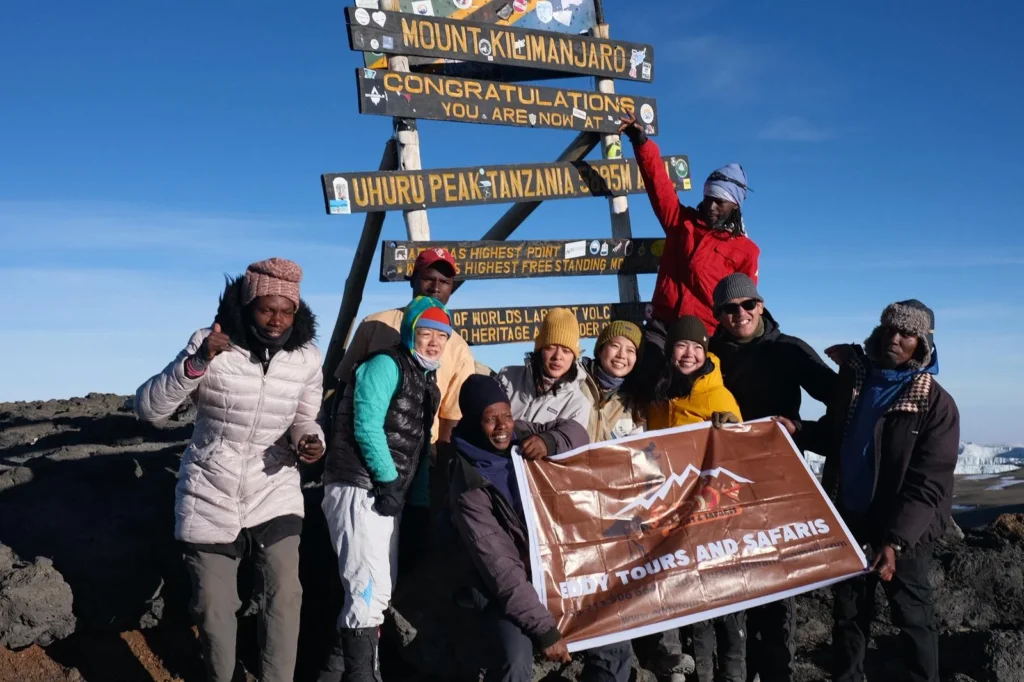
Is Kilimanjaro Really Possible for Beginners:Mount Kilimanjaro Without Technical Climbing: Why Beginners Can Still Reach the Summit
Yes.
One of the reasons Kilimanjaro is so popular is that it allows people without previous technical mountaineering experience to attempt one of the world’s great summits.
Eddy Tour and Safaris states that technical climbing skills are not required for the standard Kilimanjaro trekking routes, although the mountain remains physically demanding because of altitude and long trekking days.
That means your previous experience doesn’t have to include:
- Rock climbing
- Ice climbing
- Alpine mountaineering
- Rope work
- Technical glacier travel
- Advanced climbing techniques
Instead, you should focus on:
- Physical preparation
- Walking endurance
- Altitude awareness
- Appropriate clothing
- Mental preparation
- Proper acclimatization
- Following your guide’s instructions
In other words, Kilimanjaro is accessible to beginners but accessible does not mean effortless.
What Does Non-Technical Climb Actually Mean?
This is an important question.
When climbers describe Kilimanjaro as a non-technical mountain, they are not saying you can simply walk to the top without preparation.
They mean that the standard trekking routes generally don’t require specialized technical climbing skills.
Think of the difference this way:
Technical Mountaineering
A technical mountain may require:
- Ropes
- Harnesses
- Carabiners
- Ice axes
- Crampons
- Belaying
- Rock climbing
- Glacier travel
- Specialized rescue techniques
Kilimanjaro Trekking
The standard experience is much closer to:
- Walking
- Hiking
- Climbing gradually uphill
- Crossing uneven terrain
- Managing altitude
- Camping or staying in mountain huts depending on the route
- Walking for several hours each day
You still need proper equipment, experienced guides and preparation.
But you don’t need to become a technical mountaineer first.
That is why a person whose biggest previous adventure was a long hiking trip can potentially prepare for Kilimanjaro.
The Real Challenge Is Altitude
If technical climbing isn’t the main difficulty, what makes Kilimanjaro hard?
The answer is altitude.
Uhuru Peak rises to approximately 5,895 meters.
At that elevation, the amount of oxygen available to your body is substantially lower than at sea level.
Your body has to adapt.
The CDC identifies altitude illness as one of the major health risks for people climbing Kilimanjaro and notes that acute mountain sickness can occur as travelers ascend to high elevations.
This is why someone who is extremely fit can still struggle on Kilimanjaro.
You might be able to run 20 kilometers at home.
You might regularly go to the gym.
You might have strong legs.
But none of those things automatically means your body is acclimatized to 5,000+ meters.
That is why the mountain should never be treated like an ordinary hiking trip.
You Don’t Have to Be an Athlete
Another common misconception is that only young, extremely athletic people can climb Kilimanjaro.
That’s not true.
Of course, physical fitness helps.
But Kilimanjaro isn’t a competition.
You aren’t expected to sprint uphill.
In fact, one of the most important lessons on the mountain is:
Pole pole.
That is Swahili for:
“Slowly, slowly.”
Your guide may repeat this phrase throughout the trek.
And there is a very good reason.
Walking slowly helps you conserve energy and maintain a controlled pace as you gain altitude.
Your goal isn’t to arrive at camp before everyone else.
Your goal is to continue moving safely and steadily toward the summit.
What Does a Typical Kilimanjaro Day Look Like?
For a beginner, understanding the rhythm of the mountain can make the experience seem much less intimidating.
A typical day might look something like this:
You wake up at camp.
You have breakfast.
You pack your daypack.
Your guides prepare the group.
Then you begin walking.
You might spend several hours hiking through changing terrain.
There will be breaks.
You will stop for food and water.
You reach camp later in the day.
You eat.
You rest.
Then you repeat the process the following day.
The mountain becomes a series of manageable stages rather than one enormous climb.
That is an important mental shift.
You aren’t climbing 5,895 meters in one day.
You are gradually working your way upward over multiple days.
Choosing the Right Route as a Beginner
The route you choose can have a major effect on your experience.
Eddy Tour and Safaris currently offers several Kilimanjaro routes, including Marangu, Machame, Lemosho, Rongai, Northern Circuit, Umbwe and Shira.
Each route has its own personality.
There isn’t one route that is automatically perfect for every beginner.
However, understanding the differences can help you make an informed choice.
Marangu Route: A Popular Beginner Option
The Marangu Route is sometimes called the Coca-Cola Route.
One of its distinctive features is that climbers stay in mountain huts rather than camping in tents along the route.
For beginners who are nervous about camping, this can be appealing.
Eddy Tour and Safaris describes Marangu as a popular option for less experienced hikers and notes that it offers hut accommodation.
However, there is an important catch.
The shorter Marangu itineraries can provide less time for acclimatization.
So don’t choose it simply because it appears easier.
A shorter itinerary can actually make altitude adaptation more challenging.
For a beginner, the number of days matters.
Machame Route: For Beginners Who Want a More Adventurous Trek
Machame is one of Kilimanjaro’s most popular routes.
It is sometimes called the Whiskey Route.
Unlike Marangu, it is a camping route and offers a more rugged trekking experience.
Eddy Tour and Safaris describes Machame as a scenic route with challenging sections and currently offers 6- and 7-day options.
For a beginner who enjoys hiking and doesn’t mind camping, Machame can be an attractive option.
The landscape changes dramatically as you climb:
- Rainforest
- Moorland
- Alpine desert
- High-altitude terrain
You don’t simply walk through one environment.
The mountain gradually changes around you.
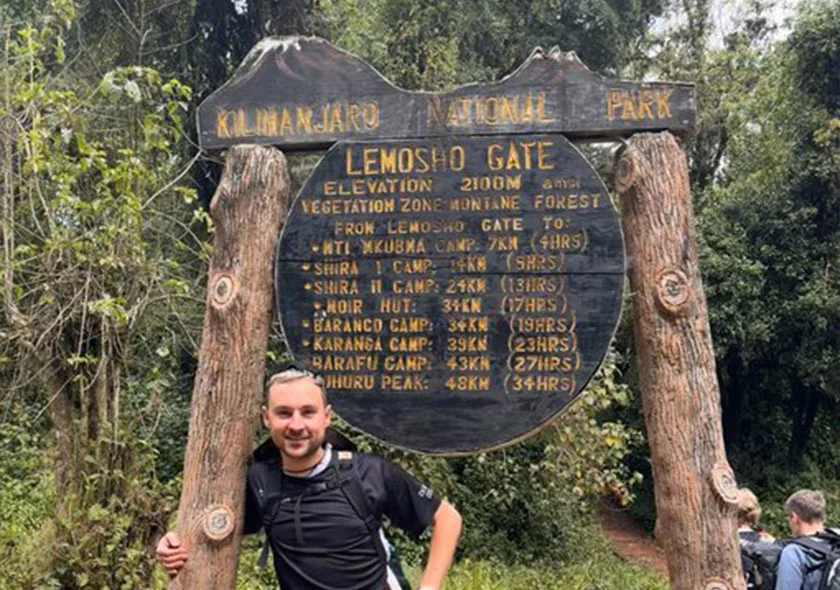
Lemosho Route: More Time, More Scenery of Mount Kilimanjaro Without Technical Climbing: Why Beginners Can Still Reach the Summit in 2026, 2027 and 2028
Lemosho is another excellent option for travelers who want a longer and more gradual experience.
Eddy Tour and Safaris describes Lemosho as a scenic route offering good acclimatization opportunities and currently provides itineraries ranging from approximately seven days upward.
For many first-time climbers, a longer itinerary is attractive because it gives the body more time to adapt.
The CDC also recommends gradual ascent and notes that adding extra acclimatization days can be beneficial for people ascending to high altitude.
So when comparing routes, don’t ask
Which itinerary gives me enough time to acclimatize comfortably?
That is a much better question.
Rongai Route: A Different Side of Kilimanjaro
Rongai approaches Kilimanjaro from the northern side.
It tends to offer a different atmosphere from the southern routes.
Eddy Tour and Safaris describes Rongai as a quieter route with a more remote trekking experience.
For beginners who want a different perspective and prefer a quieter trail, Rongai may be worth discussing with your tour operator.
Northern Circuit: For Those Who Want More Time
The Northern Circuit is one of the longer ways to experience Kilimanjaro.
Eddy Tour and Safaris currently lists 9, 10 and 11 days Northern Circuit options.
Longer routes can be attractive to climbers who want:
- More time on the mountain
- More gradual progression
- Additional acclimatization opportunities
- More scenery
- A slower overall experience
For a beginner, having more time can be a major advantage.
Why More Days Can Help Beginners
Imagine two climbers.
Climber A chooses a very short itinerary because they want to save time.
Climber B chooses a longer itinerary because they want a more gradual ascent.
Both may be equally determined,but the mountain doesn’t care how motivated you are,your body still has to adapt to altitude.
The CDC explains that acclimatization takes time and recommends gradual ascent, particularly at higher sleeping elevations.
This is why adding days can be beneficial,more time does not guarantee that you will reach the summit,but it can give your body more opportunity to adapt.
What Fitness Level Do You Need?
You don’t need to be an elite athlete.
But you should be able to walk for several hours.
Before your trip, you should ideally train with:
Long walks
Build up the amount of time you can comfortably spend on your feet.
Hiking
If you have access to hills, use them.
Stair training
Stairs are useful if you live somewhere flat.
Cardiovascular exercise
Walking, cycling, swimming or running can improve endurance.
Leg strength
Squats, lunges and step-ups can help prepare your legs.
Backpack practice
Practice carrying a daypack so your shoulders and back become accustomed to it.
Eddy Tour and Safaris recommends cardiovascular conditioning, leg strength, endurance and backpack practice for prospective climbers.
You Don’t Need to Carry Everything Yourself
One thing that surprises first-time climbers is the role of the mountain crew.
Depending on the operator and package, porters carry many of the heavier camp and logistical loads.
This means you generally don’t need to carry your entire expedition on your back.
However, you should still expect to carry your personal daypack with items such as:
- Water
- Snacks
- Rain gear
- Warm layers
- Personal essentials
- Camera or phone
Your guide or operator should explain what you need to carry and what is transported separately.
What About Technical Equipment?
If you’re imagining yourself arriving in Tanzania with ropes, climbing harnesses and ice axes, relax.
For standard Kilimanjaro trekking routes, those aren’t generally the tools that define the experience.
Instead, your equipment should focus on comfort, protection and changing weather.
Important items can include:
- Good hiking boots
- Waterproof jacket
- Warm insulating layers
- Waterproof trousers
- Gloves
- Warm hat
- Sunglasses
- Headlamp
- Trekking poles
- Sleeping bag where required
- Daypack
- Water bottles or hydration system
Eddy Tour and Safaris’ Kilimanjaro preparation information similarly emphasizes proper clothing, hiking boots, waterproof gear and trekking poles.
Why Good Shoes Matter More Than Technical Skills:Mount Kilimanjaro Without Technical Climbing: Why Beginners Can Still Reach the Summit
Imagine reaching Day Four and discovering that your boots are rubbing your heels badly.
That is a much bigger problem than not knowing how to use a climbing rope.
You should break in your hiking boots before your trip.
Walk in them.
Hike in them.
Wear them on longer outings.
Make sure you know exactly how they feel after several hours.
Your feet are going to work hard.
Take care of them.
The Summit Night Is the Real Test
For many beginners, the hardest part of Kilimanjaro isn’t the technical side.
It is summit night.
You may wake up around midnight.
It is dark.
It is cold.
You are tired from several days of trekking.
And now you’re being asked to climb toward the highest point in Africa.
The pace is deliberately slow.
Step.
Breathe.
Step.
Breathe.
The air is thin.
The terrain becomes steeper.
You may begin wondering how much longer you have.
This is where mental preparation becomes incredibly important.
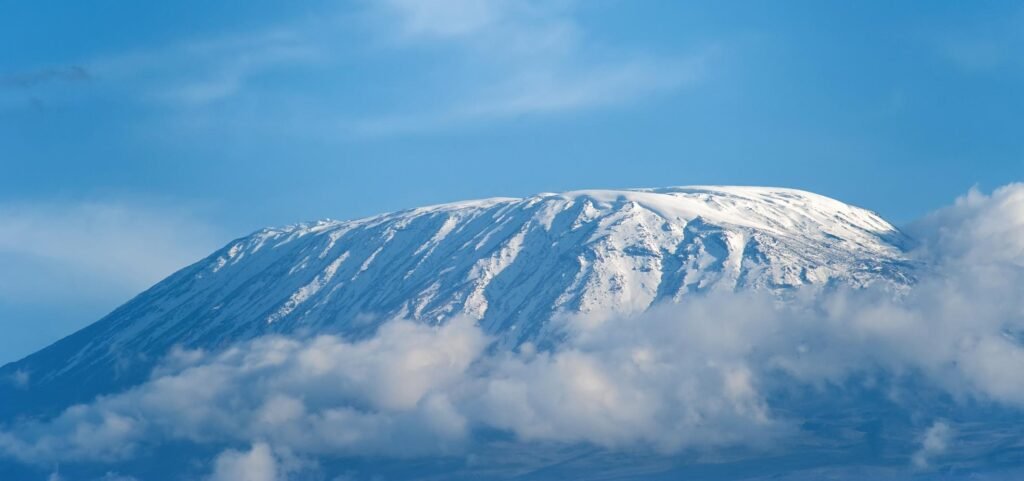
Why the Summit Is Mentally Challenging
At lower elevations, you can look at a hill and estimate how long it will take.
At extreme altitude, your perception changes.
A short section can feel surprisingly long.
You may need to take frequent breaks.
You may feel tired much sooner than expected.
Your guide’s job is not to make you race.
It is to help you manage the climb safely.
This is why experienced guiding matters.
Don’t Compare Yourself With Other Climbers
You may see someone moving faster.
Don’t worry.
You may see another climber taking more breaks.
Don’t judge them.
Altitude affects people differently.
The CDC specifically notes that susceptibility to altitude illness varies among individuals and that physical fitness does not determine who will develop altitude illness.
Your Kilimanjaro journey isn’t a competition.
Stay focused on yourself.
Altitude Illness: The Part Beginners Must Take Seriously
This is the most important safety section of the entire article,You may be physically fit,You may have trained for months,You may feel fantastic on Day One,and None of that guarantees that you will respond well to altitude.
The CDC identifies symptoms of acute mountain sickness including:
- Headache
- Fatigue
- Dizziness
- Nausea
- Vomiting
- Loss of appetite
More serious altitude illness can involve confusion, altered mental status, poor coordination or severe respiratory symptoms.
If you experience concerning symptoms, tell your guide immediately.
Do not hide symptoms because you are afraid of being told to turn around.
A responsible guide will take your health seriously.
Fitness Does Not Prevent Altitude Sickness
This point deserves repeating.
Being fit does not make you immune to altitude illness.
The CDC explicitly states that training and physical fitness do not affect susceptibility to altitude illness.
This is one of the biggest misconceptions among first-time climbers.
Your fitness helps you handle the physical workload.
Acclimatization helps your body adjust to the altitude.
They are two different things.
Why Pole Pole Is So Important
You’ll hear the words:
Pole pole.
Slowly, slowly.
This isn’t just a cultural phrase.
It describes the approach that makes sense for a high-altitude trek.
Walking too quickly can cause unnecessary fatigue.
A slow pace allows you to conserve energy and settle into the rhythm of the mountain.
On Kilimanjaro, slow doesn’t mean weak.
Slow means smart.
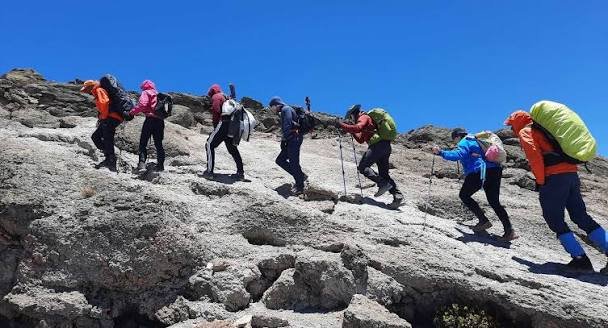
Can Someone Who Has Never Hiked Before Climb Kilimanjaro?
Potentially, yes but preparation matters.
If you’ve never hiked before, don’t decide that you’ll simply “figure it out” when you arrive.
Start training months ahead.
Begin with walking.
Add hills.
Increase your distance.
Strengthen your legs.
Practice with your boots.
Practice carrying your daypack.
Then gradually introduce longer hiking days.
You don’t have to become an expert hiker.
You simply need to arrive with a body that is accustomed to sustained walking.
A Simple Beginner Training Plan
If you’re planning your first Kilimanjaro climb, consider a gradual training approach.
Three to Six Months Before
Focus on building a fitness foundation.
Walk three to five times per week.
Add two strength sessions.
Try to include one longer walk each week.
Two to Three Months Before
Increase your longer hikes.
Introduce hills or stairs.
Start practicing with your backpack.
One Month Before
Make your training more mountain-specific.
Complete longer hikes.
Practice walking on consecutive days.
Wear your actual boots.
Test your equipment.
Final Week
Reduce your training.
Rest.
Sleep well.
Organize your gear.
Arrive fresh rather than exhausted.
Is It Too Late for a Beginner?
If you’re planning to climb Kilimanjaro in 2026, don’t assume that being a beginner automatically means you cannot do it.
Your available time and current fitness level matter.
If you are already reasonably active, you can begin a focused training program.
If you’re starting from a low fitness level, be realistic and consider an itinerary that gives you enough time.
Eddy Tour and Safaris currently provides multiple Kilimanjaro route options and group-climbing itineraries for the 2026 period.
The key is to choose a climb that matches your preparation rather than trying to force your body into an unrealistic schedule.
Give Yourself More Time to Prepare
For people planning a Kilimanjaro climb in 2027, there is a major advantage:
You have time.
Use it.
You can start walking now.
You can gradually improve your fitness.
You can practice hiking.
You can save for the trip.
You can research routes.
You can choose a longer itinerary.
And you can arrive in Tanzania with confidence rather than anxiety.
Eddy Tour and Safaris currently presents Machame, Lemosho, Marangu and Rongai among its principal route options for upcoming climbing seasons.
Start Slowly and Build Properly
If your goal is 2028, you have even more time.
That is excellent for a beginner.
You don’t need to train aggressively.
Instead, build a lifestyle that includes regular walking and physical activity.
By the time your trip arrives, hiking won’t feel like something completely foreign.
You’ll have developed endurance gradually.
You will know your equipment.
You’ll understand how your body responds to long walks.
And mentally, you’ll already feel like a trekker.
What Makes Eddy Tour and Safaris Useful for Beginners?
For a first-time Kilimanjaro climber, choosing a reputable operator is about much more than booking a vehicle to the mountain.
You want a company that understands the routes, logistics, altitude, pacing and challenges that beginners face.
Eddy Tour and Safaris is a Tanzania-based tour operator offering Kilimanjaro climbs alongside safari, Zanzibar and tailor-made travel experiences. Its current Kilimanjaro program covers multiple routes and different itinerary lengths.
For a beginner, the value of working with an experienced local operator is the ability to discuss questions such as:
- Which route suits my fitness?
- How many days should I choose?
- What equipment do I need?
- What should I expect on summit night?
- What happens if I struggle with altitude?
- What should I pack?
- How should I prepare?
Those conversations should happen before you arrive at the trailhead.
What Should Beginners Ask Before Booking?
Don’t be afraid to ask questions.
A good pre-climb conversation should cover:
Route
Which route will you take?
Duration
How many days will you spend on the mountain?
Acclimatization
Does the itinerary provide enough time for altitude adaptation?
Guide Support
Who will guide the climb?
Safety
What happens if someone develops altitude symptoms?
Accommodation
Will you camp or sleep in huts?
Meals
What food is provided?
Equipment
What is included and what must you bring?
Porter Support
What luggage will be carried by the mountain crew?
These questions help you understand exactly what you’re booking.
You Are Not Climbing Alone
One of the beautiful things about Kilimanjaro is the sense of community.
You may begin the trek as strangers.
After several days, you’re sharing meals.
You’re encouraging each other.
You’re laughing about tired legs.
You’re discussing the summit.
And eventually, you’re standing together at Uhuru Peak.
Your guides and mountain crew are also an important part of this experience.
They know the trail.
They understand the pace.
They know what the weather can do.
And they can help you make decisions when the mountain becomes difficult.
What Beginners Often Get Wrong
Here are some of the most common mistakes.
Choosing the Shortest Route Automatically
Shorter doesn’t necessarily mean easier.
Training Only in the Gym
Strength matters, but you also need walking endurance.
Buying Boots at the Last Minute
Your boots should be broken in.
Ignoring Altitude Symptoms
Never hide symptoms from your guide.
Walking Too Fast
Remember:
Pole pole.
Packing Too Much
Carry what you need, not your entire house.
Focusing Only on the Summit
Enjoy the journey.
The rainforest, moorland and alpine environments are part of the experience.
Kilimanjaro Is Difficult—Just Not in the Way You Might Think
This is perhaps the most accurate way to describe the mountain.
Kilimanjaro isn’t necessarily difficult because you need advanced climbing techniques.
It is difficult because it asks you to keep going when:
- Your legs are tired
- The air is thin
- The temperature is cold
- The trail is steep
- You’ve been walking for several days
- You’re awake during summit night
- Your body is adapting to extreme altitude
That is the challenge.
And it is exactly why preparation matters.
So, Can Beginners Really Reach Uhuru Peak?
Yes.
A beginner can potentially stand at Uhuru Peak without ever having completed a technical mountain climb before.
But don’t confuse beginner-friendly with easy.
Kilimanjaro is a serious high-altitude trek.
Your success depends on many factors:
- Physical preparation
- Route choice
- Itinerary length
- Acclimatization
- Weather
- Pacing
- Individual response to altitude
- Mental resilience
- Guide support
No responsible operator can guarantee that every person will reach the summit.
Sometimes the safest decision is to stop climbing.
And that’s okay.
The mountain will still be there.
Final Thoughts: You Don’t Need to Be a Mountaineer to Climb Kilimanjaro
If you’ve been dreaming about Kilimanjaro but have never climbed a technical mountain, don’t assume the dream is out of reach.
You don’t need to know how to climb a vertical rock face.
You don’t need years of mountaineering experience.
You don’t need to become an extreme athlete.
What you need is preparation.
You need to train your body to walk for long periods.
You need to understand altitude.
You need to choose a sensible itinerary.
You need the right equipment.
You need patience.
And you need to respect the mountain.
For climbers planning 2026, 2027 or 2028, Eddy Tour and Safaris offers several routes that allow travelers to choose an experience suited to their time, interests and trekking goals. Its current route information includes Marangu, Machame, Lemosho, Rongai, Northern Circuit, Umbwe and Shira.
The most important lesson is simple:
You don’t have to be a technical climber to dream about Kilimanjaro.
You just have to be willing to prepare for the trek.
And when you finally begin walking toward Uhuru Peak, remember the philosophy that has guided climbers across this mountain for generations:
Pole pole.
Slowly.
Patiently.
One step at a time.
Because the summit isn’t reached by one giant effort.
It is reached through thousands of small steps.
And for a beginner, that may be the most encouraging thing about climbing Africa’s highest mountain.
Frequently Asked Questions
Is Kilimanjaro a technical climb?
No. The standard trekking routes generally do not require technical mountaineering skills. However, the mountain is physically demanding and reaches approximately 5,895 meters.
Can a complete beginner climb Kilimanjaro?
Yes, beginners can potentially climb Kilimanjaro if they prepare appropriately, choose a suitable itinerary and respond well to altitude.
Do I need previous mountain-climbing experience?
No technical climbing experience is normally required on the standard routes. Previous hiking experience is helpful but not essential.
What is the hardest part of Kilimanjaro?
For many climbers, the greatest challenge is the combination of high altitude, fatigue, cold and the long summit-night ascent rather than technical climbing.
Do I need to be extremely fit?
No, but you should have good endurance and be able to walk for several hours over multiple days.
Which Kilimanjaro route is best for beginners?
There is no universal answer. Marangu is popular with less-experienced hikers because of its hut accommodation, while longer Machame, Lemosho or Northern Circuit itineraries may provide a more gradual experience.
Is the Marangu Route easier?
Marangu has relatively straightforward trail characteristics and hut accommodation, but shorter itineraries can provide less time for acclimatization. “Easier” therefore does not necessarily mean “better for altitude.”
Does being fit prevent altitude sickness?
No. The CDC specifically notes that physical fitness does not determine susceptibility to altitude illness.
How should I prepare for Kilimanjaro?
Build cardiovascular endurance, walk regularly, hike on hills when possible, strengthen your legs, practice with your backpack and break in your hiking boots well before the trip.
What does pole pole mean?
“Pole pole” is Swahili for “slowly, slowly.” It is a common expression on Kilimanjaro and captures the importance of maintaining a steady pace.
Can I climb Kilimanjaro in 2026, 2027 or 2028 without being an experienced climber?
Yes. Previous technical climbing experience isn’t generally required. The important thing is to prepare properly, choose an appropriate route and itinerary, and take altitude seriously.