
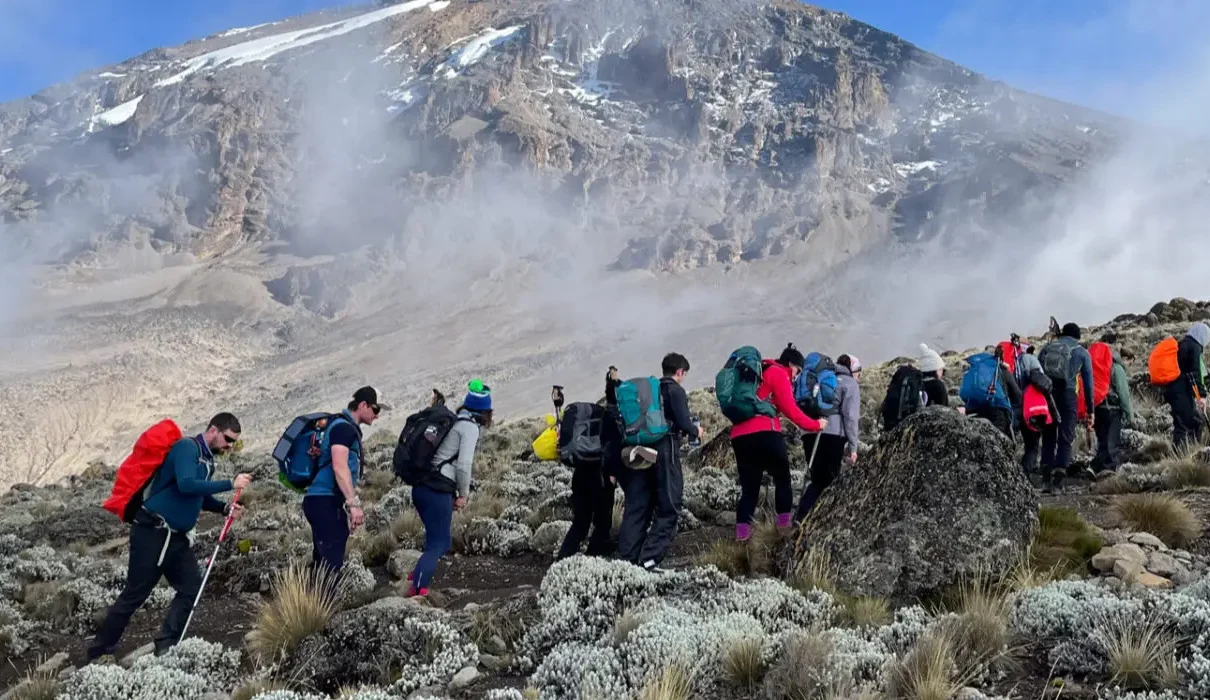
Kilimanjaro Training Guide: How to Get Ready for Africa’s Highest Mountain in 2026, 2027 and 2028Standing at 5,895 meters (19,341 feet) above sea level, Mount Kilimanjaro is the highest mountain in Africa and one of the world’s most famous trekking destinations.For many people, the dream starts with a simple thought:One day, I want to climb Kilimanjaro.”But once the dream becomes a real plan, another question quickly follows:How do I prepare for it? Do you need to be an experienced mountaineer? Do you need to run marathons? How many months should you train? What exercises are best? Should you practice with a heavy backpack? And perhaps most importantly, how do you prepare your body for the altitude?
The good news is that you don’t need to be a professional athlete to climb Kilimanjaro ;You do, however, need to prepare intelligently.
Kilimanjaro is a trekking mountain, but it is still a serious physical challenge. You will walk for several consecutive days, often for many hours at a time. The final summit attempt is particularly demanding because you will be climbing at extreme altitude, in cold conditions, often during the night.
At Eddy Tour and Safaris, we believe good preparation begins long before you arrive in Tanzania. The stronger your endurance, the more comfortable you are walking for extended periods, and the better you understand altitude, the more prepared you will be for the experience.
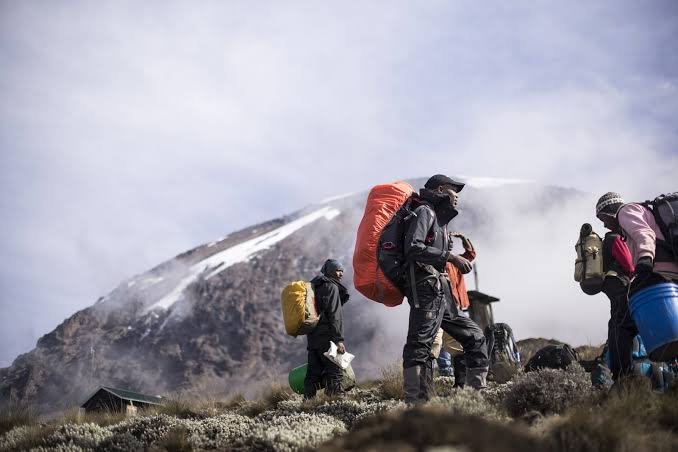
Do You Need to Be Extremely Fit to Climbing Kilimanjaro?:Kilimanjaro Training Guide: How to Get Ready for Africa’s Highest Mountain in 2026, 2027 and 2028
No.
But you should be reasonably fit.One of the biggest misconceptions about Kilimanjaro is that you need to be an elite athlete.
You don’t.
The standard routes do not normally require technical climbing skills, and many ordinary people successfully reach Uhuru Peak every year.
What Kilimanjaro does require is endurance, patience, determination and the ability to keep moving for several consecutive days.
You might not find the individual walking stages extremely difficult at lower elevations. The challenge comes from the cumulative nature of the trek.
You wake up.
You walk.
You climb.
You eat.
You rest.
Then you do it again the next day.
Eventually, you reach the summit section, where altitude and fatigue make every step more demanding.
This is why your training should focus less on becoming incredibly strong and more on becoming comfortable with sustained activity.
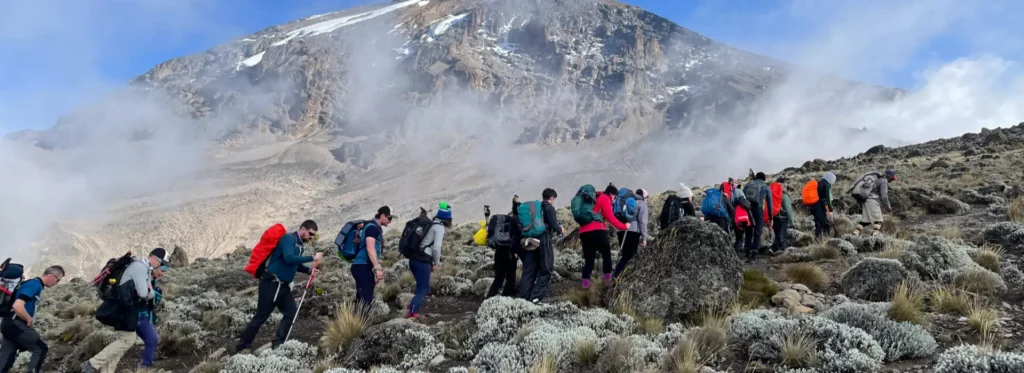
The Biggest Training Mistake: Preparing Only for Fitness of Kilimanjaro Training Guide: How to Get Ready for Africa’s Highest Mountain in 2026, 2027 and 2028
If you remember one thing from this guide, remember this:
Fitness and acclimatization are not the same thing.
You can be extremely fit and still experience altitude illness.
You can run long distances and still find 5,000 meters difficult.
You can have excellent leg strength and still need to walk very slowly at high altitude.
The CDC explains that altitude illness is caused by lower oxygen availability at high elevations and can affect travelers who ascend too quickly. Symptoms of acute mountain sickness can include headache, tiredness, loss of appetite, nausea and vomiting.
This is why training prepares your body for the physical work, while your itinerary and gradual ascent help your body adapt to altitude.
You need both.How Many Months Should You Train for Kilimanjaro?
There is no single training schedule that works for everyone.
Your starting fitness level matters.
Someone who already hikes regularly may need less preparation than someone who spends most of the day sitting at a desk.
As a practical guideline:
If You Are Already Active
Give yourself around 2 To 3 months of focused preparation.
If You Have Average Fitness
Around 3To 4 months is a sensible target.
If You Are Starting From a Low Fitness Level
Consider 4 To 6 months or more, increasing activity gradually.
The important thing is consistency.
You don’t need to destroy yourself in the gym.
You need to build your fitness progressively.
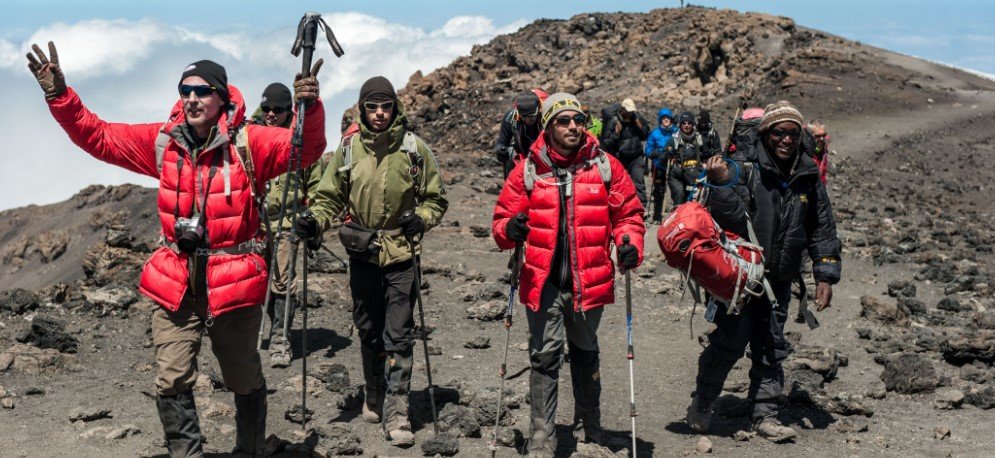
What Should Your Kilimanjaro Training Includeof Kilimanjaro Training Guide: How to Get Ready for Africa’s Highest Mountain in 2026, 2027 and 2028
A good training program should combine several areas:
- Cardiovascular endurance
- Long-distance walking
- Hill and stair training
- Leg strength
- Core strength
- Balance and stability
- Backpack practice
- Recovery and rest
- Mental preparation
Let’s look at each one.
1.Build Your Cardiovascular Endurance
Cardiovascular fitness helps your body handle prolonged physical activity.
You can use activities you already enjoy.
Good options include:
- Walking
- Jogging
- Running
- Cycling
- Swimming
- Elliptical training
- Stair climbing
- Hiking
You don’t have to become a marathon runner.
The goal is to make several hours of moderate activity feel manageable.
For example, if you currently walk for 30 minutes comfortably, gradually work toward longer sessions.
You might start with:
30 minutes To 45 minutes To 60 minutesTo 90 minutes To 2 hours
The progression should be gradual.
Don’t suddenly double your training volume because your trip is getting closer.
2. Walking Is Your Most Important Training Exercise of Kilimanjaro Training Guide: How to Get Ready for Africa’s Highest Mountain in 2026, 2027 and 2028
This sounds obvious, but it is worth emphasizing.
Walk.
Kilimanjaro is a trekking experience, so the best preparation is often trekking itself.
If you can access hills or hiking trails, use them.
If you live somewhere flat, long walks are still extremely valuable.
Try to make walking a regular part of your weekly routine.
As your fitness improves, gradually introduce longer walks.
Eventually, you should be comfortable spending several hours on your feet.
This teaches your body something that a short gym workout cannot fully replicate:
How to keep moving when you have already been walking for a long time.
3.Train on Hills and Stairs:Kilimanjaro Training Guide: How to Get Ready for Africa’s Highest Mountain in 2026, 2027 and 2028
Kilimanjaro involves elevation gain, so training on hills is particularly useful.
If you have access to hiking trails, walk uphill.
If you live in a flat area, stairs can provide an alternative.
Try sessions such as:
- Walking up several flights of stairs
- Repeating hill climbs
- Hiking on an incline treadmill
- Walking uphill with trekking poles
Don’t turn every session into a race.
The mountain’s philosophy is pole pole slowly, slowly.
Your training should sometimes include sustained, moderate-effort sessions rather than only short bursts of maximum effort.
4.Strengthen Your Legs:Kilimanjaro Training Guide: How to Get Ready for Africa’s Highest Mountain in 2026, 2027 and 2028
Your legs will do most of the work on Kilimanjaro.
Strong legs can make long climbs and descents much more manageable.
Useful exercises include:
Squats
Excellent for developing overall lower-body strength.
Lunges
Useful for developing leg strength and stability.
Step-Ups
Particularly relevant because climbing Kilimanjaro involves repeated upward steps.
Calf Raises
Help strengthen the lower legs.
Glute Bridges
Useful for strengthening the glutes and posterior chain.
You don’t necessarily need extremely heavy weights.
Focus on controlled movements and good technique.
If you’re new to strength training, consider working with a qualified trainer.
5.Don’t Forget Your Core:Kilimanjaro Training Guide: How to Get Ready for Africa’s Highest Mountain in 2026, 2027 and 2028
Your core helps stabilize your body while walking over uneven ground.
Exercises such as:
- Planks
- Side planks
- Bird dogs
- Dead bugs
- Controlled abdominal exercises
can help develop stability.
You don’t need a bodybuilding-style abdominal workout.
The objective is functional strength.
You want your body to remain stable while carrying your daypack and walking over rocks, roots and uneven surfaces.
6.Practice With a Backpack
This is one of the most useful ways to make your training more realistic.
You don’t need to carry an extremely heavy pack.
In fact, you should avoid unnecessarily overloading yourself.
Instead, gradually practice walking with the approximate weight you expect to carry during your trek.
This allows you to discover:
- Whether your backpack fits properly
- Whether the straps cause discomfort
- Whether your shoulders become sore
- Whether your hip belt is adjusted correctly
- How your posture changes
- Whether you need to reorganize your gear
Eddy Tour and Safaris’ Kilimanjaro preparation guidance also recommends training with a weighted backpack as part of building endurance for longer routes.
The key is gradual progression.
7.Practice Walking for Several Days in a Row
This is something many climbers overlook.
Kilimanjaro isn’t just about completing one long hike.
You need to be prepared to walk repeatedly over several days.
A useful training strategy is to occasionally schedule:
Saturday: Long hike
Sunday: Moderate walk
This teaches your body what it feels like to exercise while still recovering from the previous day’s activity.
As your trip gets closer, you can occasionally simulate two or three consecutive hiking days.
You don’t need to reproduce the entire Kilimanjaro trek at home.
The objective is simply to become comfortable with consecutive days of activity.
8.Train for the Descent, Too
Many people prepare only for going uphill.
That’s a mistake.
Descending Kilimanjaro can be hard on your knees and thighs, especially after the summit attempt.
This is where exercises such as step-downs, lunges and controlled squats can help.
Trekking poles can also provide additional stability and reduce some of the load on your knees during descent.
Eddy Tour and Safaris recommends trekking poles as part of its Kilimanjaro preparation guidance, particularly for balance and reducing strain during descents.
9. Don’t Try to Train at Kilimanjaro Altitude
One common misconception is that you need to simulate extreme altitude during your training.
For most people, that isn’t practical.
You don’t need to live at 5,000 meters to prepare for Kilimanjaro.
Altitude acclimatization happens during the climb itself.
Your best preparation is:
Build fitness + choose an appropriate itinerary + ascend gradually + listen to your body.
The CDC recommends gradual ascent at high elevations and advises travelers to discuss altitude-related preventive medication with a doctor when appropriate.
10. Understand That Fitness Does Not Prevent Altitude Sickness
This deserves its own section because it is so important.
A physically fit person can experience altitude sickness.
A less athletic person can sometimes acclimatize successfully.
Your fitness level and your body’s response to altitude are separate issues.
Symptoms that should be taken seriously include:
- Headache
- Nausea
- Loss of appetite
- Unusual tiredness
- Dizziness
- Vomiting
More serious symptoms can include confusion, loss of coordination and severe shortness of breath. The CDC advises immediate descent for serious altitude illness such as high-altitude cerebral edema or high-altitude pulmonary edema.
Never hide symptoms from your guide.
If you feel unwell, tell your guide immediately.
Your Kilimanjaro Training Plan: 16 Weeks
If you have around four months before your climb, the following framework can be a useful starting point.
It is not a medical prescription or a personalized fitness program. Adjust it to your current fitness level and seek professional advice if you have health concerns.
Weeks 1To 4: Build the Foundation
Focus on consistency.
Aim for approximately:
- 3 cardio sessions per week
- 2 strength sessions
- 2–3 walking sessions
- One longer walk on the weekend
Start comfortably.
The goal is to create a habit.
Don’t worry about speed.
Weeks 5 To 8: Increase Endurance
Now begin extending your walking sessions.
Your weekend hike can gradually become longer.
Introduce more hills or stairs.
Continue strength training.
You can also begin practicing with a light backpack.
Your body should be adapting to longer periods on your feet.
Weeks 9 To 12: Make Training More Mountain-Specific
This is where your training becomes more closely related to Kilimanjaro.
Include:
- Longer hikes
- Hill walking
- Stair sessions
- Backpack walks
- Consecutive-day hiking
- Longer endurance sessions
You should begin feeling more comfortable spending several hours walking.
Weeks 13 To 15: Peak Preparation
This is your strongest training phase.
Include some of your longest walks.
Practice with your actual hiking boots.
Use your trekking poles.
Test your backpack.
Wear the layers you expect to use.
Try the snacks you plan to take.
The purpose is to identify problems before you reach Tanzania.
Week 16: Taper and Recover
Don’t arrive in Tanzania exhausted.
Reduce your training volume during the final week.
Continue light walking and mobility work, but prioritize sleep and recovery.
Your objective is to arrive at the mountain feeling fresh.
Not tired.
Not injured.
Not desperately trying to squeeze in one final huge workout.
What Should You Eat While Training?
You don’t need a complicated diet.
Focus on balanced nutrition.
Your meals should generally include:
- Carbohydrates for energy
- Protein for recovery
- Healthy fats
- Fruits and vegetables
- Adequate fluids
During long training walks, experiment with snacks such as:
- Bananas
- Dried fruit
- Nuts
- Energy bars
- Sandwiches
- Other foods you know you tolerate well
Don’t wait until Kilimanjaro to discover that a particular energy gel makes you feel sick.
Practice during training.
Hydration Before and During Kilimanjaro
Hydration matters, but don’t fall into the trap of thinking that drinking enormous amounts of water will prevent altitude sickness.
Drink regularly and according to your body’s needs.
During training, learn how much fluid you typically need during long walks.
This makes it easier to plan your mountain routine.
Your operator will also advise you about water availability and drinking arrangements on the mountain.
Eddy Tour and Safaris states that drinking water is included during its published Kilimanjaro packages.
Practice With Your Kilimanjaro Boots
Never make summit day the first time you wear your hiking boots.
This is one of the easiest mistakes to avoid.
Wear your boots during training.
Walk on:
- Roads
- Trails
- Hills
- Uneven ground
- Wet surfaces where appropriate
Make sure you know how your feet respond after several hours.
If your boots cause rubbing or pressure points, solve the problem before your trip.
Test Your Clothing Before You Travel
Kilimanjaro passes through several climate zones.
You may start in warm, humid rainforest conditions and eventually reach an extremely cold summit environment.
That means layers are important.
Eddy Tour and Safaris recommends warm layers, waterproof clothing and appropriate footwear as part of its Kilimanjaro preparation guidance.
Your clothing system may include:
- Moisture-wicking base layer
- Fleece or insulating layer
- Warm jacket
- Waterproof jacket
- Waterproof trousers
- Warm gloves
- Hat
- Warm socks
- Comfortable hiking trousers
Test everything during training.
Mental Preparation Is Part of Training
Kilimanjaro is physical.
But it is also mental.
There will probably be moments when you feel tired.
There may be moments when you question yourself.
The summit night can be especially demanding because you are walking in darkness and at extreme altitude.
Mental preparation means understanding beforehand that discomfort is part of the experience.
It also means learning to focus on small goals.
Don’t think:
I still have five hours to go.
Think:
“Let’s reach the next rest point.”
Then:
“Let’s take the next section.”
Then another.
One step at a time.
Learn the Phrase Pole Pole
If you’re preparing for Kilimanjaro, learn this phrase before you arrive:
Pole pole.
It means:
Slowly, slowly.
You will probably hear your guide say it many times.
And there is a reason.
You are not competing against the climber next to you.
The objective isn’t to reach camp first.
The objective is to manage your energy and give your body the best possible opportunity to acclimatize.
Eddy Tour and Safaris specifically recommends adopting the “pole pole” approach as part of Kilimanjaro preparation.
Choosing the Right Route With Eddy Tour and Safaris
Your training plan should also take your route into account.
Eddy Tour and Safaris currently lists several Kilimanjaro routes, including Machame, Marangu, Lemosho, Rongai, Northern Circuit, Umbwe and Shira.
Each route has a different character.
Machame Route
Machame is popular for its scenery and varied terrain. Eddy currently offers six- and seven-day Machame options.
Lemosho Route
Lemosho is known for its scenic western approach and longer trekking options. Eddy’s current 7-day Lemosho itinerary emphasizes gradual acclimatization.
Marangu Route
Marangu is famous for its mountain huts and is one of the shorter traditional itineraries. Eddy currently advertises a five-day Marangu itinerary for 2026, 2027 and 2028.
Rongai Route
Rongai approaches Kilimanjaro from the northeastern side and provides a different perspective of the mountain.
Northern Circuit
This is a longer option that can suit travelers who want more time on the mountain and a gradual experience.
Umbwe and Shira
These routes have their own specific characteristics and should be selected based on experience, itinerary and acclimatization considerations.
The “best” route isn’t necessarily the same for every climber.
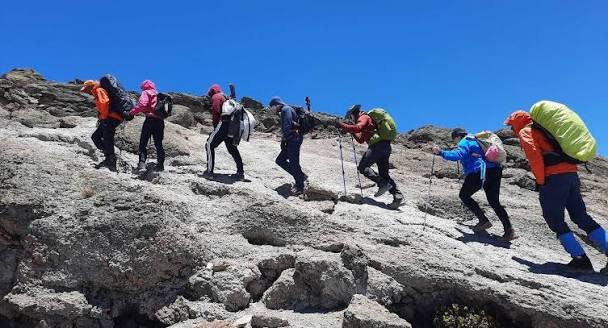
How Training Changes for 2026, 2027 and 2028
Preparing for Kilimanjaro in 2026
If your climb is happening in 2026, your focus should be on practical preparation.
Don’t try to dramatically transform your fitness at the last minute.
Instead:
- Walk consistently
- Build endurance
- Test your equipment
- Practice with your boots
- Strengthen your legs
- Get adequate sleep
- Understand altitude symptoms
- Confirm your itinerary
Eddy currently markets Kilimanjaro climbing packages for 2026 across several routes.
Preparing for Kilimanjaro in 2027
If you’re planning for 2027, you have more time to build a structured fitness base.
This is ideal.
Start slowly and increase your activity over the months.
By the final three to four months, you can move into more mountain-specific training.
Eddy currently lists 2026–2027 Machame programs, including a seven-day option.
Preparing for Kilimanjaro in 2028
If you’re targeting 2028, you have the biggest advantage of all:
Time.
You can build your fitness gradually without rushing.
You can improve your cardiovascular endurance.
You can strengthen your legs.
You can develop a hiking habit.
You can experiment with different equipment.
And you can plan your route well in advance.
Long-term preparation is particularly useful if you are currently new to hiking.
What About People Who Don’t Exercise Regularly?
Don’t panic.
You can start where you are.
If you currently walk for only 20 minutes, start with 20 minutes.
After a few weeks, increase it.
Then increase again.
The biggest mistake is believing that you need to become fit immediately.
You don’t.
Fitness is built gradually.
Your body responds to consistent training.
A realistic training program followed for several months is much more useful than an extreme program followed for ten days.
Should You Run to Prepare for Kilimanjaro?
Running can be useful for cardiovascular fitness.
But you don’t have to run.
If you enjoy running, include it.
If you hate running, don’t force yourself to become a runner.
Walking, hiking, cycling, swimming and stair training can all contribute to your endurance.
Remember:
You are preparing to hike a mountain, not run a marathon.
Should You Train With Heavy Weights?
Strength training is useful, but you don’t need to become extremely muscular.
Focus on functional strength.
Your training should help you:
- Walk uphill
- Walk downhill
- Carry a daypack
- Maintain balance
- Stay active for long periods
Good technique is more important than lifting the heaviest possible weight.
If you are unfamiliar with strength training, consider getting guidance from a qualified professional.
What About Rest Days?
Rest is training too.
Your muscles need time to recover.
Schedule easier days between harder sessions.
Sleep enough.
Eat well.
Pay attention to persistent pain.
There is a difference between productive training discomfort and an injury.
If something hurts persistently or unusually, don’t simply push through it because your trip is approaching.
Get appropriate professional advice.
Medical Preparation Before Kilimanjaro
Kilimanjaro reaches extreme altitude, so health preparation matters.
The CDC recommends that people with pre-existing medical conditions discuss high-altitude travel with an appropriate healthcare professional before traveling. It also advises travelers to speak with a doctor about medicines that may be appropriate for preventing or treating altitude illness.
This is especially important if you have heart or lung conditions, take regular medication, or have another health concern that could affect high-altitude activity.
Don’t self-prescribe altitude medication based on something you read online.
Discuss your individual situation with a qualified healthcare professional.
What Should You Pack for Training and the Mountain?
Your final packing list will depend on your route and operator, but important categories include:
Clothing
- Base layers
- Fleece
- Warm jacket
- Waterproof jacket
- Waterproof trousers
- Hiking trousers
- Warm hat
- Gloves
- Hiking socks
Footwear
- Broken-in hiking boots
- Comfortable camp shoes
Equipment
- Daypack
- Trekking poles
- Headlamp
- Water bottles or hydration system
- Sleeping bag appropriate for the expected conditions
Personal Items
- Sunscreen
- Sunglasses
- Personal toiletries
- Personal medication
- Small first-aid supplies
- High-energy snacks
Eddy Tour and Safaris’ published Kilimanjaro preparation information similarly emphasizes layered clothing, sturdy broken-in boots, waterproof gear, trekking poles and high-energy snacks.
Your Final Week Before Kilimanjaro
The final week is not the time to prove how tough you are.
Reduce your training.
Go for easy walks.
Check your equipment.
Organize your documents.
Confirm your travel arrangements.
Sleep well.
Eat normally.
And give your body a chance to recover.
You want to arrive in Tanzania thinking:
I’m ready.
Not:
I hope my legs recover before Day One.
The Day Before You Start Climbing
Use the day before your trek to relax.
Avoid unnecessary strenuous activity.
Check your backpack.
Organize your clothing.
Make sure your boots are ready.
Meet your guide and ask questions.
Understand the itinerary.
Most importantly, don’t compare yourself with other climbers.
Everyone starts from a different fitness level.
Your journey is your own.
What Makes Eddy Tour and Safaris a Useful Partner?
Training is only one part of preparing for Kilimanjaro.
Your choice of operator matters too.
Eddy Tour and Safaris is a Tanzania-based operator offering Kilimanjaro climbs, safaris, Zanzibar holidays and tailor-made trips. Its current Kilimanjaro program includes multiple routes and itinerary lengths, allowing travelers to choose according to their preferences and schedule.
Its published Kilimanjaro packages also describe professional mountain guides, mountain crew, meals, drinking water and park-related fees among included services, depending on the specific itinerary.
When selecting a climbing company, don’t just ask:
How much does it cost?
Also ask:
- How many days is the itinerary?
- What route will we use?
- How is acclimatization handled?
- What safety procedures are in place?
- What equipment is provided?
- What happens if someone becomes sick?
- What is included in the price?
- How are guides and porters treated?
These questions can help you make a much more informed decision.
Your Kilimanjaro Training Checklist
Before traveling, you should ideally be able to say:
Fitness
- I can walk for several hours.
- I have trained on hills or stairs.
- My legs are accustomed to long activity.
- I have practiced consecutive-day walking.
Equipment
- My boots are broken in.
- My backpack fits properly.
- I have tested my clothing layers.
- I know how to use my trekking poles.
- I have tested my headlamp.
Nutrition
- I know what foods work for me.
- I have practiced eating during long walks.
- I understand my hydration needs.
Mental Preparation
- I understand that the summit will be difficult.
- I am comfortable walking slowly.
- I know that altitude affects people differently.
- I will communicate honestly with my guide.
Health
- I have considered whether I need medical advice before high-altitude travel.
- I understand basic symptoms of altitude illness.
- I know that serious symptoms require immediate action.
Final Thoughts: Prepare for the Journey, Not Just the Summit
Training for Kilimanjaro is not about becoming superhuman.
It is about becoming consistent.
You don’t need to run 50 kilometers.
You don’t need to lift enormous weights.
You don’t need to spend every weekend climbing mountains.
You need to teach your body that several hours of walking is normal.
You need to strengthen your legs.
You need to develop endurance.
You need to practice carrying your equipment.
And you need to prepare your mind for a slow, steady journey toward 5,895 meters.
Most importantly, remember that fitness cannot replace acclimatization.
The mountain will still demand respect from the strongest athlete.
Choose an itinerary that gives you an appropriate opportunity to adapt.
Walk pole pole.
Listen to your guide.
Stay hydrated and nourished.
Rest.
And tell someone immediately if you feel unwell.
For climbers planning their adventure in 2026, 2027 or 2028, Eddy Tour and Safaris offers a range of Kilimanjaro routes, including Machame, Marangu, Lemosho, Rongai, Northern Circuit, Umbwe and Shira.
Whether you are an experienced hiker or someone taking your first serious mountain adventure, preparation can make the difference between simply surviving the trek and actually enjoying it.
Because Kilimanjaro isn’t just about the moment you reach Uhuru Peak.
It is about every step that takes you there.
The rainforest.
The moorland.
The cold alpine landscape.
The friendships made along the trail.
The quiet evenings at camp.
The early-morning summit push.
And finally, the moment you look across Tanzania from the Roof of Africa and realize:
You prepared for this.
You took it one step at a time.
You made it.
Frequently Asked Questions About Kilimanjaro Training
1. How long should I train before climbing Kilimanjaro?
Most people can benefit from approximately 3–6 months of preparation, depending on their starting fitness level. Already-active hikers may need less, while beginners may benefit from a longer gradual buildup.
2. Do I need to be an athlete to climb Kilimanjaro?
No. You don’t need to be an athlete, but you should have good endurance and be comfortable walking for several hours on consecutive days.
3. What is the best exercise for Kilimanjaro?
Walking and hiking are among the most relevant forms of training. Combine them with cardiovascular exercise, leg strength, core stability and hill or stair training.
4. Can running prepare me for Kilimanjaro?
Yes. Running can improve cardiovascular fitness, but it isn’t essential. Hiking, walking, cycling, swimming and stair training can also help.
5. Does training prevent altitude sickness?
No. Physical fitness does not guarantee protection from altitude illness. Gradual ascent and adequate acclimatization are important.
6. Should I train with a backpack?
Yes, but gradually. Practice with a reasonable weight so you can become accustomed to your equipment without unnecessarily overloading yourself.
7. Do I need trekking experience?
Previous mountain experience is helpful but not normally essential for standard Kilimanjaro trekking routes. Good preparation, appropriate pacing and professional guiding are important.
8. What does “pole pole” mean?
“Pole pole” is Swahili for “slowly, slowly.” It is a familiar phrase on Kilimanjaro and reflects the importance of maintaining a controlled pace.
9. Which route is best for beginners?
There isn’t one universally best route. Your fitness, available time, altitude concerns and preferences all matter. Longer itineraries can provide more time for acclimatization. Eddy Tour and Safaris offers several route options for travelers to compare.
10. When should I start training for Kilimanjaro 2026, 2027 or 2028?
Kilimanjaro Training Guide: How to Get Ready for Africa’s Highest Mountain in 2026, 2027 and 2028;This guide explains how to train for your Kilimanjaro climb in 2026, 2027 or 2028, whether you are a complete beginner or someone who already enjoys hiking.
The earlier the better, particularly if you are new to hiking. A long-term approach allows you to increase fitness gradually instead of attempting a sudden and stressful training program.