
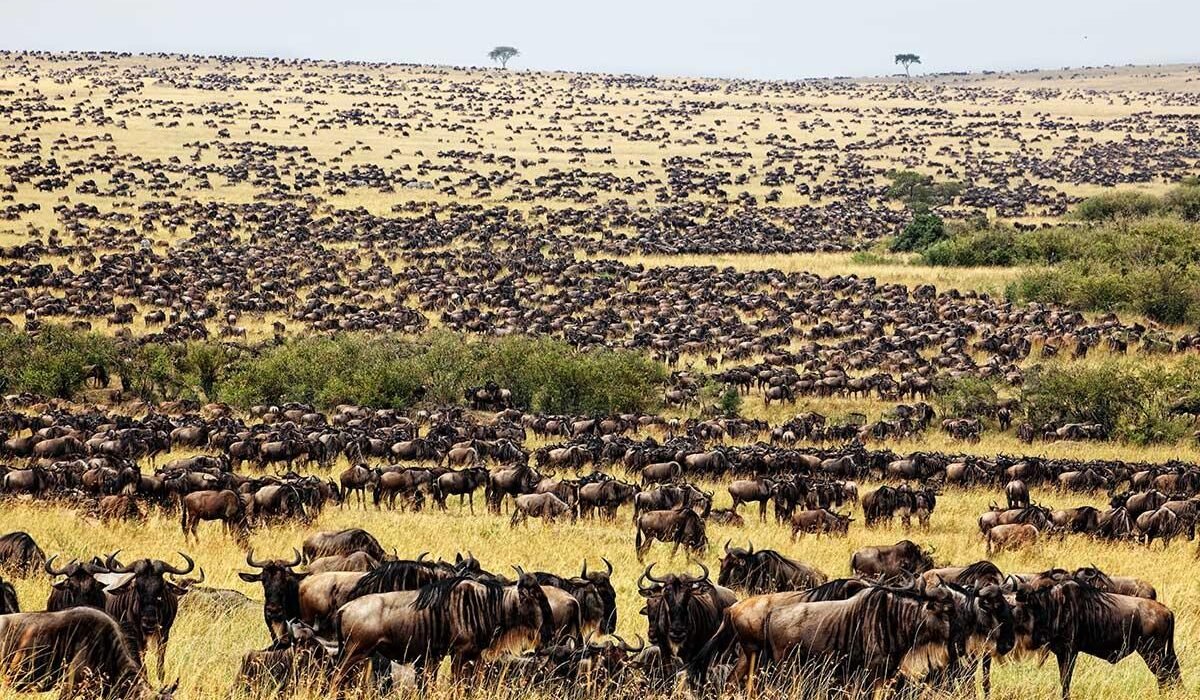
The Great Wildebeest Migration is one of the main reasons travelers visit Tanzania. Every year, enormous herds of wildebeest, accompanied by zebras and gazelles, move across the Serengeti ecosystem in search of fresh grass and water. Along the way, they encounter lions, cheetahs, hyenas, crocodiles, and other predators. The migration is not a single event that happens in one location. It is a continuous natural cycle, and the best place to see it depends largely on the time of year.
If you are planning a Tanzania safari in 2027, 2028 or 2029, choosing the right part of the Serengeti is one of the most important decisions you will make. Visitors traveling in February may have excellent opportunities to see newborn wildebeest calves in the southern plains, while those visiting in August may prefer the northern Serengeti, where herds sometimes cross the Mara River. Travelers visiting during the transition months can explore central or western Serengeti, depending on the rainfall and movement of the animals.
The Serengeti is a vast landscape, and wildlife movements are not controlled by a fixed timetable. Rainfall, grazing conditions, water availability, and natural herd behavior determine where the animals travel. Even during the most popular migration months, it is impossible to guarantee that a particular river crossing or predator encounter will happen during a game drive.
At Eddy Tours & Safaris, we help travelers organize Tanzania wildlife safaris based on their preferred travel dates, available time, and interests. Whether you want to experience the calving season, watch large herds moving across the plains, or spend several days near the Mara River, understanding the main migration areas will help you plan a more rewarding safari.
This guide covers the five best places to see the Great Wildebeest Migration in Tanzania, the months normally associated with each area, and practical advice for planning your safari in 2027, 2028 or 2029.
Understanding the Great Wildebeest Migration in Tanzania
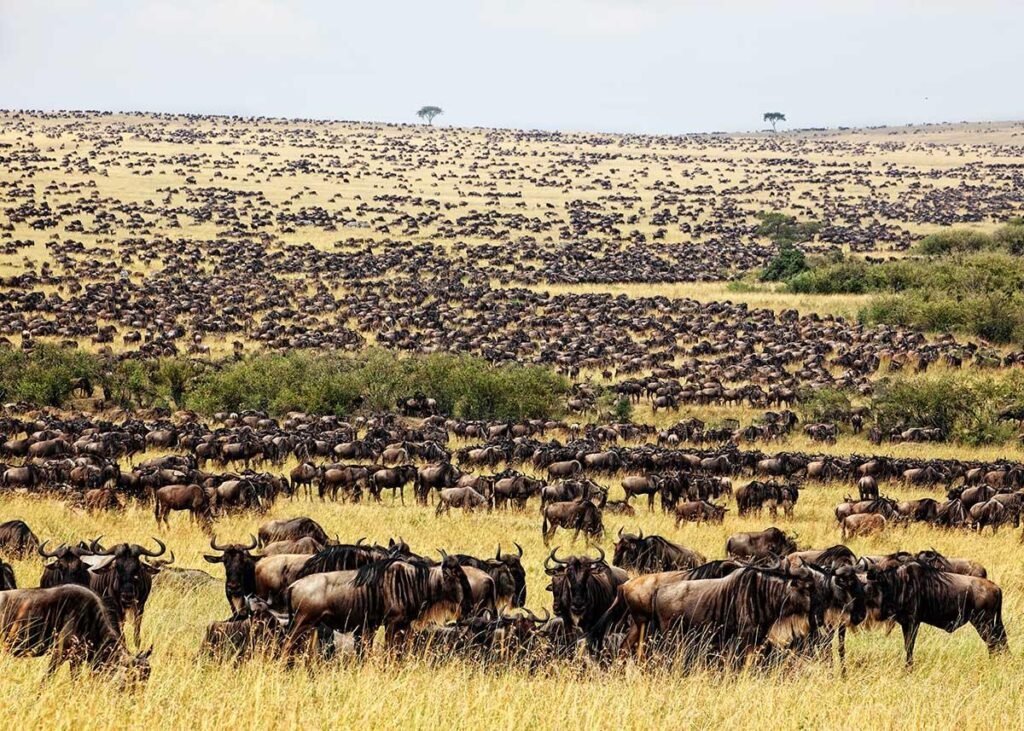
The Great Wildebeest Migration is an annual movement of large herbivore populations across the Serengeti–Mara ecosystem in Tanzania and Kenya. Wildebeest form the largest part of the migrating herds, while zebras and gazelles also participate in seasonal movements. These animals travel in response to changing rainfall patterns and the availability of nutritious grazing, creating one of the world’s most important wildlife spectacles.
The migration is closely connected to the ecosystem’s seasonal cycle. When the short rains return toward the end of the year, many wildebeest move toward the southern Serengeti and Ndutu plains, where fresh grass provides suitable feeding conditions. The calving season generally takes place during the early months of the year, when large numbers of young wildebeest are born over a relatively short period.
As the southern plains become drier, many herds begin moving north and west. Some pass through the central Serengeti, while others move toward the Western Corridor and Grumeti River. During the middle and later parts of the year, significant numbers may reach the northern Serengeti, where the Mara River forms one of the most recognizable landmarks of the migration.
When rainfall returns to the southern plains, the herds begin moving back toward areas with fresh grazing. However, this movement does not happen as one enormous group traveling in a perfectly organized circle. Herds frequently separate, spread across different areas, change direction, or remain in suitable grazing locations longer than expected.
For travelers, this means that the best migration safari is planned around the likely seasonal movement rather than a promise that animals will be in a particular location on an exact date.
Top 5 Best Places to See the Wildebeest Migration in Tanzania
| Migration destination | Best months to consider | Main experience |
|---|---|---|
| Ndutu Area | December–March | Calving season, newborn wildebeest and predator activity |
| Southern Serengeti Plains | December–April | Large herds grazing across open grasslands |
| Central Serengeti – Seronera | April–June and November–December | Migration movement and excellent resident wildlife |
| Western Serengeti – Grumeti River | May–July | Herd movement, river crossings and western landscapes |
| Northern Serengeti – Kogatende | July–October | Mara River crossings and large dry-season herds |
These months describe typical seasonal patterns. Actual herd locations may vary considerably from year to year.
1. Ndutu Area – Best for the Wildebeest Calving Season
The Ndutu area is one of the best places in Tanzania to experience the Great Wildebeest Migration during the early months of the year. Located within the wider southern Serengeti ecosystem, including parts of the Ngorongoro Conservation Area, Ndutu is especially important because its short-grass plains provide suitable grazing for pregnant wildebeest and newly born calves. When seasonal rains create fresh pasture, enormous herds can gather across the surrounding landscape.
The most famous event in Ndutu is the wildebeest calving season, which generally reaches its peak around February. During this period, large numbers of calves are born within a relatively short time, creating a remarkable wildlife experience for visitors. Seeing young wildebeest standing beside their mothers, learning to move with the herd, and crossing the open plains is one of the most memorable parts of a southern Serengeti safari.
The abundance of young animals also attracts predators. Lions, cheetahs, hyenas, and other carnivores take advantage of the seasonal concentration of prey, making Ndutu particularly attractive for travelers interested in predator behavior and wildlife photography. However, predator sightings and hunting events are natural and unpredictable, so visitors should approach every game drive with realistic expectations.
Ndutu is also known for its varied landscapes, including open grasslands, seasonal marshes, acacia woodland, and areas surrounding Lake Ndutu and Lake Masek. This mixture of habitats supports different wildlife species and provides excellent photographic opportunities. Depending on the applicable conservation-area rules and the exact location, some designated areas allow more flexible game-drive arrangements than the main Serengeti National Park, which can be useful for photography.
For travelers planning a safari in January, February, or March 2027–2029, Ndutu deserves serious consideration. Spending two or three nights in the area provides more opportunities to explore different parts of the plains and respond to the movement of the herds.
Best months: December to March, especially January and February.
Best for: Wildebeest calving, predator activity, photography, and green-season safaris.
2. Southern Serengeti Plains – Best for Large Herds and Open Landscapes
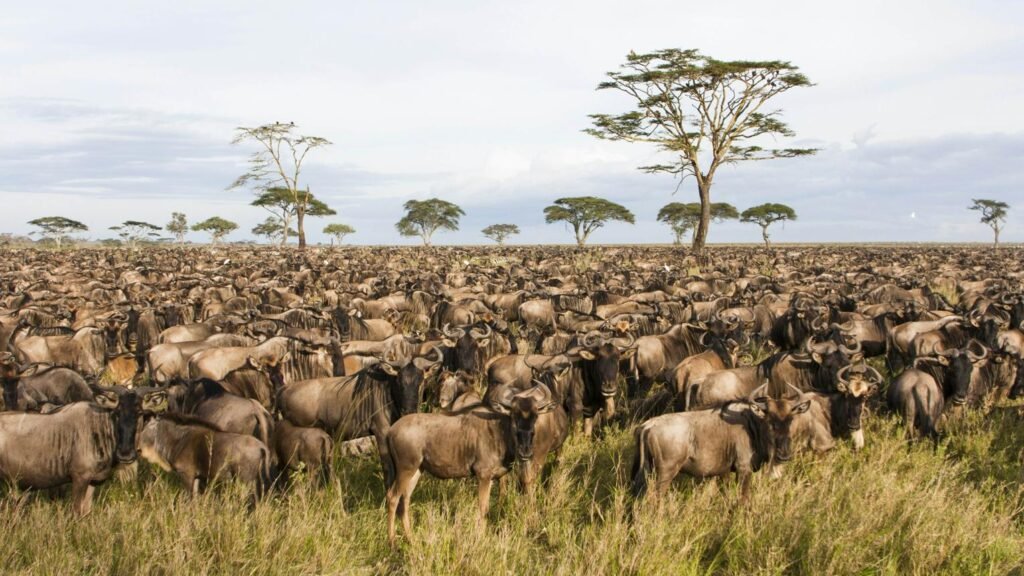
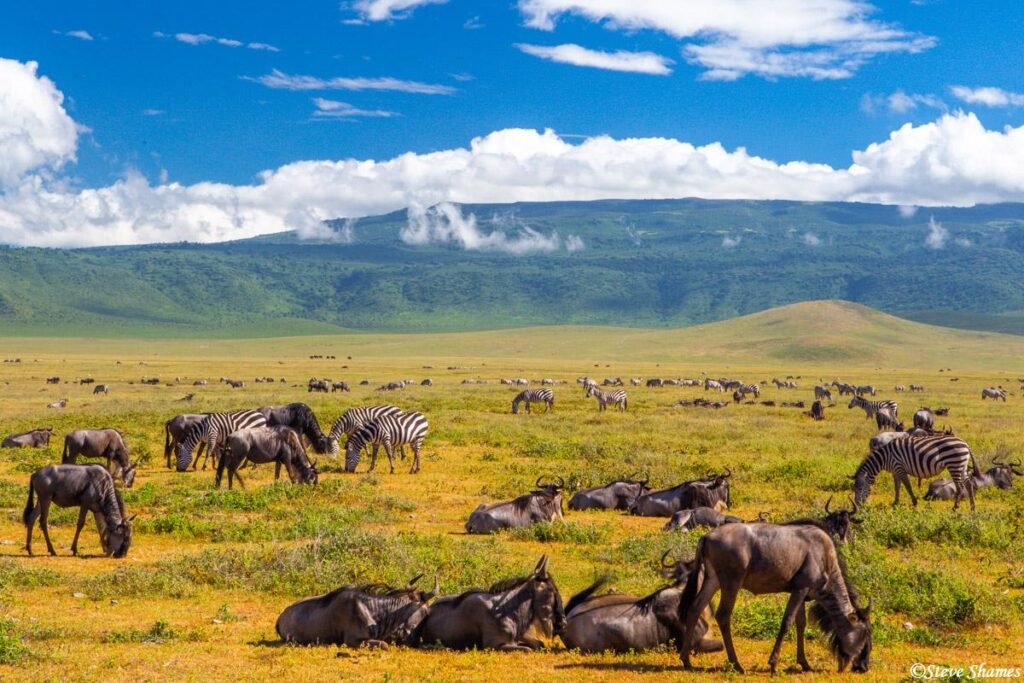
The Southern Serengeti Plains are another outstanding place to experience the Great Wildebeest Migration. This extensive grassland region stretches across the southern part of Serengeti National Park and connects with the wider Ndutu and Ngorongoro ecosystems. During the wet season, fresh grass attracts migrating wildebeest, zebras, and gazelles, sometimes spreading large herds across the horizon.
One of the main attractions of the southern plains is the openness of the landscape. Unlike heavily wooded areas, the short-grass environment often allows visitors to observe animals over long distances. Herds may gather in enormous groups, while smaller concentrations spread across different grazing areas. The wide views also create excellent opportunities for landscape and wildlife photography, particularly when dramatic clouds form over the plains during the green season.
The southern Serengeti is especially important for the migration’s breeding cycle. The nutritious grasses growing on the volcanic soils help support wildebeest during pregnancy and lactation. As calves are born, the plains become an important nursery area, although the exact distribution of animals changes according to rainfall and grazing conditions.
Visitors may also encounter resident wildlife, including lions, cheetahs, hyenas, jackals, and different antelope species. The presence of migrating herds can create opportunities to observe interactions between predators and prey, but these encounters cannot be guaranteed. Even when the migration is spread across a wide area, the southern Serengeti remains a beautiful place to enjoy the natural environment and the scale of the ecosystem.
For travelers visiting Tanzania between December and March, combining the Southern Serengeti Plains with Ndutu can provide a well-rounded migration safari. A flexible itinerary allows your guide to explore the areas where animals have recently been reported rather than following a rigid sightseeing schedule.
Best months: December to March, sometimes extending into April depending on rainfall.
Best for: Large herds, open-plains photography, calving-season wildlife, and scenic game drives.
3. Central Serengeti – Seronera Valley and the Migration Movement
Central Serengeti, particularly the Seronera Valley, is one of the most reliable wildlife-viewing areas in Tanzania. Although it is not always the main concentration point for the Great Wildebeest Migration, it plays an important role in the seasonal movement of animals between the southern plains and other parts of the ecosystem. During certain months, migrating herds may pass through or gather in different parts of central Serengeti as they respond to changing grazing conditions.
The Seronera region is characterized by grasslands, river valleys, acacia woodland, and rocky outcrops known as kopjes. These varied habitats support a large population of resident wildlife, including lions, leopards, elephants, buffaloes, giraffes, and different antelope species. This makes central Serengeti particularly attractive for travelers who want a strong overall wildlife experience, even when the main migration herds are located elsewhere.
During the transition months, especially around April, May, November, and December, central Serengeti may provide opportunities to observe wildebeest moving between seasonal grazing areas. However, the movement can be widely dispersed, and not every part of Seronera will contain large herds at the same time. A knowledgeable safari guide can use recent wildlife information to decide which sections of the region are worth exploring.
Central Serengeti is also an important logistical base for longer safaris. Its location allows travelers to combine the southern plains, western areas, or northern Serengeti within a single itinerary. For example, a safari beginning in Ndutu during March may continue through Seronera, while a trip focused on the northern migration during July or August may include central Serengeti before traveling toward Kogatende.
For first-time visitors to Tanzania, central Serengeti is often worth including regardless of the migration season. The combination of resident wildlife, varied landscapes, and access to different parts of the park makes it one of the most practical destinations for a well-balanced safari.
Best months: Year-round for resident wildlife; migration movement is often associated with April–June and November–December.
Best for: Big cats, general wildlife viewing, migration transitions, and first-time Serengeti safaris.
4. Western Serengeti and Grumeti River – Best for the Western Migration
The Western Corridor of Serengeti National Park is an important part of the wildebeest migration route, particularly during the months when herds move away from the southern plains toward the western and northern parts of the ecosystem. The area is known for its river systems, woodland, grassland, and quieter landscapes, offering a different safari experience from the open southern plains.
The Grumeti River is one of the most recognizable landmarks in the western Serengeti. During certain periods, migrating wildebeest may gather near the river and attempt to cross it while continuing their seasonal movement. Nile crocodiles inhabit the river, and crossings can create dramatic wildlife encounters. However, Grumeti crossings are not guaranteed, and the timing and location of these events vary considerably with rainfall and water levels.
The western region also provides opportunities to observe animals moving through a mixture of habitats. Some herds may travel in long lines across the grassland, while others gather near water sources or remain in suitable grazing areas. Visitors may encounter giraffes, elephants, buffaloes, lions, and other resident wildlife during game drives, making the region interesting even when the migration is less concentrated.
One of the attractions of the Western Corridor is that it may offer a quieter safari experience than the most popular northern crossing areas during peak season. Travelers who prefer a more relaxed atmosphere, fewer vehicles at certain sightings, and varied scenery may find this region especially appealing. Nevertheless, the distances involved mean that accommodation location and travel time should be considered carefully when planning the itinerary.
For travelers visiting Tanzania between May and July, the Western Corridor and Grumeti River are worth considering as part of a migration-focused safari. Spending at least two nights in the region can provide more flexibility for exploring different wildlife areas and waiting for natural events to unfold.
Best months: May to July, depending on seasonal conditions.
Best for: Western migration movement, possible Grumeti River crossings, quieter game drives, and varied landscapes.
5. Northern Serengeti and Kogatende – Best for Mara River Crossings
Northern Serengeti is one of the most famous destinations for the Great Wildebeest Migration, particularly between July and October. The region includes the Kogatende area, the Mara River, and surrounding grasslands and woodland near the Kenya–Tanzania border. During the dry season, migrating herds may gather in this part of the ecosystem while searching for suitable grazing and water.
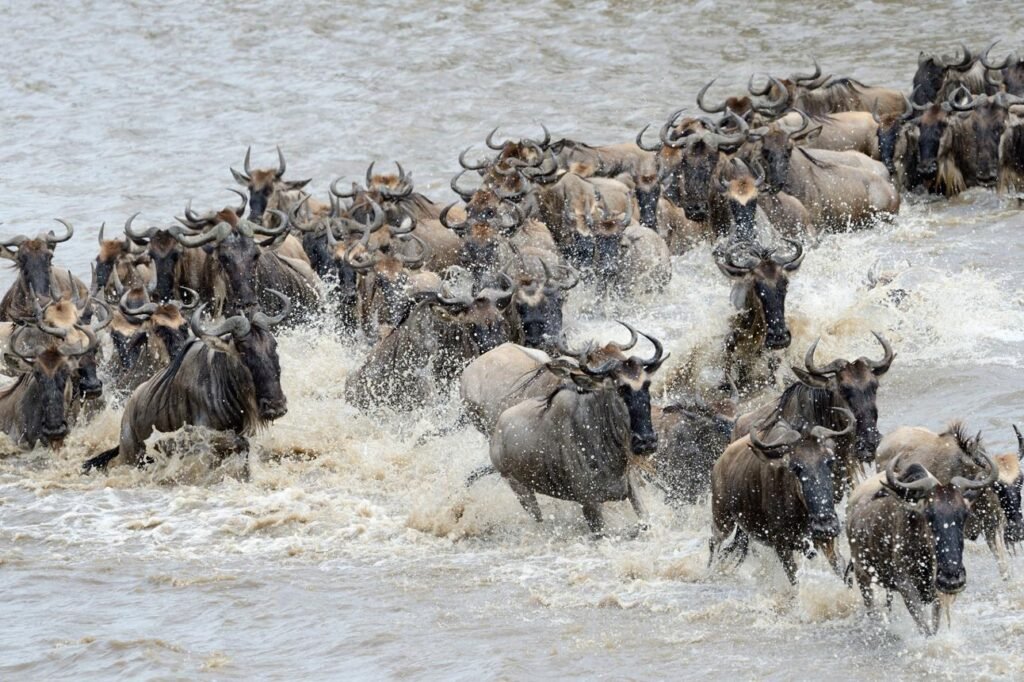
The Mara River is the main attraction for many visitors. Wildebeest sometimes gather along the riverbanks before attempting to cross, often facing strong currents, steep banks, and crocodiles. These crossings can be dramatic, with large numbers of animals entering the water within a short period. However, the herds may also wait for hours or days, change direction, or cross at a different location from the one where safari vehicles are waiting.
This unpredictability is an important part of planning a northern Serengeti safari. Travelers who spend only a few hours near the Mara River may not witness a crossing, even during the most popular months. A longer stay of three or four nights generally provides more opportunities to explore different crossing areas and respond to wildlife movements, although it still cannot guarantee a particular event.
Northern Serengeti is also attractive for its scenery and resident wildlife. The landscape includes rolling grasslands, riverine woodland, and rocky hills, creating a different atmosphere from the central and southern regions. Visitors may encounter lions, elephants, giraffes, buffaloes, and other wildlife while searching for migrating herds.
For travelers planning a safari in August or September 2027–2029, northern Serengeti is one of the strongest areas to consider. Accommodation can be in high demand during the popular migration months, so arranging the safari well in advance is advisable. The best itinerary should allow sufficient time in the northern region rather than spending most of the holiday driving between distant parks.
Best months: July to October, with August and September commonly popular.
Best for: Mara River crossings, dry-season migration, photography, and extended Serengeti safaris.
Best Time to See the Wildebeest Migration in Tanzania Month by Month
The Great Wildebeest Migration can be experienced during different parts of the year, but the type of wildlife activity changes with the season. The following calendar provides a general guide for travelers planning their Tanzania safari in 2027, 2028, or 2029.
| Month | Typical migration area | Main wildlife experience |
|---|---|---|
| January | Ndutu and Southern Serengeti | Early calving activity and grazing herds |
| February | Ndutu and Southern Serengeti | Peak calving season and predator activity |
| March | Southern Serengeti and Ndutu | Calves, grazing herds, and possible northward movement |
| April | Southern and Central Serengeti | Herd movement following changing rainfall |
| May | Central and Western Serengeti | Movement toward western grazing areas |
| June | Western Corridor and Grumeti | Western migration and possible river crossings |
| July | Western and Northern Serengeti | Northward movement and possible Mara crossings |
| August | Northern Serengeti | Mara River crossing opportunities |
| September | Northern Serengeti | River crossings and large dry-season herds |
| October | Northern Serengeti | Late northern migration and possible return movement |
| November | Central and Eastern Serengeti | Movement toward southern grazing areas |
| December | Southern Serengeti and Ndutu | Return of herds to the short-grass plains |
These are seasonal estimates rather than exact wildlife schedules. The migration may begin earlier, move later, or follow different paths depending on rainfall.
Which Migration Destination Should You Choose?
The best place to see the wildebeest migration depends on the type of experience you want. Travelers interested in newborn animals and predator activity should consider Ndutu and the Southern Serengeti between January and March. Those who want to explore quieter landscapes and possibly observe river crossings in the western part of the ecosystem may prefer the Grumeti region around May to July.
If your main goal is to see a Mara River crossing, northern Serengeti is the most suitable area to consider between July and October. However, river crossings are unpredictable, and travelers should allow several days rather than expecting a guaranteed event. Central Serengeti is a valuable addition for visitors who want excellent resident wildlife viewing alongside the seasonal migration.
For a well-rounded safari, combining two migration areas can be more effective than concentrating on one location. For example, a February itinerary might include Ndutu and central Serengeti, while an August itinerary could combine Seronera with northern Serengeti. This approach provides opportunities to see different landscapes and wildlife species while reducing dependence on one particular migration event.
How Many Days Do You Need for a Wildebeest Migration Safari?
A migration safari can be organized over several different durations, depending on your travel dates and the region you want to visit. However, the Serengeti is a large national park, and driving between its main wildlife areas can take several hours. Travelers should therefore choose an itinerary that provides enough time for game drives rather than spending most of the holiday traveling between destinations.
A four- or five-day safari may be suitable for visitors focusing on one part of the Serengeti, particularly when using flights or carefully planned road transfers. A six- or seven-day safari provides more flexibility to combine central Serengeti with Ndutu, the Western Corridor, or northern Serengeti. Longer itineraries may be particularly useful for travelers hoping to observe river crossings, since these events can require patience.
For travelers planning a northern Serengeti safari during August or September, spending at least three nights near Kogatende is often a sensible approach. This allows more time to visit different parts of the Mara River and respond to changing herd movements. For calving-season safaris, two or three nights around Ndutu can provide valuable opportunities to explore the surrounding plains.
What to Pack for a Wildebeest Migration Safari
Packing for a Serengeti migration safari is relatively straightforward, but the right clothing and equipment can make game drives more comfortable. Neutral-colored, lightweight clothing is practical for daytime activities, while a warm jacket or fleece is useful for early morning and evening game drives. Temperatures can vary depending on the season and location, and open safari vehicles may feel particularly cold before sunrise.
A good pair of binoculars is useful for observing wildlife at a distance, especially when herds are spread across the plains. Travelers interested in photography should bring a suitable camera, additional memory cards, spare batteries, and a protective bag for dust. Sunscreen, sunglasses, a wide-brimmed hat, and comfortable footwear are also recommended.
During the wetter months, a light waterproof jacket may be useful, while dry-season travelers should prepare for dusty conditions. Your safari operator can provide more specific packing advice based on your chosen itinerary and travel dates.
Can You Combine the Wildebeest Migration with Other Tanzania Parks?
Yes. A Serengeti migration safari can be combined with other destinations in northern Tanzania, creating a more varied wildlife holiday. Tarangire National Park is known for its elephants, baobab trees, and seasonal wildlife concentrations, while Ngorongoro Crater offers an opportunity to explore a distinctive volcanic landscape with a high concentration of resident animals.
Lake Manyara National Park can also be included, particularly for travelers interested in varied habitats and birdlife. Depending on the season and available time, a safari may begin in Tarangire, continue through Ngorongoro, and then reach the Serengeti migration area that best matches the travel dates.
Travelers with additional time may also combine their safari with a Mount Kilimanjaro climb or a Zanzibar beach holiday. At Eddy Tours & Safaris, these arrangements can be discussed when requesting a personalized itinerary.
Frequently Asked Questions About the Great Wildebeest Migration
1. Where is the best place to see the wildebeest migration in Tanzania?
The best location depends on the month. Ndutu is excellent for calving, the Western Corridor for seasonal movement, and northern Serengeti for Mara River crossings.
2. What is the best month to see the Great Migration?
There is no single best month. February is popular for calving, while August and September are popular for northern river-crossing opportunities.
3. Where can I see wildebeest calving in Tanzania?
Ndutu and the Southern Serengeti Plains are the main areas to consider.
4. When does the wildebeest calving season take place?
Calving generally occurs between January and March, often peaking around February.
5. Where can I see the Mara River crossing?
The northern Serengeti, particularly around Kogatende and the Mara River, is the main Tanzanian destination.
6. When do Mara River crossings happen?
They are commonly associated with July to October, although exact timing varies.
7. Are Mara River crossings guaranteed?
No. Crossings depend on natural herd behavior, rainfall, river conditions, and other environmental factors.
8. Where is the Grumeti River?
The Grumeti River flows through the Western Corridor of the Serengeti ecosystem.
9. When is the best time to visit the Western Serengeti?
May to July is commonly associated with migration movement through the western region.
10. Is Central Serengeti good for the migration?
Yes, particularly during seasonal transitions, although it is also well known for resident wildlife throughout the year.
11. Can I see the migration in January?
Yes. January is often a good time to visit Ndutu and the southern plains.
12. Is February a good month for a Serengeti safari?
Yes. February is particularly attractive for travelers interested in wildebeest calving and predator activity.
13. Can I see the migration in June?
Yes. June is commonly associated with the Western Corridor and Grumeti region.
14. Is August the best month for river crossings?
August is a popular month for northern Serengeti crossings, but sightings cannot be guaranteed.
15. Can I see the migration in December?
Yes. Many herds are often returning toward the southern plains as seasonal rains refresh grazing areas.
16. How many days should I spend in Serengeti?
Four to seven days is a useful range for many travelers, depending on the region and itinerary.
17. Is a three-day Serengeti safari enough?
It can provide a worthwhile wildlife experience, but it offers limited time for exploring distant migration areas.
18. Is Ndutu inside Serengeti National Park?
The wider Ndutu ecosystem includes areas within the Ngorongoro Conservation Area and near the southern Serengeti boundary.
19. What animals migrate with wildebeest?
Zebras and gazelles are among the herbivores associated with the wider migration ecosystem.
20. Are lions common during the migration?
Lions inhabit the Serengeti throughout the year, and migrating herds can create opportunities to observe predator activity.
21. Can I see cheetahs during calving season?
Cheetahs inhabit the southern plains, and sightings are possible, although not guaranteed.
22. Is the Great Migration suitable for families?
Yes. A migration safari can be organized for families, with accommodation and driving schedules selected according to children’s ages and needs.
23. Can I book a migration safari for 2027?
Yes. You can request a quotation and discuss suitable travel dates for 2027.
24. Can I plan a migration safari for 2028 or 2029?
Yes. Future safari arrangements can be discussed, although exact prices and accommodation availability must be confirmed.
25. Can Eddy Tours & Safaris organize a private migration safari?
You can contact Eddy Tours & Safaris to request a private itinerary based on your travel dates, group size, and preferred migration experience.
Book Your Great Wildebeest Migration Safari with Eddy Tours & Safaris
The Great Wildebeest Migration offers several different wildlife experiences throughout the year, from newborn calves on the southern plains to dramatic river-crossing opportunities in northern Serengeti. Understanding the seasonal movement of the herds is the best way to choose a safari destination that matches your travel dates and interests.
For travelers visiting between January and March, Ndutu and the Southern Serengeti are excellent areas to consider. Between May and July, the Western Corridor and Grumeti region may offer rewarding migration viewing, while northern Serengeti becomes particularly attractive between July and October. Central Serengeti is a valuable destination throughout the year because of its resident wildlife and position within the wider migration ecosystem.
At Eddy Tours & Safaris, we help travelers organize Tanzania safari holidays for 2027, 2028, and 2029. Our team can assist with selecting the right migration region, planning game drives, choosing accommodation, and preparing a personalized itinerary based on your travel dates and budget.
Request Your Serengeti Wildebeest Migration Safari Quotation
Chat with Eddy Tours & Safaris on WhatsApp
Email: sales@eddytours-safaris.com
Contact our team to plan a Serengeti migration safari that gives you enough time to explore the right wildlife areas while enjoying Tanzania’s remarkable natural landscapes.