
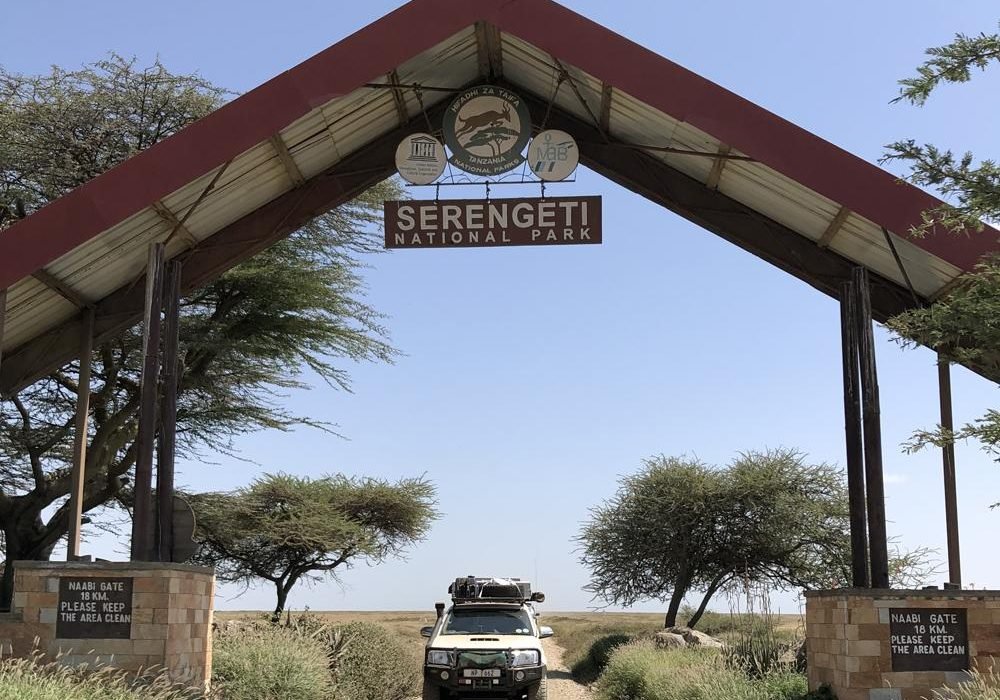
Planning an African safari in 2027 often begins with one important question: should you visit Serengeti National Park in Tanzania or Kruger National Park in South Africa? Both are among Africa’s most respected wildlife destinations, attracting travelers who want to see lions, elephants, leopards, buffaloes, giraffes, zebras, and many other animals living in their natural habitats. Although the parks share some wildlife species, they offer different safari experiences, landscapes, travel arrangements, and accommodation options.
The Serengeti is famous for its wide grasslands, large predator populations, and the Great Wildebeest Migration. Its open plains provide the setting for traditional guided game drives, wildlife photography, and multi-day safari expeditions. Kruger, on the other hand, is well known for its extensive road network, accessible wildlife viewing, public rest camps, and opportunities for independent self-drive safaris. Visitors can explore the park in their own vehicles or join guided excursions arranged through lodges and safari operators.
Choosing between Serengeti and Kruger depends on the experience you want. Travelers interested in watching large wildebeest herds, exploring open African savannah, and combining several famous national parks may find Serengeti particularly attractive. Those who prefer flexible travel arrangements, self-catering accommodation, and the freedom to explore independently may find Kruger more suitable. Both parks offer excellent wildlife experiences, but neither can guarantee sightings of particular animals.
At Eddy Tours & Safaris, we organize guided Tanzania wildlife safaris, including visits to Serengeti National Park, Ngorongoro Crater, Tarangire, and other northern Tanzania destinations. This guide compares Serengeti and Kruger in simple, practical terms to help you understand their differences and decide which destination best suits your African safari plans for 2027.
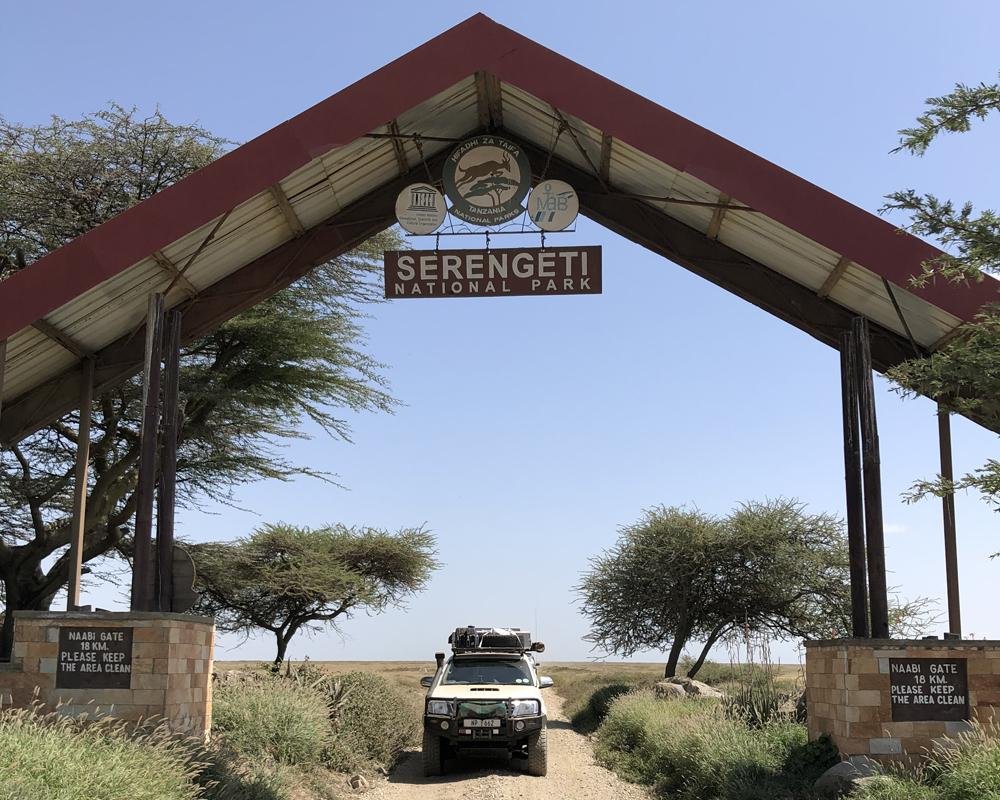
Serengeti vs Kruger: Main Differences
| Safari feature | Serengeti National Park | Kruger National Park |
|---|---|---|
| Country | Tanzania | South Africa |
| Approximate size | 14,763 km² | Nearly 19,500 km² |
| Most famous attraction | Great Wildebeest Migration | Big Five wildlife and self-drive safaris |
| Main landscapes | Open grasslands, kopjes, rivers and woodlands | Bushveld, savannah woodland, rivers and mixed vegetation |
| Wildlife viewing | Excellent, particularly for migration and plains wildlife | Excellent, particularly in productive southern and central areas |
| Safari style | Predominantly guided vehicle safaris | Guided and self-drive safaris |
| Accommodation | Tented camps, safari lodges and luxury properties | Public rest camps, self-catering units and luxury lodges |
| Budget flexibility | Guided safaris can be relatively expensive | Strong self-drive and public accommodation options |
| Migration experience | Major annual wildebeest migration | No equivalent large-scale wildebeest migration |
| Ideal trip duration | 3–5 nights or longer | 3–7 nights or longer |
| Best for | Migration, photography and classic guided safaris | Independent travel, Big Five viewing and flexible budgets |
These are general comparisons. The actual experience depends on which part of each park you visit, the season, your accommodation location, and the number of days available.
1. Wildlife Viewing: Is Serengeti Better Than Kruger?
Wildlife viewing is the main reason travelers visit either park, and both destinations offer opportunities to observe many of Africa’s most recognizable animals. However, their habitats influence how animals are seen. Serengeti’s extensive grasslands provide broad views across the landscape, while Kruger’s woodland and bushveld habitats can require visitors to look carefully between trees, along riverbanks, and around waterholes.
In Serengeti, travelers may encounter lions resting near rocky outcrops, cheetahs scanning the grasslands, elephants moving through woodland areas, and large groups of zebras and antelopes feeding across the plains. The central Serengeti, particularly the Seronera region, is known for resident wildlife and predator activity throughout much of the year. Other regions become especially attractive when migratory herds move through the ecosystem.
Kruger is also an excellent destination for wildlife viewing, with substantial populations of elephants, buffaloes, lions, leopards, antelopes, and many other species. The park’s rivers, dams, and waterholes attract wildlife, especially during drier periods. Because much of the landscape includes woodland and bush, some encounters may happen at relatively close range, although vegetation can sometimes make photography more difficult.
Neither park guarantees sightings of the Big Five, and finding a particular animal depends on its movements, habitat, weather, and chance. Travelers should approach wildlife viewing with patience rather than expecting every species to appear during a short visit.
Which Park Is Better for Seeing Lions?
Both Serengeti and Kruger are strong destinations for observing lions. Serengeti’s open grasslands and resident prey populations can make lions easier to notice in certain areas, especially around Seronera and the plains where large herbivores gather. Visitors may see lions resting in the shade, moving across the grassland, or interacting with other members of their pride.
Kruger also supports a substantial lion population, with sightings possible along roads, near river systems, and in open sections of the bushveld. Southern Kruger is particularly popular among visitors looking for predators, although sightings vary from day to day. Neither park is guaranteed to produce a better lion encounter, but Serengeti’s open scenery can provide an advantage for observing animals from a distance.
Which Park Is Better for Seeing Leopards?
Leopards are naturally secretive animals, making them difficult to find even in parks with healthy populations. In Serengeti, leopards are often associated with riverine vegetation, rocky areas, and trees where they may rest during the day. The Seronera Valley is a well-known area for leopard sightings, although encounters remain unpredictable.
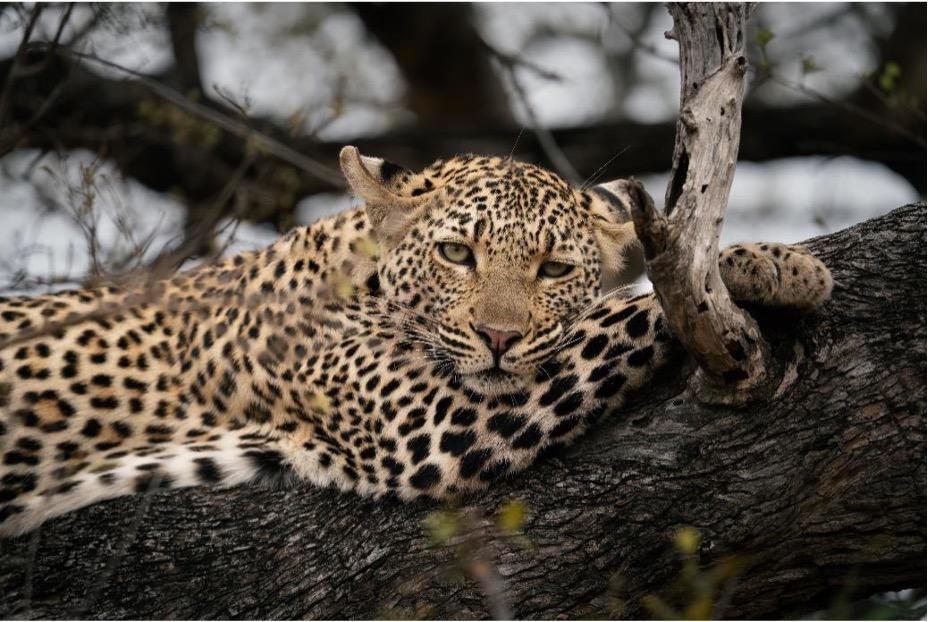
Kruger is also famous for leopard viewing, particularly in parts of the southern park where river systems and suitable woodland habitats provide cover. Visitors sometimes encounter leopards resting in trees or moving along roads during early morning and evening hours. For travelers whose main interest is leopards, both destinations are worth considering, and the experience of the guide or careful self-drive observation can make a significant difference.
Which Park Is Better for Elephants?
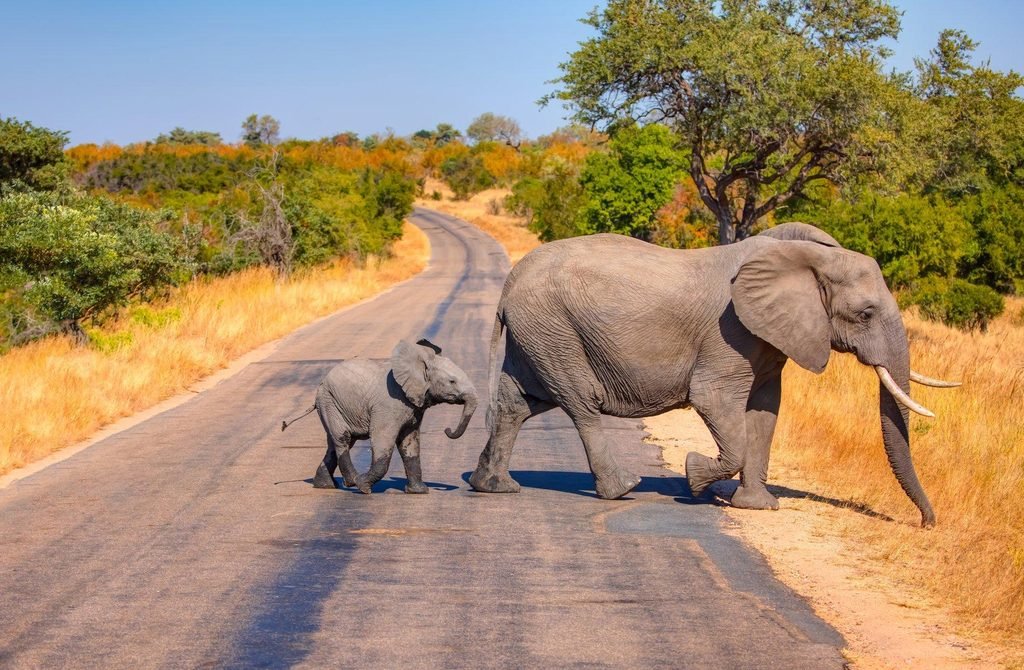
Both parks offer excellent opportunities to see African elephants, although the surrounding scenery is different. Serengeti elephants are often observed in woodland and riverine areas, while Kruger supports large numbers of elephants across various habitats. Visitors to Kruger may encounter family groups near rivers, waterholes, and roads, sometimes at close range.
If elephants are your main priority during a Tanzania safari, you may also consider combining Serengeti with Tarangire National Park, which is particularly well known for its elephant herds and baobab landscapes. This combination allows travelers to experience different wildlife environments during the same holiday.
2. The Great Wildebeest Migration: Serengeti Has the Advantage
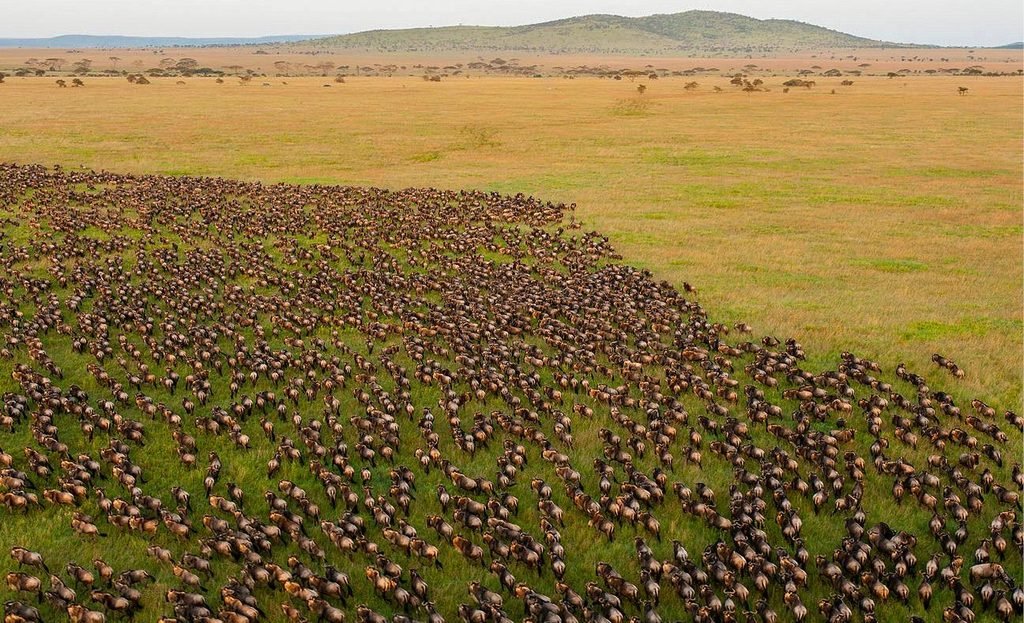
One of the biggest differences between Serengeti and Kruger is the Great Wildebeest Migration. This annual movement involves enormous numbers of wildebeest, accompanied by zebras and other grazing animals, traveling through the Serengeti–Mara ecosystem in search of fresh grass and water. It is one of the most famous wildlife events in the world and a major reason why many international travelers choose Tanzania for their first African safari.
The migration is not a single event that happens in one location on a fixed date. Herds move throughout the year, responding to rainfall, grass growth, and changing environmental conditions. During some months, large numbers of animals gather on the southern plains, while at other times they travel through the western corridor or northern Serengeti. This means that the best area to visit depends on your travel month and the actual location of the herds.
Kruger has impressive wildlife movements and seasonal changes, but it does not offer an equivalent migration involving enormous wildebeest herds crossing the Serengeti–Mara ecosystem. If witnessing the Great Migration is the main purpose of your safari, Serengeti is the clear choice.
Serengeti Great Migration Calendar for 2027
| Period | General migration area | What travelers may experience |
|---|---|---|
| January–March | Southern Serengeti and Ndutu region | Calving season and predator activity |
| April–May | Southern and central migration corridors | Herds beginning to move northwest |
| May–June | Western Corridor and Grumeti region | Large herds and possible river activity |
| July–October | Northern Serengeti and Mara River region | Possible river crossings and major herd movements |
| November–December | Eastern and southern migration areas | Herds returning toward southern grazing grounds |
This calendar describes a general seasonal pattern, not a guaranteed schedule. Rainfall can change the location and timing of the migration, and river crossings cannot be predicted precisely.
For travelers planning a migration-focused holiday, Eddy Tours & Safaris can help discuss suitable Serengeti regions for your preferred travel month. Choosing accommodation near the likely migration area is often more useful than simply booking a lodge anywhere in the park.
3. Landscapes and Safari Scenery: Two Different African Experiences
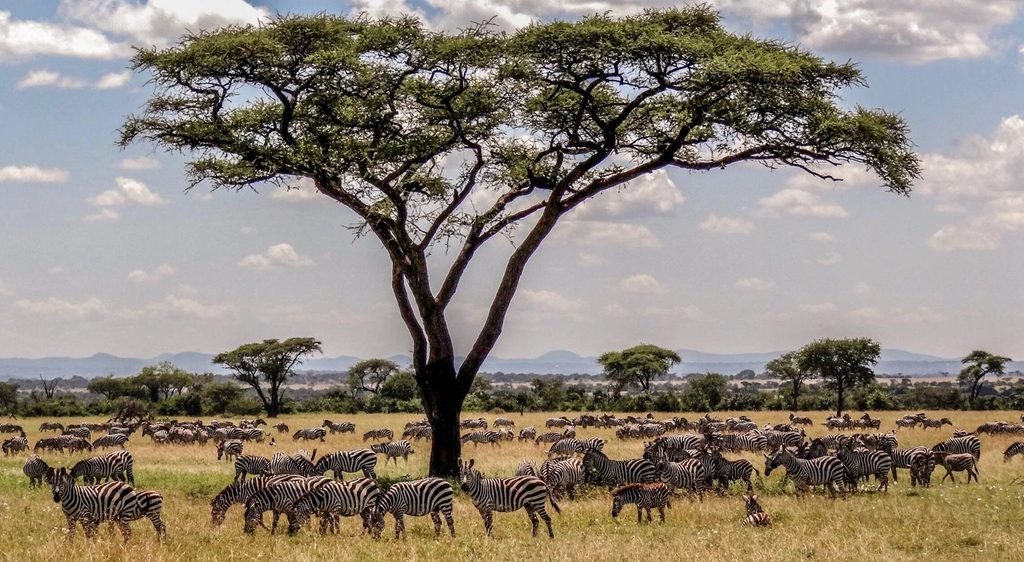
Serengeti is known for its vast open plains, where the horizon can stretch for many kilometres. These grasslands are interrupted by rocky outcrops known as kopjes, river systems, woodland areas, and seasonal wetlands. The landscape changes between the southern short-grass plains, central Seronera region, western corridor, and northern Serengeti, giving travelers several different environments to explore.
The open scenery is one of Serengeti’s greatest attractions for wildlife photography. A lion standing on a kopje, a cheetah moving through the grass, or a herd of wildebeest crossing an open plain can create photographs that capture the scale of the African wilderness. Sunrise and sunset are particularly attractive times for photography because the changing light can highlight the landscape and animal silhouettes.
Kruger has a different character. Much of the park consists of bushveld, woodland, grassland patches, rocky hills, and river systems. Some sections are relatively open, while others contain dense vegetation. The southern park includes productive river environments, whereas northern areas can feel quieter and more remote, with different plant communities and wildlife distributions.
Travelers who prefer wide-open grasslands and classic savannah scenery may be more attracted to Serengeti. Those who enjoy varied bushveld habitats, river landscapes, and the experience of searching for wildlife through woodland may prefer Kruger.
4. Safari Costs: Is Serengeti More Expensive Than Kruger?
Cost is an important consideration when comparing these destinations. In general, Kruger offers more opportunities for independent travelers to control their expenses because visitors can use their own or rented vehicles and stay in public rest camps, self-catering accommodation, or campsites. This allows travelers to choose a relatively simple trip without paying for a private guide and safari vehicle throughout their stay.
Serengeti safaris are commonly organized as guided expeditions using a safari vehicle and professional driver-guide. Costs may include park fees, accommodation, meals, transport, and other services. The park’s location in northern Tanzania also means that travelers often need to consider longer road transfers or domestic flights, particularly when visiting remote migration areas.
However, it would be misleading to say that Serengeti is always more expensive. A shared camping safari in Tanzania may cost less than a luxury lodge holiday in Kruger, while a private fly-in Serengeti safari can be considerably more expensive than a self-drive trip in South Africa. The correct comparison depends on accommodation standard, group size, season, transport, and included activities.
Main Factors Affecting Safari Prices
| Cost factor | Serengeti | Kruger |
|---|---|---|
| Park fees | Apply according to Tanzania’s official tariff | Apply according to SANParks visitor categories |
| Vehicle | Usually part of a guided safari package | Self-drive or guided options |
| Guide | Commonly included in organized safari packages | Optional for self-drive visitors |
| Accommodation | Campsites, tented camps and lodges | Public rest camps, self-catering units and lodges |
| Travel distances | Long drives or domestic flights may be needed | Several road-access options |
| Luxury options | Wide range of high-end safari camps | Wide range of private luxury lodges |
| Budget flexibility | Shared camping and group tours available | Strong independent travel options |
For 2027, avoid relying on old price lists when calculating your holiday budget. Park fees, accommodation rates, transport costs, and exchange rates can change. Request an updated quotation showing the full cost and all included services before making a booking.
5. Safari Accommodation: Serengeti Tented Camps vs Kruger Rest Camps
Accommodation is another major difference between Serengeti and Kruger. In Serengeti, travelers can choose from public campsites, permanent tented camps, mid-range safari lodges, and luxury properties. Some camps are located near productive wildlife areas, while others operate seasonally in regions associated with the migration. Staying inside or near the park can reduce travel time and allow guests to begin game drives earlier in the morning.
A tented safari camp in Serengeti does not necessarily mean basic accommodation. Many camps offer comfortable beds, private bathrooms, dining facilities, and views across the surrounding wilderness. Higher-end properties may provide additional services, but the exact facilities vary. Travelers should check the location and accommodation standard carefully rather than assuming that all tented camps offer the same experience.
Kruger has an extensive system of public rest camps operated by South African National Parks. Accommodation can include campsites, self-catering units, bungalows, and other facilities. Private luxury lodges are also available within the broader Kruger safari region, including associated private reserves where the safari experience and access arrangements may differ from the public park.
For travelers who want a traditional guided safari with meals and accommodation organized in advance, Serengeti is an attractive option. For visitors who prefer preparing some of their own meals, driving independently, and choosing public park accommodation, Kruger offers greater flexibility.
6. Guided Safaris vs Self-Drive Safaris
One of Kruger’s greatest advantages is the opportunity to explore the park independently. Visitors can drive along designated public roads in their own or rented vehicles, stopping to observe wildlife whenever conditions and park rules permit. This can be appealing to experienced travelers who enjoy planning their own daily routes and spending time searching for animals.
Self-driving also requires patience, careful navigation, and respect for wildlife regulations. Visitors must remain within permitted areas, observe speed limits, follow gate opening and closing times, and maintain safe distances from animals. Wildlife can be unpredictable, especially when large mammals approach roads or vehicles.
Serengeti safaris are predominantly organized through professional guides and safari vehicles. A knowledgeable guide can help identify animal tracks, explain wildlife behavior, and choose suitable areas based on recent sightings and seasonal movements. This can be particularly valuable for first-time safari travelers who are unfamiliar with East African wildlife and the distances between different regions of the park.
For travelers who prefer to relax while someone else manages navigation, driving, and wildlife interpretation, a guided Serengeti safari may be the better choice. Those who enjoy independent travel and want more control over their daily schedule may find Kruger more suitable.
7. Best Time to Visit Serengeti vs Kruger in 2027
Both parks can be visited throughout the year, but their seasonal patterns differ. Serengeti’s wildlife viewing is strongly influenced by the Great Migration, with different regions becoming attractive at different times. Kruger’s wildlife viewing is influenced by rainfall, vegetation density, and water availability, particularly during the dry winter months.
Best Time to Visit Serengeti
June to October is generally a popular period for Serengeti safaris because of the relatively dry conditions and the movement of migratory herds through the western and northern regions. January to March is also attractive for travelers interested in the southern plains and calving season. However, wildlife can be seen in Serengeti throughout the year, and central Serengeti supports resident animals even when the largest migratory herds are elsewhere.
The best month depends on the experience you want. Travelers interested in river crossings may consider the northern Serengeti during the usual crossing season, while those interested in newborn wildebeest and predator activity may prefer the southern plains early in the year. Neither experience can be guaranteed on a particular date.
Best Time to Visit Kruger
May to September is generally an attractive period for Kruger because the weather is often drier and vegetation may be less dense, making wildlife easier to observe in some areas. Animals may also gather around rivers and remaining water sources. Cooler mornings and evenings are common during this period, so warm clothing can be useful during early game drives.
October to April generally brings warmer conditions and seasonal rainfall, creating greener landscapes and good opportunities for birdwatching. Although vegetation can make some animals harder to spot, the park remains an excellent wildlife destination throughout the year.
8. Which Park Is Better for a Luxury African Safari?
Both Serengeti and Kruger offer excellent luxury safari accommodation, but the experiences can feel quite different. Serengeti luxury camps often emphasize the surrounding wilderness, open plains, and access to major wildlife areas. Some properties are positioned near seasonal migration routes, allowing guests to spend more time in regions where large herds may be present.
Kruger’s luxury safari experience is particularly well developed in private lodges and associated reserves, where guests may enjoy highly personalized service, guided game drives, and comfortable accommodation. The exact activities available depend on the property and the regulations governing its location.
Travelers looking for a luxury safari built around the Great Migration may prefer Serengeti, while those seeking a lodge-focused holiday with shorter transfers and highly personalized wildlife activities may prefer certain properties in the Greater Kruger region. In either destination, the lodge location and guiding quality are often more important than the number of luxury facilities advertised.
9. Which Park Is Better for Families and First-Time Safari Travelers?
Both parks can provide excellent family safari experiences, but the most suitable option depends on children’s ages, travel preferences, and available time. Kruger’s self-drive system and public accommodation may be attractive to families who prefer flexible daily schedules and the ability to return to their accommodation whenever needed. Some rest camps also provide facilities that make longer stays convenient.
Serengeti can be an excellent choice for families who want a guided wildlife holiday without organizing each day’s route themselves. A private safari vehicle allows the family to travel together with a driver-guide who can explain animal behavior, answer questions, and adjust the day’s schedule where practical. However, long drives and remote accommodation locations should be considered when traveling with younger children.
For a first African safari, Serengeti provides a classic guided experience, particularly when combined with Ngorongoro Crater and Tarangire. Kruger may be preferable for travelers who already feel comfortable driving independently in unfamiliar environments or who want a safari with more control over daily expenses.
10. Which Park Is Better for Wildlife Photography?
Serengeti is especially attractive for photographers who enjoy open landscapes, large animal herds, and dramatic wildlife scenes. The grasslands provide opportunities to photograph animals against broad horizons, while kopjes and river systems create varied backgrounds. During the migration, photographers may encounter large concentrations of wildebeest and zebras, although the location of the herds changes throughout the year.
Kruger offers a different style of wildlife photography, with opportunities for close observations along roads, riverbanks, and waterholes. Woodland environments can provide interesting natural frames, and bird photographers may appreciate the park’s extensive birdlife. However, vegetation can sometimes obstruct clear views, particularly during wetter periods.
Photographers who want wide-angle images of migration herds and open savannah may prefer Serengeti. Those who enjoy patient observation from roads, bird photography, and varied bushveld scenes may find Kruger equally rewarding.
11. How Many Days Should You Spend in Serengeti or Kruger?
The number of days you spend on safari has a major influence on your experience. Wildlife sightings are unpredictable, and a single game drive cannot represent everything a park has to offer. Spending several days in one area allows you to explore different habitats, return to productive wildlife locations, and enjoy the experience without rushing from one sighting to another.
For Serengeti, three to five nights is a useful starting point for many travelers, particularly when visiting central Serengeti. A longer stay may be worthwhile when traveling to remote migration regions or combining the park with other destinations in northern Tanzania. A well-planned six- to eight-day Tanzania safari can include Serengeti, Ngorongoro Crater, and Tarangire, depending on the travel route and preferred pace.
For Kruger, three to seven nights can provide a rewarding safari experience. Travelers may choose to stay in one area or divide their time between different rest camps to explore more of the park. Because Kruger is extensive, trying to cover too much distance in a short visit can reduce the time available for wildlife observation.
12. Combining Serengeti with Other Tanzania Safari Destinations
One of Serengeti’s greatest advantages is the opportunity to combine it with other famous wildlife destinations in northern Tanzania. Travelers can visit Ngorongoro Crater, which is known for its concentrated wildlife viewing within a remarkable volcanic landscape, and Tarangire National Park, which is famous for elephants and baobab trees. Lake Manyara National Park may also be included in suitable itineraries.
These destinations offer different habitats and wildlife experiences, making a multi-park safari particularly attractive for first-time visitors. A typical journey may begin in Arusha, continue to Tarangire, travel through the Ngorongoro highlands toward Serengeti, and include a crater visit on the return journey. The exact sequence depends on accommodation availability, travel dates, and the number of days available.
Travelers can also combine a Tanzania safari with a Mount Kilimanjaro climb or a Zanzibar beach holiday. This makes Tanzania an attractive destination for visitors who want to experience wildlife, mountains, and the Indian Ocean during one trip.
To discuss a customized itinerary, contact Eddy Tours & Safaris with your preferred travel dates, group size, and accommodation preferences.
13. Serengeti vs Kruger: Which Offers Better Value for Money?
Value for money should not be judged only by the total package price. A safari that costs less may offer fewer guided activities, less convenient accommodation, or more time spent traveling between destinations. Conversely, a more expensive safari may include private guiding, park fees, meals, and accommodation that would otherwise need to be arranged separately.
Kruger can offer excellent value for independent travelers because of its public rest camps and self-drive opportunities. Visitors who are comfortable planning their own routes may be able to manage costs effectively, particularly when sharing a rental vehicle and choosing self-catering accommodation.
Serengeti offers a different kind of value through the combination of professional guiding, open savannah landscapes, the Great Migration, and opportunities to visit several northern Tanzania parks. For travelers who specifically want a guided East African safari, the overall experience may justify the higher cost compared with a basic self-drive holiday.
The best approach is to compare complete quotations rather than headline prices. Check what is included, how many full game-drive days you receive, where you will sleep, and how much time you will spend traveling.
14. Serengeti vs Kruger: Which Should You Choose in 2027?
If your main dream is to see the Great Wildebeest Migration, Serengeti is the clear choice because Kruger does not offer an equivalent wildlife movement. Serengeti is also particularly attractive for travelers who want wide-open savannah landscapes, traditional guided game drives, and the opportunity to combine several of Tanzania’s famous national parks.
If you prefer independent travel, self-drive safaris, public rest camps, and greater flexibility over your daily expenses, Kruger may be the better destination. Its extensive road network and accommodation system make it especially appealing to travelers who enjoy exploring at their own pace.
For first-time visitors who want a guided African safari with varied wildlife, both parks can be excellent choices. The decision should reflect your interests rather than a general ranking. Serengeti is not automatically better simply because it has the Great Migration, and Kruger is not automatically better because it offers self-drive access.
Frequently Asked Questions About Serengeti vs Kruger
1. Is Serengeti better than Kruger?
Serengeti is particularly attractive for the Great Migration and open grassland safaris, while Kruger is excellent for self-drive travel and flexible accommodation.
2. Which park has more wildlife?
Both support abundant wildlife, but comparing total animal numbers is difficult because populations vary by species, season, and survey methods.
3. Which park is better for seeing lions?
Both parks offer excellent lion-viewing opportunities, although sightings are never guaranteed.
4. Which park is better for leopards?
Both Serengeti and Kruger are well-known leopard destinations, particularly in suitable woodland and riverine habitats.
5. Can I see the Big Five in Serengeti?
Yes. Serengeti supports all five species, although rhinos are rare and sightings of every species cannot be guaranteed.
6. Can I see the Big Five in Kruger?
Yes. Kruger supports all five species, but sightings depend on location, season, and chance.
7. Which park has the Great Migration?
Serengeti is part of the Serengeti–Mara ecosystem, where the annual Great Wildebeest Migration takes place.
8. Does Kruger have a wildebeest migration?
Kruger does not have a migration equivalent in scale to the Serengeti–Mara wildebeest movement.
9. Is Serengeti more expensive than Kruger?
A guided Serengeti safari may cost more than a basic Kruger self-drive trip, but actual costs depend on the travel style and accommodation.
10. Can I drive myself in Serengeti?
Self-drive travel may be possible under applicable park and vehicle regulations, but guided safaris are the usual choice for international visitors.
11. Can I drive myself in Kruger?
Yes. Kruger has an established public self-drive safari system.
12. Which park is larger?
Kruger National Park is larger than Serengeti National Park when comparing their protected park boundaries.
13. Which park is better for photography?
Serengeti is particularly attractive for open landscapes and migration photography, while Kruger offers excellent bushveld and bird photography.
14. Which park is better for families?
Both can be suitable, depending on children’s ages, accommodation choices, and preferred travel arrangements.
15. Is Serengeti suitable for first-time safari travelers?
Yes. A guided Serengeti safari can be an excellent introduction to African wildlife.
16. Is Kruger suitable for first-time safari travelers?
Yes. Guided tours and self-drive options make Kruger accessible to different types of travelers.
17. What is the best month to visit Serengeti?
The best month depends on whether you want to see calving, migrating herds, river crossings, or resident wildlife.
18. What is the best month to visit Kruger?
May to September is often attractive for wildlife viewing because of the relatively dry conditions.
19. How many days do I need in Serengeti?
Three to five nights is a useful starting point, although longer stays provide more opportunities for wildlife viewing.
20. How many days do I need in Kruger?
Three to seven nights can provide a rewarding experience, depending on how much of the park you want to explore.
21. Can I combine Serengeti with Ngorongoro Crater?
Yes. Many northern Tanzania itineraries combine Serengeti and Ngorongoro Crater.
22. Can I combine Serengeti with Tarangire?
Yes. Tarangire is a popular addition to a northern Tanzania wildlife safari.
23. Can I visit Serengeti in 2027?
Yes. You can plan a 2027 safari and request a quotation based on your preferred travel dates.
24. Are 2027 safari prices already fixed?
Not necessarily. Prices should be confirmed according to the applicable park fees, accommodation rates, and travel arrangements.
25. How do I book a Serengeti safari?
You can contact Eddy Tours & Safaris with your travel dates, group size, preferred accommodation standard, and safari interests.
Serengeti or Kruger for Your 2027 African Safari?
Serengeti and Kruger are two outstanding African wildlife destinations, but they are best suited to different travel preferences. Serengeti stands out for the Great Wildebeest Migration, extensive open plains, and the classic experience of exploring Tanzania’s wilderness with a professional safari guide. Kruger stands out for its public road network, self-drive opportunities, varied accommodation, and the flexibility it offers independent travelers.
For visitors who want to witness large migrating herds, photograph animals against open grasslands, and combine several famous northern Tanzania parks, Serengeti is an excellent choice. For travelers who prefer to drive themselves, manage their own schedule, and choose from a wide range of public accommodation, Kruger may be more suitable. Both destinations reward patience, careful planning, and respect for wildlife.
At Eddy Tours & Safaris, we organize guided Tanzania wildlife safaris for travelers planning their holidays in 2027. Our team can help you choose suitable Serengeti regions, compare accommodation options, and organize a private safari that may include Ngorongoro Crater, Tarangire, Lake Manyara, or other destinations according to your interests.
Request Your 2027 Serengeti Safari Quotation
Chat with Eddy Tours & Safaris on WhatsApp
Email: sales@eddytours-safaris.com
Contact our team to plan a Serengeti safari with suitable travel dates, realistic wildlife expectations, and a carefully arranged itinerary.