
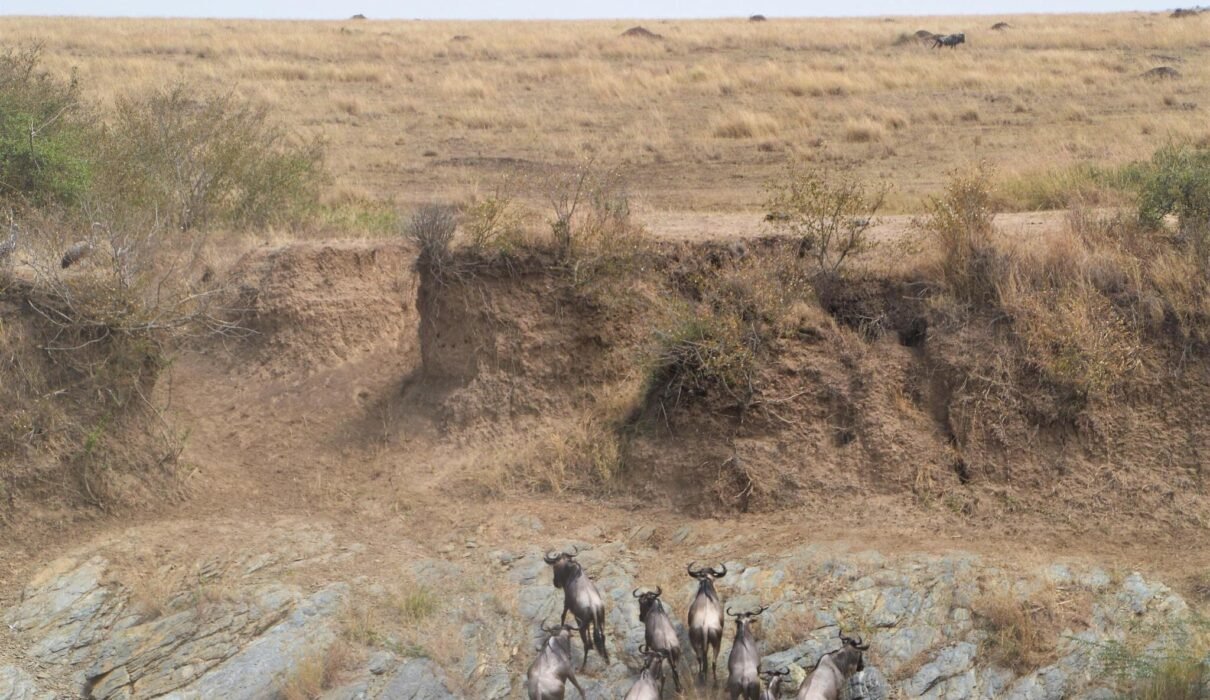
The Great Migration is one of the world’s most remarkable wildlife movements. Every year, vast numbers of wildebeest, zebra and gazelle travel through the Serengeti-Mara ecosystem in Tanzania and Kenya, following rain, fresh grass and water. Many people picture one dramatic river crossing, but the migration is much larger than that. It is a continuous cycle of calving, grazing, movement, predators, rivers and changing landscapes.
For travellers planning a safari in 2027 or 2028, the key is to match your dates to the likely location of the herds. The migration does not follow an exact printed calendar. Rainfall and grazing conditions influence when animals move, how long they remain in one area and whether they cross a river while visitors are nearby. A good migration safari is based on season, local knowledge and realistic expectations—not a promise that nature will perform on a particular day.
This guide explains how the Great Migration works, where to go in different months, what you may see and how to plan a Tanzania safari around it. It also explains why the migration is worth seeing even if you do not witness a river crossing. The best experiences often come from understanding the full ecosystem rather than chasing one famous photo.
What is the Great Migration?
The Great Migration is the large annual movement of grazing animals through the wider Serengeti-Mara ecosystem. Wildebeest form the largest part of the moving herds, joined by zebra and gazelle. Their journey is driven by the need for fresh grass and water. As rain falls in different areas, the quality of grazing changes and the herds respond.
The animals move through southern, central, western and northern Serengeti in Tanzania, with many herds crossing into Kenya’s Maasai Mara during part of the year. The route is not a perfect circle drawn on the ground. Some animals move early, some remain behind, and weather can change the pattern. It is better to think of the migration as a living system rather than a scheduled parade.
Predators are part of the story. Lions, cheetahs, leopards, hyenas, jackals and crocodiles depend in different ways on the movement of prey. Birds, insects, grasslands and rivers are also connected. Watching this system at work is what makes the migration so compelling. The herds are impressive because of their numbers, but the relationships around them make the experience deeper.
Why does the migration happen?
Rain is the main driver. Short-grass plains after rainfall provide nutritious grazing for wildebeest and other herbivores. As grass is eaten or dry conditions return, the herds move toward areas with better food and water. This movement has repeated for generations and supports one of the most important wildlife ecosystems in Africa.
Wildebeest, zebra and gazelle use the landscape differently. Zebras often eat taller grass, while wildebeest feed on shorter fresh growth, which can make mixed herds beneficial. Gazelles select different plants again. This shared movement is not random. It reflects how several species have adapted to use the same grassland at different levels.
The movement also has risks. Calves are born in exposed plains, predators follow the herds and rivers can be dangerous. Yet the migration continues because the herds must keep moving with the seasons. It is a reminder that wildlife is not arranged for tourism. Visitors are seeing a process that has its own rhythm and priorities.
The Great Migration calendar: where are the herds?
The following guide gives broad seasonal patterns. Exact timing changes, so use it as a planning tool rather than a guarantee.
January to March: southern Serengeti and Ndutu calving season
In the early months of the year, the herds are often on the short-grass plains of southern Serengeti and the Ndutu area, which lies within the wider Ngorongoro and Serengeti ecosystem. This is widely known as the calving season. Large numbers of wildebeest calves may be born across the plains in a relatively short period, depending on conditions.
This period is excellent for travellers who want green landscapes, young animals and strong predator activity. Lions, cheetahs, hyenas and jackals are often present around the herds, though every sighting depends on the day. The grass can be lush, skies dramatic and roads sometimes muddy after rain. A capable safari vehicle and flexible guide are important.
Calving season is not necessarily about dramatic action every minute. It can also be about quiet scenes: calves standing for the first time, zebra grazing beside wildebeest, mothers calling to young or a distant predator watching the plains. Photographers and people who want a fuller understanding of the migration often find this time very rewarding.
April to May: movement through central and western Serengeti
As the longer rains influence grazing, herds generally begin moving from the southern plains toward central and western parts of Serengeti. The landscape can be green and beautiful, with fewer visitors in some areas. Rain may make some tracks more difficult, and certain seasonal camps can close or adjust their operations.
This is a good time for travellers who do not mind wet weather, appreciate greener scenery and want a less crowded safari. The migration can be spread across a wide area, so choosing the right camp and allowing enough time matters. Do not expect a simple single line of animals on one road; the movement may appear as broad herds, scattered groups or long columns depending on conditions.
June to July: western corridor and Grumeti area
In the dry-season transition, many herds move through the western corridor toward the Grumeti region. River crossings may occur in this wider period, but they are still unpredictable. The Grumeti River is part of the migration narrative, yet crossings can happen quickly or not at all while you are there.
June and July can be an exciting time because the weather is often drier and the herds may be moving in large numbers. It is also a good period for people who want a classic Serengeti safari with a mix of migration movement and resident wildlife. Book early if your dates are fixed, as well-located camps and lodges can be in high demand.
July to October: northern Serengeti and Maasai Mara
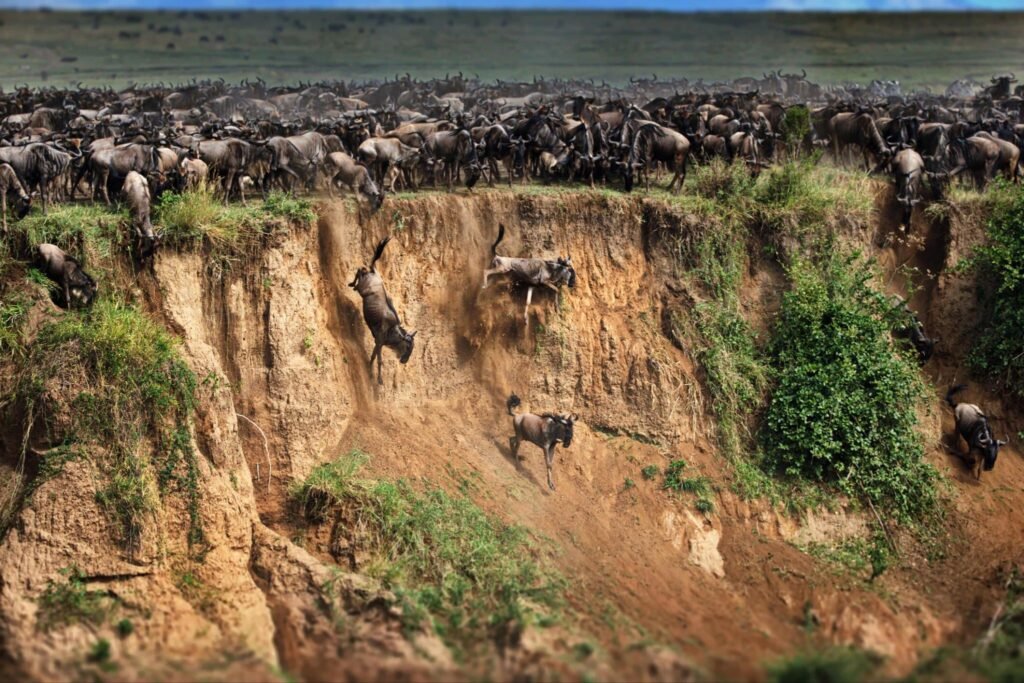
During the broader period from July to October, many travellers focus on northern Serengeti in Tanzania and the Maasai Mara in Kenya. The Mara River is famous for river crossings, where large herds may gather, hesitate, cross, turn back or choose another location entirely. Crocodiles, steep banks and strong currents make these events genuinely risky for the animals.
A crossing is never something a guide can guarantee. Herds may wait on a bank for a long time, cross at night, move away or use a different section of river. The best approach is to stay in the region for enough nights, follow current wildlife reports and enjoy the full northern Serengeti or Mara ecosystem rather than waiting all day with only one expected result.
Northern Serengeti is still rewarding without a crossing. It has open grasslands, woodland, river systems, predators, elephants, giraffes and a quieter feel in some locations than central areas. Maasai Mara also offers excellent resident wildlife and big-cat viewing. Choose the country and camp based on your travel dates, budget and what type of safari experience you prefer.
November to December: return toward the south
Short rains often encourage the herds to begin moving south again. The return is not instant or identical every year. Some animals may still be in northern areas while others are already travelling through central Serengeti. The landscape begins to green, birdlife can be strong and visitor pressure may be lower than the main northern migration season.
November and early December can suit travellers who want to avoid peak-season crowds but still experience active safari conditions. The festive period later in December may become busy, so early booking is still sensible. A flexible route and the right camp location make more difference than choosing a title that promises a fixed migration date.
Great Migration river crossings: what to expect
River crossings are the most famous migration moment, but they are also the least predictable. The animals may gather near the water for hours, appearing ready to cross, then turn away. One wildebeest may start moving and hundreds follow, or the entire herd may wait until conditions change. Weather, water level, herd pressure, predators and instinct all play a role.
When a crossing happens, it can be intense. Animals move quickly, dust rises, zebra and wildebeest mix together, and crocodiles may be present in deeper river sections. It can also be emotionally difficult, because not every animal crosses safely. Visitors should watch quietly and let guides manage vehicle positioning. Crowding the banks or pressuring animals is not responsible wildlife tourism.
Do not make a crossing the only reason for your trip. The migration offers amazing scenes in every phase: calving, grazing, moving columns, predator behaviour, dramatic skies and the sheer scale of the herds. A good safari remains valuable even when no crossing takes place.
Best Great Migration safari areas in Tanzania
Southern Serengeti and Ndutu are the key areas for calving season, usually in the early months of the year. Central Serengeti is an excellent all-year wildlife base with resident cats and broad safari infrastructure. Western Serengeti becomes more relevant as herds move toward the Grumeti region, while northern Serengeti is the main focus for the later northern migration phase and Mara River activity.
The right area should be selected based on your dates. If you are travelling in February, a northern Serengeti camp may be beautiful but too far from the main southern herds. If you are travelling in August, southern Ndutu may not be the logical place to wait for a northern crossing. A safari planner who understands this will explain the seasonal trade-off clearly.
How many days do you need for a migration safari?
For a focused migration safari, allow at least three nights in the relevant Serengeti area if possible. Two nights can work on a shorter itinerary, but more time gives the guide flexibility to follow the herds, adapt to weather and avoid making every game drive feel rushed. If you also want Tarangire and Ngorongoro, a six- to nine-day northern Tanzania itinerary is usually more balanced.
Consider a fly-in safari if you have limited time. Domestic flights can reduce long road transfers and place you closer to a seasonal camp, but they add cost and have baggage restrictions. Soft-sided luggage and a lower weight allowance are common on small aircraft. A road safari offers changing scenery and can be more affordable, but distances should be planned honestly.
What to pack for the Great Migration
Pack layers. Morning game drives can be cool, afternoons may be warm and rain is possible in green-season months. Lightweight trousers, breathable shirts, a fleece, compact rain jacket, closed shoes, hat, sunglasses and sunscreen are practical. A light scarf or buff helps with dust on dry roads.
Bring binoculars, camera batteries, memory cards and a protective pouch for electronics. Many migration sightings happen at a distance or across wide plains, so binoculars make a real difference. Keep medication, passport, insurance details and valuables in your day bag or hand luggage rather than in a checked suitcase.
Responsible migration viewing
The migration is a wildlife event, not a performance. Responsible guides give animals room, follow park rules and avoid blocking paths or crowding riverbanks. Guests should keep voices low, remain in the vehicle unless permitted to step out at a designated site, and never request that an animal be chased for a better photograph.
Choose accommodation and tours that respect the parks, employ local staff fairly and manage waste responsibly. Bring a refillable water bottle where practical and keep all personal rubbish out of the wildlife areas. Small decisions by visitors help protect the ecosystem that makes the migration possible.
Photography tips for the Great Migration
The scale of the migration is difficult to capture if every photo is a close-up. Take wide images showing herds against the plains, clouds, kopjes or distant hills. Then look for smaller stories: a calf with its mother, a zebra standing among wildebeest, a guide watching fresh tracks or a line of animals moving through evening light. These pictures often describe the experience better than a single tight animal portrait.
Keep your camera ready but be patient. Good light is usually early or late in the day, while dramatic cloud can make even a quiet herd look powerful. Use a camera bag or protective pouch for dust and rain, carry spare batteries and avoid changing lenses in strong wind. Phone photographers can also create strong images by using the landscape, waiting for a clean background and avoiding excessive digital zoom.
Most importantly, do not let photography take over the whole safari. Put the camera down occasionally. The sound of hooves, the scale of moving herds and the changing wind across the plains are part of the memory too.
Choosing a camp for migration season
Location comes before luxury. A simple, well-placed camp near the seasonal wildlife area can be more valuable than a high-end property requiring hours of driving each day. Ask whether the camp is permanent or seasonal, how far it is from the intended game-drive area, and whether a flight is needed to reach it. In popular months, book early because small camps in good locations have limited rooms.
For families, consider room layout, meal timing and transfer distances as well as wildlife location. For photographers, ask about early departures and private-vehicle options. The best camp is the one that supports the way you actually want to travel.
Frequently asked questions
What is the best month to see the Great Migration?
The best month depends on what you want to see. January to March is commonly best for calving in southern Serengeti and Ndutu. July to October is popular for northern Serengeti and Maasai Mara movement. There is no one best month for every stage.
Can I guarantee a Mara River crossing?
No. River crossings are unpredictable wildlife events. You can choose the right region and stay for several nights, but no operator can guarantee that a herd will cross while you are present.
Is the Great Migration only in Kenya?
No. Most of the migration cycle takes place in Tanzania’s Serengeti ecosystem. Kenya’s Maasai Mara is important during the northern phase, but the herds spend much of the year in Tanzania.
Is calving season good for families?
It can be excellent for families who enjoy wildlife and green scenery. Parents should understand that predator-prey interactions are part of the natural cycle and can sometimes be difficult for young children to watch.
Plan your Great Migration safari with Eddy Tours & Safaris
A well-planned Great Migration safari matches your dates to the most likely wildlife area and gives you enough time to enjoy the experience without rushing. Eddy Tours & Safaris can help you choose a private, group, camping, mid-range or lodge safari across southern, central or northern Serengeti, with Ngorongoro and Tarangire added where they make sense.
To discuss a 2027 or 2028 itinerary, use the contact page, email eddytoursandsafaris@gmail.com or sales@eddytours-safaris.com, or call and WhatsApp +255 711 906 664. If you are also planning Kilimanjaro, see Kilimanjaro Climb Specialist for route guidance.