
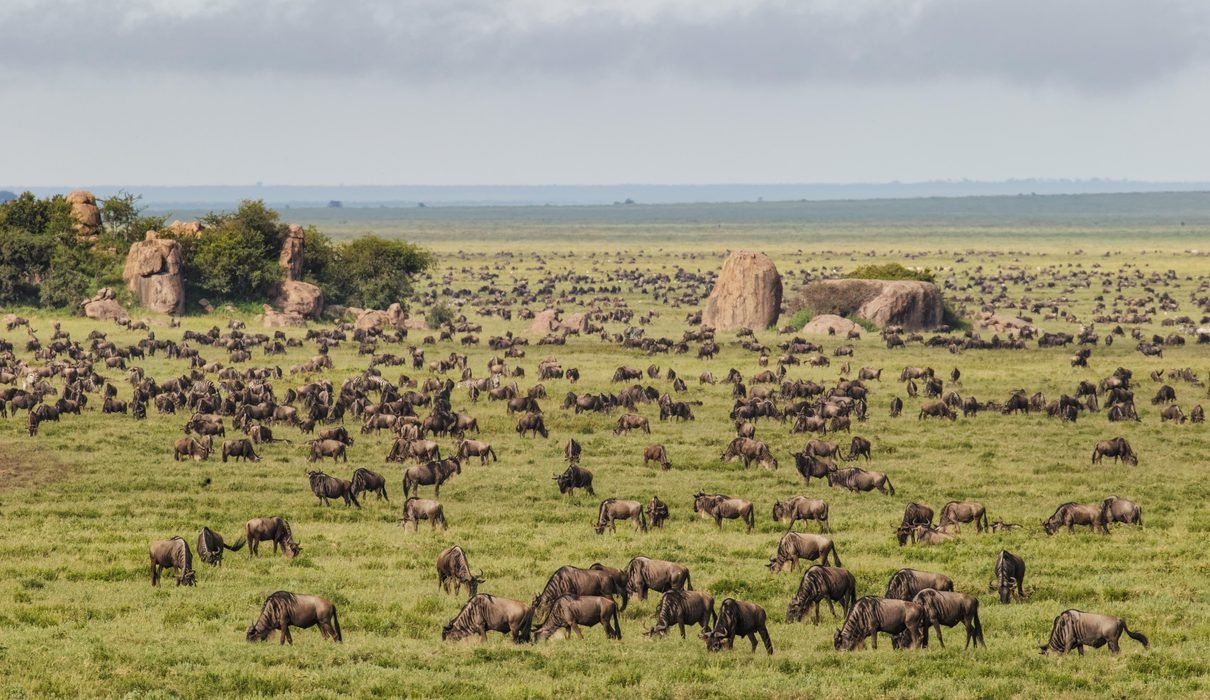
The Serengeti is one of the most famous wildlife destinations in Africa, attracting travellers from around the world who want to experience Tanzania’s natural beauty. Known for its endless grasslands, large populations of wild animals, and the Great Wildebeest Migration, Serengeti National Park offers some of the best wildlife viewing opportunities on the continent. Whether you are planning a Tanzania safari in 2027 or 2028, understanding what makes this national park special can help you appreciate the landscapes, animals, and natural processes that have shaped it over thousands of years.
Located in northern Tanzania, the Serengeti covers approximately 14,763 square kilometres and forms part of the wider Serengeti–Mara ecosystem, which extends into Kenya. The national park is home to lions, elephants, leopards, cheetahs, giraffes, buffaloes, zebras, wildebeest, and hundreds of bird species. Its landscapes range from open grasslands and rocky kopjes to riverine forests and wooded savannahs, creating different habitats for wildlife throughout the year.
For travellers interested in visiting the park, Eddy Tours & Safaris organizes Tanzania safari experiences from Arusha, including trips to Serengeti National Park and other northern Tanzania destinations. In this updated guide, we explore ten interesting facts about the Serengeti that will help you understand why this protected area remains one of Africa’s most important wildlife destinations.
1. The Name Serengeti Means Endless Plains
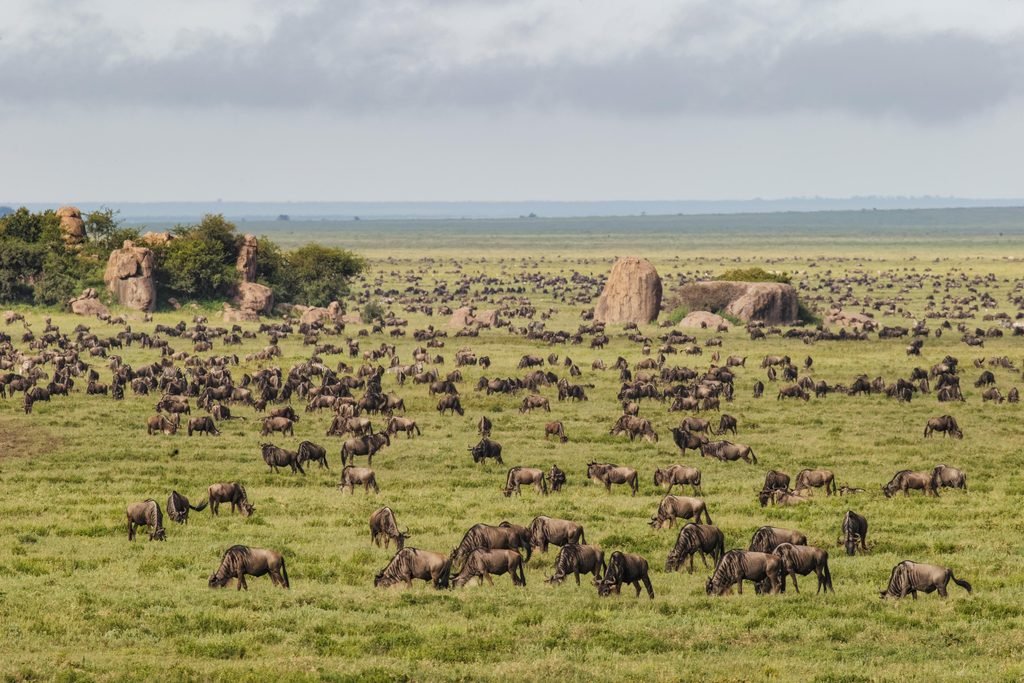
One of the most interesting facts about the Serengeti is the meaning behind its name. The word Serengeti is commonly associated with the Maa language spoken by the Maasai people and is generally interpreted as referring to endless plains. This description suits the landscape particularly well because large sections of the park consist of wide, open grasslands that stretch toward the horizon.
When travelling through the central and southern Serengeti, visitors can experience the sense of space that makes the park so distinctive. During the rainy season, the grasslands become green and support large numbers of grazing animals. In drier periods, the vegetation changes colour, and wildlife movements become increasingly influenced by available water and fresh grazing areas. These seasonal changes create different safari experiences throughout the year.
The Serengeti is not entirely flat, however. Its landscape includes granite rock formations known as kopjes, woodland areas, seasonal streams, rivers, and rolling hills. These different habitats support a wide variety of animals and make the park more diverse than its famous grasslands might suggest. Travellers visiting in 2027 or 2028 can explore several areas of the park to experience these contrasts rather than spending their entire safari in one location.
2. The Serengeti Hosts the Great Wildebeest Migration
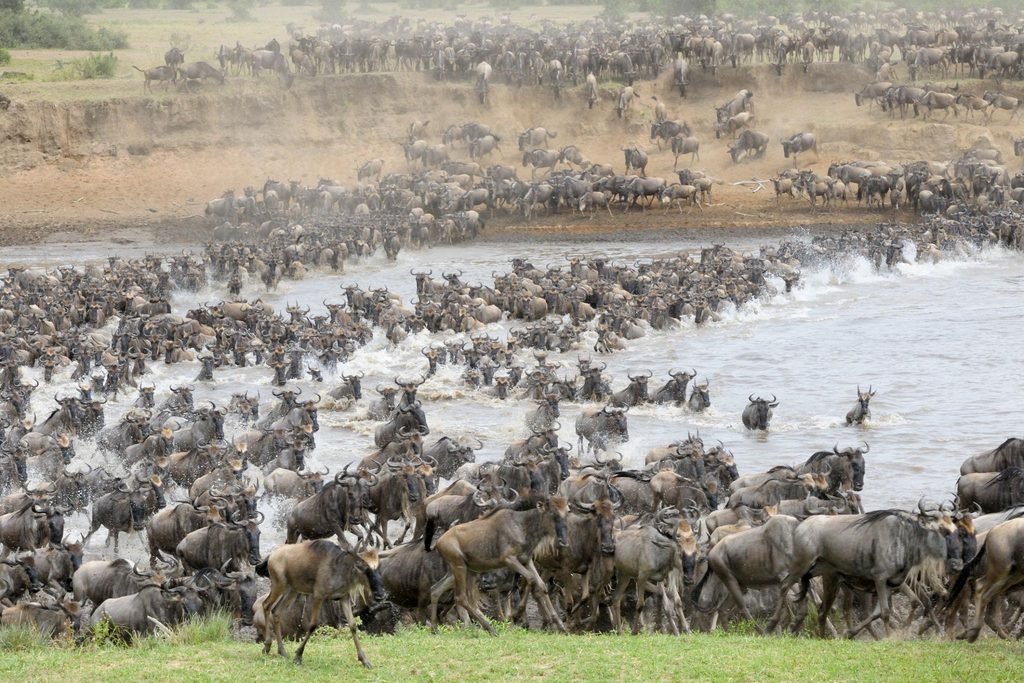
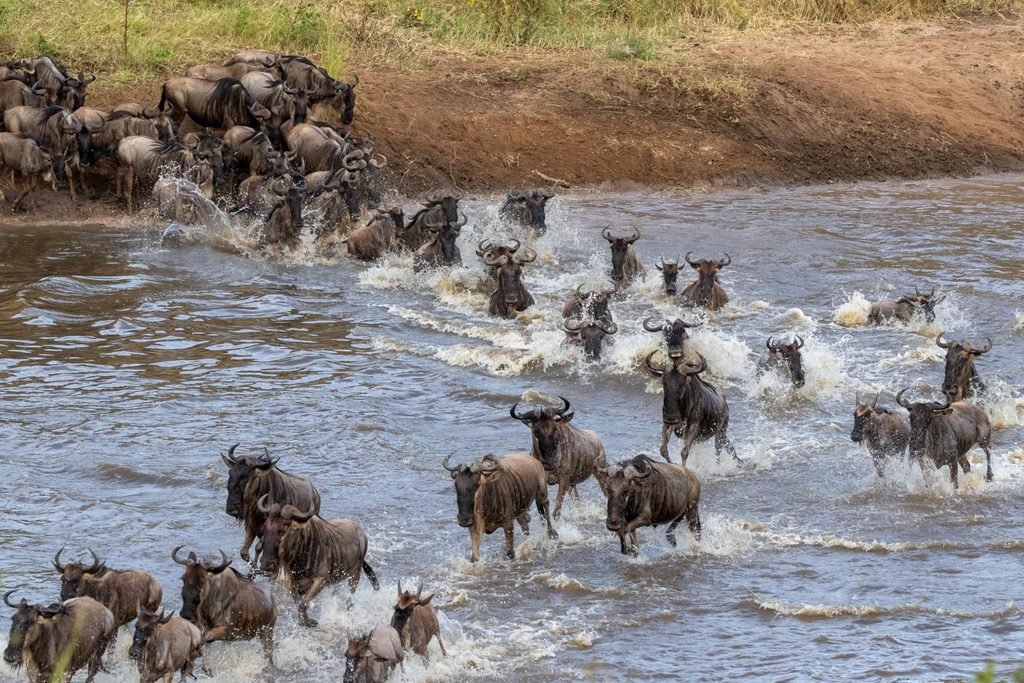
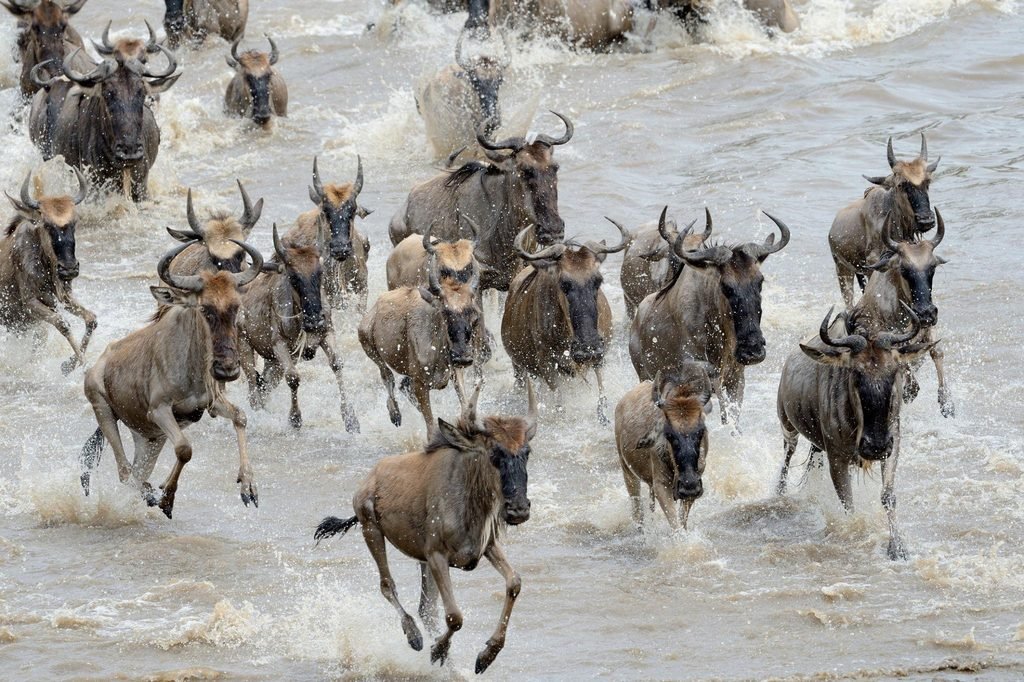
The Great Wildebeest Migration is perhaps the most famous natural event associated with the Serengeti. Every year, approximately 1.5 million wildebeest, accompanied by hundreds of thousands of zebras and gazelles, move across the wider Serengeti–Mara ecosystem in search of fresh grass and water. The migration is a continuous seasonal movement rather than a single event that happens on a fixed date.
The movement of these animals is mainly influenced by rainfall and the availability of grazing. During the early months of the year, large herds are often found on the southern Serengeti plains and in the Ndutu area. As conditions change, many animals move toward the central and western regions before continuing north. During parts of the dry season, herds may cross the Mara River between northern Tanzania and Kenya’s Maasai Mara ecosystem.
River crossings attract considerable attention because the animals must negotiate strong currents, steep riverbanks, and predators such as crocodiles. However, the migration is much more than river crossings. It includes calving, predator interactions, grazing movements, and the constant movement of animals across different habitats. For visitors planning a Tanzania safari in 2027 or 2028, choosing the right region of the Serengeti for the intended travel month is particularly important.
3. The Serengeti Is a UNESCO World Heritage Site
Serengeti National Park was inscribed on the UNESCO World Heritage List in 1981 because of its exceptional natural importance. The park is recognized for its large wildlife populations, ecological processes, and one of the world’s most significant remaining large-mammal migrations. This international recognition highlights the value of protecting the Serengeti for both present and future generations.
The park’s ecological importance extends beyond its boundaries. Wildlife moves between protected areas and surrounding landscapes, making conservation across the wider ecosystem essential. The Serengeti is connected ecologically to areas such as the Ngorongoro Conservation Area and Kenya’s Maasai Mara National Reserve, although different sections of the ecosystem have separate management arrangements.
Protecting the Serengeti involves maintaining wildlife habitats, reducing illegal hunting, managing tourism responsibly, and monitoring environmental changes. Visitors also have a role to play by respecting park regulations, remaining on permitted roads, avoiding disturbance to animals, and following the instructions of professional safari guides. More information about the park’s international significance is available through the UNESCO World Heritage Centre.
4. The Serengeti Has One of Africa’s Most Important Lion Populations
The Serengeti is well known for its lions, which are among the most sought-after animals on a Tanzania wildlife safari. The park and its surrounding ecosystem support an important population of these large predators, making the region particularly valuable for lion conservation and scientific research.
Lions in the Serengeti live in social groups known as prides, which commonly include related females, their young, and one or more adult males. Their social behaviour is fascinating to observe because members of a pride may rest together, care for cubs, defend territory, and cooperate during some hunting activities. However, hunting success depends on many factors, including the type of prey, habitat, and conditions.
The central Serengeti, particularly the Seronera area, is well known for lion sightings because of its mixture of open plains, river valleys, and resident prey populations. Lions can also be found in other regions of the park, including the southern plains and northern woodlands. Wildlife sightings are never guaranteed, but spending several days in the Serengeti generally provides more opportunities to observe natural predator behaviour than making a very short visit.
5. The Serengeti Is Home to the African Big Five
Many travellers visit Tanzania hoping to see the African Big Five: lion, leopard, elephant, buffalo, and rhinoceros. The Serengeti provides habitat for all five species, although some are much easier to observe than others. Lions, elephants, and buffaloes are regularly encountered in suitable areas, while leopards require patience and careful searching.
Leopards are particularly interesting because they are solitary, secretive animals that often rest in trees or dense vegetation during daylight hours. In the Seronera region, riverine trees and rocky areas provide suitable places for leopards to rest and watch their surroundings. Experienced safari guides look for signs such as alarm calls, animal tracks, and movement in the branches to improve the chances of finding these elusive predators.
Black rhinoceroses also occur in the Serengeti ecosystem, but they are rare and sightings inside the national park are uncommon. Travellers whose main goal is to see a rhinoceros may have better opportunities in the Ngorongoro Crater, although sightings there are not guaranteed either. Combining the Serengeti with Ngorongoro can therefore provide a more varied wildlife experience during a northern Tanzania safari.
6. The Serengeti Contains Ancient Granite Rock Formations Called Kopjes
One of the Serengeti’s most distinctive landscape features is the presence of kopjes, which are isolated rocky outcrops rising above the surrounding grasslands. These formations are made largely of ancient crystalline rock, including granite and related rock types, exposed over very long periods through geological weathering and erosion.
Kopjes create important habitats for wildlife because they provide shade, shelter, lookout points, and protection from the surrounding open plains. Lions are sometimes seen resting on the rocks, where elevated positions offer good views of nearby animals. Smaller creatures, including rock hyraxes, reptiles, and various bird species, also use these formations as places to live and shelter.
The Moru Kopjes in the central-southern Serengeti are among the better-known examples. They provide an interesting contrast to the grasslands and can be rewarding places for wildlife photography. Some kopjes also have cultural significance because of their historical associations with people who lived in or travelled through the region. A safari that includes different habitats, rather than only open plains, gives visitors a better understanding of the Serengeti’s natural diversity.
7. The Serengeti Supports More Than 500 Bird Species
Although the Serengeti is famous for its large mammals, it is also an excellent destination for birdwatching. More than 500 bird species have been recorded in the park, including birds of prey, ground-dwelling species, waterbirds, and colourful woodland birds. The variety of habitats across the Serengeti provides feeding, breeding, and resting areas for many different species.
Among the birds visitors may encounter are ostriches, secretarybirds, kori bustards, lilac-breasted rollers, hornbills, vultures, eagles, and several species of storks. The secretarybird is especially interesting because it spends much of its time walking through grasslands while hunting snakes, insects, and other small animals. The kori bustard, meanwhile, is one of the heaviest flying birds in the world and is often seen walking slowly across open savannah.
Birdwatching conditions vary throughout the year. Resident species can be observed in different seasons, while migratory birds add to the diversity during certain months. Travellers interested in photography or bird identification should inform their safari guide in advance so that sufficient time can be allocated to quieter wildlife observations. A Serengeti safari is not only about finding lions and elephants; smaller animals and birds are equally important parts of the ecosystem.
8. The Serengeti Has One of the World’s Most Important Wildlife Research Histories
The Serengeti has been an important centre for wildlife research for many decades. Scientists have studied its lions, wildebeest, vegetation, predators, diseases, and ecological relationships to better understand how large natural ecosystems function. Research in the Serengeti has contributed significantly to modern wildlife ecology and conservation science.
One particularly important area of study involves the relationship between wildebeest populations, grassland vegetation, and predators. Changes in the numbers of grazing animals can influence vegetation growth, fire patterns, and the wider food web. This demonstrates that the Serengeti’s wildlife species are connected through complex ecological processes rather than existing independently.
Long-term lion research has also helped scientists understand social behaviour, reproduction, territorial relationships, and population changes. Such studies are valuable because conservation decisions depend on reliable information collected over many years. Visitors travelling to the Serengeti in 2027 or 2028 are entering a landscape that is not only a tourism destination but also an internationally significant natural research environment.
9. The Serengeti Changes Dramatically Between the Wet and Dry Seasons
Another interesting fact about the Serengeti is how much its appearance and wildlife distribution change throughout the year. During wetter months, parts of the grasslands become green, seasonal water sources fill, and grazing conditions improve. These changes attract herbivores to different areas and influence the movement of predators that depend on them.
During the dry season, many areas become more open as grasses lose moisture and water sources become less widely available. Animals may concentrate around permanent rivers and other reliable water sources, which can make certain locations particularly productive for wildlife viewing. The northern Serengeti and river systems become important for some migrating herds during portions of the dry season.
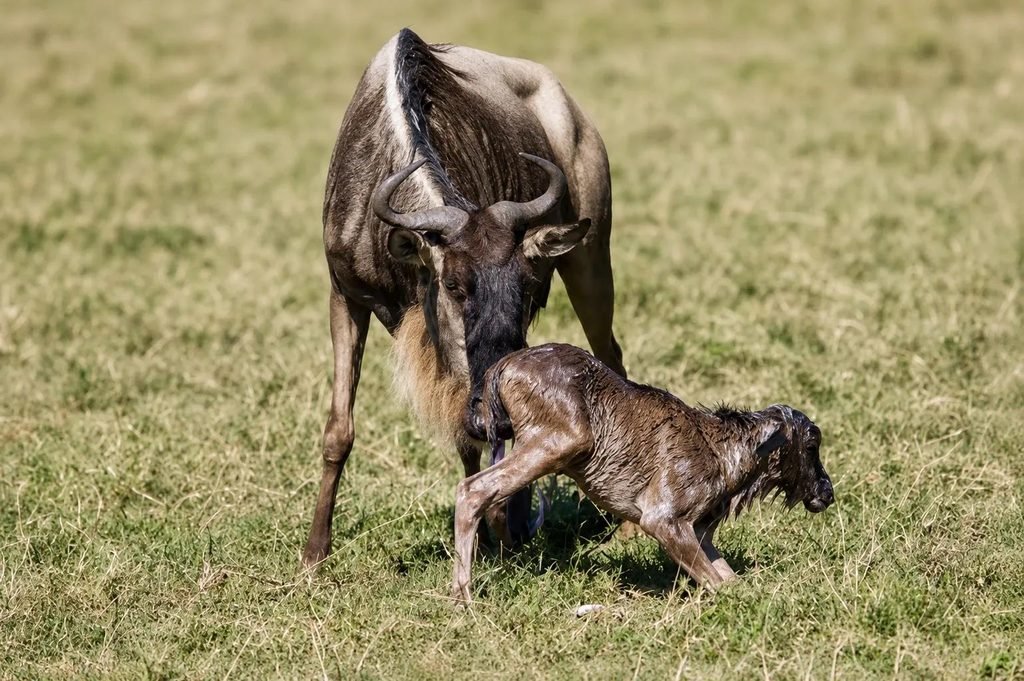
There is no single month that guarantees the best safari experience for every traveller. Those interested in the calving season may prefer the southern Serengeti and Ndutu region during the early months of the year. Visitors hoping to see Mara River crossings often plan travel between approximately July and October, although the timing varies. Travellers primarily interested in resident wildlife can enjoy the central Serengeti across much of the year. Understanding these seasonal differences is essential when planning a safari for 2027 or 2028.
10. The Serengeti Is Part of a Much Larger Wildlife Ecosystem
Serengeti National Park is enormous, but the wider Serengeti–Mara ecosystem is even larger. This connected landscape includes protected areas and surrounding lands in northern Tanzania and southwestern Kenya. The ecological relationship between these areas allows migratory animals to move across large distances in response to changing environmental conditions.
The southern plains associated with the Ngorongoro Conservation Area are particularly important during the wildebeest calving period. The western and northern corridors provide seasonal movement routes, while the Mara River region plays an important role during parts of the dry-season migration. Each section contributes to the survival of wildlife populations that depend on access to different habitats throughout the year.
This is why conservation efforts cannot focus only on individual animals or isolated park boundaries. Wildlife corridors, grazing habitats, rivers, and surrounding communities all influence the health of the ecosystem. For visitors, understanding this wider landscape helps explain why the Great Migration continues across different regions rather than remaining permanently inside one national park.
Best Time to Visit the Serengeti in 2027 and 2028
The Serengeti is a year-round safari destination, but the most suitable travel period depends on the wildlife you want to see and the type of experience you prefer. The Great Migration follows seasonal rainfall and grazing conditions, so its movements cannot be predicted with complete accuracy several years in advance.
| Travel period | Typical wildlife experience | Areas to consider |
|---|---|---|
| January–March | Wildebeest calving and predator activity | Southern Serengeti and Ndutu |
| April–May | Green landscapes and changing herd movements | Central and western Serengeti |
| June–July | Migration moving through western and northern areas | Western Corridor and northern Serengeti |
| August–September | Potential Mara River crossings | Northern Serengeti |
| October | Northern migration activity and changing seasonal movements | Northern and central Serengeti |
| November–December | Returning herds and renewed grazing | Central and southern Serengeti |
These are general seasonal patterns, not fixed migration schedules. Rainfall can alter where animals are found in any particular year. When planning your Serengeti safari for 2027 or 2028, allow enough time to explore the region rather than expecting a specific wildlife event to happen on a particular day.
How Many Days Should You Spend in the Serengeti?
The number of days you spend in the Serengeti can make a significant difference to your safari experience. Although short visits are possible, the park is large, and travelling between different regions takes time. A single afternoon game drive cannot provide the same opportunities as several days of exploring different habitats.
For most first-time visitors, spending at least two or three nights in the Serengeti is a reasonable starting point. This allows time for morning and afternoon game drives, searching for different animals, and enjoying the landscape without rushing. Travellers interested in the Great Migration or wildlife photography may benefit from staying longer, particularly when visiting the northern Serengeti.
A four- to six-day northern Tanzania safari can combine the Serengeti with Ngorongoro Crater or Tarangire National Park, depending on the itinerary. Travellers with more time can consider a seven- or eight-day safari that includes additional nights in the Serengeti. At Eddy Tours & Safaris, we can help you plan a route based on your travel dates, budget, and wildlife interests.
What Animals Can You See on a Serengeti Safari?
The Serengeti is home to an impressive variety of wildlife, and sightings can vary according to the season, habitat, and time of day. Large grazing animals such as wildebeest, zebras, buffaloes, and various antelope species are important components of the ecosystem. Their movements and behaviour influence the distribution of predators across the landscape.
Lions, cheetahs, leopards, spotted hyenas, and jackals are among the carnivores that visitors may encounter. Elephants and giraffes can be seen in suitable woodland and savannah habitats, while hippos and crocodiles are associated with rivers and permanent water sources. Smaller mammals, reptiles, and birds also contribute to the park’s remarkable biodiversity.
Wildlife viewing requires patience because animals move freely through their natural environment. Professional safari guides use their knowledge of animal behaviour, habitats, and seasonal conditions to identify promising areas. However, no responsible operator can guarantee a particular animal sighting or river crossing.
Tips for Planning a Serengeti Safari in 2027/2028
Planning ahead is particularly helpful when visiting the Serengeti during popular travel months. Accommodation in areas such as the northern Serengeti can be in high demand during the migration season, and travellers who want particular camps or lodges should consider booking well in advance.
It is also important to choose accommodation based on the part of the Serengeti you intend to explore. Staying in the central Serengeti may be convenient for general wildlife viewing, but it is not necessarily the best location for travellers whose main interest is Mara River crossings. Similarly, visitors hoping to experience the calving season should consider the southern Serengeti and Ndutu area during the appropriate months.
A well-planned safari should balance travel time with actual wildlife viewing. Long driving days are sometimes unavoidable, but spending more nights in suitable locations can reduce unnecessary transfers. Discuss your priorities with your tour operator before confirming the itinerary, particularly if you are interested in photography, birdwatching, the Big Five, or the Great Migration.
Why Visit the Serengeti with Eddy Tours & Safaris?
Eddy Tours & Safaris is a local tour company based in Arusha, Tanzania, offering safari planning services for travellers who want to explore the country’s wildlife destinations. We help visitors arrange trips to Serengeti National Park, Ngorongoro Crater, Tarangire National Park, Lake Manyara National Park, and other destinations in northern Tanzania.
Our safari planning approach considers your available travel days, preferred accommodation, budget, and wildlife interests. Whether you are planning a short safari, a family holiday, or a longer trip focused on the Great Migration, we can help you review an itinerary suited to your plans.
You can also combine a Serengeti safari with a Mount Kilimanjaro climb or a Zanzibar beach holiday. Tanzania offers many opportunities to experience wildlife, mountains, local culture, and coastal landscapes within one trip. For official information about the country’s national parks, visit the Tanzania National Parks Authority.
Frequently Asked Questions About the Serengeti
What is the Serengeti most famous for?
The Serengeti is most famous for the Great Wildebeest Migration, its extensive grasslands, large predator populations, and exceptional wildlife viewing opportunities. It is also internationally recognized as a UNESCO World Heritage Site.
Where is Serengeti National Park located?
Serengeti National Park is located in northern Tanzania, primarily within the Mara and Simiyu regions. It forms part of the wider Serengeti–Mara ecosystem, which extends into southwestern Kenya.
How big is Serengeti National Park?
The national park covers approximately 14,763 square kilometres, making it one of Tanzania’s largest and best-known protected wildlife areas.
Can you see the Big Five in the Serengeti?
All five Big Five species occur in the Serengeti ecosystem, but black rhinoceroses are rare and difficult to see. Lions, elephants, and buffaloes are generally easier to encounter, while leopard sightings require patience.
What is the best month to see the Great Migration?
There is no single best month for every migration experience. The southern calving season is generally associated with January to March, while northern Serengeti river crossings may occur between July and October. Actual movements depend on rainfall and grazing conditions.
Is the Serengeti worth visiting outside the migration season?
Yes. The Serengeti supports resident wildlife throughout the year, including lions, elephants, giraffes, buffaloes, leopards, and many bird species. Visitors can enjoy rewarding game drives even when the largest migrating herds are elsewhere.
How many days are recommended for a Serengeti safari?
At least two or three nights are recommended for many first-time visitors. Longer stays are useful for travellers interested in photography, particular wildlife behaviours, or exploring different regions of the park.
Can I visit Serengeti and Ngorongoro on the same safari?
Yes. Serengeti National Park and Ngorongoro Crater are commonly combined in northern Tanzania safari itineraries. The appropriate duration depends on your starting point, accommodation, and the amount of time you want to spend on game drives.
Plan Your Serengeti Safari for 2027 or 2028
The Serengeti is much more than a place to see wild animals. It is a vast natural ecosystem where seasonal migration, predator behaviour, ancient landscapes, and conservation processes come together. From the open southern plains to the rivers of the northern Serengeti, each region offers a different view of Tanzania’s wildlife heritage.
These ten interesting facts show why the Serengeti continues to attract wildlife enthusiasts, photographers, families, and travellers from around the world. Whether your main interest is seeing the Great Wildebeest Migration, searching for the Big Five, or simply enjoying the African savannah, planning the right itinerary will help you make better use of your time.
Book your Serengeti safari with Eddy Tours & Safaris for 2027 or 2028. Contact our team to discuss your preferred travel dates, number of travellers, accommodation options, and safari budget.
Website: Eddy Tours and Safaris
Email: sales@eddytours-safaris.com
WhatsApp: +255 711 906 664
Contact page: Eddy Tours and Safaris Contact