
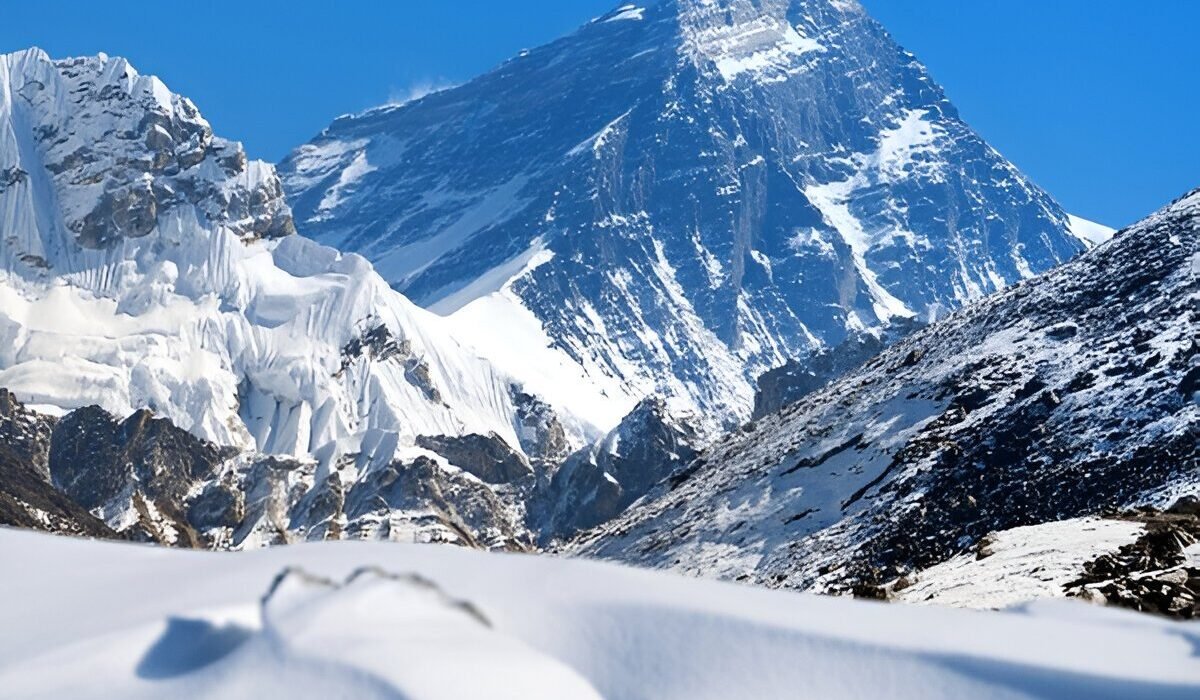
Asia is home to the highest mountains on Earth. Its great ranges—the Himalaya and Karakoram—contain every one of the world’s fourteen 8,000-metre peaks, along with thousands of lower but still formidable summits. For trekkers, climbers and geography lovers, these mountains are far more than impressive numbers on a map. They shape weather, rivers, cultures, trade routes and some of the most demanding journeys on the planet.
This guide lists the top 10 highest mountains in Asia by elevation, with their locations, climbing context and the reasons each mountain is so widely known. Heights are given in metres and feet, using commonly accepted figures. A mountain’s height may be fixed on paper, but access, permits, safety rules, local conditions and climbing routes can change. Anyone considering an expedition should work with a properly qualified operator and check official requirements close to travel.
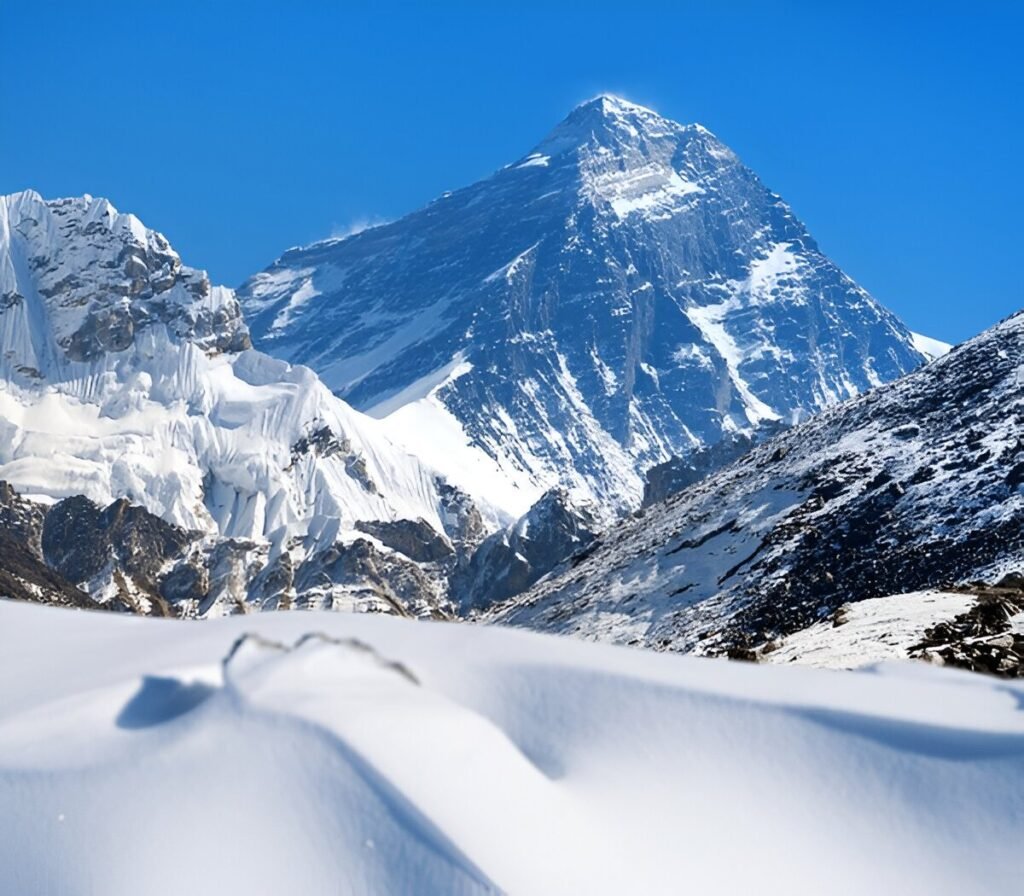
Top 10 highest mountains in Asia at a glance
| Rank | Mountain | Height | Location |
|---|---|---|---|
| 1 | Mount Everest | 8,848.86 m / 29,031.7 ft | Nepal–China border |
| 2 | K2 | 8,611 m / 28,251 ft | Pakistan–China border |
| 3 | Kangchenjunga | 8,586 m / 28,169 ft | Nepal–India border |
| 4 | Lhotse | 8,516 m / 27,940 ft | Nepal–China border |
| 5 | Makalu | 8,485 m / 27,838 ft | Nepal–China border |
| 6 | Cho Oyu | 8,188 m / 26,864 ft | Nepal–China border |
| 7 | Dhaulagiri I | 8,167 m / 26,795 ft | Nepal |
| 8 | Manaslu | 8,163 m / 26,781 ft | Nepal |
| 9 | Nanga Parbat | 8,126 m / 26,660 ft | Pakistan |
| 10 | Annapurna I | 8,091 m / 26,545 ft | Nepal |
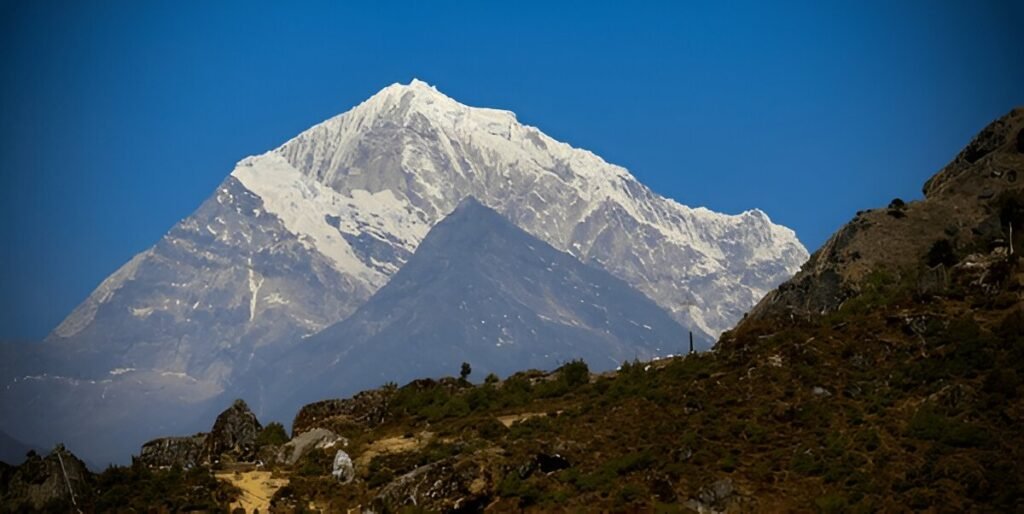
1. Mount Everest — 8,848.86 metres
Mount Everest is the highest mountain in Asia and the world. It stands on the border of Nepal and China, between Nepal’s Khumbu region and Tibet. Its official height was confirmed jointly by Nepal and China as 8,848.86 metres, or 29,031.7 feet. The mountain is known as Sagarmatha in Nepali and Qomolangma in Tibetan, names that carry far more local meaning than the English name used on many maps.
Everest attracts climbers from around the world, but it should never be described as an easy mountain. Even the commonly used south-side and north-side routes demand long acclimatisation, strong physical conditioning, technical judgement, logistical support and good weather. The high-altitude “death zone” begins above 8,000 metres, where the body cannot acclimatise indefinitely and decision-making becomes much harder.
For non-climbers, the Everest region is still a major travel destination. Treks to Everest Base Camp, Gokyo Lakes and high passes provide close views of the mountain and introduce visitors to Sherpa communities, monasteries and Himalayan landscapes. Trekking to base camp is not the same as climbing Everest, but it still requires fitness, careful acclimatisation and respect for altitude.
2. K2 — 8,611 metres
K2 is the second-highest mountain in Asia and the world. It rises in the Karakoram range on the Pakistan–China border. Its shape is strikingly steep and pyramid-like, and its reputation among mountaineers is serious. K2 is often regarded as one of the most technically demanding 8,000-metre peaks because of its steep sections, exposure, unpredictable weather and difficult descent.
Unlike Everest, K2 has no straightforward equivalent of a heavily developed trekking route to its base. Reaching K2 Base Camp involves a long approach through the Karakoram, commonly via the Baltoro Glacier. The journey itself is a major expedition, passing famous peaks such as Broad Peak and the Gasherbrum group. It is one of the great high-mountain treks for experienced hikers who are prepared for remote conditions.
K2’s beauty and difficulty are part of the same story. It is not a mountain for casual ambition, and even very strong climbers must treat it with humility. Weather windows are short, rescue resources are limited compared with more accessible mountains, and turning back is often the right decision.
3. Kangchenjunga — 8,586 metres
Kangchenjunga is the third-highest mountain in Asia and lies on the border between Nepal and the Indian state of Sikkim. Its name is commonly translated as “The Five Treasures of the Great Snow,” referring to its five major peaks. It is a mountain with deep cultural and spiritual importance to the communities around it.
Although Kangchenjunga is lower than Everest and K2, it remains an extremely serious expedition objective. The terrain is complex, the weather can be severe and access is more remote than in the Everest region. Climbers traditionally stop short of the true summit out of respect for local beliefs, a practice followed by many expedition teams.
Trekking in the Kangchenjunga region offers a quieter Himalayan experience than more famous routes. The trails pass villages, forests, high grazing land and viewpoints with broad views of the massif. Visitors should expect basic infrastructure in some areas and longer travel times, but that remoteness is exactly what appeals to many experienced trekkers.
4. Lhotse — 8,516 metres
Lhotse is connected to Everest by the South Col and shares much of the same approach from Nepal. It is the fourth-highest mountain in Asia, standing at 8,516 metres. From certain perspectives, it can appear to be part of Everest’s massive ridge system, but it is a distinct peak with its own summit and climbing challenges.
The standard route to Lhotse follows the Everest route for much of the early journey before separating near the upper mountain. One of its most famous features is the Lhotse Face, a steep wall of hard snow and ice that climbers must negotiate at high altitude. The mountain’s proximity to Everest does not make it a simple alternative. It requires high technical ability, careful acclimatisation and a team experienced in expedition climbing.
For trekkers, Lhotse is often part of the wider visual drama of the Khumbu. From trails and viewpoints around Everest Base Camp, the summit and face can be seen in changing light, reminding visitors how closely packed the world’s highest mountains are in this region.
5. Makalu — 8,485 metres
Makalu, the fifth-highest mountain in Asia, sits on the Nepal–China border southeast of Everest. It is recognised by its sharp, four-sided pyramid shape. At 8,485 metres, it is only slightly lower than Lhotse, but its climbing environment is distinctly remote and demanding.
Makalu is known for steep terrain, exposed ridges and difficult upper sections. It is not a mountain where altitude alone is the challenge; technical climbing ability, judgement and resilience are essential. The mountain’s remote location can make logistics more complicated, and climbers must be ready for a much less developed setting than the Everest corridor.
The Makalu-Barun region is also important for biodiversity. It includes deep valleys, forest, alpine land and high Himalayan terrain. Trekkers who visit the area experience a wilder, less crowded side of Nepal, where views of Makalu are earned through long days on the trail rather than reached by a quick road transfer.
6. Cho Oyu — 8,188 metres
Cho Oyu is the sixth-highest mountain in Asia. It stands on the Nepal–China border west of Everest and reaches 8,188 metres. Its name is often translated as “Turquoise Goddess.” Among 8,000-metre peaks, Cho Oyu has sometimes been described as one of the more accessible from a technical perspective, but that phrase can be dangerously misleading.
Any climb above 8,000 metres carries serious risks from altitude, cold, storms, avalanches and exhaustion. A less technical route does not mean a safe route. Conditions, permits and border access also affect whether an expedition is practical in a particular year. Prospective climbers need prior high-altitude experience, strong guides and a conservative decision-making approach.
Cho Oyu is an important part of the Himalayan skyline and the broader Everest region. Its height shows just how extreme the Himalaya is: a mountain more than eight kilometres above sea level is still only sixth on this list.
7. Dhaulagiri I — 8,167 metres
Dhaulagiri I is the highest mountain entirely within Nepal and ranks seventh in Asia. Its name means “White Mountain,” and at 8,167 metres it towers above the Kali Gandaki Valley, often described as one of the world’s deepest gorges between major Himalayan peaks. The contrast between the valley and surrounding summits is remarkable.
The Dhaulagiri region is admired by trekkers for its rugged scenery and relative quiet. The Dhaulagiri Circuit is a demanding trek involving high passes, glacial terrain and remote camps. It is best suited to well-prepared hikers with experience of multi-day mountain travel. Conditions can be harsh, and the route should not be treated as an ordinary walking holiday.
For mountaineers, Dhaulagiri I has a reputation for complex weather and serious avalanche terrain. It is a major expedition peak, not simply another name on an 8,000-metre list.
8. Manaslu — 8,163 metres
Manaslu is Nepal’s eighth-highest mountain in Asia and the eighth-highest in the world. It rises to 8,163 metres in the west-central Himalaya. The name is often linked to the Sanskrit word for “spirit” or “intellect,” and the mountain sits above valleys where Tibetan Buddhist culture remains a strong part of daily life.
The Manaslu Circuit Trek has become a respected alternative to the Annapurna Circuit for people who want a long Himalayan journey with changing landscapes and fewer crowds. It usually includes a high crossing of Larkya La, so acclimatisation, weather planning and physical preparation are important. The trail has developed in recent years, but it is still a real mountain route rather than a casual sightseeing walk.
Manaslu’s climbing history includes avalanches and serious conditions. The mountain demands competent expedition leadership, realistic turnaround decisions and a full understanding that summit success is never owed to anyone.
9. Nanga Parbat — 8,126 metres
Nanga Parbat, in Pakistan’s western Himalaya, ranks ninth among the highest mountains in Asia. Its name means “Naked Mountain,” a reference to its immense exposed slopes. It rises to 8,126 metres and is famous for the Rupal Face, one of the largest mountain faces on Earth.
Its history is marked by difficult climbing, changing weather and a level of seriousness that has earned it a powerful reputation among mountaineers. The mountain is remote, steep and not forgiving of poor conditions. Its height alone does not explain the challenge; the scale of its faces and the complexity of its routes do.
Visitors to the region can enjoy dramatic views from lower valleys and access points, but travel conditions and local requirements should always be checked carefully. Pakistan’s Karakoram and western Himalaya are among the world’s great mountain landscapes, yet distances are long and weather can alter plans quickly.
10. Annapurna I — 8,091 metres
Annapurna I completes the top 10 highest mountains in Asia. It stands at 8,091 metres in central Nepal and was the first 8,000-metre peak ever climbed, in 1950. That historical achievement did not make the mountain routine. Annapurna I is associated with steep terrain, unstable snow, avalanches and complex route conditions.
The Annapurna region is much more accessible to trekkers than the summit itself is to climbers. Routes around Annapurna, including the Annapurna Circuit and treks to Annapurna Base Camp, attract visitors who want Himalayan scenery, villages and high passes without attempting expedition mountaineering. These treks still require appropriate footwear, warm layers, acclimatisation and the willingness to adapt to weather.
Annapurna I is a good reminder that famous trekking regions and extreme climbing objectives can exist side by side. Seeing a mountain, trekking beneath it and climbing it are three entirely different activities with very different preparation needs.
Why nearly all of Asia’s highest mountains are in the Himalaya and Karakoram
The Himalaya and Karakoram were created through the collision of tectonic plates. The Indian plate moved northward and pushed into the Eurasian plate, uplifting enormous sections of the Earth’s crust. That process continues today, which is why the region remains geologically active and prone to earthquakes and landslides in some areas.
The Himalaya contains Everest, Kangchenjunga, Lhotse, Makalu, Cho Oyu, Dhaulagiri, Manaslu and Annapurna. K2 is in the Karakoram, a range often grouped with the greater Himalayan mountain world but geologically and geographically distinct. Both regions contain glaciers that feed major river systems and support millions of people far downstream.
Are these mountains suitable for ordinary travellers?
Most people do not climb the top 10 highest mountains in Asia. They experience them through treks, scenic flights, cultural visits and base-camp journeys. That is not a lesser adventure. Walking through the Khumbu, Annapurna, Manaslu or Karakoram regions gives travellers time to understand the scale of the mountains and the communities that live around them.
Choose a trek that matches your health, experience and available time. Train before departure, plan gradual acclimatisation, drink enough water, listen to guides and be willing to stop or descend if altitude symptoms become serious. Do not treat altitude illness as something to push through. A successful trip is one where everyone returns safely.
From Asia’s giants to Tanzania’s highest mountain
Asia’s 8,000-metre peaks show the most extreme end of mountaineering. Mount Kilimanjaro in Tanzania is much lower at 5,895 metres, but altitude remains a real challenge and preparation still matters. Kilimanjaro is a trekking mountain rather than a technical 8,000-metre expedition on its standard routes, making it a more achievable goal for fit travellers who choose enough acclimatisation time.
If you are planning a Kilimanjaro climb after reading about the mountains of Asia, see Kilimanjaro Climb Specialist for route-specific information and preparation guidance. For a Tanzania holiday that combines wildlife, culture and mountain views, explore Eddy Tours & Safaris.
Frequently asked questions about Asia’s highest mountains
Which country has the most of Asia’s highest mountains?
Nepal is closely associated with many of the highest Himalayan peaks and is home to several mountains on this list, either entirely within Nepal or on its borders with China and India. Pakistan is home to Nanga Parbat and shares K2 with China. The mountains and the communities around them often extend across national borders, so their geography is more complex than a simple country count.
Is K2 higher than Mount Everest?
No. Everest is higher, at 8,848.86 metres, while K2 is 8,611 metres. K2 is widely regarded as technically more difficult on its normal climbing routes, but both are extreme high-altitude mountains with serious risk.
How many mountains are over 8,000 metres high?
There are fourteen recognised 8,000-metre peaks, and all are in Asia. The ten listed here are the tallest; the remaining four are Gasherbrum II, Broad Peak, Gasherbrum I and Shishapangma.
Can a beginner climb an 8,000-metre mountain?
No responsible guide would recommend an 8,000-metre peak as a beginner’s mountain. Build experience gradually through lower-altitude trekking, mountaineering skills, glacier travel where appropriate and guided expeditions suited to your level. Altitude and technical terrain leave little room for inexperience.
Plan responsibly and travel well
The highest mountains in Asia deserve respect. Their beauty is real, but so are altitude, storms, cold, avalanches and isolation. Use experienced local guides, obtain the right permits, keep your insurance appropriate for the activities you are doing and check official updates before travel. Never assume a successful trip is only about reaching a summit. Good decisions, cultural respect and returning safely are the real measures of a mountain journey.
For Tanzania safari and Kilimanjaro planning, contact Eddy Tours & Safaris, email eddytoursandsafaris@gmail.com or sales@eddytours-safaris.com, or call and WhatsApp +255 711 906 664.