
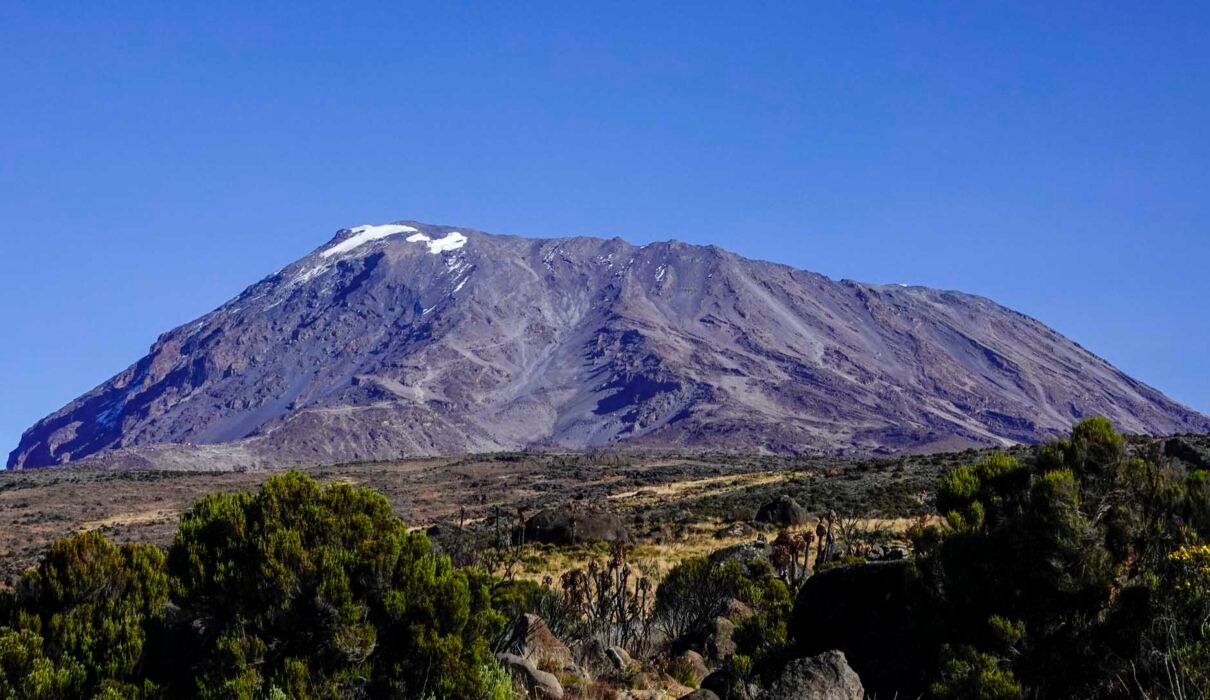
Kilimanjaro is generally harder than the classic Inca Trail, mainly because of its higher altitude, longer expedition, colder upper slopes, and demanding summit attempt. However, the Inca Trail has steep climbs and long stone staircases that can challenge your legs and knees.
Both journeys require preparation. Their difficulties differ, and the better choice depends on your hiking experience, available time, health, and what you want from the trip.
This comparison looks at the classic four-day Inca Trail to Machu Picchu and a standard trekking expedition to Kilimanjaro’s Uhuru Peak. Short Inca Trail options and alternative Peruvian treks have different demands, while Kilimanjaro itineraries vary by route and duration.
Inca Trail vs Kilimanjaro: Quick Comparison
| Factor | Classic Inca Trail | Kilimanjaro summit trek |
|---|---|---|
| Location | Peru | Tanzania |
| Main objective | Reach Machu Picchu through a historic mountain trail | Reach Uhuru Peak, Africa’s highest summit |
| Highest elevation | Approximately 4,200 metres at Dead Woman’s Pass | 5,895 metres at Uhuru Peak |
| Typical trekking duration | Four days; longer versions exist | Commonly five to nine days, depending on itinerary |
| Walking distance | Approximately 40–43 kilometres | Varies substantially by route |
| Terrain | Stone steps, mountain passes, uneven paths, and forest trails | Forest paths, rocky ground, scree, and exposed upper slopes |
| Main physical challenge | Repeated climbs and steep stair descents | Sustained trekking followed by a long summit ascent and descent |
| Accommodation | Usually camping on the classic trek | Camping on most routes; huts on Marangu |
| Overall assessment | A demanding mountain trek | Generally the more demanding expedition |
Peru’s official tourism sources describe the classic trail as approximately 40–43 kilometres over four days. An operator’s itinerary identifies Warmiwañusca, or Dead Woman’s Pass, at approximately 4,200 metres. The UIAA identifies Kilimanjaro’s Uhuru Peak at 5,895 metres.
The overall difficulty assessment is a comparison of these characteristics, rather than an official difficulty rating.
1. Altitude: Kilimanjaro Presents the Greater Challenge
The largest difference between the Inca Trail and Kilimanjaro is elevation.
Kilimanjaro’s summit is roughly 1,700 metres higher than the Inca Trail’s highest pass. That difference matters even if you walk slowly and carry only a daypack.
On the Inca Trail, reaching a high pass is followed by descent. On Kilimanjaro, the expedition builds towards a summit attempt substantially above the highest point of the classic Peruvian trek.
The CDC explains that altitude illness risk depends on individual susceptibility and ascent rate. Physical fitness does not protect against it.
A strong runner may therefore struggle on Kilimanjaro, while a slower walker may manage well with a suitable itinerary. Neither outcome can be promised before departure.
Does completing the Inca Trail prepare you for Kilimanjaro?
It provides useful experience with multiday walking, camping, and hiking at altitude.
However, completing a trek around 4,200 metres does not prove that you will tolerate an ascent to 5,895 metres. Treat it as experience to build upon, rather than medical clearance for a higher mountain.
Which is harder for altitude? Kilimanjaro.
2. Walking Effort: The Inca Trail Can Be Surprisingly Tough
The Inca Trail is shorter, but its walking should not be underestimated.
Stone staircases can make progress feel relentless. Some sections require repeated high steps, while descents demand careful foot placement. A staircase that looks manageable in a photograph may feel very different after several hours on the trail.
Kilimanjaro’s terrain changes with the chosen route. Some sections allow a steady walking rhythm; others involve rocks, uneven footing, or loose material.
Comparing distance alone gives an incomplete picture. Ten kilometres of steep stairs is a different experience from ten kilometres of gradual trail.
Ask both operators for:
- Daily walking distances.
- Expected walking hours.
- Elevation gained and lost.
- Terrain descriptions.
- The location of the longest or steepest sections.
Which is harder for concentrated stair climbing? Often the Inca Trail. Which is harder across the full expedition? Generally Kilimanjaro.
3. Summit Day: Kilimanjaro’s Biggest Difference
The Inca Trail leads towards Machu Picchu. Kilimanjaro leads towards a high mountain summit.
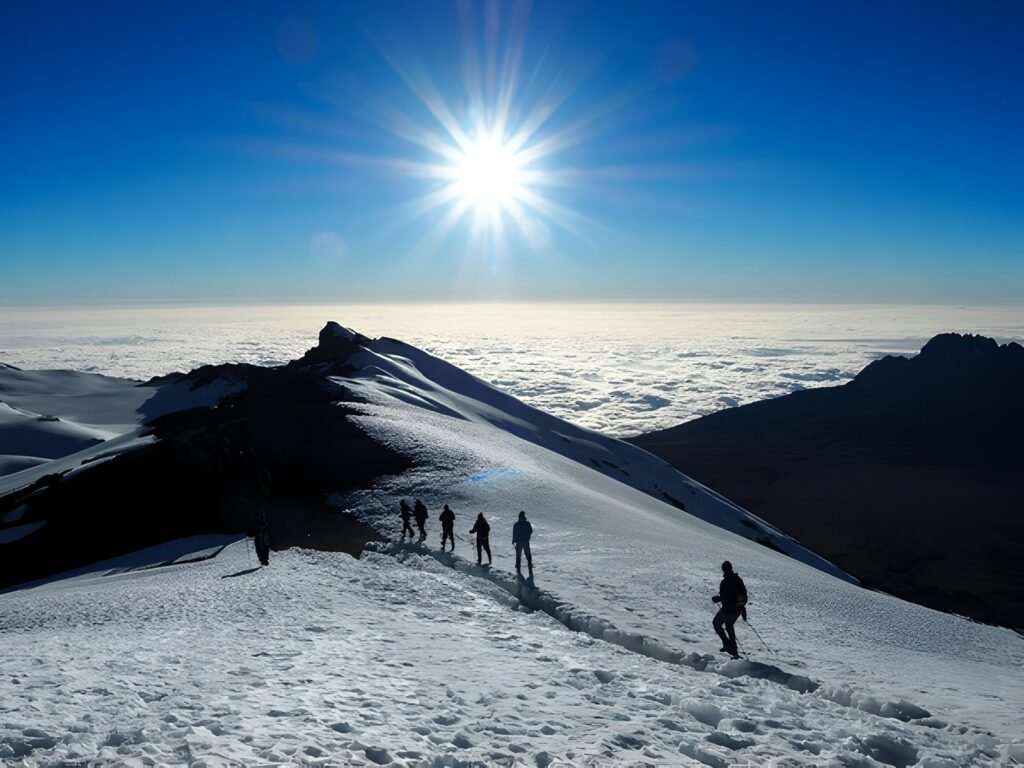
On many Kilimanjaro itineraries, the summit attempt begins overnight. Climbers walk uphill by headlamp, reach the crater rim, and continue towards Uhuru Peak if their condition and circumstances allow.
The effort continues after the summit. You must descend to camp and usually continue to a lower overnight stop.
The exact schedule depends on the route, pace, weather, and guiding decisions. Ask for the expected summit-day ascent and descent rather than relying on one advertised walking time.
The Inca Trail’s final day may also begin early, but it does not involve climbing to nearly 5,900 metres.
This is why someone can feel comfortable during Kilimanjaro’s earlier days and still find the final ascent exceptionally demanding.
Which has the harder final push? Kilimanjaro.
4. Duration: More Days Create More Cumulative Fatigue
The classic Inca Trail usually involves four trekking days. Kilimanjaro commonly requires a longer period on the mountain.
An extended expedition means more consecutive days of walking, more nights away from ordinary comforts, and more time managing equipment and personal routines.
Small inconveniences can accumulate:
- Boots that become uncomfortable.
- A sleeping bag that feels too cold.
- Difficulty keeping clothing organised.
- An appetite that changes.
- Tiredness from repeated early starts.
Extra days can also serve an important purpose. A suitable ascent schedule provides time for acclimatization, although a longer itinerary does not guarantee protection from altitude illness. The CDC recommends gradual ascent and considers sleeping elevation central to planning.
Distinguish trekking days from total holiday days. A package may include hotel nights, transfers, or sightseeing that do not add time on the trail.
Which requires more expedition endurance? Usually Kilimanjaro.
5. Terrain: Which Trek Is Harder on Your Knees?
For travelers with sensitive knees, the Inca Trail’s stair descents deserve particular attention.
Repeated steps can be tiring even when you are breathing comfortably. Uneven surfaces also require concentration, especially when wet.
Kilimanjaro has substantial descents too. Coming downhill after a summit attempt can be challenging because your legs are already tired.
Neither trek is automatically suitable for someone with an existing knee problem. Discuss your symptoms with a qualified clinician or physiotherapist and review the itinerary before committing.
During preparation, practise downhill walking as well as uphill effort. Test trekking poles on local hikes if you intend to use them.
Which is harder on the knees? It depends on the individual. The Inca Trail’s stairs and Kilimanjaro’s long descent present different challenges.
6. Weather and Clothing: Kilimanjaro Requires More Summit Preparation
Both trips require protection from rain, sun, wind, and changing mountain conditions.
Kilimanjaro adds a particularly demanding upper-mountain environment. The UIAA’s mountain medicine guidance identifies cold and altitude illness among the challenges that turn climbers back.
Your clothing needs to work while you are moving slowly as well as when you stop. Gloves, warm layers, suitable head protection, and a reliable outer layer deserve careful attention.
For the Inca Trail, practical priorities include waterproof clothing, comfortable footwear, and clothing suitable for both mountain passes and forest sections.
Use your operator’s equipment list as a starting point, then clarify anything you do not understand. Confirm what can be rented and whether the rental item is appropriate for your size and itinerary.
Which demands more preparation for summit cold? Kilimanjaro.
7. Technical Skills: Neither Standard Trek Is a Technical Climb
The classic Inca Trail and Kilimanjaro’s standard trekking routes generally do not require technical rock climbing experience.
That does not make them easy.
You still need balance, stamina, and confidence on uneven ground. Certain Kilimanjaro itineraries involve scrambling sections, while the Inca Trail includes steep and exposed-feeling stretches.
Tell your operator if heights, narrow paths, or scrambling make you uncomfortable. Request a description of the relevant sections before selecting a route.
A useful question is:
“Which parts require more than ordinary walking, and how will the guides support someone who finds them difficult?”
Which requires greater technical climbing ability? Neither standard itinerary normally requires mountaineering skills, but route details matter.
8. Preparation: What Should You Train For?
Both treks benefit from consistent walking preparation.
Build up gradually rather than attempting one exhausting hike shortly before departure. Practise using the footwear, socks, daypack, and clothing you plan to bring.
Preparing for the Inca Trail
Give particular attention to:
- Uphill walking and stairs.
- Controlled descents.
- Uneven surfaces.
- Several walking days close together.
- Carrying your expected daypack.
Preparing for Kilimanjaro
Include those elements, then place additional emphasis on:
- Longer periods of steady walking.
- Consecutive hiking days.
- Managing layers and equipment.
- Walking comfortably at a sustainable pace.
- Descending when your legs are tired.
Training develops walking capacity. Your ascent schedule and medical suitability still need separate consideration.
If you have an existing condition, unexplained exercise symptoms, or a history of serious altitude illness, obtain medical advice before booking.
9. Cost: Compare the Whole Trip
There is no single reliable price comparison that applies to every traveler.
A Kilimanjaro expedition often involves more days of guiding, accommodation, meals, and mountain support. However, international flights, service level, group size, and additions can change the overall comparison considerably.
For Peru, check whether the quotation includes trail arrangements, guiding, camping equipment, Machu Picchu entry, and onward transport.
For Kilimanjaro, check park charges, mountain staffing, accommodation, meals, transfers, equipment, and any required supplements.
For both, identify these separately:
- International flights.
- Insurance.
- Tips.
- Equipment purchases or rentals.
- Pre-trek accommodation.
- Optional excursions.
- Costs associated with itinerary changes.
Compare written quotations for your actual dates. A cheap headline price is difficult to assess without its inclusions.
Which Trek Is Better for Beginners?
The classic Inca Trail is generally the more manageable starting point for someone seeking a shorter multiday mountain journey.
That recommendation assumes appropriate preparation and time to adjust to altitude before the trek. Arriving in Peru and immediately beginning a demanding itinerary is a different proposition.
Kilimanjaro can be attempted by people without previous mountaineering experience, but it requires serious planning. A beginner should carefully review the route, sleeping elevations, trekking duration, and emergency arrangements.
Choose according to your interests as well as difficulty:
- Choose the Inca Trail if ancient sites, Andean landscapes, and reaching Machu Picchu are your main priorities.
- Choose Kilimanjaro if your goal is a high summit expedition and you can commit to the preparation and time involved.
- Build more experience first if consecutive walking days, camping, or steep descents are still unfamiliar.
What Should You Ask Before Booking?
Send an operator clear information about your hiking experience, available dates, fitness preparation, and accommodation preferences.
Then request answers to five questions:
- What are the actual trekking days and overnight stops?
- Which day is expected to be hardest, and why?
- How does the itinerary account for altitude?
- What happens if I need to stop or descend?
- What is included in the full price?
Look for explanations that relate to your proposed trip. General promises about experienced guides or impressive success rates are less useful than a clear itinerary and emergency plan.
Frequently Asked Questions
Is Kilimanjaro harder than the Inca Trail?
Generally, yes. Its higher summit, longer expedition, and demanding summit day make it the harder overall undertaking. Individual experiences still vary.
Is the Inca Trail easy?
No. It includes high-altitude walking, steep ascents, and demanding descents. Being easier than Kilimanjaro does not make it a casual walk.
Can I climb Kilimanjaro after completing the Inca Trail?
The experience is useful, but assess Kilimanjaro separately. Review your training, medical circumstances, route, and ascent schedule before booking.
Which trek has more stairs?
The Inca Trail is particularly associated with stone staircases. Kilimanjaro’s standard routes involve a broader mixture of trail surfaces, including rocky and loose ground.
Can I rely on porters to make either trek easy?
Porters can reduce the equipment you carry, but you still need to walk the itinerary yourself. Confirm your daypack requirements and ask how the operator supports fair crew treatment.
Do I have to reach the final destination?
No. Health, weather, and guiding decisions can require an itinerary change. Choose an operator that explains this possibility clearly before payment.
Plan Your Kilimanjaro Climb With Eddy Tours & Safaris
If Kilimanjaro fits your goals, contact Eddy Tours & Safaris for a proposed itinerary based on your available time and trekking experience.
Ask for the daily schedule, overnight elevations, equipment requirements, full inclusions, and emergency arrangements. If you are combining the climb with a safari or Zanzibar holiday, include those plans in your enquiry.
Contact: Request a Kilimanjaro proposal
Email: sales@eddytours-safaris.com
WhatsApp: +255 711 906 664
For independent preparation resources, visit Peru’s official tourism website, the UIAA’s Kilimanjaro guide, and the CDC’s altitude guidance.