
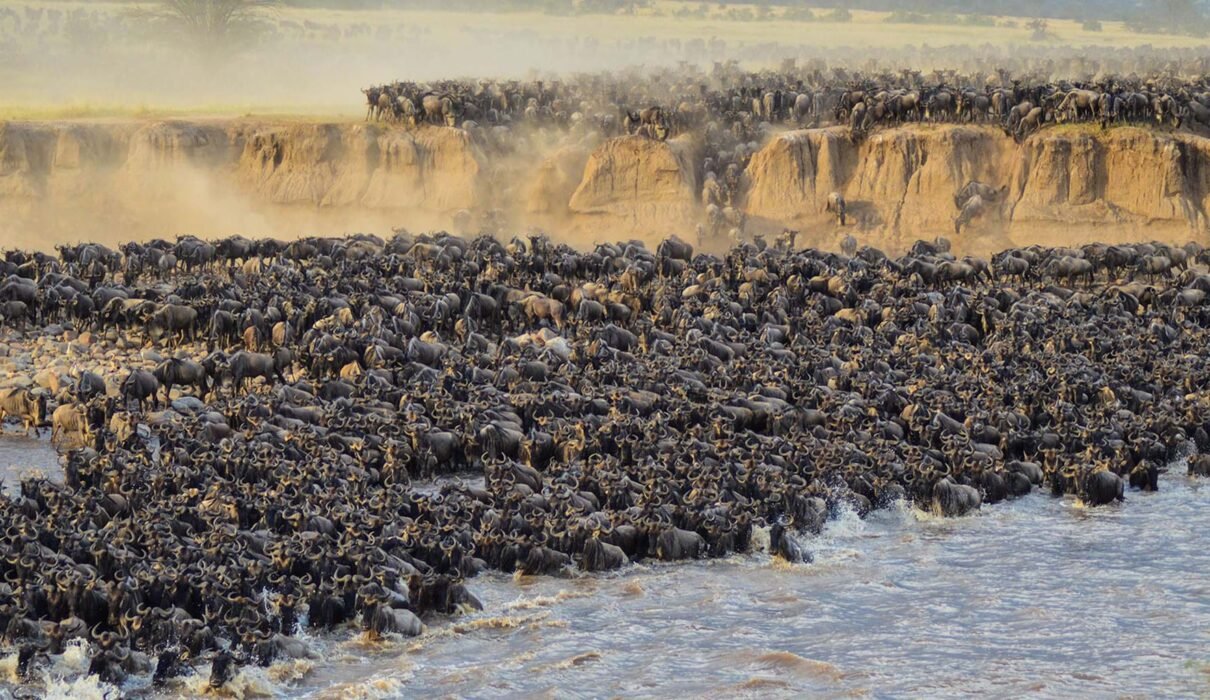
A Great Migration river crossing is one of the most dramatic wildlife experiences you can hope to witness in East Africa. Wildebeest and zebras gather near the water, hesitate along the banks and sometimes cross in large numbers, creating a scene of movement, splashing water and intense activity.
For travellers planning a 2027 or 2028 safari, July to October is the main seasonal window to consider for Mara River crossings, with August and September popular starting points for planning. However, herd movements depend on conditions, and no month, camp or guide can guarantee a crossing during your visit.
The best approach is to choose accommodation in a suitable seasonal area, allow several days for game drives and appreciate the wildlife around you while waiting.
Explore the Serengeti migration safari options with Eddy Tours & Safaris and use this guide to plan your dates, location and viewing expectations.
What Is a Great Migration River Crossing?
River crossings are one part of the wider migration cycle through the Serengeti–Mara ecosystem.
Herds move between feeding areas as grazing and water conditions change. Rivers lie along parts of that journey, creating obstacles that animals sometimes need to negotiate.
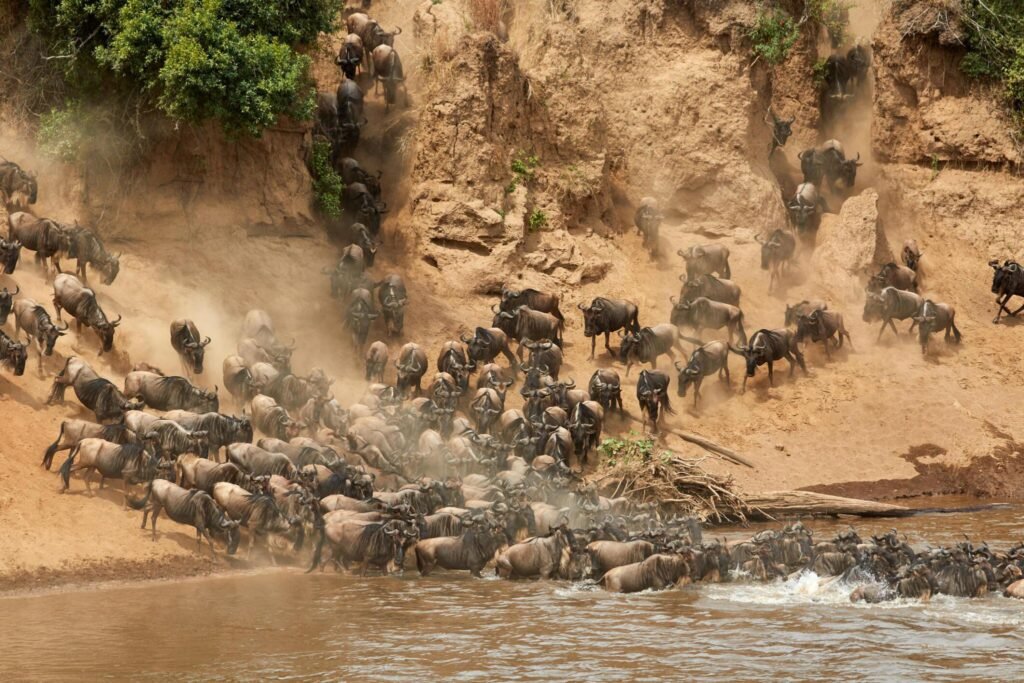
A crossing may involve a small group or a much larger concentration. Animals can gather, move along the bank, turn away or enter the water suddenly. The experience is unpredictable because it follows animal behaviour rather than a visitor timetable.
The migration also includes grazing, breeding, calving and long periods of movement away from rivers. Read the Great Migration overview to understand how river encounters fit into the annual cycle.
Best Time for a Great Migration River Crossing in 2027/2028
For Mara River viewing, July to October provides the main broad planning window. Arrival and departure timing vary, and crossings may occur earlier or later depending on the year.
Asilia’s northern Serengeti camp information describes crossings beginning around July and continuing through the northern season, with later crossings as herds start moving south. These are seasonal observations, not predictions for 2027 or 2028.
| Period | Broad planning expectation |
|---|---|
| January–March | Southern calving-season safaris are generally the more relevant migration focus |
| April–May | Herd movement and distribution change as animals move away from southern areas |
| June | Consider Western Corridor migration activity; do not assume Mara crossings have begun |
| July | Northern arrivals and Mara crossing opportunities may develop |
| August–September | Popular months for northern Serengeti and Maasai Mara migration viewing |
| October | Crossings may continue as herd distribution changes |
| November–December | Attention generally shifts towards southward movement and southern grazing |
Historical migration patterns provide guidance, but rainfall and grazing influence the actual route and timing.
Is August better than September?
Both months are worth discussing if river viewing is your priority. Neither is automatically better for every departure.
Accommodation location, time in the area and actual herd distribution matter more than choosing between two months on a calendar.
Can you book an exact crossing date?
No. You can book a safari during a suitable season, but a crossing cannot be scheduled.
Be cautious about treating phrases such as “river-crossing departure” as a promise. They should describe the itinerary’s intended focus and location.
Where Can You See Migration River Crossings?
Northern Serengeti, Tanzania
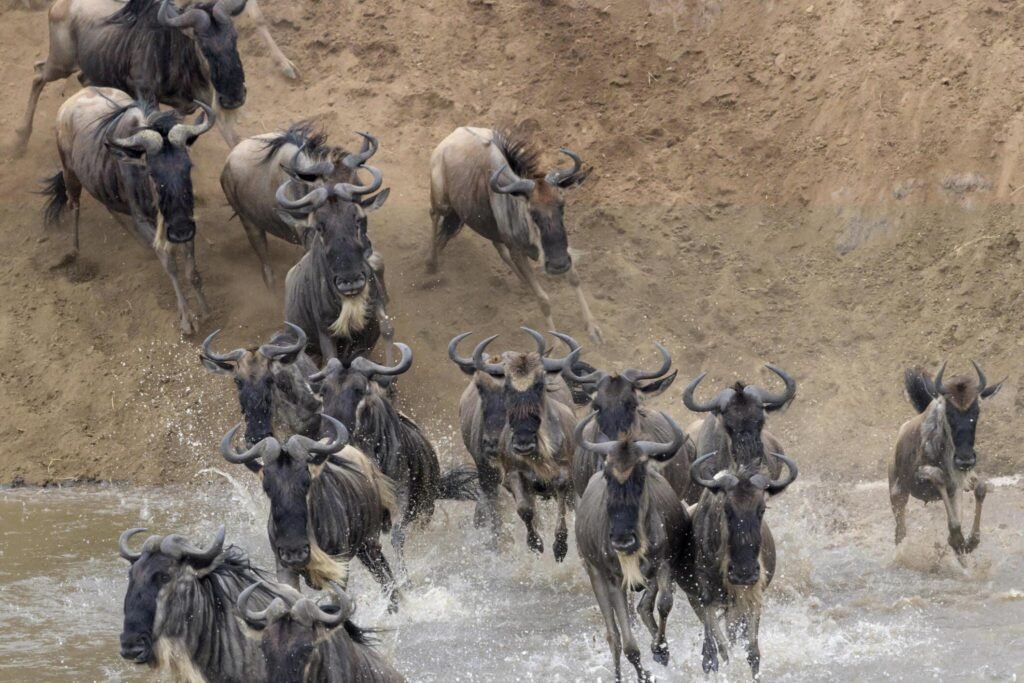
The Mara River runs through the northern Serengeti, where crossing opportunities may be accessible from safari areas around Kogatende.
You do not need to enter Kenya solely to have a chance of seeing a Mara River crossing. The Serengeti Mara destination guide describes the river area and access near Kogatende.
Explore the five-day Serengeti migration safari and ask how many nights are allocated to the northern area.
Maasai Mara, Kenya
Kenya’s Maasai Mara is another destination to consider during the northern migration season.
However, the herds do not all enter Kenya together. Some remain in Tanzania, and their distribution changes throughout the season.
Compare the destinations through the Serengeti versus Maasai Mara guide before choosing your route.
Western Corridor and the Grumeti River
The Grumeti River offers a different migration setting in the Serengeti’s Western Corridor.
The destination guide associates migration activity in this area with approximately May to July. Grumeti encounters should be planned separately from the later northern Mara River focus.
Visit the Western Corridor guide for further background.
A River Crossing Is Not Always a Border Crossing
The Mara River and the international border are different geographic features.
Animals crossing the river may remain within Tanzania or Kenya, depending on where the event occurs. Do not assume every crossing shows wildebeest entering the Maasai Mara from the Serengeti.
During your game drive, ask the guide to explain your location and the direction of movement. This adds context to the scene and helps you understand the landscape.
How Many Days Should You Allow?
If river viewing is your main interest, consider allowing at least three nights in the relevant migration area, with more time if your budget and holiday permit. This is a planning suggestion rather than a guarantee of success.
Several nights provide repeated opportunities to explore with your guide. They also make it easier to enjoy other wildlife instead of spending the entire holiday focused on one anticipated moment.
Count destination nights carefully. A five-day safari may include arrival, long transfers and visits to other parks, leaving fewer days near the river than the title suggests.
Ask these questions before booking:
- How many nights are in the northern migration area?
- How much of each day involves transfers?
- Which camp is proposed?
- Is the camp’s location appropriate for my dates?
- How flexible are game-drive plans?
Compare the migration safari itineraries using the actual daily programme.
Great Migration River Crossing: 10 Practical Viewing Tips
1. Choose location before luxury features
A comfortable camp is valuable, but its position matters when river viewing is your priority.
Ask for the camp’s actual location during your stay, particularly if it moves seasonally. A camp name alone does not explain how much driving is needed.
2. Allow your guide to adjust the day
Herd locations and behaviour change. Your guide may recommend a different route or a longer wait at a suitable viewing place.
Follow informed decisions while respecting park rules and approved access.
3. Prepare for waiting
Animals may spend a long time near the water without crossing.
Bring drinking water, sun protection and anything else your guide recommends for the day. Use the waiting time to observe herd behaviour and the surrounding landscape.
4. Keep voices low
Avoid shouting when animals approach the bank. Sudden noise and activity can disturb wildlife and affect the experience for other visitors.
Stay calm even if the scene becomes exciting.
5. Never pressure the guide to block animals
Do not ask for a closer position if it could obstruct animals approaching or leaving the water.
Follow the guide’s instructions on vehicle placement. A clear view should not come at the expense of wildlife movement.
6. Remain in the vehicle
Riverbanks can present risks from wildlife and terrain.
Stay in the vehicle unless the guide confirms that you are at an authorised place where leaving it is permitted. Never approach the water independently for a photograph.
7. Enjoy sightings away from the crossing points
The northern migration area offers more than river action.
Herds grazing, zebras moving through the landscape and other wildlife encounters can be rewarding parts of the safari. Let the itinerary include these opportunities.
8. Share viewing space considerately
Other visitors may also be waiting for the same event.
Avoid loud conversations, unnecessary movements and requests that encourage vehicles to crowd a viewing area. Within your vehicle, give fellow travellers room to see.
9. Discuss expectations with children
A crossing can include injuries, drowning or predation. Explain that wildlife encounters may be difficult to watch.
Tell the guide if anyone in your party would prefer to move away from a distressing scene.
10. Accept that nature may change the plan
A successful safari does not require a crossing.
Choose the experience because you want to spend time in the ecosystem, with river encounters as a possibility. This makes the whole journey worthwhile.
Photography Tips for River Crossings
Have your camera ready before activity begins, but take time to watch with your own eyes too.
Useful preparation includes spare batteries, sufficient memory and protection from dust. A camera support such as a beanbag may help, provided it fits the vehicle arrangements.
Use a shutter speed suitable for movement if you want sharper action photographs. Check your camera settings while waiting so you are not adjusting everything when the animals enter the water.
Photograph a range of scenes:
- Herds gathering near the bank.
- The wider river landscape.
- Smaller groups moving through the water.
- Animals emerging on the opposite side.
- Quiet moments before and after the event.
Avoid changing lenses unnecessarily in dusty conditions. Keep equipment inside the vehicle and follow your guide’s positioning decisions.
Fly-In Safari or Road Safari?
Fly-in arrangements
A flight to an appropriate airstrip can reduce a long road transfer and may suit a shorter holiday.
Confirm baggage limits, transfer arrangements and whether flights are included. Light aircraft services may have restrictions that affect photographic equipment and luggage.
Road arrangements
A road safari can combine the Serengeti with other destinations, but reaching the north requires sufficient travel time.
Ask how the journey is divided and where you stay en route. An ambitious itinerary can leave less time for wildlife viewing than expected.
Eddy Tours & Safaris can compare arrangements through the Tanzania safari options.
Choosing Accommodation for 2027/2028
Request named accommodation in your quotation and confirm its location for your travel dates.
Some migration camps change location seasonally. Asilia’s Olakira information, for example, describes northern and southern camp locations at different times of year. This illustrates why the location must be checked rather than assumed from the name.
Compare room or tent arrangements, meals, charging facilities and transfers. If travelling with children, check the property’s age policy.
A private vehicle may offer more flexibility for waiting and photography. A shared safari follows arrangements agreed for the group. Confirm which applies before booking.
Should You Visit Both Tanzania and Kenya?
A two-country itinerary can offer different landscapes and safari settings, but it needs additional planning.
Review flights or road transfers, border procedures, entry requirements and park arrangements before committing. Do not assume a direct tourist crossing between the two protected areas is available for your itinerary.
Explore the Kenya and Tanzania migration safari and request a clear transport plan.
For a shorter holiday, concentrating on one well-positioned destination may give you more viewing time.
Frequently Asked Questions
What is the best month for Mara River crossings?
July to October is the broad planning window, with August and September popular choices. Actual opportunities vary with herd movements.
Are crossings guaranteed during peak season?
No. Animals may remain nearby without crossing during your visit.
Can I see a crossing from Tanzania?
Yes. The Mara River runs through the northern Serengeti, where crossing opportunities may occur.
Do herds cross only once?
No. Animals may cross back and forth during the northern season.
Is there a guaranteed best time of day?
No. A crossing can happen when animals decide to enter the water. Follow your guide’s assessment rather than a fixed clock.
Is a balloon flight a reliable way to see a crossing?
No. Balloon routes and timing depend on operating conditions and cannot guarantee a river event. Treat a balloon safari as a separate experience.
Plan Your Great Migration River Crossing Safari
Choose your dates around the expected season, stay in a suitable area and allow time for patient wildlife viewing.
Contact Eddy Tours & Safaris with your preferred 2027 or 2028 dates, number of travellers and accommodation preference. Request an itinerary explaining the destination nights, transport, guiding and complete price.
Website: Eddy Tours & Safaris
Email: sales@eddytours-safaris.com
Alternative email: eddytoursandsafaris@gmail.com
WhatsApp: +255 711 906 664