
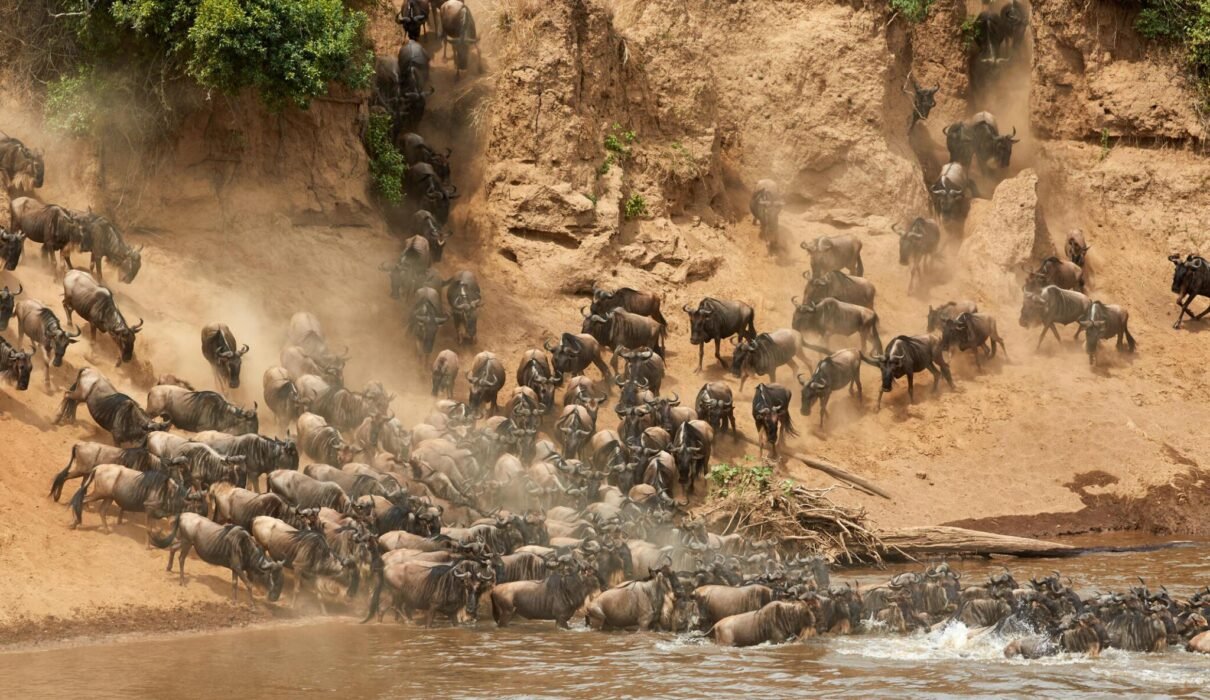
Facts about wildebeest migration help you understand one of East Africa’s most remarkable wildlife experiences before planning your 2027 or 2028 safari. The movement connects Tanzania’s Serengeti ecosystem with Kenya’s Maasai Mara, bringing together large herds, seasonal grazing, newborn calves and dramatic river encounters.
Many travellers know the migration through photographs of wildebeest crossing the Mara River. However, the full story includes months of feeding, movement, breeding and survival across different landscapes.
Understanding that story helps you choose a suitable safari area and appreciate what you see on the ground. A migration holiday can be rewarding during calving season, on the northern plains or while watching herds spread across fresh grazing.
Explore the Serengeti migration safari options with Eddy Tours & Safaris and use these ten facts to plan your journey.
1. Facts About Wildebeest Migration: It Is a Continuing Cycle
The Great Migration is not a one-way journey from the Serengeti to the Maasai Mara. It is a recurring cycle of movement through the wider ecosystem.
Herds move between seasonal feeding areas and eventually return towards the southern plains. There is no single starting line or finishing point for the whole population.
UNESCO describes an annual circular migration extending across Tanzania and Kenya, with journeys of roughly 1,000 kilometres. This distance represents the broad migration pattern rather than an identical route followed by every animal.
For travellers, this means the migration can be explored at different stages of the year. The important decision is where to go during your available dates.
Read the guide to understanding the Great Migration for further planning information.
2. More Than a Million Wildebeest Take Part
The migration involves an enormous population of wildebeest, accompanied by other grazing animals.
Published estimates vary, so population figures should be treated as approximate. UNESCO describes more than one million migrating wildebeest, alongside hundreds of thousands of other hoofed animals.
You should not expect all these animals to gather in one visible place. Herds can spread across a large area, forming separate concentrations.
On a game drive, you may encounter long moving lines, scattered grazing groups or a large gathering stretching into the distance. Each scene represents a different part of the migration.
Ask your guide about the animals nearby rather than judging the experience only by the size of the herd.
3. Rainfall and Fresh Grazing Influence the Journey
Wildebeest move in response to changing feeding conditions and water availability. Seasonal rainfall helps produce the grazing that supports the herds.
Historical patterns provide useful planning guidance, but they cannot establish exact future locations. The timing and distribution of rain can change where animals gather and how quickly they move.
Asilia’s migration guide explains that rainfall and grass growth influence the journey, making precise timing uncertain.
For a 2027 or 2028 safari, choose an itinerary around the expected seasonal area while allowing for adjustments based on local observations.
The Serengeti Great Migration safari tours and prices page provides packages to compare. Confirm where the proposed accommodation is located during your travel month.
4. Calving Season Is a Major Part of the Migration
River crossings receive plenty of attention, but the southern calving season is another important stage.
During the early months of the year, migrating herds commonly gather on the southern short-grass plains and around the Ndutu area. Many females give birth within a relatively concentrated period.
The African Wildlife Foundation identifies synchronised births as a notable feature of wildebeest behaviour.
A calving-season safari offers opportunities to watch mothers with young calves, large feeding herds and interactions across the plains. Predators may also be active, although particular encounters cannot be promised.
This season can suit travellers interested in animal behaviour and the beginning of the migration’s next generation.
5. Newborn Wildebeest Stand Within Minutes
A wildebeest calf must become mobile quickly.
The African Wildlife Foundation explains that newborn calves stand within minutes of birth and develop the ability to keep pace with the wider herd soon afterwards. This rapid development is important for life in a moving population.
Watching a calf take its first steps can be as compelling as seeing a large herd cross a river. It reveals the effort involved in survival from the beginning of life.
During calving-season viewing, give animals space. Avoid asking a guide to move closer if doing so could disturb a mother and calf.
You can learn more about wildebeest through the African Wildlife Foundation species page.
6. Zebras and Gazelles Are Part of the Wider Spectacle
Although wildebeest give the migration its familiar name, they are not the only animals involved.
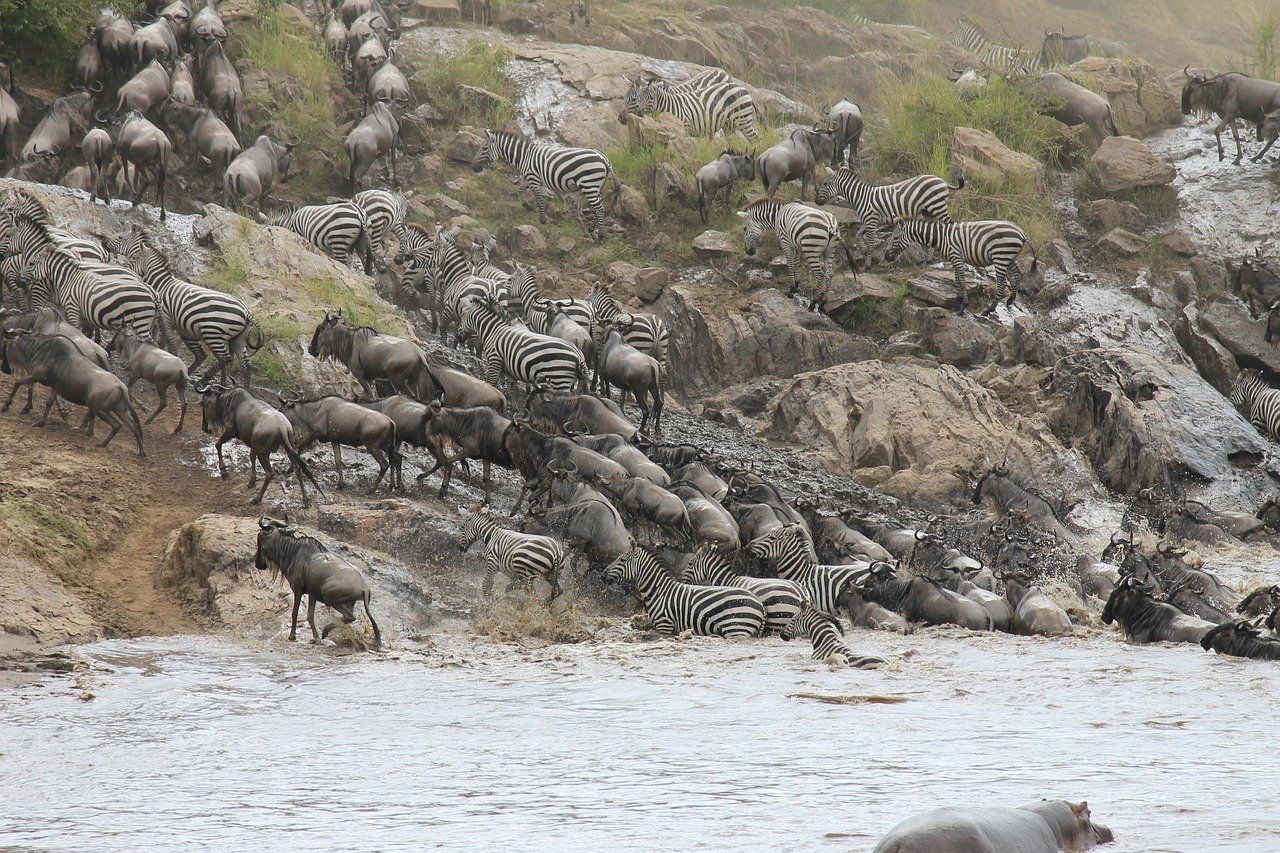
Zebras and gazelles also form important parts of the large herbivore populations moving through the ecosystem. UNESCO includes these animals in its description of the migration.
Look beyond the most numerous species during your safari. Mixed wildlife scenes provide opportunities to compare body shapes, feeding behaviour and reactions to nearby animals.
A group of zebras crossing open ground or gazelles feeding beside wildebeest can add variety to your photographs and observations.
Ask your guide which animals are taking part in seasonal movements and which may be resident in the area. Their presence does not mean every species follows an identical journey.
7. Mara River Crossings Can Be Seen in Tanzania
The Mara River is closely associated with Kenya’s Maasai Mara, but it also runs through the northern Serengeti.
Crossing opportunities therefore exist on the Tanzanian side as well as in Kenya. A safari does not need to visit both countries solely to include the possibility of a Mara River encounter.
The northern Serengeti’s Mara area includes river access near Kogatende, as described in the Serengeti Mara destination guide.
Crossing the river is also not automatically the same as crossing the international border. River geography and the border are separate considerations.
Compare the five-day Serengeti migration safari with a Kenya and Tanzania migration itinerary according to your interests and available time.
8. River Crossings Have No Fixed Timetable
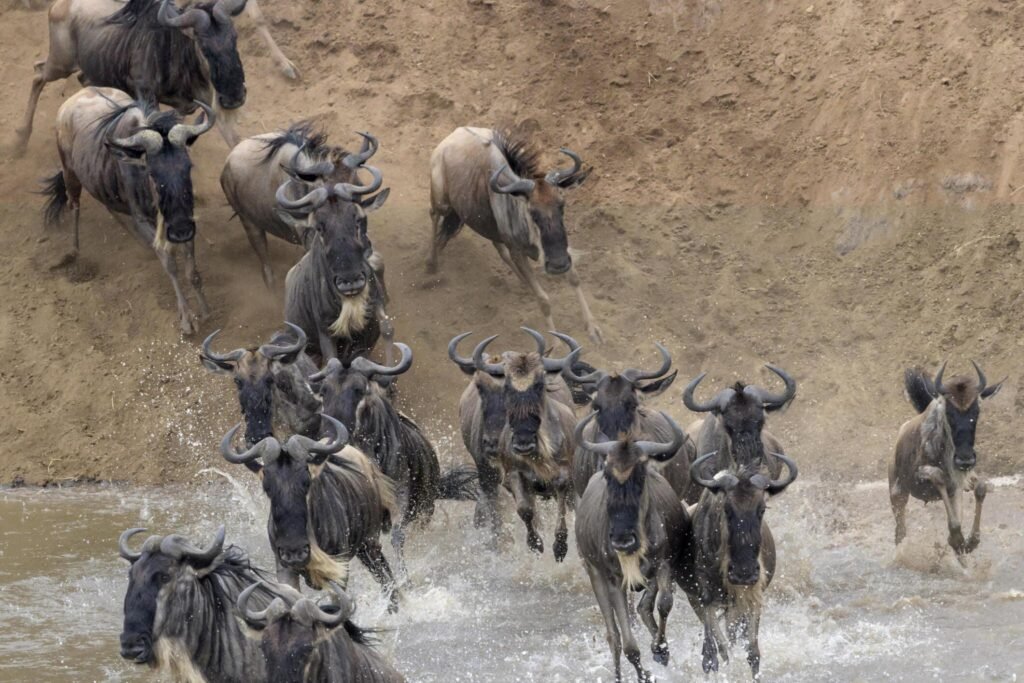
Wildebeest may gather near a river without entering it. They may move along the bank, turn away or remain nearby while visitors wait.
No operator can guarantee that a crossing will happen during a particular game drive.
The uncertainty is part of the experience. A migration safari should provide time to observe herds and explore surrounding habitats, rather than depend entirely on one anticipated event.
Spending several nights in a suitable area gives you more opportunities to be out with your guide. It still does not create a guarantee.
When reviewing the four-day Serengeti migration itinerary, ask how much time is allocated to the relevant seasonal area and how much is spent travelling.
9. Predators Are Part of the Migration Story
The movement of large herbivore populations creates feeding opportunities for predators. UNESCO identifies the interaction between migrating herds and predators as a major feature of the Serengeti ecosystem.
This does not mean every predator follows the entire migration route. Your guide can explain the behaviour of animals seen in a particular area.
Predator encounters may include resting animals, hunting attempts or scavenging. Hunting scenes can be difficult to watch, especially for younger travellers, so discuss expectations before your safari.
There is value in quieter observations too. Watching how herds react to a nearby predator can reveal much about vigilance and group behaviour.
Explore the official Serengeti wildlife and habitats page for an introduction to the park’s varied environments.
10. Protecting the Wider Ecosystem Matters
The migration relies on more than one national park or reserve.
The African Wildlife Foundation describes the Mara–Serengeti landscape as a connected ecosystem linking Tanzania’s Serengeti National Park with Kenya’s Maasai Mara National Reserve.
Wildlife needs access to suitable grazing and water across that landscape. Conservation planning must therefore consider the wider area and the people living alongside it.
Visitors can contribute through respectful behaviour: follow viewing rules, remain on authorised tracks and avoid pressuring guides to disturb wildlife for photographs.
Learn more through the African Wildlife Foundation’s Mara–Serengeti overview and the UNESCO Serengeti World Heritage page.
Facts About Wildebeest Migration: Seasonal Planning for 2027/2028
Use the following table as a broad guide. It reflects commonly observed patterns rather than a prediction of exact herd positions in either year.
| Approximate period | Areas commonly considered | Main planning interest |
|---|---|---|
| January–March | Southern Serengeti and Ndutu | Calving season and large grazing herds |
| April–June | Central Serengeti and Western Corridor | Northward movement and changing concentrations |
| July–October | Northern Serengeti and, seasonally, Maasai Mara | Northern herds and possible river encounters |
| November–December | Movement towards southern areas | Return towards fresh seasonal grazing |
The timing can shift with rainfall and conditions. Some herds remain in Tanzania while others reach the Maasai Mara; the population does not move as one complete group.
For a destination comparison, read Serengeti versus Maasai Mara and discuss the most suitable area for your dates.
How to Choose Your Migration Safari
Start with what you most want to observe.
If mothers and young calves interest you, discuss a southern itinerary. If river encounters are your priority, ask about northern locations during the relevant season. If you want varied wildlife and landscapes, allow enough time to combine areas without rushing.
Before booking, confirm:
- The intended seasonal safari area.
- Accommodation locations for your dates.
- The number of nights near that area.
- Driving or flight arrangements.
- Park fees and other included services.
- Private or shared vehicle arrangements.
- Cancellation and amendment conditions.
A camp’s location matters as much as its photographs. Some camps move seasonally, so request the actual location applicable to your stay.
Browse the migration tours for first-time visitors and ask for a personalised recommendation.
Photography Tips for Migration Viewing
Carry spare batteries and enough memory for several days. Keep camera equipment protected from dust and accessible during game drives.
Photograph the wider landscape as well as individual animals. Herd formations, clouds, riverbanks and quieter feeding scenes help tell the story of the journey.
Give fellow travellers room to view and avoid making noise to influence animal movement. Follow the guide’s positioning decisions, particularly around river approaches.
Binoculars are useful even when you have a camera. They help you observe behaviour at a distance without needing the vehicle to move closer.
Frequently Asked Questions
Does the migration happen only in July and August?
No. It is a continuing cycle. Those months are associated with northern viewing opportunities, while other periods offer different stages.
Do all wildebeest enter Kenya?
No. Herds spread across the ecosystem, and many remain in Tanzania during the northern season.
Can I see river crossings in the Serengeti?
Yes, crossings may occur along the Mara River in the northern Serengeti. Seeing one during your visit is not guaranteed.
Is the migration the same every year?
The broad pattern repeats, but rainfall, grazing and local conditions influence timing and distribution.
Can families enjoy a migration safari?
Yes, with an itinerary suited to the children’s ages and tolerance for driving. Discuss travel times and expectations around predator encounters.
Should I visit both Tanzania and Kenya?
Choose according to your interests, budget and holiday duration. A two-country trip requires additional transport and entry planning; one destination can still provide a rewarding migration experience.
Plan Your Wildebeest Migration Safari for 2027/2028
Understanding these facts about wildebeest migration helps you appreciate the whole journey, from newborn calves on the southern plains to herds gathering near northern rivers.
Share your preferred dates, number of travellers, accommodation choice and wildlife interests with Eddy Tours & Safaris. Request an itinerary positioned for the expected seasonal area, with clear travel arrangements and a complete quotation.
Enquiries: Contact Eddy Tours & Safaris
Email: sales@eddytours-safaris.com
Alternative email: eddytoursandsafaris@gmail.com
WhatsApp: +255 711 906 664